
Joanna Blythman
Author of Shopped: The Shocking Power of British Supermarkets
About the Author
Image credit: Joanna Blythman - Photo: © Alan Peebles
Works by Joanna Blythman
How to Avoid GM Food : Hundreds of Brands, Products and Ingredients to Avoid (1999) 7 copies, 1 review
Tagged
Common Knowledge
- Canonical name
- Blythman, Joanna
- Birthdate
- 1956
- Gender
- female
- Education
- City University London, UK
- Occupations
- food journalist
writer - Awards and honors
- Derek Cooper Award, one of BBC Radio 4's Food and Farming Awards (2004)
Glenfiddich Awards for writing (2006)
Good Housekeeping award for Outstanding Contribution to Food (2007) - Relationships
- Blythman, Morris (father)
- Nationality
- UK
- Birthplace
- Glasgow, Scotland, UK
- Associated Place (for map)
- Scotland, UK
Members
Reviews
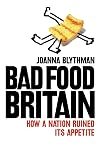
I don't want to reduce a whole nation to silly clichés, but I have to admit that, being a Frenchman living in England for now more than a decade, Britain and food seem to be two worlds apart. It's not that our British friends are alien to good gastronomy (far from that!), it's just that they don't seem to care even about their own culinary specialities (and they have a very good cuisine too, don't be mistaken!). Personally coming from a country where food is a cultural heritage taken very show more seriously, I find that really sad... And I don't even enjoy cooking!
Sure, here's a country where so-called 'celebrity chefs' are flooding our TV screens. But how many viewers, actually, cook even as a hobby? Personally, I might not like to cook (or even bother to learn how to) but I still know what a healthy diet is, and, since I must eat to survive I still can manage cooking proper and healthy food as necessary! Here's a country, though, where people rarely share a meal around a table (one household out of four don't even have a table where to sit together and eat!) but rather 'grab' fast food and takeaways; where, at the time of publishing, the government spent more money feeding its military dogs than children in school canteens (you've read that right!...); where 60% of the population have no clue of what constitutes an healthy diet and what isn't; and on, and on...
Pessimistic until the last line, Joanna Blythman portrays a sad picture of British eating habits, and it's far from being funny. It's not only the consequences upon people's health which will be impacted (obesity, cardio-vascular diseases, diabetes...), or what to expect in the long term with new generations so saturated with fatty/sugary/salted junk completely destroying their taste buds. The problem is the flabbergasting attitude towards the simple fact of cooking, let alone consuming healthy products. We have indeed reached a point where tossing ready meals into a microwave is considered a feminist victory (no more slaving in the kitchen!) or, again, offering fruits or home made cakes in school cause both a class struggle and a rising concern about public health and safety! Should we laugh? Should we cry?
You might retort that, well, this is Britain -and we don't want to reduce whole nations to silly clichés but... Fair enough. The British case surely is quite extreme, and, no doubt, the author focuses here upon extreme cases to make her case even more extremely compelling. Nevertheless, if it's easy to throw a stone at these food manufactured in factories and wrapped up under dubious packaging, the triumph of snacking and fast eating coupled with a growing ignorance of what is an healthy diet in the first place, let alone a reject of cooking even just for the sake of cooking, is a telling tale of what happen when the culture surrounding proper food is no longer taken seriously. It ought to be a red flag.
It doesn't matter whether you enjoy cooking, or, like me, can't be bothered beyond the necessity of cooking meals because you have to. Just make sure you don't lose your appetite! show less
Sure, here's a country where so-called 'celebrity chefs' are flooding our TV screens. But how many viewers, actually, cook even as a hobby? Personally, I might not like to cook (or even bother to learn how to) but I still know what a healthy diet is, and, since I must eat to survive I still can manage cooking proper and healthy food as necessary! Here's a country, though, where people rarely share a meal around a table (one household out of four don't even have a table where to sit together and eat!) but rather 'grab' fast food and takeaways; where, at the time of publishing, the government spent more money feeding its military dogs than children in school canteens (you've read that right!...); where 60% of the population have no clue of what constitutes an healthy diet and what isn't; and on, and on...
Pessimistic until the last line, Joanna Blythman portrays a sad picture of British eating habits, and it's far from being funny. It's not only the consequences upon people's health which will be impacted (obesity, cardio-vascular diseases, diabetes...), or what to expect in the long term with new generations so saturated with fatty/sugary/salted junk completely destroying their taste buds. The problem is the flabbergasting attitude towards the simple fact of cooking, let alone consuming healthy products. We have indeed reached a point where tossing ready meals into a microwave is considered a feminist victory (no more slaving in the kitchen!) or, again, offering fruits or home made cakes in school cause both a class struggle and a rising concern about public health and safety! Should we laugh? Should we cry?
You might retort that, well, this is Britain -and we don't want to reduce whole nations to silly clichés but... Fair enough. The British case surely is quite extreme, and, no doubt, the author focuses here upon extreme cases to make her case even more extremely compelling. Nevertheless, if it's easy to throw a stone at these food manufactured in factories and wrapped up under dubious packaging, the triumph of snacking and fast eating coupled with a growing ignorance of what is an healthy diet in the first place, let alone a reject of cooking even just for the sake of cooking, is a telling tale of what happen when the culture surrounding proper food is no longer taken seriously. It ought to be a red flag.
It doesn't matter whether you enjoy cooking, or, like me, can't be bothered beyond the necessity of cooking meals because you have to. Just make sure you don't lose your appetite! show less

'Shopped' takes the reader on a lively, thought-provoking and incredibly interesting journey through the world of the modern British supermarket, revealing every secret trick and behind-the-scenes truths that they really wouldn't want the public to think about. From screwed-over suppliers to exhausted assistants, corner-cutting to own-label quality, obsessive perfection to global domination; it's all here in candid detail. I worked as a shop assistant for one of the 'Big Four' and within a show more couple of months of employment, I could see the truth in some of the topics covered in Blythman's book.
This book has affected me a lot. After reading this book, why would I want to shop somewhere that has colour charts to determine whether a tomato is good enough to sell? Where checkout girls have to put up their hands to go to the loo like naughty school children? Where staff have no idea what their products are or what to do with them? That shamelessly hire and fire suppliers with no thought as to their livelihoods and the amount of work that goes into large-scale production for supermarkets?
Read this book and be inspired. Vote with your feet and refuse to conform to the supermarket-driven one-stop-shop ideal where everything you need in your life comes from them in a neat once-a-week consumer package. This book is a sharp and well-written call to arms, and should be compulsory reading for everyone from teenagers to grandmothers. show less
This book has affected me a lot. After reading this book, why would I want to shop somewhere that has colour charts to determine whether a tomato is good enough to sell? Where checkout girls have to put up their hands to go to the loo like naughty school children? Where staff have no idea what their products are or what to do with them? That shamelessly hire and fire suppliers with no thought as to their livelihoods and the amount of work that goes into large-scale production for supermarkets?
Read this book and be inspired. Vote with your feet and refuse to conform to the supermarket-driven one-stop-shop ideal where everything you need in your life comes from them in a neat once-a-week consumer package. This book is a sharp and well-written call to arms, and should be compulsory reading for everyone from teenagers to grandmothers. show less
Blythman is an investigative journalist specializing in food. Here she examines the state of food and eating in Britain, exposing the national food revolution as a publicity scam to end the country's reputation for badly cooked, tasteless food. Instead, Blythman says that the U.K. has stopped cooking at all and is now living on ready-made meals, frozen foods, snacks and takeaway. The state of school lunches and home economics are particularly dire, with cooking being removed from the agendas show more in favor of "food technology" classes where students learn how to create eye-catching packaging but never touch a stove.
This book was published in 2006, so perhaps some things have improved, but not by that much. As a regular reader of magazines like Bon Appetit, I was really surprised by Blythman's evidence that London's food revolution, the one that's been going on for the last 10-15 years and has put London as a major foodie destination after years of ridicule, is a fraud. She states that restaurants in the capitol are having their food supplied by the two major catering suppliers in the country. Ready-made and frozen, so that the restaurants are using their kitchens for heating, not cooking.
Lots of surprising information that will have you packing your own lunch for a couple of days. show less
This book was published in 2006, so perhaps some things have improved, but not by that much. As a regular reader of magazines like Bon Appetit, I was really surprised by Blythman's evidence that London's food revolution, the one that's been going on for the last 10-15 years and has put London as a major foodie destination after years of ridicule, is a fraud. She states that restaurants in the capitol are having their food supplied by the two major catering suppliers in the country. Ready-made and frozen, so that the restaurants are using their kitchens for heating, not cooking.
Lots of surprising information that will have you packing your own lunch for a couple of days. show less
Following on from the glittering tour de force that was Shopped, this is a wider attack on the food industry, not only on supermarkets but on the food companies, the government, schools and families that have turned British food into the homogenized, fatty, effort-free laughing stock that it is today.
Blythman skilfully compares our current food culture not only with contemporary European trends and American junk food, but also with our own history – we may have been less fat, and have show more cooked more and passed on vital culinary knowledge but, she argues, even fifty years ago we were favouring fatty traditional food and packet mixes over healthier meals cooked from scratch. The comparison of our eating habits with those of our European neighbours is devastating, particularly relating to family values around mealtimes and healthy eating, and the way school meals are approached here compared to France, for example.
Though the book doesn’t try to beat the reader over the head and inspire them to turn their entire lifestyle around the way Shopped does, it is still very relevant, thought-provoking, and extremely accessible. Perhaps despite our lack of a real British food culture, Blythman can offer some inspiration to us to try to eat fresher food, cook simple, wholesome dishes, and enjoy our meals instead of accepting our Bad Food and letting the decline continue! show less
Blythman skilfully compares our current food culture not only with contemporary European trends and American junk food, but also with our own history – we may have been less fat, and have show more cooked more and passed on vital culinary knowledge but, she argues, even fifty years ago we were favouring fatty traditional food and packet mixes over healthier meals cooked from scratch. The comparison of our eating habits with those of our European neighbours is devastating, particularly relating to family values around mealtimes and healthy eating, and the way school meals are approached here compared to France, for example.
Though the book doesn’t try to beat the reader over the head and inspire them to turn their entire lifestyle around the way Shopped does, it is still very relevant, thought-provoking, and extremely accessible. Perhaps despite our lack of a real British food culture, Blythman can offer some inspiration to us to try to eat fresher food, cook simple, wholesome dishes, and enjoy our meals instead of accepting our Bad Food and letting the decline continue! show less
Awards


You May Also Like


Statistics
- Works
- 8
- Members
- 432
- Popularity
- #56,590
- Rating
- 3.7
- Reviews
- 15
- ISBNs
- 25
- Languages
- 1