
Felicity Lawrence
Author of Not on the Label
Works by Felicity Lawrence
Tagged
Common Knowledge
- Canonical name
- Lawrence, Felicity
- Birthdate
- 20th century
- Gender
- female
- Awards and honors
- British Guild of Food Writers (Derek Cooper Award, 2004)
British Guild of Food Writers (Food Journalist of the Year Award, 2007)
British Guild of Food Writers (Derek Cooper Award, 2007) - Nationality
- UK
- Associated Place (for map)
- UK
Members
Reviews
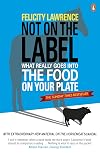
This book is essentially a window into the demise of our society, morality and health. The message is simple: supermarkets are black holes into which all other entities are pulled and consumed remorselessly, be they animals, immigrant workers, producers, suppliers or consumers. We are slaves of our creations - never mind worries about artificial intelligence rising up to supersede humanity - supermarkets are already doing it! Taking our money whilst configuring our biochemistry in order that show more we become obese, malnourished, gluttonous, depressives, our sense of quality kicked to the curb in favour of an addictive desire for cheap, unethically produced, bastardised, genetically modified, odourless, nutrionless slop (in various gastronomical forms).
A great piece of journalism, one that would serve the general public well if we are indeed able to enforce change with our buying power. I need to make a change and I hope the advice in the afterward is some I heed.
Incidentally, 'What a Carve Up' by Jonathan Coe is a good fictional tale of similar issues this book raises. show less
A great piece of journalism, one that would serve the general public well if we are indeed able to enforce change with our buying power. I need to make a change and I hope the advice in the afterward is some I heed.
Incidentally, 'What a Carve Up' by Jonathan Coe is a good fictional tale of similar issues this book raises. show less
This book should be compulsory reading for everyone. And if you're not moved to tears by it… well I don't know what to say. This book made me cry, rage, shake with anger. A lot of it I already knew, a lot of it I've been trying to do something about but to see it all written down in black and white in one space filled me with absolute horror. A few titbits for your delight:-
• Most of you probably already know that most of the chicken in supermarkets and restaurants is broiler; overfeed, show more filled with hormones and antibiotics, spends its pathetic life living in its own shit with no natural light and killed in a grossly inhumane manner (and sadly the organic chooks are often killed in exactly the same place and way unless you buy them from specialist farms), and that the packaged chickens are filled with water to plump them up, but did you also know that an awful lot of supermarket and catering chicken is also bound with pig and cow DNA to make it firmer. Which is just great if you are Hindu or Muslim.
• That off-season mid-winter salad from Spain? Picked and packaged by north-African migrant workers on a pittance living in shanty towns with no running water or sanitation and all this just a mile down the road from the Costa Del Sol. And even if you couldn't care less about human rights, do you really want someone who hasn't washed for days packing your salad?
• The average trolley full of food has travelled about 100,000 miles to get to you. Marvellous. And even better some of it's flown from the UK (packaging especially) is packed up in foreign parts and flown back. Double marvellous.
• Bread - now bread is a great one. Bought bread isn't made like it should be. Oh no. It is no longer allowed to rise properly anymore. We just don't have the time for that, we need that bread on the shelves. Of course if it's not risen it will sink when it's baked. So we fill it full of hydrogenated fat to keep it solid. You know how white sliced fills your mouth like putty? Well that'll be why. I started baking my own bread when I realised the shop bought gave me belly ache. I'm not fucking surprised. Plus how can anyone possibly deal with their own weight issues when they have no idea what's in their food.
• Fruit and veg has to conform to certain sizes and shapes to be sold in the supermarket you know. The consumer, that's you and me, don't want to buy food that doesn't look like it's made of plastic. Where the hell am I when they do these surveys? About 40% of fruit and veg are wasted in this country each year because they don't conform. Even the Prince of Wales gets his Highgrove Organic stuff rejected. Best apples I've ever eaten were from my mum's tree. Looked like old ladies' faces but tasted divine. All this waste has made half the farmers give up. Can't afford it. And this puts rural landscapes, biodiversity and ecosystems under threat. 60% of ancient woodlands, 97% of meadows and 50% of birds that depend on agriculture are gone.
• Coffee (and we're talking you're jars of instant here rather than Starbucks and its ilk who at least buy fair-trade) - A Ugandan coffee farmer will sell a kilo of his coffee for 14 US cents. By the time it's on the supermarket shelf its market value is $26.40 per kilo. And that's after they've put all the crap in it that makes instant coffee. Now hippy I might be, but I'm also the daughter of an economist and do in fact believe to an extent in globalization, capitalism and free market. But this isn't a free market. This is bullying. This is like medieval feudalism. Any wonder the South American and African coffee farmers are pulling up their coffee crops to grow coca beans for cocaine and marijuana plants?
And why? Money of course. The major supermarket undercut and undercut and undercut. At one point they were selling baked beans so cheaply that even Nestle said they couldn't afford to bottle air at that price, thus closing down the Crosse and Blackwell bottling plant.
And there's absolutely nothing we can do unless every suddenly stops shopping at supermarkets, and sadly an awful lot of people either don't have a choice, or don't have the information to make a choice. For my part I'm getting pretty much everything from Abel and Cole now. Food shouldn't be cheap you know. Where we got this idea that we had a right to cheap food I don't know? Less plasma tvs and more simple living IMHO.
And if none of that has touched you, I leave you with this:-
"Some 1.2 billion people in the world still have too little to eat; the same number today suffer from being overweight…..For the first time in 100 years medical experts are predicting that life expectancy in developed countries will fall. Thanks to obesity our children face the prospect of dying younger than us." show less
• Most of you probably already know that most of the chicken in supermarkets and restaurants is broiler; overfeed, show more filled with hormones and antibiotics, spends its pathetic life living in its own shit with no natural light and killed in a grossly inhumane manner (and sadly the organic chooks are often killed in exactly the same place and way unless you buy them from specialist farms), and that the packaged chickens are filled with water to plump them up, but did you also know that an awful lot of supermarket and catering chicken is also bound with pig and cow DNA to make it firmer. Which is just great if you are Hindu or Muslim.
• That off-season mid-winter salad from Spain? Picked and packaged by north-African migrant workers on a pittance living in shanty towns with no running water or sanitation and all this just a mile down the road from the Costa Del Sol. And even if you couldn't care less about human rights, do you really want someone who hasn't washed for days packing your salad?
• The average trolley full of food has travelled about 100,000 miles to get to you. Marvellous. And even better some of it's flown from the UK (packaging especially) is packed up in foreign parts and flown back. Double marvellous.
• Bread - now bread is a great one. Bought bread isn't made like it should be. Oh no. It is no longer allowed to rise properly anymore. We just don't have the time for that, we need that bread on the shelves. Of course if it's not risen it will sink when it's baked. So we fill it full of hydrogenated fat to keep it solid. You know how white sliced fills your mouth like putty? Well that'll be why. I started baking my own bread when I realised the shop bought gave me belly ache. I'm not fucking surprised. Plus how can anyone possibly deal with their own weight issues when they have no idea what's in their food.
• Fruit and veg has to conform to certain sizes and shapes to be sold in the supermarket you know. The consumer, that's you and me, don't want to buy food that doesn't look like it's made of plastic. Where the hell am I when they do these surveys? About 40% of fruit and veg are wasted in this country each year because they don't conform. Even the Prince of Wales gets his Highgrove Organic stuff rejected. Best apples I've ever eaten were from my mum's tree. Looked like old ladies' faces but tasted divine. All this waste has made half the farmers give up. Can't afford it. And this puts rural landscapes, biodiversity and ecosystems under threat. 60% of ancient woodlands, 97% of meadows and 50% of birds that depend on agriculture are gone.
• Coffee (and we're talking you're jars of instant here rather than Starbucks and its ilk who at least buy fair-trade) - A Ugandan coffee farmer will sell a kilo of his coffee for 14 US cents. By the time it's on the supermarket shelf its market value is $26.40 per kilo. And that's after they've put all the crap in it that makes instant coffee. Now hippy I might be, but I'm also the daughter of an economist and do in fact believe to an extent in globalization, capitalism and free market. But this isn't a free market. This is bullying. This is like medieval feudalism. Any wonder the South American and African coffee farmers are pulling up their coffee crops to grow coca beans for cocaine and marijuana plants?
And why? Money of course. The major supermarket undercut and undercut and undercut. At one point they were selling baked beans so cheaply that even Nestle said they couldn't afford to bottle air at that price, thus closing down the Crosse and Blackwell bottling plant.
And there's absolutely nothing we can do unless every suddenly stops shopping at supermarkets, and sadly an awful lot of people either don't have a choice, or don't have the information to make a choice. For my part I'm getting pretty much everything from Abel and Cole now. Food shouldn't be cheap you know. Where we got this idea that we had a right to cheap food I don't know? Less plasma tvs and more simple living IMHO.
And if none of that has touched you, I leave you with this:-
"Some 1.2 billion people in the world still have too little to eat; the same number today suffer from being overweight…..For the first time in 100 years medical experts are predicting that life expectancy in developed countries will fall. Thanks to obesity our children face the prospect of dying younger than us." show less
If a little out of date (published in 2004) Not on the Label is a solid exposé of the industrialization and globalization of food to the detriment of the environment, health, society, our senses and wallets. [a:Felicity Lawrence|237096|Felicity Lawrence|/assets/nophoto/nophoto-U-50x66-251a730d696018971ef4a443cdeaae05.jpg] has spent 3 years investigating the global food system for The Guardian uncovering the hidden and scandalous practices involved in the journey of food from the dirt to our show more stomachs, offering up suggestions for improvements to the system for future security as '...our current food system is environmentally, ethically and even biologically unsustainable...' and how the average person can do their part if they wish, though she doesn't judge those that are unable to do so.
Chicken
All chicken is diseased. It's not a stretch to make that statement since mass contamination takes place. It only takes is one sick chicken. Doesn't matter if it's organically reared, they go through the same processing plants. And if that wasn't enough, cheap chicken breasts can contain only 54% chicken - the rest is water and possibly pork and/or beef, which usually appear in ethnic restaurants to be eaten Muslims and Hindus. (In that case, the recent horsemeat scandal should've come as no surprise, though once again it was the Irish who brought it to light.)
Furthermore, genetic selection has seen chickens appear like 'weightlifters on steroids' with their over-large breasts crippling their legs, putting undue pressure on their hearts and causing skin infections from rolling around in their own excrement. Limited living space from intense farming increases disease and treatment with antibiotics resulted in antibiotic resistance which may be being passed on to humans.
Salad
Ready-to-eat salad is less nutritious, can be diseased, and the chlorine it's washed in has been linked to cancer.
Half the workforce in food and catering are illegals - more than 2 million in the UK, procured and managed by dangerous and greedy gangmasters making more than £8m per year through intimidation, punishment, murder, expanding into prostitution and drug-smuggling. These illegals also travel to Spain - the salad bowl of the UK, where intense farming practices to satisfy our demand have polluted the environment with pesticides and dried out the land, turning it into desert.
Food Miles & Transport
We're dependent on crude oil for agrochemicals, plastics and food miles. Tesco in 2002 covered 224,000km in 1.2m lorry journeys. Thirty years has quadrupled the number of products stocked by supermarkets yet the variety they offer is still limited. However, in an effort to cut costs supermarkets prefer to collect their goods from suppliers using their own lorries meaning small independents will have to do the same, contributing to their disappearance from our high streets.
To add to the pressure, suppliers can be delisted for refusing price reductions, trade with other supermarkets are restricted, and they're sometimes forced asked to 'contribute to the costs of store refurbishments or openings,' though absorbing volume and customer discounts such as BOGOF pressed upon them, sometimes retrospectively, have to be the most damaging to the health of their businesses. Demands for compensation for anything and everything or just having it deducted from invoices without discussion also screams unfair practice and treatment of suppliers by supermarkets.
So our salad comes from Spain, our veg is also sourced from Africa, and traditional English apples are overlooked in favour of foreign types. Even 80% of organic produce comes from abroad. These food miles actually have a detrimental effect on nutritional value since frozen veg contains more nutrients than fresh imported stuff that's sat countless hours in refrigerated containers.
Bread
Less than 2% of bread is made by independent bakers yet a few bake from scratch. The rest rely on the Chorleywood Bread Process (CBP) which involves fats, E numbers, salt and 3% more water taking considerably less time to make than the traditional flour, water, yeast recipe. However, skipping the proving time aggravates gluten allergies - that's how these allergies came about.
Fruit & Veg
'The beauty parade' that disqualifies mildly discoloured or misshapen fruit and veg has led to 40% waste and harvesting earlier and earlier to prevent bruising giving you hard, odourless and tasteless results.
The evils of ready meals and junk food containing corn, sugar, soya, palm and rapeseed oil which are heavily subsidized, are also extolled, though I've all ready been educated on this via [b:Salt Sugar Fat: How the Food Giants Hooked Us|15797397|Salt Sugar Fat How the Food Giants Hooked Us|Michael Moss|http://d.gr-assets.com/books/1361919312s/15797397.jpg|21520265].
Lawrence, in the Afterword, details ways to improve our food system and future security with policy suggestions and by providing resources for the individual to make an impact, enhancing their health in the process. She also confesses where and what she buys including the occasional ready meal. I find I'm jealous of all the independents like butchers, greengrocers, baker, etc. and farmers' markets located near her. I'd have to travel many miles to find these.
Although I was aware of the enormous pressure on UK farmers and suppliers I didn't fully appreciate the abuse they've suffered at the hands of supermarkets and the need to cut corners in order to survive, yielding a host of further problems including hiring illegal migrant workers who are in turn abused by their gangmasters, and having to import food when they can't meet demand. Fast, cheap food has never been so expensive, not more so when the system inevitably collapses. show less
Chicken
All chicken is diseased. It's not a stretch to make that statement since mass contamination takes place. It only takes is one sick chicken. Doesn't matter if it's organically reared, they go through the same processing plants. And if that wasn't enough, cheap chicken breasts can contain only 54% chicken - the rest is water and possibly pork and/or beef, which usually appear in ethnic restaurants to be eaten Muslims and Hindus. (In that case, the recent horsemeat scandal should've come as no surprise, though once again it was the Irish who brought it to light.)
Furthermore, genetic selection has seen chickens appear like 'weightlifters on steroids' with their over-large breasts crippling their legs, putting undue pressure on their hearts and causing skin infections from rolling around in their own excrement. Limited living space from intense farming increases disease and treatment with antibiotics resulted in antibiotic resistance which may be being passed on to humans.
Salad
Ready-to-eat salad is less nutritious, can be diseased, and the chlorine it's washed in has been linked to cancer.
'Supermarkets rarely have written contracts with farmers or packhouses promising to buy certain quantities, although farmers are obliged to commit to supplying certain amounts to them. The farmers are both required to take the loss on any surplus and to meet any shortfall at their own expense by importing if their own harvest does not meet demand. [...] The prices paid to farmers are nowhere near the cost of carrying a permanent workforce large enough to cope with fluctuations in demand.'
Half the workforce in food and catering are illegals - more than 2 million in the UK, procured and managed by dangerous and greedy gangmasters making more than £8m per year through intimidation, punishment, murder, expanding into prostitution and drug-smuggling. These illegals also travel to Spain - the salad bowl of the UK, where intense farming practices to satisfy our demand have polluted the environment with pesticides and dried out the land, turning it into desert.
'Ninety-nine pence for a few leaves is a lot of money. But 99p for an unlimited supply of servants to wash and pick over it all, hidden not as in the old days below stairs, but in remote caravans or underneath plastic hothouses - that is cheap.'
Food Miles & Transport
We're dependent on crude oil for agrochemicals, plastics and food miles. Tesco in 2002 covered 224,000km in 1.2m lorry journeys. Thirty years has quadrupled the number of products stocked by supermarkets yet the variety they offer is still limited. However, in an effort to cut costs supermarkets prefer to collect their goods from suppliers using their own lorries meaning small independents will have to do the same, contributing to their disappearance from our high streets.
The 'falldown' begins when a customer buys something in one of the [supermarket] stores. Scanning the barcode at the till creates a new order for the product. The information is transmitted to head office, electronically collated several times a day and instantly converted into a delivery schedule for the farmer or manufacturer for the following day. The supplier will have estimated how much food to produce, but will only get a final order a few hours ahead of the time he or she is expected to deliver to the depot...The orders can vary dramatically. A spell of good weather can, for example, double the demand for lettuce. Failing to meet a retailer's order in full can result in a financial penalty. Suppliers can find themselves losing thousands of pounds. But then unexpected rain might halve your order. If you end up with a surplus there's hardly anywhere for it to go, since the big retailers control much of the country's total market.'
To add to the pressure, suppliers can be delisted for refusing price reductions, trade with other supermarkets are restricted, and they're sometimes forced asked to 'contribute to the costs of store refurbishments or openings,' though absorbing volume and customer discounts such as BOGOF pressed upon them, sometimes retrospectively, have to be the most damaging to the health of their businesses. Demands for compensation for anything and everything or just having it deducted from invoices without discussion also screams unfair practice and treatment of suppliers by supermarkets.
So our salad comes from Spain, our veg is also sourced from Africa, and traditional English apples are overlooked in favour of foreign types. Even 80% of organic produce comes from abroad. These food miles actually have a detrimental effect on nutritional value since frozen veg contains more nutrients than fresh imported stuff that's sat countless hours in refrigerated containers.
Bread
Less than 2% of bread is made by independent bakers yet a few bake from scratch. The rest rely on the Chorleywood Bread Process (CBP) which involves fats, E numbers, salt and 3% more water taking considerably less time to make than the traditional flour, water, yeast recipe. However, skipping the proving time aggravates gluten allergies - that's how these allergies came about.
Fruit & Veg
'The beauty parade' that disqualifies mildly discoloured or misshapen fruit and veg has led to 40% waste and harvesting earlier and earlier to prevent bruising giving you hard, odourless and tasteless results.
'Each cow may produce twice as many litres of milk a year, each chicken may grow twice as fast, and each hectare of wheat may yield nearly three times as many tonnes as fifty years ago, but in that time, 60 per cent of ancient woodlands, 97 per cent of meadows with their rich flora and fauna, and fifty per cent of birds that depend on agricultural fields have gone, as have nearly 200,000 hedges. Not only has intensive farming polluted water courses, it has also created problems of soil erosion and flood. Industrialization of livestock has left animals prone to devastating epidemics of disease.'
The evils of ready meals and junk food containing corn, sugar, soya, palm and rapeseed oil which are heavily subsidized, are also extolled, though I've all ready been educated on this via [b:Salt Sugar Fat: How the Food Giants Hooked Us|15797397|Salt Sugar Fat How the Food Giants Hooked Us|Michael Moss|http://d.gr-assets.com/books/1361919312s/15797397.jpg|21520265].
Lawrence, in the Afterword, details ways to improve our food system and future security with policy suggestions and by providing resources for the individual to make an impact, enhancing their health in the process. She also confesses where and what she buys including the occasional ready meal. I find I'm jealous of all the independents like butchers, greengrocers, baker, etc. and farmers' markets located near her. I'd have to travel many miles to find these.
Although I was aware of the enormous pressure on UK farmers and suppliers I didn't fully appreciate the abuse they've suffered at the hands of supermarkets and the need to cut corners in order to survive, yielding a host of further problems including hiring illegal migrant workers who are in turn abused by their gangmasters, and having to import food when they can't meet demand. Fast, cheap food has never been so expensive, not more so when the system inevitably collapses. show less
Eat Your Heart Out: Why the Food Business is Bad for the Planet and Your Health by Felicity Lawrence
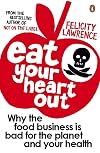
Monkeys eating their own testicles. The merits of omega-3s. Foods to avoid. The ineffectual food system controlled by supermarkets and the demand for cheaper food. The exploitation of developing nations. Antiquated legisalation and subsidies. Felicity Lawrence covers them all in Eat Your Heart Out, expanding on her previous work [b:Not on the Label: What Really Goes Into the Food on Your Plate|420162|Not on the Label What Really Goes Into the Food on Your Plate|Felicity show more Lawrence|http://d.gr-assets.com/books/1174587064s/420162.jpg|409296].
However, if you've read that then you'll find parts of Eat Your Heart Out repetitive by again describing our dependence on oil and fossil fuels, and noting the plight of farmers and processors at the hands of the supermarkets. But the author does eventually build on and update us on those issues, though perhaps Ms. Lawrence should've started her books off with 'Supermarkets are destroying food sustainability because... and are responsible for many other evils such as...' If you don't feel guilty about buying your groceries from them now, then you will once you've finished reading.
The System
Agricultural subsidies are benefiting large corporations (e.g. Tate & Lyle) and landowners and not the farmers who need them to survive, so we're seeing more and more farmers either selling up or going bankrupt, decreasing the number of competitors and sometimes creating monopolies leading supermarkets to search further afield for certain foods. For example, we'll soon have to import milk because dairymen are rapidly disappearing:
Developed countries are buying up land (for intensive farming) or plundering the seas of developing countries and are depleting and/or destroying their natural resources without taking responsibility by making an effort to minimize or repair the damage. Sometimes this action is in response to growing domestic legislation and increasing local labour costs.
Domestic labour costs are expensive so food processors get rid of British workers in favour of migrant workers both legal and otherwise:
Exploited migrant labour falls somewhere between servants and slaves as they're not paid a reliable or livable wage and are likely to suffer dangerous and deadly conditions.
Talking of slaves, Lawrence gives us a history lesson on the Atlantic slave trade as free labour for sugar production in the West Indies for British consumption by the rich. I suppose I'm a descendant of those slaves being that I'm half Bajan.
The Food
Are a majority of us omega-3 deficient?
Deprived monkeys self-harm. One tried to eat his own testicles. Experiments Lawrence describes are incredibly interesting, showing the substantial effects on physical and mental health. Diet changes in prison reflected a remarkable lowering of objectionable behaviour. Violence and depression decreased as levels of omega-3 increased. Today's diet is less varied and nutritious as it was fifty years ago and omega-3 is harder to come by other than in fish. Of course, other factors play a part but I think there's some merit to this theory.
FOODS TO AVOID:
Probiotics. They make you fat and aren't particularly healthy for you unless you have a digestive illness.
Acrylamide. A carcinogen present in starchy foods heated to high temps during processing, e.g. crisps, chips, and breakfast cereals.
Sugar in all its refined forms, including high fructose corn syrup, because it's addictive, fattening, causes diabetes, etc.
Baby formula, if possible. Eight months of exclusively bottle feeding results in 30,000 extra calories in the form of sugar, than consumed by breastfed babies. They're getting them hooked while they're young.
Commercial baby food. Sterilization caramelizes sugars in their fruit and veg.
'Low-fat' anything. Code for 'high in sugar'.
Aspartame, an artificial sweetener that has been found to be carcinogenic.
Endangered fish. Try to eat wild fish from the MSC sustainable list. Farmed seafood is rife with disease and heavy metals. Lawrence says the fish industry is committing suicide by willfully depleting wild fish stocks. She notes the red tape tying the hands of local fishermen (selling locally) illegally over-fishing to make ends meet as the bulk of quotas are allocated to the 'big fish' so to speak, forcing the little guys to either break the law or go out of business.
Margarine and its hydrogenated trans fat high cholesterol crap. Ironically, you're better off with butter than its substitutes which are less healthy.
Soya milk. Soya's oestrogens disrupt hormone balances (e.g. menstrual cycles) and damage the thyroid. Babies exclusively fed soya milk equates to them taking 5 birth control pills a day - which is unsafe. Not even children should be drinking it as they'll reach sexual maturity faster. For boys, oestrogen can negatively affect their fertility. It's possible it could be good for menopausal women and older men as it may help protect against heart disease, osteoporosis, and breast and prostate cancers.
Cereal. Most are high in sugar. Weetabix and porridge are best.
Standard milk. Organic grass-fed is healthier and more nutritious (68% more omega-3s) and the cows are treated better than this:
Consuming lots of low quality meat. Meat is an inefficient source of protein requiring a large amount of resources for small output, which due to intensive farming practices has been further devalued since the once lower fat white meat, like chicken, is now as fatty as red when the animals aren't free to exercise. Neither are they free to eat their natural diet and are instead fed grain, lowering the nutritional value of their meat, eggs and dairy. Also, cheap 'fresh' meat sometimes contains added sugar and water. I knew about the water, not the sugar.
BE AWARE:
✺ Male dairy calves are viewed as useless waste because they don't produce milk, there's little demand for veal and EU legislation and DEFRA policy allows them little recourse but to shoot them at birth. Why can't they be raised for beef? They're bred for high-producing dairy and give very little beef for the cost of resources to raise them - it doesn't make economic sense.
✺ Soya and its derivatives are in high demand for its uses in animal feed, ready meals, junk and fast food, but the price is the illegal clearing of the Amazon to grow it.
✺ Fruit's been engineered to be sweeter (e.g. red grapes 4% sweeter than in 1940s) sacrificing flavour and vitamins and minerals in the process. It may also be months old by the time it hits supermarket shelves - they've found a way to halt the ripening process.
✺ 75% of sugar is bought by industry rather than shoppers so it should be no surprise British teenage boys consume the equivalent of 1,000 colas or 11,800 sugar cubes per year.
The Future
Future prospects for the food industry are going to be shaped by the rising oil prices, climate change, China and India's rapid growth and changing diets, obesity and related illness, the 'short-termism' of governments, and the raised awareness among consumers changing the way we shop, resulting in more protests and campaigns for change. Yep, change is inevitable.
Lawrence really hammers home the dangers of the current system one day leaving us all starving to death if we don't change what and how we grow, rear and sell our food. Whatever happens, know we'll most likely have to pay more for it, and so we should. Remember, you get what you pay for. Hopefully, that will mean nutritious food free from chemicals produced by people paid a decent wage to treat animals with care. show less
However, if you've read that then you'll find parts of Eat Your Heart Out repetitive by again describing our dependence on oil and fossil fuels, and noting the plight of farmers and processors at the hands of the supermarkets. But the author does eventually build on and update us on those issues, though perhaps Ms. Lawrence should've started her books off with 'Supermarkets are destroying food sustainability because... and are responsible for many other evils such as...' If you don't feel guilty about buying your groceries from them now, then you will once you've finished reading.
The System
Agricultural subsidies are benefiting large corporations (e.g. Tate & Lyle) and landowners and not the farmers who need them to survive, so we're seeing more and more farmers either selling up or going bankrupt, decreasing the number of competitors and sometimes creating monopolies leading supermarkets to search further afield for certain foods. For example, we'll soon have to import milk because dairymen are rapidly disappearing:
'The irony for Colin Rank was that his cows were drinking water from a Cotswold spring that he could bottle and sell for 80p a litre, several times the price he could get for his milk. "We're giving it to cows and devaluing it by turning it into milk. Like all dairy farmers we could pack up tomorrow and do something better with our capital but we do it because we have an emotional investment in the land and the animals. And we know there's a market for our products if only the market worked."'
Developed countries are buying up land (for intensive farming) or plundering the seas of developing countries and are depleting and/or destroying their natural resources without taking responsibility by making an effort to minimize or repair the damage. Sometimes this action is in response to growing domestic legislation and increasing local labour costs.
Domestic labour costs are expensive so food processors get rid of British workers in favour of migrant workers both legal and otherwise:
'...cheap, dispensable labour had become structural to the economics of food manufacturing and processing. Companies didn't want to employ people directly, because to be the lowest cost producer you have to be able to turn off your labour at no cost whenever you want. You don't want to be saddled with expensive benefits such as pensions. And subcontracting chains enable you to hide how little you are paying.'
Exploited migrant labour falls somewhere between servants and slaves as they're not paid a reliable or livable wage and are likely to suffer dangerous and deadly conditions.
Talking of slaves, Lawrence gives us a history lesson on the Atlantic slave trade as free labour for sugar production in the West Indies for British consumption by the rich. I suppose I'm a descendant of those slaves being that I'm half Bajan.
The Food
Are a majority of us omega-3 deficient?
Deprived monkeys self-harm. One tried to eat his own testicles. Experiments Lawrence describes are incredibly interesting, showing the substantial effects on physical and mental health. Diet changes in prison reflected a remarkable lowering of objectionable behaviour. Violence and depression decreased as levels of omega-3 increased. Today's diet is less varied and nutritious as it was fifty years ago and omega-3 is harder to come by other than in fish. Of course, other factors play a part but I think there's some merit to this theory.
FOODS TO AVOID:
Probiotics. They make you fat and aren't particularly healthy for you unless you have a digestive illness.
Acrylamide. A carcinogen present in starchy foods heated to high temps during processing, e.g. crisps, chips, and breakfast cereals.
Sugar in all its refined forms, including high fructose corn syrup, because it's addictive, fattening, causes diabetes, etc.
Baby formula, if possible. Eight months of exclusively bottle feeding results in 30,000 extra calories in the form of sugar, than consumed by breastfed babies. They're getting them hooked while they're young.
Commercial baby food. Sterilization caramelizes sugars in their fruit and veg.
'Low-fat' anything. Code for 'high in sugar'.
Aspartame, an artificial sweetener that has been found to be carcinogenic.
Endangered fish. Try to eat wild fish from the MSC sustainable list. Farmed seafood is rife with disease and heavy metals. Lawrence says the fish industry is committing suicide by willfully depleting wild fish stocks. She notes the red tape tying the hands of local fishermen (selling locally) illegally over-fishing to make ends meet as the bulk of quotas are allocated to the 'big fish' so to speak, forcing the little guys to either break the law or go out of business.
Margarine and its hydrogenated trans fat high cholesterol crap. Ironically, you're better off with butter than its substitutes which are less healthy.
Soya milk. Soya's oestrogens disrupt hormone balances (e.g. menstrual cycles) and damage the thyroid. Babies exclusively fed soya milk equates to them taking 5 birth control pills a day - which is unsafe. Not even children should be drinking it as they'll reach sexual maturity faster. For boys, oestrogen can negatively affect their fertility. It's possible it could be good for menopausal women and older men as it may help protect against heart disease, osteoporosis, and breast and prostate cancers.
Cereal. Most are high in sugar. Weetabix and porridge are best.
Standard milk. Organic grass-fed is healthier and more nutritious (68% more omega-3s) and the cows are treated better than this:
'[Cows] have been so overbred for high yields that their mammary glands' capacity to produce milk exceeds their ability to digest enough nutrients to keep up ... they are operating at the limits of their physiology ... half intensively kept cows go lame in any one year, and 20 per cent in a herd are likely to go lame at any one time. 'Why? Standing on concrete for long periods, too heavy udders prone to mastitis requiring antibiotics and possibly causing infertility, and not enough space to lie down in.
Consuming lots of low quality meat. Meat is an inefficient source of protein requiring a large amount of resources for small output, which due to intensive farming practices has been further devalued since the once lower fat white meat, like chicken, is now as fatty as red when the animals aren't free to exercise. Neither are they free to eat their natural diet and are instead fed grain, lowering the nutritional value of their meat, eggs and dairy. Also, cheap 'fresh' meat sometimes contains added sugar and water. I knew about the water, not the sugar.
BE AWARE:
✺ Male dairy calves are viewed as useless waste because they don't produce milk, there's little demand for veal and EU legislation and DEFRA policy allows them little recourse but to shoot them at birth. Why can't they be raised for beef? They're bred for high-producing dairy and give very little beef for the cost of resources to raise them - it doesn't make economic sense.
✺ Soya and its derivatives are in high demand for its uses in animal feed, ready meals, junk and fast food, but the price is the illegal clearing of the Amazon to grow it.
✺ Fruit's been engineered to be sweeter (e.g. red grapes 4% sweeter than in 1940s) sacrificing flavour and vitamins and minerals in the process. It may also be months old by the time it hits supermarket shelves - they've found a way to halt the ripening process.
✺ 75% of sugar is bought by industry rather than shoppers so it should be no surprise British teenage boys consume the equivalent of 1,000 colas or 11,800 sugar cubes per year.
The Future
Future prospects for the food industry are going to be shaped by the rising oil prices, climate change, China and India's rapid growth and changing diets, obesity and related illness, the 'short-termism' of governments, and the raised awareness among consumers changing the way we shop, resulting in more protests and campaigns for change. Yep, change is inevitable.
Lawrence really hammers home the dangers of the current system one day leaving us all starving to death if we don't change what and how we grow, rear and sell our food. Whatever happens, know we'll most likely have to pay more for it, and so we should. Remember, you get what you pay for. Hopefully, that will mean nutritious food free from chemicals produced by people paid a decent wage to treat animals with care. show less
Awards


You May Also Like


Statistics
- Works
- 6
- Members
- 465
- Popularity
- #52,882
- Rating
- 4.0
- Reviews
- 16
- ISBNs
- 11
- Languages
- 2