
King James Version
Author of The Holy Bible: King James Version
About the Author
Disambiguation Notice:
This is the Bible translation, also known as the King James (Authorized) Version. Please do not combine versions with different books (for example, just the New Testament), with substantially different study materials, or with different translations (even if related, such as the NKJV). Do combine editions that are only different in format, print size, cover, etc.
Series
Works by King James Version
The Gospel According to St. John: The Authorized Version with Introduction and Notes (1880) 329 copies
The Revelation of St. John the Divine: The Holy Bible, King James Version (1611) 62 copies, 4 reviews
The Holy Bible, in four translations: King James version, New American Standard Bible, the New English Bible, the Jerusalem Bible (1972) 50 copies, 1 review
Good News America, God Loves You : The New Testament / A Marked Edition / King James Version (1983) 44 copies
Bíblia King James 1611 de Estudo Holman - Marrom com Preta (Em Portugues do Brasil) (2017) 17 copies
Comparative Bible New Testament Edition in Four Complete Versions (King James, American Standard, Revised Standard, & Confraternity) (1969) 13 copies
Holy Bible - The Dramatized New Testament - Authorized King James Version - (16 Audio Cassettes) (2002) 8 copies
The Comprehensive Bible 7 copies
Topical Reference Bible, Complete Analytical Study Edition, Crudens Concordance Dictionary, King James Version (1996) 4 copies
The New Testament a Marked Edition 3 copies
The Holy Bible. As printed by Robert Aitken and approved & recommended by the Congress of the United States of America in 1782 (1782) 2 copies
Psalms and Proverbs (video dvd 2003) with the Song of Solomon : King James Version / narrated by Stephen Johnston (2007) 2 copies
The Oxford Illustrated Old testament: Vol. 3 - Poetical Books - Job to Song of Solomon (1968) 2 copies
Ten Commandments 1 copy
The KJV Store Classic Wide Margin Study Bible (With C.I. Scofield Notes) - Lambskin Edition (2022) 1 copy
Easter Story 1 copy
The Song of Songs 1 copy
Compliments of Voice of Hope 1 copy
Nehemiah - KJV 1 copy
The Holy Bible KJV, bound with the Scottish church hymnary revised, metrical psalms and paraphrases of biblical verses 1 copy, 1 review
The Lord’s Prayer 1 copy
The Layman's Parallel Bible 1 copy
Holy Bible TBN Parallel Edition King James Version and New Living Translation (TBN Special Edition) (1997) 1 copy
The Four Gospels of the Lord Jesus Christ According to the Authorised Version of King James I 1 copy
John Calvin 1 copy
The Interlinear Bible, Volume 2: Hebrew/English--The Book of Exodus, with the King James Version (KJV) and JPS Translation (2005) 1 copy
The Parallel New Testament 1 copy
Tagged
Common Knowledge
- Canonical name
- King James Version
- Other names
- KJV
King James Bible
Authorized Version - Gender
- n/a
- Map Location
- UK
- Disambiguation notice
- This is the Bible translation, also known as the King James (Authorized) Version.
Please do not combine versions with different books (for example, just the New Testament), with substantially different study materials, or with different translations (even if related, such as the NKJV). Do combine editions that are only different in format, print size, cover, etc.
Members
Discussions
The Book of Tobit from the Apocrypha (Raven Press, 1931) in Fine Press Forum (October 2024)
Best dictionary for Early Modern English word definitions in the King James Bible? in Book talk (May 2022)
Reviews
After going into the Bible a few years back as a scofflaw atheist and coming out as someone with a healthy respect for the philosophy and stories of the Bible, particularly when rendered in that gorgeous King James prose, I opened the Apocrypha with an open mind. These are the ugly stepchildren of the Biblical corpus; texts that, for one reason or another, are considered non-canonical. Sometimes that is because they were meant to be read in private rather than in public service, sometimes show more because their authenticity was unclear, and mostly, I suspect, because in the various translations and denominations of Christianity over the millennia, they just got shuffled out of the pack.
After reading the Apocrypha, I do find myself wishing some had been expunged due to being too heretical. Because, even though it is also available in that King James prose, the book could do with some spice to it. From first to last I found the Apocrypha dull and tedious, and while some might have that impression of the canonical Bible, that was certainly not my impression of it when I finally sat down to reading it some years back. The Bible had the masterpiece that is the Book of Job, some neat origin stories in Genesis, the fiery books of Moses, eloquent philosophic rants like Jeremiah, to say nothing of the New Testament's 'Greatest Story Ever Told' and Revelation fever-dream. The Apocrypha had nothing like that, but it also didn't have much else. (And some other non-canonical books which sound interesting, like the Gnostic Gospels – particularly Thomas – and the Gospel of Judas, don't form part of the Apocrypha either.)
The Apocrypha starts off with the two books of Esdras, which are standard Old Testament fare about waging war on powerful enemies and coming through by the power of the Lord. They're interesting enough, but they don't do anything that the Books of the Kings don't do, and the Books of the Kings are far from the best stuff in the Bible. After a banal book called Tobit, there is the Book of Judith, which is the only part of the Apocrypha which threatens to actually be interesting for a moment (Judith seduces a warlord who is an enemy of the Jews, then beheads him in his bed in the night).
After that, there is a long scattergun sequence of books that are nothing very much, but at least are short (though all of the books in the Apocrypha are quite short). This is disappointing, and even a book called the Wisdom of Solomon, which should at least have a few good lines, is mostly just unreflective stuff about praising and trusting in God, lacking the nuance of many similar proverbs in, well, Proverbs.
The book ends with its two longest pieces – the two Books of the Maccabees. Like Esdras, these are banal narratives of fighting other desert tribes and trusting in God to help you smite them. It's sub-standard fare, lacking anything memorable. Ultimately, one can see why the Apocrypha is not part of the canonical Bible; there's just not much there for people to chew on, except for one or two of the more dedicated Biblical scholars. I maintain, not just due to its importance and influence but its objective quality, that the King James Bible should be on the reading list of anyone who is serious about literature. But the Apocrypha can be safely ignored. show less
After reading the Apocrypha, I do find myself wishing some had been expunged due to being too heretical. Because, even though it is also available in that King James prose, the book could do with some spice to it. From first to last I found the Apocrypha dull and tedious, and while some might have that impression of the canonical Bible, that was certainly not my impression of it when I finally sat down to reading it some years back. The Bible had the masterpiece that is the Book of Job, some neat origin stories in Genesis, the fiery books of Moses, eloquent philosophic rants like Jeremiah, to say nothing of the New Testament's 'Greatest Story Ever Told' and Revelation fever-dream. The Apocrypha had nothing like that, but it also didn't have much else. (And some other non-canonical books which sound interesting, like the Gnostic Gospels – particularly Thomas – and the Gospel of Judas, don't form part of the Apocrypha either.)
The Apocrypha starts off with the two books of Esdras, which are standard Old Testament fare about waging war on powerful enemies and coming through by the power of the Lord. They're interesting enough, but they don't do anything that the Books of the Kings don't do, and the Books of the Kings are far from the best stuff in the Bible. After a banal book called Tobit, there is the Book of Judith, which is the only part of the Apocrypha which threatens to actually be interesting for a moment (Judith seduces a warlord who is an enemy of the Jews, then beheads him in his bed in the night).
After that, there is a long scattergun sequence of books that are nothing very much, but at least are short (though all of the books in the Apocrypha are quite short). This is disappointing, and even a book called the Wisdom of Solomon, which should at least have a few good lines, is mostly just unreflective stuff about praising and trusting in God, lacking the nuance of many similar proverbs in, well, Proverbs.
The book ends with its two longest pieces – the two Books of the Maccabees. Like Esdras, these are banal narratives of fighting other desert tribes and trusting in God to help you smite them. It's sub-standard fare, lacking anything memorable. Ultimately, one can see why the Apocrypha is not part of the canonical Bible; there's just not much there for people to chew on, except for one or two of the more dedicated Biblical scholars. I maintain, not just due to its importance and influence but its objective quality, that the King James Bible should be on the reading list of anyone who is serious about literature. But the Apocrypha can be safely ignored. show less
It is important to remember when assessing this 'book' that it is not a book but a 'bible'. It is a collection of books, its title coming from the same Latin root that gives us 'library' (the heritage is more obvious in the French equivalent, bibliothèque). I mention this seemingly trivial fact because it leads into my whole assessment of the Bible. As a self-styled atheist or near-atheist, the Bible only really had an impression on me once I stopped seeing it as the word of God passed down show more (which can be easily scoffed at) and started seeing it as the words of men, telling stories to try and figure things out. Ignoring a dogmatic approach and appraising it as literature and, increasingly, as philosophy, I think I tapped into the wellspring of why the Bible has endured.
This was strange for me. Richard Dawkins' The God Delusion was a formative experience in my teenage years and I've always tried to hold myself to a standard of rationality and freethinking. So it was rather disturbing to me when my open-mindedness forced me to accept that when I actually got around to reading it, I was actually liking the Bible and taking a lot of worth from it.
I had two contemporary aids which I found myself leaning on when trying to understand why this was happening. The first – surprisingly – is the writing of Christopher Hitchens. The arch-atheist and public champion of secular rationality actually wrote glowingly of the King James Version of the Bible (codified in his essay 'When the King Saved God' – https://www.vanityfair.com/culture/2011/05/hitchens-201105) and, certainly, if you want the Bible to have value as literature you have to read the King James translation. It is not up for debate. This is the one with all the seemingly archaic 'thees' and 'thou shalts' and 'cometh unto ye', but such language is beautifully rendered and flows easily from an English tongue. It rings with a cleaner sound than the supposedly more 'modern' translations, which become dated as soon as they are printed, just as a Shakespearean soliloquy can still stir your soul in the 21st century where slam poetry can't. The legacy of this translation in the English oral and literary tradition, from Shakespeare onwards, is unparalleled. If you are serious about literature, you have to read the KJV.
Indeed, my desire to retain my self-respect as an amateur bookworm is what made reading the King James Bible an ambition of mine. To qualify some of the heritage of my language – perhaps the most flexible of languages and certainly the most historically important – was what I expected. And it was what I got. But more than that, I found I was increasingly enjoying the book's lessons, its philosophy and its underlying themes. This is where the second contemporary aid proved useful: Jordan B. Peterson. Less surprising, perhaps, than Hitchens, for those who have engaged with some of this Canadian professor's talks and writings over the last couple of years, but still not entirely regular. Peterson is best-known for his 'self-help' stuff (a massive over-simplification, but I won't go into that here). But he also has a huge body of academic work on the psychology of religion and why such stories resonate with us, and (as a bookworm) it is often this rather than the 'tidy your damn room' stuff which has interested me. I began to find I was reading the Bible – still trying to come to terms with how it was so different from my preconceptions – as literature and as philosophy rather than from the point-of-view of a scofflaw atheist.
And it works on that level. In admiring the Bible, it's not that I've seen the power and the glory and I'm on board with the Light and the Word and I'll be going to church tomorrow, praise the Lord. I won't be. And anyone who thinks I am no longer a rationalist and have become someone who is willing to entertain hocus pocus would be mistaken. But I've been dipping into the Bible on and off over the past year and I have had to admit – at first ruefully and then increasingly unashamedly – that I've really enjoyed it. It's not that I've gone into it thinking, 'this is the Word of God and I have to accept it as truth regardless of what I think'. Instead, it's that I've gone into it and my mind has become shaped by the thoughts: 'these are the words of men and though I don't believe it's literal truth, there is a lot here to appreciate'.
And it is true that there is a lot to scoff at and even some to despise. This is a bible, after all; a library, a compendium, a collection. And like any library, some books on the shelves will be better than others. The Bible starts with Genesis and the four other Books of Moses – Exodus, Leviticus, Numbers and Deuteronomy. This is where it seems that, for many, the Bible's reputation is made. Some original and interesting creation stories, backed with some sound prose, that serves as the strong foundation of the Judeo-Christian faith. These are also the books where there are some rather iffy lines ('thou shalt not suffer a witch to live' is thrown in randomly among a bunch of some-stern and some-innocuous rules in Exodus, for example) and sickening events (Moses' war crimes, for example, or Lot's daughter, who is offered up by her father, the 'last good man in Sodom', to be gang-raped by a mob in order to spare his guests – two angels sent by God – from the same fate) that betray a morality you would not want to abide by. Couple this with some interminable passages in which such-and-such begat such-and-such, son of such-and-such, who begat such-and-such (for pages and pages), and laborious passages on the right way to go about minor rituals about sacrifices and unleavened bread, and you see why atheist mockery has such ample feeding ground. By this point a love-and-hate relationship with the Bible is established with the reader, something reinforced by the books which follow, including the Books of the Kings, which is all more of the same.
Things began to change for me with the Book of Job. Particularly when rendered in the KJV, this book is an absolute masterpiece of literature, and only slightly less so as a piece of philosophy. This was the point where I started to take seriously my reassessment of the Bible and began to embrace its ability to provide for metaphysical and transcendental moments. This is where I began to delve into Peterson's remarks about the Biblical storytelling tradition, particularly when infused into his 'self-help' lectures. From Job onwards, I began to recognize how many of the stories were about challenging God (which is what the name 'Israel' means) and being in conflict with God and, through this fight, becoming someone new and ascendant. There is a strain of individualism that starts to become very apparent, only reinforced by the eloquent and entertaining rants in the books of the Prophets (Ecclesiastes, Isaiah, Jeremiah and Ezekiel) which follow. Add to this the lyricism of the Book of Psalms and the Proverbs, and the message throughout that doom will manifest on an individual and societal level if you do not take on this mantle and improve yourself (thanks to Dr. Peterson, again), and by this point I was seriously impressed. If you read only one book in the Bible, make it the Book of Job. It is the key.
This summarizes the thick wodge of paper that is the Old Testament and, to be honest, I actually prefer it to the New Testament. The New Testament is much shorter (about 250 pages compared to the approximately 870 of the Old) but the imperial joy I felt from reading parts of the Old Testament began to dissipate, even though I was completely on board by this point and putting my atheism to the side. The New Testament is still good, and in the figure of the Christ we have the embodiment of the individual 'ideal' to aspire to, which forms a continuation of the strain of individualism I so enjoyed in the Old books. In the story of the crucifixion we have, if not 'the greatest story ever told', then certainly a strong contender for it.
Furthermore, the line from the Gospel according to St. Matthew, when Jesus is being tortured on the cross and cries aloud to God, "Why hast thou forsaken me?" (Matthew 27:46), is – especially in context – the most heart-breaking line in all literature. A close second is the scene the night before his arrest, when Jesus, knowing exactly what he is going to suffer on the cross, asks God to remove this obligation from him – "let this cup pass from me" (Matthew 26:39) – but, if He cannot, to give him the strength not to falter ("the spirit indeed is willing, but the flesh is weak" – Matthew 26:41). Monty Python were of the right mind when they said that Life of Brian evolved from being a lampooning of Jesus to being a mockery of his dim followers because there wasn't really anything funny about Christ, and that he had some good lessons.
Thinking historically and anthropologically, I also enjoyed the lesson that all men are equal before God, relative to their good or bad deeds. It is a hugely emancipating lesson and I don't know if Western civilization would have advanced beyond tribalism and monarchy and rigid class structure if not for the fact that its founding document had this imperishable kernel of the sovereignty of the individual built into it. But if I continue in that vein, I might as well just direct you to a Jordan Peterson video on YouTube, so I won't.
The problem I had with the New Testament is that whilst it is still a case of people telling stories to one another to try and figure things out, the people in question are becoming increasingly aware of that fact. A lot of Jesus' sayings are clearly inspired by passages from the Old Testament (particularly the books of the Prophets), and the secular response would be that Jesus was a man, rather than the Christ, who assimilated and taught the old lessons well, passing them off as his own. But that's fine – Jesus was clearly a man of fortitude and brotherly love, regardless of his divinity or otherwise.
Rather, it is the books of the Bible following the Gospels which disappointed me. I subscribe to what I call the John Lennon school of thought, which is that Jesus is alright but the disciples come along and ruin it. There are still some good lines, but they bastardize the message not only of Jesus but of the better Old Testament books. I didn't mind the Book of Revelation so much, sick and strange as it is, though I wouldn't want John the Revelator looking after any small children. Instead, it is the Epistles of St. Paul and the other contributions by the apostles which are damaging. The increasingly naked anti-Semitism (and I've read the KJV is actually rather tame compared to other versions) placed a grain of evil in Christianity which laid the first slat on the railroad to Auschwitz, the great failure of Western civilization in the 20th century, which we still have not recovered from.
Paul's epistles also introduce a missionary zeal completely contrary to the individualism of both the Old Testament and the example of the Christ. The establishment of the church and the ministry is the other great Christian error. It took away from the individual whom Christ was set up to represent, perhaps irrevocably. 2nd Peter also says that the Word is not up for interpretation (2 Peter 1:20-21), thereby making dogma rather than liberality the Christian code from then on. St. Paul can turn a phrase, but the Apostles did more harm than good. In some crucial ways, they were dim and dogmatic and closed-minded. (C. K. Stead's short novel My Name Was Judas is great on this.)
Thinking about this sad end to the Bible, with its perversion of all that came before, I was inclined to be unkind in this review. But, ironically, it is one of the lines from these later books, the Epistle of Paul to Titus, which encapsulates why I am unwilling to do so. "And let ours also learn to maintain good works for necessary uses, that they be not unfruitful," says Titus 3:14, and this is why I am unwilling to judge the quality of the library by its least members. There is a lot to embrace in the Bible, from the archetypal stories to the lyricism to the masterpiece of Job to the idea of the sovereignty of the individual. Not to mention its role as one of the two founding pillars of Western civilization. To return to Hitchens, he wrote a few times of the values of the two cities of Athens and Jerusalem, to juxtapose the values of the Enlightenment to the role of Christianity in Western history. But increasingly, I am of the mind that you need both of these pillars; that a secular rationalism is not enough, and placing all the weight on that one pillar of the Enlightenment and the Classical tradition will cause it to wobble. We saw that in the 20th century, as predicted by Nietzsche, when nationalism and socialism and commercialism failed (and continue to fail) to adequately replace religion as a source of meaning.
There is humanism, of course, which is the right idea, but humanism has to embrace Christianity as much as rationality. It needs to be placed lengthways along both pillars in order to serve as the next foundation. You need the balance. People have a need which is emotional, metaphysical, and spiritual, alongside the intellectual and rational need. I am not in any way trying to explain away the horrors of religion which have been wrought throughout history or, for example, the problems involved in Jesus' injunction to believe solely in him, which could easily lead to the despotic, but the Christian tradition at its best had a deep philosophical meaning and sense of individualism. There's a lot about ascension in the New Testament, birthed from the Old, and not just in Revelation. And Christianity is arguably better than the other religions. Certainly, given its history, it has proven it can work in line with the secular tradition, even if that history has not always been an easy one. The test going forward for a rehabilitated Christianity (for I think that is the best possible outcome) will be in whether it can embrace the second pillar of rationality, whether it can resist the hostility to blasphemy and the overly-dogmatic thinking which characterized it when it was 'in charge' in the West. (One simple test might be: 'Can you laugh along with Life of Brian?')
Some secular atheists say, somewhat complacently, that you can make a believer into an atheist if you only get them to read the Bible. Whilst the opposite isn't true (I'm still an atheist), the near-opposite is. Reading the book from a secular point-of-view leads you to assess it as story: as literature and, through its themes, as philosophy. And it stands. As a piece of literature, it stands. And you might be so caught up in it at times that you believe it's real. That, after all, is what the best stories do to us. show less
This was strange for me. Richard Dawkins' The God Delusion was a formative experience in my teenage years and I've always tried to hold myself to a standard of rationality and freethinking. So it was rather disturbing to me when my open-mindedness forced me to accept that when I actually got around to reading it, I was actually liking the Bible and taking a lot of worth from it.
I had two contemporary aids which I found myself leaning on when trying to understand why this was happening. The first – surprisingly – is the writing of Christopher Hitchens. The arch-atheist and public champion of secular rationality actually wrote glowingly of the King James Version of the Bible (codified in his essay 'When the King Saved God' – https://www.vanityfair.com/culture/2011/05/hitchens-201105) and, certainly, if you want the Bible to have value as literature you have to read the King James translation. It is not up for debate. This is the one with all the seemingly archaic 'thees' and 'thou shalts' and 'cometh unto ye', but such language is beautifully rendered and flows easily from an English tongue. It rings with a cleaner sound than the supposedly more 'modern' translations, which become dated as soon as they are printed, just as a Shakespearean soliloquy can still stir your soul in the 21st century where slam poetry can't. The legacy of this translation in the English oral and literary tradition, from Shakespeare onwards, is unparalleled. If you are serious about literature, you have to read the KJV.
Indeed, my desire to retain my self-respect as an amateur bookworm is what made reading the King James Bible an ambition of mine. To qualify some of the heritage of my language – perhaps the most flexible of languages and certainly the most historically important – was what I expected. And it was what I got. But more than that, I found I was increasingly enjoying the book's lessons, its philosophy and its underlying themes. This is where the second contemporary aid proved useful: Jordan B. Peterson. Less surprising, perhaps, than Hitchens, for those who have engaged with some of this Canadian professor's talks and writings over the last couple of years, but still not entirely regular. Peterson is best-known for his 'self-help' stuff (a massive over-simplification, but I won't go into that here). But he also has a huge body of academic work on the psychology of religion and why such stories resonate with us, and (as a bookworm) it is often this rather than the 'tidy your damn room' stuff which has interested me. I began to find I was reading the Bible – still trying to come to terms with how it was so different from my preconceptions – as literature and as philosophy rather than from the point-of-view of a scofflaw atheist.
And it works on that level. In admiring the Bible, it's not that I've seen the power and the glory and I'm on board with the Light and the Word and I'll be going to church tomorrow, praise the Lord. I won't be. And anyone who thinks I am no longer a rationalist and have become someone who is willing to entertain hocus pocus would be mistaken. But I've been dipping into the Bible on and off over the past year and I have had to admit – at first ruefully and then increasingly unashamedly – that I've really enjoyed it. It's not that I've gone into it thinking, 'this is the Word of God and I have to accept it as truth regardless of what I think'. Instead, it's that I've gone into it and my mind has become shaped by the thoughts: 'these are the words of men and though I don't believe it's literal truth, there is a lot here to appreciate'.
And it is true that there is a lot to scoff at and even some to despise. This is a bible, after all; a library, a compendium, a collection. And like any library, some books on the shelves will be better than others. The Bible starts with Genesis and the four other Books of Moses – Exodus, Leviticus, Numbers and Deuteronomy. This is where it seems that, for many, the Bible's reputation is made. Some original and interesting creation stories, backed with some sound prose, that serves as the strong foundation of the Judeo-Christian faith. These are also the books where there are some rather iffy lines ('thou shalt not suffer a witch to live' is thrown in randomly among a bunch of some-stern and some-innocuous rules in Exodus, for example) and sickening events (Moses' war crimes, for example, or Lot's daughter, who is offered up by her father, the 'last good man in Sodom', to be gang-raped by a mob in order to spare his guests – two angels sent by God – from the same fate) that betray a morality you would not want to abide by. Couple this with some interminable passages in which such-and-such begat such-and-such, son of such-and-such, who begat such-and-such (for pages and pages), and laborious passages on the right way to go about minor rituals about sacrifices and unleavened bread, and you see why atheist mockery has such ample feeding ground. By this point a love-and-hate relationship with the Bible is established with the reader, something reinforced by the books which follow, including the Books of the Kings, which is all more of the same.
Things began to change for me with the Book of Job. Particularly when rendered in the KJV, this book is an absolute masterpiece of literature, and only slightly less so as a piece of philosophy. This was the point where I started to take seriously my reassessment of the Bible and began to embrace its ability to provide for metaphysical and transcendental moments. This is where I began to delve into Peterson's remarks about the Biblical storytelling tradition, particularly when infused into his 'self-help' lectures. From Job onwards, I began to recognize how many of the stories were about challenging God (which is what the name 'Israel' means) and being in conflict with God and, through this fight, becoming someone new and ascendant. There is a strain of individualism that starts to become very apparent, only reinforced by the eloquent and entertaining rants in the books of the Prophets (Ecclesiastes, Isaiah, Jeremiah and Ezekiel) which follow. Add to this the lyricism of the Book of Psalms and the Proverbs, and the message throughout that doom will manifest on an individual and societal level if you do not take on this mantle and improve yourself (thanks to Dr. Peterson, again), and by this point I was seriously impressed. If you read only one book in the Bible, make it the Book of Job. It is the key.
This summarizes the thick wodge of paper that is the Old Testament and, to be honest, I actually prefer it to the New Testament. The New Testament is much shorter (about 250 pages compared to the approximately 870 of the Old) but the imperial joy I felt from reading parts of the Old Testament began to dissipate, even though I was completely on board by this point and putting my atheism to the side. The New Testament is still good, and in the figure of the Christ we have the embodiment of the individual 'ideal' to aspire to, which forms a continuation of the strain of individualism I so enjoyed in the Old books. In the story of the crucifixion we have, if not 'the greatest story ever told', then certainly a strong contender for it.
Furthermore, the line from the Gospel according to St. Matthew, when Jesus is being tortured on the cross and cries aloud to God, "Why hast thou forsaken me?" (Matthew 27:46), is – especially in context – the most heart-breaking line in all literature. A close second is the scene the night before his arrest, when Jesus, knowing exactly what he is going to suffer on the cross, asks God to remove this obligation from him – "let this cup pass from me" (Matthew 26:39) – but, if He cannot, to give him the strength not to falter ("the spirit indeed is willing, but the flesh is weak" – Matthew 26:41). Monty Python were of the right mind when they said that Life of Brian evolved from being a lampooning of Jesus to being a mockery of his dim followers because there wasn't really anything funny about Christ, and that he had some good lessons.
Thinking historically and anthropologically, I also enjoyed the lesson that all men are equal before God, relative to their good or bad deeds. It is a hugely emancipating lesson and I don't know if Western civilization would have advanced beyond tribalism and monarchy and rigid class structure if not for the fact that its founding document had this imperishable kernel of the sovereignty of the individual built into it. But if I continue in that vein, I might as well just direct you to a Jordan Peterson video on YouTube, so I won't.
The problem I had with the New Testament is that whilst it is still a case of people telling stories to one another to try and figure things out, the people in question are becoming increasingly aware of that fact. A lot of Jesus' sayings are clearly inspired by passages from the Old Testament (particularly the books of the Prophets), and the secular response would be that Jesus was a man, rather than the Christ, who assimilated and taught the old lessons well, passing them off as his own. But that's fine – Jesus was clearly a man of fortitude and brotherly love, regardless of his divinity or otherwise.
Rather, it is the books of the Bible following the Gospels which disappointed me. I subscribe to what I call the John Lennon school of thought, which is that Jesus is alright but the disciples come along and ruin it. There are still some good lines, but they bastardize the message not only of Jesus but of the better Old Testament books. I didn't mind the Book of Revelation so much, sick and strange as it is, though I wouldn't want John the Revelator looking after any small children. Instead, it is the Epistles of St. Paul and the other contributions by the apostles which are damaging. The increasingly naked anti-Semitism (and I've read the KJV is actually rather tame compared to other versions) placed a grain of evil in Christianity which laid the first slat on the railroad to Auschwitz, the great failure of Western civilization in the 20th century, which we still have not recovered from.
Paul's epistles also introduce a missionary zeal completely contrary to the individualism of both the Old Testament and the example of the Christ. The establishment of the church and the ministry is the other great Christian error. It took away from the individual whom Christ was set up to represent, perhaps irrevocably. 2nd Peter also says that the Word is not up for interpretation (2 Peter 1:20-21), thereby making dogma rather than liberality the Christian code from then on. St. Paul can turn a phrase, but the Apostles did more harm than good. In some crucial ways, they were dim and dogmatic and closed-minded. (C. K. Stead's short novel My Name Was Judas is great on this.)
Thinking about this sad end to the Bible, with its perversion of all that came before, I was inclined to be unkind in this review. But, ironically, it is one of the lines from these later books, the Epistle of Paul to Titus, which encapsulates why I am unwilling to do so. "And let ours also learn to maintain good works for necessary uses, that they be not unfruitful," says Titus 3:14, and this is why I am unwilling to judge the quality of the library by its least members. There is a lot to embrace in the Bible, from the archetypal stories to the lyricism to the masterpiece of Job to the idea of the sovereignty of the individual. Not to mention its role as one of the two founding pillars of Western civilization. To return to Hitchens, he wrote a few times of the values of the two cities of Athens and Jerusalem, to juxtapose the values of the Enlightenment to the role of Christianity in Western history. But increasingly, I am of the mind that you need both of these pillars; that a secular rationalism is not enough, and placing all the weight on that one pillar of the Enlightenment and the Classical tradition will cause it to wobble. We saw that in the 20th century, as predicted by Nietzsche, when nationalism and socialism and commercialism failed (and continue to fail) to adequately replace religion as a source of meaning.
There is humanism, of course, which is the right idea, but humanism has to embrace Christianity as much as rationality. It needs to be placed lengthways along both pillars in order to serve as the next foundation. You need the balance. People have a need which is emotional, metaphysical, and spiritual, alongside the intellectual and rational need. I am not in any way trying to explain away the horrors of religion which have been wrought throughout history or, for example, the problems involved in Jesus' injunction to believe solely in him, which could easily lead to the despotic, but the Christian tradition at its best had a deep philosophical meaning and sense of individualism. There's a lot about ascension in the New Testament, birthed from the Old, and not just in Revelation. And Christianity is arguably better than the other religions. Certainly, given its history, it has proven it can work in line with the secular tradition, even if that history has not always been an easy one. The test going forward for a rehabilitated Christianity (for I think that is the best possible outcome) will be in whether it can embrace the second pillar of rationality, whether it can resist the hostility to blasphemy and the overly-dogmatic thinking which characterized it when it was 'in charge' in the West. (One simple test might be: 'Can you laugh along with Life of Brian?')
Some secular atheists say, somewhat complacently, that you can make a believer into an atheist if you only get them to read the Bible. Whilst the opposite isn't true (I'm still an atheist), the near-opposite is. Reading the book from a secular point-of-view leads you to assess it as story: as literature and, through its themes, as philosophy. And it stands. As a piece of literature, it stands. And you might be so caught up in it at times that you believe it's real. That, after all, is what the best stories do to us. show less
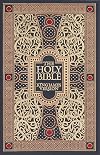
Ah the Bible. This particular version is the King James version of 1611. Contained within this volume are illustrations of biblical passages, a history of the King James Translation as a whole, and the entire text of the Bible in tiny print. I guess I have a love/hate relationship with this book, since a great deal of it has always confused and angered me. Perhaps wiser people than I can enlighten me about the purpose of hell to a loving and all forgiving God. But no matter, we have Jesus show more right? The guy that cursed a fig tree for no reason.
Okay, I would say I am a religious skeptic, but that would be an understatement. I started my doubts when I was around ten or eleven years of age. Back then I distinctly remember finding Church service depressing. Oh don't get me wrong, it was boring, but that isn't what bothered me. I hated the way of worship itself. All the bowing and scraping to the "All Mighty God" seemed stupid to me. The tone is all wrong for what we are saying. What evidence is there of a God that actually cares for us one whit? Isn't God supposed to want our happiness? Why isn't Church fun? These are the things that bothered me as a child. Even if I was to pray, what does that mean to God at all? It's not like anything ever happened due to prayer. It can't be proven to have any effect, and in some cases it is actually detrimental. Take the Christian Scientist. Certainly prayer offers a piece of mind, a crutch to stand on, hope for the future, but healing a disease? Ridiculous. My great-grandfather was a Christian Scientist. He had a massive buildup of water in his lungs and body, but refused to go to a doctor. Then my great-grandmother went and said she was leaving him if he didn't go since she didn't want to go and bury another husband. The doctors removed over forty pounds of fluid from his body.
So these are the things that bothered me as a child. Take the Biblical story of the Fall of Mankind for instance. How in the seven seas does God not know what is happening to his creation at any given time if he is supposed to be omniscient? Does that mean something other than knowing everything that is to happen? Why does he ask these stupid questions? Doesn't he know that some random demon or creature in the form of a snake told Eve to eat a fruit from the Tree of the Knowledge of Good and Evil? Moreover, if he is Omniscient, what does that do to Free Will? This is only the story of the fall, I'm just getting started.
So God made it so that childbirth would be painful. I think some web cartoonist summed it up best when they had Eve sardonically comment that having a child come out of your vagina was going to hurt now and not before. So anyway, we have more of the Bible being vague and useless. Where do the other people come from? Are you seriously telling me that Eve had enough sex with Adam to populate entire villages? Or did God make more human beings that aren't mentioned? I guess the bible does mention that Adam lived for ... what was that figure... something around 900 years, so they might have had time. Still kind of disturbing with all of the incest though.
Then we get to Abraham. So God blesses him in his old age with a son, and in a typically Bipolar manner demands that Abraham kill him as a sacrifice. I know this is written off as some kind of test of faith, but I can't help feeling from this and other stories that God just enjoys screwing with people. Take Job for instance. Job was all happy and a great follower of God. Then the Devil who just so happens to be on speaking terms with God has a little talk and convinces God to "taketh away." Horrible things happen to Job, his family is killed, maimed and enslaved. His property is destroyed or killed. He develops horrible boils and disfiguring ailments that make his life a terrible living hell. Then he continues worshiping God and God is all like "This was only a test of the emergency broadcast system" and gives him back all of his stuff. As if a family can be replaced.
Did I miss Noah? I probably missed Noah. So God commands some guy named Noah to build a giant boat to put all the beasts of land and air into so that God can do a clean reinstall of the Earth. Noah does this. His boat is not only big enough to house all of the beasts, but also food for them and his family. I don't know how long a cubit is, but I was told that it was roughly the distance from your elbow to the tip of your middle finger. I just never believed that a boat like that could hold all of creation.
So we get to Lot. Sodom and Gomorrah were cities back in the day. God hated them though and wanted to destroy them, since he is filled with so much love. So God spares Lot and his family, but tells them not to look back or else. So God doesn't understand human nature huh? God doesn't realize that when your home is being destroyed by fire from the sky that people are going to look at the spectacle? So God turns Lot's Wife (who doesn't even get the dignity of a name) into a pillar of salt. Seems like God just wanted an excuse to go and turn someone into a pillar of salt to me. That doesn't end the tale of Lot though. His daughters want some offspring and get their father drunk enough to sleep with both of them. Read that sentence again. Lot's daughters somehow get Lot so drunk that he doesn't realize he is having sex with them. And God doesn't care, or at least he doesn't seem to.
New testament stuff is all good though right? Right. Jesus talks about how the fires of hell will consume you and how you should abandon everything to follow him for no reason. One minute he talks of turning the other cheek and in the next he is whipping people that set up shop in "his father's house." Seems legit. Most of the New Testament is about the early Church right? Letters to Bishops and other stories. Then you have The Revelation of St. John the Divine, which I guess I thought was cool when I was younger. The weird drug fueled beasts, the end of days, blah blah... all of that stuff seemed really cool I guess. I was a pretty weird kid. His other miracles are suspect too. Like the multiplication of loaves and fishes. They even tried to explain that miracle to me by saying that it was the miracle of sharing. He did the water to wine thing though right? The raising of the dead? Making the blind to see? Curing leprosy? Wow. Couldn't he do something better? Flying might be neat. Though I guess he did calm a storm and walk on water.
Then there is the whole Judas thing. So basically in order for Jesus to even die for our sins, someone had to be the heel right? Why isn't he venerated as the greatest of the apostles, the only one that followed through with his destiny and allowed us to be saved? Peter denied being Jesus' friend three times, none of the Apostles besides John were with him in his time of need. Oh that's right, he "betrayed" Jesus for silver. Blah. This is enough for the ultimate forgiveness of putting him in the ninth circle of Hell, where he is chewed on by one of Satan's three mouths for all eternity. He loves you so much after all. Then again, I am taking that scene from Inferno by Dante...
So basically, I really doubt that Jesus was the son of God born of a virgin. I don't doubt that he existed, since there might be census records and things. His acts don't really make me believe, and the acts done in his name aren't really flattering his memory.
So all in all, the Bible is ... okay. There is stuff in there that might have happened with artistic license. But it is quite a silly book to base a faith on when someone is capable of reading what it says. Two out of five, miiiiiight read again. Who knows. show less
Okay, I would say I am a religious skeptic, but that would be an understatement. I started my doubts when I was around ten or eleven years of age. Back then I distinctly remember finding Church service depressing. Oh don't get me wrong, it was boring, but that isn't what bothered me. I hated the way of worship itself. All the bowing and scraping to the "All Mighty God" seemed stupid to me. The tone is all wrong for what we are saying. What evidence is there of a God that actually cares for us one whit? Isn't God supposed to want our happiness? Why isn't Church fun? These are the things that bothered me as a child. Even if I was to pray, what does that mean to God at all? It's not like anything ever happened due to prayer. It can't be proven to have any effect, and in some cases it is actually detrimental. Take the Christian Scientist. Certainly prayer offers a piece of mind, a crutch to stand on, hope for the future, but healing a disease? Ridiculous. My great-grandfather was a Christian Scientist. He had a massive buildup of water in his lungs and body, but refused to go to a doctor. Then my great-grandmother went and said she was leaving him if he didn't go since she didn't want to go and bury another husband. The doctors removed over forty pounds of fluid from his body.
So these are the things that bothered me as a child. Take the Biblical story of the Fall of Mankind for instance. How in the seven seas does God not know what is happening to his creation at any given time if he is supposed to be omniscient? Does that mean something other than knowing everything that is to happen? Why does he ask these stupid questions? Doesn't he know that some random demon or creature in the form of a snake told Eve to eat a fruit from the Tree of the Knowledge of Good and Evil? Moreover, if he is Omniscient, what does that do to Free Will? This is only the story of the fall, I'm just getting started.
So God made it so that childbirth would be painful. I think some web cartoonist summed it up best when they had Eve sardonically comment that having a child come out of your vagina was going to hurt now and not before. So anyway, we have more of the Bible being vague and useless. Where do the other people come from? Are you seriously telling me that Eve had enough sex with Adam to populate entire villages? Or did God make more human beings that aren't mentioned? I guess the bible does mention that Adam lived for ... what was that figure... something around 900 years, so they might have had time. Still kind of disturbing with all of the incest though.
Then we get to Abraham. So God blesses him in his old age with a son, and in a typically Bipolar manner demands that Abraham kill him as a sacrifice. I know this is written off as some kind of test of faith, but I can't help feeling from this and other stories that God just enjoys screwing with people. Take Job for instance. Job was all happy and a great follower of God. Then the Devil who just so happens to be on speaking terms with God has a little talk and convinces God to "taketh away." Horrible things happen to Job, his family is killed, maimed and enslaved. His property is destroyed or killed. He develops horrible boils and disfiguring ailments that make his life a terrible living hell. Then he continues worshiping God and God is all like "This was only a test of the emergency broadcast system" and gives him back all of his stuff. As if a family can be replaced.
Did I miss Noah? I probably missed Noah. So God commands some guy named Noah to build a giant boat to put all the beasts of land and air into so that God can do a clean reinstall of the Earth. Noah does this. His boat is not only big enough to house all of the beasts, but also food for them and his family. I don't know how long a cubit is, but I was told that it was roughly the distance from your elbow to the tip of your middle finger. I just never believed that a boat like that could hold all of creation.
So we get to Lot. Sodom and Gomorrah were cities back in the day. God hated them though and wanted to destroy them, since he is filled with so much love. So God spares Lot and his family, but tells them not to look back or else. So God doesn't understand human nature huh? God doesn't realize that when your home is being destroyed by fire from the sky that people are going to look at the spectacle? So God turns Lot's Wife (who doesn't even get the dignity of a name) into a pillar of salt. Seems like God just wanted an excuse to go and turn someone into a pillar of salt to me. That doesn't end the tale of Lot though. His daughters want some offspring and get their father drunk enough to sleep with both of them. Read that sentence again. Lot's daughters somehow get Lot so drunk that he doesn't realize he is having sex with them. And God doesn't care, or at least he doesn't seem to.
New testament stuff is all good though right? Right. Jesus talks about how the fires of hell will consume you and how you should abandon everything to follow him for no reason. One minute he talks of turning the other cheek and in the next he is whipping people that set up shop in "his father's house." Seems legit. Most of the New Testament is about the early Church right? Letters to Bishops and other stories. Then you have The Revelation of St. John the Divine, which I guess I thought was cool when I was younger. The weird drug fueled beasts, the end of days, blah blah... all of that stuff seemed really cool I guess. I was a pretty weird kid. His other miracles are suspect too. Like the multiplication of loaves and fishes. They even tried to explain that miracle to me by saying that it was the miracle of sharing. He did the water to wine thing though right? The raising of the dead? Making the blind to see? Curing leprosy? Wow. Couldn't he do something better? Flying might be neat. Though I guess he did calm a storm and walk on water.
Then there is the whole Judas thing. So basically in order for Jesus to even die for our sins, someone had to be the heel right? Why isn't he venerated as the greatest of the apostles, the only one that followed through with his destiny and allowed us to be saved? Peter denied being Jesus' friend three times, none of the Apostles besides John were with him in his time of need. Oh that's right, he "betrayed" Jesus for silver. Blah. This is enough for the ultimate forgiveness of putting him in the ninth circle of Hell, where he is chewed on by one of Satan's three mouths for all eternity. He loves you so much after all. Then again, I am taking that scene from Inferno by Dante...
So basically, I really doubt that Jesus was the son of God born of a virgin. I don't doubt that he existed, since there might be census records and things. His acts don't really make me believe, and the acts done in his name aren't really flattering his memory.
So all in all, the Bible is ... okay. There is stuff in there that might have happened with artistic license. But it is quite a silly book to base a faith on when someone is capable of reading what it says. Two out of five, miiiiiight read again. Who knows. show less

This really isn't something you can "review" as such, so I'm just gonna scribble down some of my thoughts in no particular order now that I've finally reached the end of this eight month journey.
1. Anyone who tells you to simply "read the Bible", with the expectation that it will change your faith has gotta be more specific. Not saying I didn't learn anything, the read certainly helped me understand a lot more about where we come from as a cultural tradition, but I didn't find anything that show more challenged me spiritually or belief-wise.
2. Whoever edited this needs to take a literal page from Tolkien and move some of this stuff to the appendices. Too often an engaging narrative will be interrupted by a long-ass genealogy or extremely specific measurements for a tabernacle or a census or some other highly uninteresting minutiae.
3. I was not ready for the use of "circumcised" and "uncircumcised" as shorthand for "holy" and "not holy". Moses telling God that he was not worthy to speak of him, citing his "uncircumcised lips" THREW me.
4. Reading the Bible really brings out the absurdity of the claim that it's in any way the literal word of God, or dictated by God, or perfect and complete. It's very obviously written by human hands, many of them at that, over hundreds of years. As one of my favourite Youtube channels (Esoterica) pointed out, the Bible works best when thought of not as a book but a library.
4. The darkest part: If God tells you to enact a genocide, does that mean it's not only morally right, but morally REQUIRED to do so? What could have been an interesting question about ancient belief systems becomes highly disturbing in light of current events.
5. You know that "Rivers of Babylon" song by Boney M? It's a bop, right? Do NOT look up the second half of the psalm the lyrics are based on.
6. It slays me that one of the big conflicts Jesus had with the establishment was about him not washing his hands before eating. Like I get what you're going for with the analogy, what goes into us is not what defiles up, but what comes out, our words and actions and all that. But dude, you gotta wash your hands.
7. Paul, you had me at "interminable genealogies".
8. At times, I thought that reading this would give me the knowledge I needed to respond to people who state that the Bible supports this or that position. But then I had the depressing realisation that they probably don't care what the Bible "really" says.
Worth it? Yeah. For me at least, I'm a big fan of mythology and ancient stories. What's unusual for this one is that it has had such cultural staying power, and impact on peoples beliefs and actions until this day. A lot of "title drop" moments where I recognised a phrase or saying that's still used in everyday language.
Life changing? Nah. Not more than any other collection of literature. show less
1. Anyone who tells you to simply "read the Bible", with the expectation that it will change your faith has gotta be more specific. Not saying I didn't learn anything, the read certainly helped me understand a lot more about where we come from as a cultural tradition, but I didn't find anything that show more challenged me spiritually or belief-wise.
2. Whoever edited this needs to take a literal page from Tolkien and move some of this stuff to the appendices. Too often an engaging narrative will be interrupted by a long-ass genealogy or extremely specific measurements for a tabernacle or a census or some other highly uninteresting minutiae.
3. I was not ready for the use of "circumcised" and "uncircumcised" as shorthand for "holy" and "not holy". Moses telling God that he was not worthy to speak of him, citing his "uncircumcised lips" THREW me.
4. Reading the Bible really brings out the absurdity of the claim that it's in any way the literal word of God, or dictated by God, or perfect and complete. It's very obviously written by human hands, many of them at that, over hundreds of years. As one of my favourite Youtube channels (Esoterica) pointed out, the Bible works best when thought of not as a book but a library.
4. The darkest part: If God tells you to enact a genocide, does that mean it's not only morally right, but morally REQUIRED to do so? What could have been an interesting question about ancient belief systems becomes highly disturbing in light of current events.
5. You know that "Rivers of Babylon" song by Boney M? It's a bop, right? Do NOT look up the second half of the psalm the lyrics are based on.
6. It slays me that one of the big conflicts Jesus had with the establishment was about him not washing his hands before eating. Like I get what you're going for with the analogy, what goes into us is not what defiles up, but what comes out, our words and actions and all that. But dude, you gotta wash your hands.
7. Paul, you had me at "interminable genealogies".
8. At times, I thought that reading this would give me the knowledge I needed to respond to people who state that the Bible supports this or that position. But then I had the depressing realisation that they probably don't care what the Bible "really" says.
Worth it? Yeah. For me at least, I'm a big fan of mythology and ancient stories. What's unusual for this one is that it has had such cultural staying power, and impact on peoples beliefs and actions until this day. A lot of "title drop" moments where I recognised a phrase or saying that's still used in everyday language.
Life changing? Nah. Not more than any other collection of literature. show less
Lists
A Reading List (1)
bound (1)
Out of Copyright (1)
BBC Big Read (1)
Awards


You May Also Like


Associated Authors
Statistics
- Works
- 131
- Members
- 23,027
- Popularity
- #919
- Rating
- 4.0
- Reviews
- 271
- ISBNs
- 2,319
- Languages
- 10

