
Maud Newton
Author of Ancestor Trouble: A Reckoning and a Reconciliation
About the Author
Image credit: via author's website
Works by Maud Newton
Associated Works
What My Mother Gave Me: Thirty-one Women on the Gifts That Mattered Most (2013) — Contributor — 106 copies, 19 reviews
Significant Objects: 100 Extraordinary Stories about Ordinary Things (2012) — Contributor — 65 copies, 1 review
When I Was a Loser: True Stories of (Barely) Surviving High School (2007) — Contributor — 36 copies, 2 reviews
Tagged
Common Knowledge
There is no Common Knowledge data for this author yet. You can help.
Members
Reviews
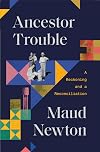
As an amateur family historian and moderator of a southern literary book club, I was excited to get an advance copy of what has been described as ‘an unflinching exploration into the history of a troubled family tree and the universal but also peculiarly American need to discover ‘roots.’’
Readers hoping for a how-to manual on researching family history may be disappointed. While the author does focus a lot on genealogy, she doesn’t dwell much on standard research procedures in the show more search for her ancestors’ stories. Hers is more a journey of self-discovery, an attempt to come to terms with her role as the descendant of racists, slave-owners, and abusers of indigenous peoples. In addition to genealogy, which she referred to as the oldest form of logic, the exhaustively researched memoir delves deeply into genetics, history, philosophy, psychology, and theology.
Newton’s first experience with family history came when her white supremacist father showed her pedigree charts in a failed effort to show their family’s superiority over other races. As she put it,
“I got interested in researching my father’s family when I learned there were things they didn’t want me to know. My sleuthing began in a spirit of gleeful defiance shadowed by a grimly obstinate self-righteousness. I wanted to root out every secret, lie, and hypocrisy and parade their skeletons up and down the block, to refute my dad’s mythology about what he called ‘our blood.’”
She soon came to believe in the quintessential nature of genealogy, arriving at the understanding that “the stories we tell ourselves about our ancestors have the power to shape us, in some ways nearly as much as our genetics do.” She cited as an example a story that her mother was fond of telling regarding the atmosphere at home when her father came home from work.
” Then his car would pull into the driveway, and, as she gleefully dramatized it to her friends at the time and still says now, the parakeets stopped singing, the cats slunk under the sofas, the dogs tucked their tails between their legs and crept out of sight, and my sister and I hovered anxiously near the hallway, waiting to gauge his mood when he came through the door.”
As a believer in the practice of verifying facts behind one’s research, part of me cringed at what I considered the lackadaisical approach she used in reporting her family history. Much of what she reports appears to be based solely on conjecture and hearsay, or derived from facial expressions in photographs. She makes up her ancestors` childhood attitudes and imagines the appearance of family dwellings she’s never seen. She attributes causal relationships to their vices and creates entire scenarios based solely on one snippet of information. She uses the word probably 30 times and variations of the word imagine another 77. It took me a while to realize that the journey that led her to learn about her family was not the same as mine. In her words,
How did my grandfather feel as he churned through wives and livelihoods and opted out of parenting his children? Was he regretful? Optimistic? Indifferent? Photos, letters, certificates, and census data couldn’t answer these questions, nor could my mom. I began to feel a sympathetic kinship with Robert only when I let my imagination and intuition become involved with what I knew of get involved with the evidence.
As many family researchers do, she turned to genetics to provide insights into her heritage but became disillusioned when she delved into the algorithms used to define geographic ancestries. Commenting on how the number of European ‘reference individuals’ vastly outnumber those from other continents, she sited a comment on Twitter that said “Only white people can steal you, enslave you for hundreds of years, systematically oppress you for hundreds more, then charge you $ 99.99 to tell you where they stole you from”.
In places the book veers off in totally unexpected directions. One such diversion is the chapter titled Lineage Repair in which Newton attends a seminar in the Black Mountains of North Carolina that focused on connecting with and repairing relationships with ancestors dating back thousands of years. She described the procedure as ‘a little abstract’, an opinion supported by her claim to have communicated with a ‘sort of fairy insect’ that ‘had a fat blue -green body like a caterpillar, large blue wings, and a blue human face.’
While this chapter did not endear me to the methods Newton employed to connect with her ancestors, she was sincere in her dedicated search for self-discover, something we all aspire to. Her approach may be unique, but I commend her for the effort she put into it.
*Quotations are cited from an advanced reading copy provided by NetGalley and may not be the same as appears in the final published edition. The review was based on an advanced reading copy obtained at no cost in exchange for an unbiased review. While this does take any ‘not worth what I paid for it’ statements out of my review, it otherwise has no impact on the content of my review. show less
Readers hoping for a how-to manual on researching family history may be disappointed. While the author does focus a lot on genealogy, she doesn’t dwell much on standard research procedures in the show more search for her ancestors’ stories. Hers is more a journey of self-discovery, an attempt to come to terms with her role as the descendant of racists, slave-owners, and abusers of indigenous peoples. In addition to genealogy, which she referred to as the oldest form of logic, the exhaustively researched memoir delves deeply into genetics, history, philosophy, psychology, and theology.
Newton’s first experience with family history came when her white supremacist father showed her pedigree charts in a failed effort to show their family’s superiority over other races. As she put it,
“I got interested in researching my father’s family when I learned there were things they didn’t want me to know. My sleuthing began in a spirit of gleeful defiance shadowed by a grimly obstinate self-righteousness. I wanted to root out every secret, lie, and hypocrisy and parade their skeletons up and down the block, to refute my dad’s mythology about what he called ‘our blood.’”
She soon came to believe in the quintessential nature of genealogy, arriving at the understanding that “the stories we tell ourselves about our ancestors have the power to shape us, in some ways nearly as much as our genetics do.” She cited as an example a story that her mother was fond of telling regarding the atmosphere at home when her father came home from work.
” Then his car would pull into the driveway, and, as she gleefully dramatized it to her friends at the time and still says now, the parakeets stopped singing, the cats slunk under the sofas, the dogs tucked their tails between their legs and crept out of sight, and my sister and I hovered anxiously near the hallway, waiting to gauge his mood when he came through the door.”
As a believer in the practice of verifying facts behind one’s research, part of me cringed at what I considered the lackadaisical approach she used in reporting her family history. Much of what she reports appears to be based solely on conjecture and hearsay, or derived from facial expressions in photographs. She makes up her ancestors` childhood attitudes and imagines the appearance of family dwellings she’s never seen. She attributes causal relationships to their vices and creates entire scenarios based solely on one snippet of information. She uses the word probably 30 times and variations of the word imagine another 77. It took me a while to realize that the journey that led her to learn about her family was not the same as mine. In her words,
How did my grandfather feel as he churned through wives and livelihoods and opted out of parenting his children? Was he regretful? Optimistic? Indifferent? Photos, letters, certificates, and census data couldn’t answer these questions, nor could my mom. I began to feel a sympathetic kinship with Robert only when I let my imagination and intuition become involved with what I knew of get involved with the evidence.
As many family researchers do, she turned to genetics to provide insights into her heritage but became disillusioned when she delved into the algorithms used to define geographic ancestries. Commenting on how the number of European ‘reference individuals’ vastly outnumber those from other continents, she sited a comment on Twitter that said “Only white people can steal you, enslave you for hundreds of years, systematically oppress you for hundreds more, then charge you $ 99.99 to tell you where they stole you from”.
In places the book veers off in totally unexpected directions. One such diversion is the chapter titled Lineage Repair in which Newton attends a seminar in the Black Mountains of North Carolina that focused on connecting with and repairing relationships with ancestors dating back thousands of years. She described the procedure as ‘a little abstract’, an opinion supported by her claim to have communicated with a ‘sort of fairy insect’ that ‘had a fat blue -green body like a caterpillar, large blue wings, and a blue human face.’
While this chapter did not endear me to the methods Newton employed to connect with her ancestors, she was sincere in her dedicated search for self-discover, something we all aspire to. Her approach may be unique, but I commend her for the effort she put into it.
*Quotations are cited from an advanced reading copy provided by NetGalley and may not be the same as appears in the final published edition. The review was based on an advanced reading copy obtained at no cost in exchange for an unbiased review. While this does take any ‘not worth what I paid for it’ statements out of my review, it otherwise has no impact on the content of my review. show less
This is a fabulously structured French braid of a book, deftly bringing together many lines of inquiry: stories of Maud Newton’s eccentric family, apocryphal and researched; her interest in genealogy; the legacy of white supremacy running down her ancestral lines; epigenetics—the study of how (or whether) environment can alter genes and inherited traits; spirituality; how we relate to our ancestors and what, if anything, we owe them; and the way all those strands come together to form show more each and every one of us. It’s both cerebral and heartfelt—she’s got wonderful control of language and tone, and can talk about matters of faith and ephemerality without getting mired in new-ageyness. I try to stay away from reviewer-speak but the phrase that comes to mind here is tour de force, so I’m going to stick with that. Fascinating stuff,; I’ll be featuring Maud on Bloom in the next couple of weeks. show less
Ancestor Trouble is an intriguing historical detective memoir, though the answers Maud Newton is searching for are more nebulous and more intriguing than any “whodunnit” could be. The nicest thing you can say about her antecedents is that they are interesting. She is estranged from her father who is so racist he would paint out the faces of Black people in her books when she was a child. A certain level of mental illness persisted from generation to generation including religious mania show more in her mother and ninth great-grandmother. Definitely an interesting bunch. I am sure they were far more entertaining to read about than to live with.
I think Ancestor Trouble begins well enough. It’s fascinating, at first, to learn more about her family and see the reverberation of trauma over generations. I think, though, that she fails to recognize that if nature provides a bit of insanity, that may also translate into nurture, so she becomes a bit too much of a biological determinist for me. As the book progressed she got more and more into the mystical/spiritual side of things and it turned me off.
I received an e-galley of Ancestor Trouble from the publisher through NetGalley
Ancestor Trouble at Penguin Random House
Maud Newton author site
https://tonstantweaderreviews.wordpress.com/2022/05/15/ancestor-trouble-by-maud-... show less
I think Ancestor Trouble begins well enough. It’s fascinating, at first, to learn more about her family and see the reverberation of trauma over generations. I think, though, that she fails to recognize that if nature provides a bit of insanity, that may also translate into nurture, so she becomes a bit too much of a biological determinist for me. As the book progressed she got more and more into the mystical/spiritual side of things and it turned me off.
I received an e-galley of Ancestor Trouble from the publisher through NetGalley
Ancestor Trouble at Penguin Random House
Maud Newton author site
https://tonstantweaderreviews.wordpress.com/2022/05/15/ancestor-trouble-by-maud-... show less
I literally inherited an interest in genealogy; there was my maternal grandfather’s family tree, researched by a distance relative, given to me at his death, and a published book of my father’s family. I became interested my unknown ancestors, and my husband’s family, and after joining Ancestry.com discovered hundreds of ancestors, corresponded with relatives hitherto unknown, and found shocking secrets. There were also insights, such as seeing a great-great-great grandmother who was show more the image of my aunt.
Maud Newton’s interest started in girlhood. She heard stories of her ancestors and wondered how much was true, and how her ancestor’s troubles were related to her own experiences. In Ancestor Trouble, Newton explores the many ways our ancestors impact us through generational trauma, shared DNA, inherited traits, and even affect our spiritual and emotional lives. Her wide-ranging book delves into our interest in our ancestors, science, mysticism, mythology, religion, spiritualism, and psychology. At the heart of the book is her grappling with her own family inheritance of mental illness.
The older I get, the more I search backward, as though if I could know everyone who led to my father, who made him who he is, I would know him, too.
Ancestor Trouble by Maud Newton
Newton came from a troubled family. Her parents married because her father decided they would produce perfect children. Of course, they were imperfect people and produced imperfect people. An intelligent, accomplished man, her father held to antiquated ideals of white superiority and an obsession with eugenics, which she later traced to his family’s roots as slave owners. His grandfather was bipolar, a man of accomplishments and failures and rumored to have had thirteen marriages. Her mother embraced an evangelical Christianity and started her own church. She saw demons and angels. Newton traced her mother’s ancestors to Puritan England witches.
Learning how our DNA data is not private, and how it is and could be used, was unsettling. I had just seen a TV crime show that used DNA to create images of suspects, and discovered it is a real thing. The United States has no law forbidden use of DNA to create phenotyping.
I found the book often fascinating, and Newton’s family story engaging.
I received a free egalley from the publisher. My review is fair and unbiased. show less
Maud Newton’s interest started in girlhood. She heard stories of her ancestors and wondered how much was true, and how her ancestor’s troubles were related to her own experiences. In Ancestor Trouble, Newton explores the many ways our ancestors impact us through generational trauma, shared DNA, inherited traits, and even affect our spiritual and emotional lives. Her wide-ranging book delves into our interest in our ancestors, science, mysticism, mythology, religion, spiritualism, and psychology. At the heart of the book is her grappling with her own family inheritance of mental illness.
The older I get, the more I search backward, as though if I could know everyone who led to my father, who made him who he is, I would know him, too.
Ancestor Trouble by Maud Newton
Newton came from a troubled family. Her parents married because her father decided they would produce perfect children. Of course, they were imperfect people and produced imperfect people. An intelligent, accomplished man, her father held to antiquated ideals of white superiority and an obsession with eugenics, which she later traced to his family’s roots as slave owners. His grandfather was bipolar, a man of accomplishments and failures and rumored to have had thirteen marriages. Her mother embraced an evangelical Christianity and started her own church. She saw demons and angels. Newton traced her mother’s ancestors to Puritan England witches.
Learning how our DNA data is not private, and how it is and could be used, was unsettling. I had just seen a TV crime show that used DNA to create images of suspects, and discovered it is a real thing. The United States has no law forbidden use of DNA to create phenotyping.
I found the book often fascinating, and Newton’s family story engaging.
I received a free egalley from the publisher. My review is fair and unbiased. show less
Lists
Awards


You May Also Like


Associated Authors
Statistics
- Works
- 1
- Also by
- 4
- Members
- 273
- Popularity
- #84,853
- Rating
- 3.9
- Reviews
- 10
- ISBNs
- 5