
Jowhor Ile
Author of And After Many Days
About the Author
Image credit: Zina Saro-Wiwa
Works by Jowhor Ile
Associated Works
Tagged
Common Knowledge
Members
Reviews
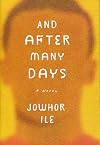
Jowhor Iwe’s debut novel opens by enticing readers with teenager Paul Utu’s disappearance in Nigeria in 1995, but And After Many Days is not a mystery novel or whodunit laden with investigation and drama. It is, however, a beautiful and quietly entrancing exploration of the landscape, both political and personal as well as physical, of the world from which Paul disappeared. The bulk of the novel examines Paul’s childhood along with his two siblings, Bibi and Ajie, as told mostly show more through the span of Ajie’s own experience. And After Many Days masterfully and vividly demonstrates life growing up in Nigeria in the ‘80s and early ‘90s while both incorporating the heritage of Nigeria’s past and addressing the hopes and concerns for the country’s future. To meld political and cultural significance to a complex character study is quite a feat and makes And After Many Days a compelling read.
I received an ARC of this novel from the publisher in exchange for an honest review. show less
I received an ARC of this novel from the publisher in exchange for an honest review. show less
And After Many Days begins with the disappearance of Paul Utu and centers around his family's quest to find him. Jowhor Ile uses this as a backdrop to paint a picture of life in Nigeria across cultures and across the urban and rural divide.
One of the major aspects explored in this novel is the nature of Nigeria. Ile gives it a very dualist nature. The Utu family is both urban and rural having homes in both settings. The father, Bendic, has spent time as a Christian, but traditional show more religious beliefs are still important to him. He has children with names from both traditions. This dualism is in stark contrast to the divisiveness between the students and the government and the history of warfare within the country.
The structure of this novel is interesting in that I think that it is more than just a structure that enables Ile to tell the story. The novel starts with the disappearance of Paul, which is really the climax of the story arc. Then, the book goes through years of backstory before finally returning to Paul's disappearance late in the book. With the amount of historical detail given in the book, I was left wondering if Ile's point was that nothing really changes in Nigeria. The country always comes full circle to its unresolved issues.
One thing that isn't too surprising is that large parts of the book center on the relationship between oil companies and the Nigerian government. Ile highlights the exploitive nature of this relationship towards the villagers in rural Nigeria, and he does so in an even-handed way that also shows the benefits that the rural Nigerians receive. This is not unsurprising in post-colonial literature, but I thought that it was done well in this novel.
My favorite part of this novel was its rich characters. I fell in love with the whole family, and their friends. Each character is well-developed in that they are each unique individuals who grow and change over the course of the story. They were believable enough that I cared what happened to them, which is where books sometimes fail for me. I am happy for that.
Overall, I thought this was a good novel. I was not blown away by it, but it was an enjoyable read that made me think at times. It was a lot like a lot of other post-colonial type novels, but the characters made it worth reading. show less
One of the major aspects explored in this novel is the nature of Nigeria. Ile gives it a very dualist nature. The Utu family is both urban and rural having homes in both settings. The father, Bendic, has spent time as a Christian, but traditional show more religious beliefs are still important to him. He has children with names from both traditions. This dualism is in stark contrast to the divisiveness between the students and the government and the history of warfare within the country.
The structure of this novel is interesting in that I think that it is more than just a structure that enables Ile to tell the story. The novel starts with the disappearance of Paul, which is really the climax of the story arc. Then, the book goes through years of backstory before finally returning to Paul's disappearance late in the book. With the amount of historical detail given in the book, I was left wondering if Ile's point was that nothing really changes in Nigeria. The country always comes full circle to its unresolved issues.
One thing that isn't too surprising is that large parts of the book center on the relationship between oil companies and the Nigerian government. Ile highlights the exploitive nature of this relationship towards the villagers in rural Nigeria, and he does so in an even-handed way that also shows the benefits that the rural Nigerians receive. This is not unsurprising in post-colonial literature, but I thought that it was done well in this novel.
My favorite part of this novel was its rich characters. I fell in love with the whole family, and their friends. Each character is well-developed in that they are each unique individuals who grow and change over the course of the story. They were believable enough that I cared what happened to them, which is where books sometimes fail for me. I am happy for that.
Overall, I thought this was a good novel. I was not blown away by it, but it was an enjoyable read that made me think at times. It was a lot like a lot of other post-colonial type novels, but the characters made it worth reading. show less
 This review was written for LibraryThing Early Reviewers.
One afternoon in 1995, Paul Utu leaves his home in Port Harcourt, Nigeria to visit a friend. Her never returns. This novel tells the story of his family, going back in time before the disappearance and ending thirteen years after it, when the mystery is solved. This is really the story of Paul's younger brother Ajie, as he tries to make sense of a world in which there seems to be little security outside the home. As the novel explores the boys' childhood, we get to know and love the Utu show more family. We also get a sense of the complexities of Nigerian politics.
Nigeria is a country of contrasts. In the villages, people still celebrate the yam harvest, while at home in Port Harcourt, Paul and Ajie listen to rap music and radio programs about Chopin. And although Paul and Ajie's father Bendic is a lawyer, there seems to be little he can do to find out what happened to his son or to prevent the oil company from destroying his village.
As Ajie visits his father's home village after a long absence, he thinks: "Few people, very few, have a treasure, and if they do, they must cling to it and not let themselves be ambushed and have it taken from them. Even though he feels this strongly, he is no longer certain whether the words are true or useful. And where is Paul when Ajie is in need of certainty?"
This is a wonderful first novel. show less
Nigeria is a country of contrasts. In the villages, people still celebrate the yam harvest, while at home in Port Harcourt, Paul and Ajie listen to rap music and radio programs about Chopin. And although Paul and Ajie's father Bendic is a lawyer, there seems to be little he can do to find out what happened to his son or to prevent the oil company from destroying his village.
As Ajie visits his father's home village after a long absence, he thinks: "Few people, very few, have a treasure, and if they do, they must cling to it and not let themselves be ambushed and have it taken from them. Even though he feels this strongly, he is no longer certain whether the words are true or useful. And where is Paul when Ajie is in need of certainty?"
This is a wonderful first novel. show less
This review was written for LibraryThing Early Reviewers.One afternoon in 1995, in Port Harcourt, Nigeria, seventeen-year-old Paul Utu leaves his family's home to visit a friend, and never returns. This is in part a mystery novel, but not "as though this were one of those mystery stories they read where, finally, at the close of the book, the mystery is solved and all the loose ends tied up in the most satisfying ways," as one of the characters indicates. The most skillful thing about Jowhor Ile's quiet accomplishment is that And After Many Days show more combines its family tale and its politics so well. It succeeds not because it moves at any breakneck pace; rather, because we come to care about the Utu family at its core--especially the young, lost central character, Paul's brother Ajie, but Paul himself (most of the novel is told in flashback) and their sister and parents all gradually emerge as sympathetic individuals. The anger in the novel, at the corrupt forces of the government and the oil company which collude in their greed to destroy the village and its culture is tempered by its heart. show less
This review was written for LibraryThing Early Reviewers.Lists
Awards

You May Also Like


Associated Authors
Statistics
- Works
- 2
- Also by
- 4
- Members
- 180
- Popularity
- #119,864
- Rating
- 3.6
- Reviews
- 54
- ISBNs
- 7
- Languages
- 1
