
Joe Bennett (3) (1968–)
Author of Buffy the Vampire Slayer Omnibus, Volume 4
For other authors named Joe Bennett, see the disambiguation page.
About the Author
Works by Joe Bennett
Immortal Hulk Vol. 1: Or is he Both? (Immortal Hulk, 1) (2018) — Illustrator — 184 copies, 7 reviews
Black Panther by Christopher Priest: The Complete Collection Volume 4 (2016) — Illustrator — 42 copies, 4 reviews
Associated Works
Tagged
Common Knowledge
- Canonical name
- Bennett, Joe
- Legal name
- Nascimento, Benedito José
- Birthdate
- 1968-02-03
- Occupations
- comic book artist
- Nationality
- Brasilien
- Birthplace
- Belem, Brazil
- Associated Place (for map)
- Belem, Brazil
Members
Reviews

The fourth collection of Gail Simone's Birds of Prey run is where her take really clicked with me-- perhaps because this collects twelve issues, a full year of her run, rather than the usual 6 or so, allowing one to really dig into her interweaving plots. This is odd, as I found the first few stories pretty disposable: the Birds, in their new mobile home Aerie One, travel to Dayton, Kansas, and Metropolis to rein in overeager vigilantes. I'm not sure why Barbara decided this was their new show more purpose in life, but there you go.
We get a few done-in-one (or -two) stories that are strong in character for the regulars, which is nice, but little else. It's nice to see Helena actually doing educational stuff, and there's one of my favorite moments in the whole series thus far when she crossbows a guy in hospital and shrugs it off. Zinda turns out to be a fantastic addition to the Birds, rarely at the center of the plots, but always fun in how she changes the dynamic. On the other hand, Kansas is portrayed in an utterly condescending way, and Tom Derenick and Bob Petrecca's art is so off that when a mystical creature ages Dinah twenty years in the middle of combat, you can't even tell.
The plot in the book's second half, as the Birds of Prey being to disintegrate and also take on some gangs internationally, was much more consistent. Helena leaves the group to do things in a way that combines her original one with Barbara's, and in doing so, we get our best understanding of her character in the series so far: someone violent and brash, but dedicated to doing good in whatever way works best. Helena trying to infiltrate the Gotham underworld (and tussling with Dick "Nightwing" Grayson, who is doing the same) is one of the series' most interesting undertakings. Meanwhile, Barbara must undergo surgery and Dinah has to organize the defense of Gotham City with just hand-on-hand combat. The interweaving of plot and character has never been sharper in the title, and I have never liked all three characters more.
Unfortunately, the story is let down by the series's weakest art thus far: Joe Bennett and Jack Jadson's women all have plastic faces incapable of displaying emotions other than wide-mouthed; Ed Benes might be cheesecakey, but at least his characters have facial expressions. Worse is the creepy way he draws all Asians. Ugh. One wonders why DC was never able to supply Gail Simone with an artist who could match her writing talent. At least Huntress's costume has lost the belly window.
Birds of Prey: « Previous in sequence | Next in sequence » show less
We get a few done-in-one (or -two) stories that are strong in character for the regulars, which is nice, but little else. It's nice to see Helena actually doing educational stuff, and there's one of my favorite moments in the whole series thus far when she crossbows a guy in hospital and shrugs it off. Zinda turns out to be a fantastic addition to the Birds, rarely at the center of the plots, but always fun in how she changes the dynamic. On the other hand, Kansas is portrayed in an utterly condescending way, and Tom Derenick and Bob Petrecca's art is so off that when a mystical creature ages Dinah twenty years in the middle of combat, you can't even tell.
The plot in the book's second half, as the Birds of Prey being to disintegrate and also take on some gangs internationally, was much more consistent. Helena leaves the group to do things in a way that combines her original one with Barbara's, and in doing so, we get our best understanding of her character in the series so far: someone violent and brash, but dedicated to doing good in whatever way works best. Helena trying to infiltrate the Gotham underworld (and tussling with Dick "Nightwing" Grayson, who is doing the same) is one of the series' most interesting undertakings. Meanwhile, Barbara must undergo surgery and Dinah has to organize the defense of Gotham City with just hand-on-hand combat. The interweaving of plot and character has never been sharper in the title, and I have never liked all three characters more.
Unfortunately, the story is let down by the series's weakest art thus far: Joe Bennett and Jack Jadson's women all have plastic faces incapable of displaying emotions other than wide-mouthed; Ed Benes might be cheesecakey, but at least his characters have facial expressions. Worse is the creepy way he draws all Asians. Ugh. One wonders why DC was never able to supply Gail Simone with an artist who could match her writing talent. At least Huntress's costume has lost the belly window.
Birds of Prey: « Previous in sequence | Next in sequence » show less

Access a version of the below that includes illustrations on my blog.
After his run on Black Panther came to an end, Christopher Priest began a short-lived ongoing called The Crew, a team book that included one-time Black Panther Kasper Cole (now the White Tiger) among its members. I wasn't super into Kasper part of Priest's Black Panther run, but The Crew was included in the Christopher Priest Black Panther: The Complete Collection volumes, which you can read for free on Hoopla, so I figured show more why not read it? (I'd already read the issues from the main title collected here, #50-56 & 59-62, so I did not reread them.)
It was kind of worth reading, kind of not. Certainly it wasn't worth it for Kasper, who continues to spin his wheels as a character, arguing with his girlfriend and expectant mother of his child, chasing promotion so he can afford to support his mother and girlfriend. The ongoing thing about his dad wasn't picked up at all, and by the end of these seven issues, Cole isn't really anywhere we haven't already seen him.
The other three members of the "Crew" (never called that in the story) are James "Rhodey" Rhodes, the one-time Iron Man and War Machine; Junta, a superpowered information broker whose mom is a robot who I think appeared in one issue of Black Panther vol. 3; and Josiah X, the son of a black man who was experimented on during World War II in an attempt to create super-soldier serum. The first few issues look at each man in turn; the "team" really only kind of comes together with issue #7, when of course the title was cancelled. Junta probably could have become fun with time, but the real standouts here are Rhodes and Josiah.Rhodes I don't think I have ever actually read a comic about before, but I liked what Priest did with him here; a man who use to be on top but has found himself at the bottom trying to climb his way back up using his sense of justice as a guide. I don't know how the character is in actual Iron Man comics, but I would read more stories about him if they were like this.
Josiah X (called "Justice" in behind-the-scenes information but not in the actual book) is a really interesting character, a black Muslim community organizer who dons Captain America iconography. Can such a man reconcile the contradictions that led to his own existence? How can he wear the emblem of the country that treated him and his father so disposably? Priest and artist Joe Bennett do their best work with Josiah, and unfortunately only scratch the surface of the character. I gather he hasn't really appeared since, but I am curious to pick up the Captain America: The Truth miniseries where his father originally appeared.
As I've alluded to, it's a bit of a slow burn, which was probably a mistake for a book that bundled together a bunch of has-been and also-ran characters; I cannot imagine it sold well at all. I enjoyed it well enough, but by the end of seven issues, I wasn't convinced we needed seven issues to see the Crew take down some pretty ordinary gangsters. A decent read, but not really for Black Panther–related reasons. I gather the Crew returns during Ta-Nehisi Coates's run, but not with this line-up. show less
After his run on Black Panther came to an end, Christopher Priest began a short-lived ongoing called The Crew, a team book that included one-time Black Panther Kasper Cole (now the White Tiger) among its members. I wasn't super into Kasper part of Priest's Black Panther run, but The Crew was included in the Christopher Priest Black Panther: The Complete Collection volumes, which you can read for free on Hoopla, so I figured show more why not read it? (I'd already read the issues from the main title collected here, #50-56 & 59-62, so I did not reread them.)
It was kind of worth reading, kind of not. Certainly it wasn't worth it for Kasper, who continues to spin his wheels as a character, arguing with his girlfriend and expectant mother of his child, chasing promotion so he can afford to support his mother and girlfriend. The ongoing thing about his dad wasn't picked up at all, and by the end of these seven issues, Cole isn't really anywhere we haven't already seen him.
The other three members of the "Crew" (never called that in the story) are James "Rhodey" Rhodes, the one-time Iron Man and War Machine; Junta, a superpowered information broker whose mom is a robot who I think appeared in one issue of Black Panther vol. 3; and Josiah X, the son of a black man who was experimented on during World War II in an attempt to create super-soldier serum. The first few issues look at each man in turn; the "team" really only kind of comes together with issue #7, when of course the title was cancelled. Junta probably could have become fun with time, but the real standouts here are Rhodes and Josiah.Rhodes I don't think I have ever actually read a comic about before, but I liked what Priest did with him here; a man who use to be on top but has found himself at the bottom trying to climb his way back up using his sense of justice as a guide. I don't know how the character is in actual Iron Man comics, but I would read more stories about him if they were like this.
Josiah X (called "Justice" in behind-the-scenes information but not in the actual book) is a really interesting character, a black Muslim community organizer who dons Captain America iconography. Can such a man reconcile the contradictions that led to his own existence? How can he wear the emblem of the country that treated him and his father so disposably? Priest and artist Joe Bennett do their best work with Josiah, and unfortunately only scratch the surface of the character. I gather he hasn't really appeared since, but I am curious to pick up the Captain America: The Truth miniseries where his father originally appeared.
As I've alluded to, it's a bit of a slow burn, which was probably a mistake for a book that bundled together a bunch of has-been and also-ran characters; I cannot imagine it sold well at all. I enjoyed it well enough, but by the end of seven issues, I wasn't convinced we needed seven issues to see the Crew take down some pretty ordinary gangsters. A decent read, but not really for Black Panther–related reasons. I gather the Crew returns during Ta-Nehisi Coates's run, but not with this line-up. show less
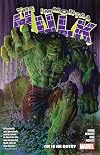
Hulk lives! Now! Again! Forever! (Cue swelling dramatic music. Maestro, please!)
Another of the big dramatic moments of Civil War II is undone as the Bruce Banner Hulk returns to his own series. But this time, writer Al Ewing is going for a straight-up horror story as he uses the nocturnal nature of the Hulk in his earliest appearances to ascribe a supernatural element to the character. And, hey, it sorta works. Hulk has always had parallels to Robert Louis Stevenson's Mr. Hyde, but now he is show more all that crossed with Frankenstein, a werewolf, and a zombie to boot.
It's a bit cheesy, but definitely worth a second look. show less
Another of the big dramatic moments of Civil War II is undone as the Bruce Banner Hulk returns to his own series. But this time, writer Al Ewing is going for a straight-up horror story as he uses the nocturnal nature of the Hulk in his earliest appearances to ascribe a supernatural element to the character. And, hey, it sorta works. Hulk has always had parallels to Robert Louis Stevenson's Mr. Hyde, but now he is show more all that crossed with Frankenstein, a werewolf, and a zombie to boot.
It's a bit cheesy, but definitely worth a second look. show less
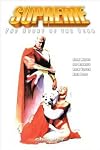
Supreme: The Story of the Year delivers on two levels.
Firstly, it is packed full of play upon comics. It uses its hero (a generic Superman-type) to walk us through key periods in the history of American comics, with the art, script and themes shifting from one page to the next. It's deftly done, by a master clearly comfortable with what these different periods offer.
Secondly, it is an unashamed celebration of the fun of comics. It manages to pull off the trick of showing us the bigger show more picture of these types of stories without ever distancing us from the story it is telling us. Moore's love of comics shines through, and each delve into, for example, the high age of E.C. horror comics is made with affection and aims to entertain, rather than allow us to feel superior.
Moore's intelligence is seen throughout the story, as the plot gathers pace seemingly out of nowhere. show less
Firstly, it is packed full of play upon comics. It uses its hero (a generic Superman-type) to walk us through key periods in the history of American comics, with the art, script and themes shifting from one page to the next. It's deftly done, by a master clearly comfortable with what these different periods offer.
Secondly, it is an unashamed celebration of the fun of comics. It manages to pull off the trick of showing us the bigger show more picture of these types of stories without ever distancing us from the story it is telling us. Moore's love of comics shines through, and each delve into, for example, the high age of E.C. horror comics is made with affection and aims to entertain, rather than allow us to feel superior.
Moore's intelligence is seen throughout the story, as the plot gathers pace seemingly out of nowhere. show less
Lists
Awards


You May Also Like


Associated Authors
Statistics
- Works
- 16
- Also by
- 17
- Members
- 1,071
- Popularity
- #24,021
- Rating
- 3.7
- Reviews
- 40
- ISBNs
- 128
- Languages
- 8