
伏見つかさ
Author of OreImo, Vol. 1 {manga}
About the Author
Series
Works by 伏見つかさ
Eromanga Sensei, Volume 2: My Little Sister and the Most Interesting Novel in the World (2014) — Author — 4 copies
私の初恋は恥ずかしすぎて誰にも言えない 2 copies
Eromanga Sensei, Volume 10: Muramasa Senju and the Cultural Festival of Love (2018) — Author — 1 copy
Tagged
Common Knowledge
- Canonical name
- Fushimi, Tsukasa
- Other names
- 伏見 つかさ
- Birthdate
- 1981
- Gender
- male
- Nationality
- Japan
- Associated Place (for map)
- Japan
Members
Reviews

I'm actually...very impressed with this ending. No, seriously. What started out as this silly little siscon of a manga ended on a very strong moral argument that I just was not expecting - not that that's necessarily a bad thing.
I won't spoil the details, but basically, the entire concept of lolicon in general is called into question in this final novel. The line between fantasy and reality is explored, the role of the media in warping our interpretations of certain groups of people is show more mentioned, and best of all, nobody is villainized for whatever side they choose to take. It could have been so easy for this mangaka to strawman anti-otakus, but he doesn't. He gives them justifiable reasons for being wary, and gently provides some reasons as to why they may not be totally right. It's pretty amazing.
I'm sad that it had to end so soon - twenty seven chapters is really nothing - but it was fun while it lasted. show less
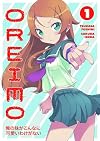
This manga is based on one of my favorite light novel series, "My Sister Can't Possibly Be This Cute". I'm so glad Dark Horse picked up the manga as they've done an awesome job with it, and hopefully someone will pick up the original novels for translation too. This series, while a little on the naughty side, also has some great social commentary on the state of how otaku (or fans to the point of mania) are viewed in Japan. It has great one-liners and the characters are crafted with care. So show more if you're looking for something new to read in the manga department, "OreImo" is a must read.
So, the otaku: a history. Otaku have been given a bad rap in Japan, mostly due to a serial killer in the early nineties who had a huge infatuation with anime (specifically incest-related content and lolicon-related content) as he abducted girls and killed them. It became a huge stigma, and it wasn't a good thing to call oneself an otaku. However, ever since the "moe boom" that started in Akihabara (a city in Tokyo that caters almost exclusively to anime otaku and computer otaku) about a little over ten years ago, and thanks to other groundbreaking novels like "Denshaotoko (Train Man)", it's become a little more acceptable in Japan to be an otaku.
That is, if you're male.
If you're female, it's still not really cool. However, thanks to series like "OreImo" and places like Otome Road in Ikebukuro (another city in Tokyo slowly growing more targeted toward otaku) that are almost exclusively targeting female otaku with its stores and cafes, it's slowly growing more acceptable to be an otaku. Keyword here being "slowly". VERY slowly, for girls. For guys, it's almost completely mainstream now.
So Fushimi took all of this history of controversy, and made a set of novels out of it, and eventually, manga, too, and out of it came the "OreImo" story.
Kirino, while being really popular at school and a hot fashion magazine model, still has to hide her secret of her love for naughty video games, manga, and mahou shoujo (magical girl) anime shows from everyone - even from her own family. That is, until her older brother finds out by mistake. It soon becomes a race of give and take between the siblings, peppered with a lot of tension and hilarity, to keep Kirino's secret. Kirino's choice of obsession (incest or otherwise naughty video games) is an abberation within the female otaku community - most go toward the BL (boys' love) or GL (girls' love) genres instead. What Kirino's into is mostly targeted toward guys 18 and up.
Now, this series isn't all humor. There are a lot of serious issues raised - and no, incest between Kirino and her brother isn't one of them. There's the issue of having kids 18 and under being able to purchase adult material online like Kirino does, skirting the laws about porn and profane materials where you'd otherwise have to show ID. There's also the social factor - what will happen when Kirino's friends and the rest of her family find out what she's into? Will she be disowned, friendless, and alone? What about her otaku friends online, who are also girls, who like the same things? Which road in life will she take - the appropriate one with being a model and studying abroad? Or the one of being an otaku? It almost at times feels like Fushimi is telling her own story, though I can't really confirm or deny that. It feels very autobiographical. But for the most part, it rides on comedy to make the reader more comfortable with the subject matter, which gets surprisingly deep.
I'm glad that Dark Horse has brought this series to the states, and with four volumes out for the manga (not including the spin-offs), it won't break the bank. The novel has ten volumes and is still going. Finally, Western fans will see what the social fallout is when they declare themselves otaku if in Japan, and learn more about the history behind the term itself. It's a pretty important piece of social commentary, and Dark Horse has done a great job with what I've read so far. And while it's not always appropriate for younger readers, I'd definitely recommend this to middle YA and older audiences as it's a really great series.
"OreImo: Volume 1" is out from Dark Horse Comics on September 5, 2012, so be sure to check it out then. It's made my best of 2012 so far list, and is highly recommended.
(posted to goodreads, shelfari, librarything, and birthofanewwitch.wordpress.com) show less
So, the otaku: a history. Otaku have been given a bad rap in Japan, mostly due to a serial killer in the early nineties who had a huge infatuation with anime (specifically incest-related content and lolicon-related content) as he abducted girls and killed them. It became a huge stigma, and it wasn't a good thing to call oneself an otaku. However, ever since the "moe boom" that started in Akihabara (a city in Tokyo that caters almost exclusively to anime otaku and computer otaku) about a little over ten years ago, and thanks to other groundbreaking novels like "Denshaotoko (Train Man)", it's become a little more acceptable in Japan to be an otaku.
That is, if you're male.
If you're female, it's still not really cool. However, thanks to series like "OreImo" and places like Otome Road in Ikebukuro (another city in Tokyo slowly growing more targeted toward otaku) that are almost exclusively targeting female otaku with its stores and cafes, it's slowly growing more acceptable to be an otaku. Keyword here being "slowly". VERY slowly, for girls. For guys, it's almost completely mainstream now.
So Fushimi took all of this history of controversy, and made a set of novels out of it, and eventually, manga, too, and out of it came the "OreImo" story.
Kirino, while being really popular at school and a hot fashion magazine model, still has to hide her secret of her love for naughty video games, manga, and mahou shoujo (magical girl) anime shows from everyone - even from her own family. That is, until her older brother finds out by mistake. It soon becomes a race of give and take between the siblings, peppered with a lot of tension and hilarity, to keep Kirino's secret. Kirino's choice of obsession (incest or otherwise naughty video games) is an abberation within the female otaku community - most go toward the BL (boys' love) or GL (girls' love) genres instead. What Kirino's into is mostly targeted toward guys 18 and up.
Now, this series isn't all humor. There are a lot of serious issues raised - and no, incest between Kirino and her brother isn't one of them. There's the issue of having kids 18 and under being able to purchase adult material online like Kirino does, skirting the laws about porn and profane materials where you'd otherwise have to show ID. There's also the social factor - what will happen when Kirino's friends and the rest of her family find out what she's into? Will she be disowned, friendless, and alone? What about her otaku friends online, who are also girls, who like the same things? Which road in life will she take - the appropriate one with being a model and studying abroad? Or the one of being an otaku? It almost at times feels like Fushimi is telling her own story, though I can't really confirm or deny that. It feels very autobiographical. But for the most part, it rides on comedy to make the reader more comfortable with the subject matter, which gets surprisingly deep.
I'm glad that Dark Horse has brought this series to the states, and with four volumes out for the manga (not including the spin-offs), it won't break the bank. The novel has ten volumes and is still going. Finally, Western fans will see what the social fallout is when they declare themselves otaku if in Japan, and learn more about the history behind the term itself. It's a pretty important piece of social commentary, and Dark Horse has done a great job with what I've read so far. And while it's not always appropriate for younger readers, I'd definitely recommend this to middle YA and older audiences as it's a really great series.
"OreImo: Volume 1" is out from Dark Horse Comics on September 5, 2012, so be sure to check it out then. It's made my best of 2012 so far list, and is highly recommended.
(posted to goodreads, shelfari, librarything, and birthofanewwitch.wordpress.com) show less
This was a lot better than I thought it would be. I'd heard that the show based on it was your bog standard moe-siscon-fanservice crap. This was, thankfully, nothing of the kind. Instead, I had fun reading this volume, and I'll probably pick up volume 2, whenever it comes out.
Slightly confused by the premise, but I'm taking this as a cultural differences thing. I quite enjoyed the depiction of the siblings reluctantly (and badly) overcoming their differences, and found their characterisation pretty well-done. Both are a bit rash and, while the brother is more mentally mature than his younger sister and has a strong sense of responsibility, neither is either ready to adopt grown-up ways of handling issues. Nor, from what we see of their family, would either show more affectionally-erratic mother or harsh and conservative father be prepared to treat them like adults (and, to be fair, they aren't). The family dynamics are interesting, if a bit shocking - the father is actively violent at times and the children are clearly scared of him. show less
Awards

You May Also Like


Associated Authors
Statistics
- Works
- 40
- Members
- 458
- Popularity
- #53,634
- Rating
- 3.4
- Reviews
- 7
- ISBNs
- 66
- Languages
- 3
- Favorited
- 1