
Francesco D'Adamo
Author of Iqbal
About the Author
Works by Francesco D'Adamo
Tagged
Common Knowledge
Members
Reviews
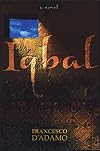
In real life, Iqbal Masih was a young Pakistani boy who escaped child slavery in a carpet factory and worked to help free other exploited children. This short historical novel is written from the perspective of a young girl who works in the same carpet factory as Iqbal and becomes his friend. Like many children in Pakistan, Fatima is indentured by her family and has no hope of ever paying off the debt. Her despair and hope are beautifully described in an analogy where every morning she show more stretches toward a window that brings in the scent of the almond tree outside. She hopes to someday be able to reach the window and pull herself up for a look. Perhaps she is 1/4 of an inch closer? No, probably not. Then Iqbal is transferred to her Master and begins working at a loom near hers. They become friends, and Fatima becomes aware that Iqbal is not like her and the other children. He is not afraid. Or rather, he is afraid, but stands up for them anyway.
I was afraid to begin reading Iqbal because the topic of child exploitation is so emotionally difficult. But instead of despair, D'Adamo creates a beautiful mood of childish innocence and hope that transcends the passivity of some characters and the greed of others. I found myself wanting more: both of the delicate language and of the story. I would like to read more by this new-to-me author, and the book's bibliography provides some opportunities to learn more about the real Iqbal Masih. show less
I was afraid to begin reading Iqbal because the topic of child exploitation is so emotionally difficult. But instead of despair, D'Adamo creates a beautiful mood of childish innocence and hope that transcends the passivity of some characters and the greed of others. I found myself wanting more: both of the delicate language and of the story. I would like to read more by this new-to-me author, and the book's bibliography provides some opportunities to learn more about the real Iqbal Masih. show less
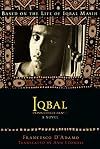
When one hears of courageous acts, or determined plans to help others, one often thinks of adults in the role. Not because children are selfish or weak, but more because we think of children as innocent, care-free and to be protected.
So when children are in danger, one expects the saviors to be fiercely determined adults. This book, narrated though through the voice of a fictitious girl, sheds some light onto an amazing child, who took the world by storm in his determination to protect and show more rescue his peers.
Iqbal Masih is a true hero. A mere child, sold to one of Pakistan's many carpet makers, he stands apart from the other scrawny, half-starved, beaten and overworked children, some of whom were chained to their looms, in the factory in his determination to escape and to help others in the factory escape from their miserable conditions.
While reading of his acts of bravery, one forgets that he is a mere child until a simple event reminds us as sharply and clearly as a sword slicing off one of our fingers. The people he and most children assumed they could trust, the policemen, betrayed them with their corruption and inhumanity.
But in spite of everything that one would think would destroy a child's soul, no matter how determined he was, Iqbal made good his promise to himself and to the other children in the factory. This little boy put himself in danger time and time again to save the other children in other brick-making or carpet factories... while he went to school for the first time in his life. Through the Bonded Labor Liberation Front who helped rescue him and the children in his factory, he gained their respect and in a short time, he was invited to step into the international spotlight to appeal against bonded child slavery. But he didn't stop there, he went on to be the voice of all other child slaves in Pakistan until his voice was silenced by those who loved profit over humanity.
He was 13 when he was shot..... by an unknown adult in a car with dark tinted windows.
It's a little book with a huge impact... just like Iqbal Masih. show less
So when children are in danger, one expects the saviors to be fiercely determined adults. This book, narrated though through the voice of a fictitious girl, sheds some light onto an amazing child, who took the world by storm in his determination to protect and show more rescue his peers.
Iqbal Masih is a true hero. A mere child, sold to one of Pakistan's many carpet makers, he stands apart from the other scrawny, half-starved, beaten and overworked children, some of whom were chained to their looms, in the factory in his determination to escape and to help others in the factory escape from their miserable conditions.
While reading of his acts of bravery, one forgets that he is a mere child until a simple event reminds us as sharply and clearly as a sword slicing off one of our fingers. The people he and most children assumed they could trust, the policemen, betrayed them with their corruption and inhumanity.
But in spite of everything that one would think would destroy a child's soul, no matter how determined he was, Iqbal made good his promise to himself and to the other children in the factory. This little boy put himself in danger time and time again to save the other children in other brick-making or carpet factories... while he went to school for the first time in his life. Through the Bonded Labor Liberation Front who helped rescue him and the children in his factory, he gained their respect and in a short time, he was invited to step into the international spotlight to appeal against bonded child slavery. But he didn't stop there, he went on to be the voice of all other child slaves in Pakistan until his voice was silenced by those who loved profit over humanity.
He was 13 when he was shot..... by an unknown adult in a car with dark tinted windows.
It's a little book with a huge impact... just like Iqbal Masih. show less
Child slavery is a rough topic, so I wasn't expecting to enjoy this book, but my main objections to it are the voice, which is not particularly believable as the voice of a child, and the fact that it is unrelentingly depressing. I think it's fair for it to be unrelentingly depressing given the subject matter, and maybe other people would find Iqbal's story inspiring. This particular book just really didn't work for me.
"Iqbal" tells a fictionalized story of the very real Iqbal Masih, through the eyes of Fatima, a girl whose parents sold her to a carpet manufacturer/moneylender in order to be able to repay their debts. Each day they work for 12 hours at a loom weaving rugs with little respite. And at the end of the day, their "master," Hussain Khan, erases one notch from each child's debt board, signifying their "pay" of one single rupee. Which, while coming across as a tiny payment, keep in mind that a show more debt of $22, would be equivalent to 2,304 Pakistani Rupees. But even their fraction of a cent wage is ceremonial, as the master tends to keep the children until they outgrow their usefulness. And any rebellion, even a small acts of frustration, is met with harsh punishment, possibly days locked in a pit with little light, and no food or water,
Enter Iqbal.. Iqbal is a talented carpet weaver, effortlessly creating beautiful patterns and artwork that none of the other slaves could dream to accomplish. This makes him quite valuable to Hussain Khan, but he is a rebel in every sense of the word. While all of the other children are resigned to their fate, Iqbal knows that what they suffer is not right. This belief, combined with confidence and charisma inspire the others to dream of the outside world - to hope for a future that will once again include their families.
Iqbal escapes (after destroying a priceless carpet of his own creation, in front of Khan and his foreign customers, and days in the pit), spends a few days on the run, discovers a bit about the world and learns of the Bonded Labour Liberation Front of Pakistan - a movement dedicated to ending child labor. However, Iqbal makes the mistake of returning to Khans labor camp with police, who are handsomely rewarded. But, after months of punishment and labor, Iqbal escapes again - with the dream of ending all child labor - connects with the BLLF. frees Fatima and the rest of the children and has Khan arrested. He then goes on to become famous for his work eliminating child labor camps, speak to a UN Council, and win a humanitarian award, including a scholarship to an American College. A happy ending for all, as most of the former slaves returned to their families.
That is until, like in real life, Iqbal was gunned down by an anonymous assassin while visiting his family for a cultural holiday - their version of Thanksgiving, if I recall correctly. He was 13.
While this book is depressing for the most part, especially at the end, it really gives you hope. For me, though, there was a sort of relief. There's always so much negativity about the Islamic regimes in the Middle East, Pakistan, and Afghanistan. And while criticism on many areas is justly deserved - it's still an awful place to be a woman - it's great to read something with a little bit of positivity for once, to know that even though such awful practices are happening there are people in the afflicted areas working to stop it.
But that's a stretch at best. This book creates a jarring juxtaposition on the life of children as I know it. When I think of children in difficult situation, I think of a broken Playstation. Reading such an account of the lives of child laborers was absolutely heartbreaking. I remember at one point during my reading, when Fatima was informing the reader of the pit, the thought crossed my mind that these kids would consider most of my problems luxuries. It's a depressing read, with a kernel of hope, but what it does best is make you take inventory of your own life.
It's not really a long read, so I would probably use it over the course of a few weeks. Because this is fiction, I think it'd be great to pair with a non-fiction book on Iqbal, or have the students research articles about child labor in Pakistan and surrounding countries. they could compare the accounts and include some of their own views as well, especially with Contrasts and Contradictions. show less
Enter Iqbal.. Iqbal is a talented carpet weaver, effortlessly creating beautiful patterns and artwork that none of the other slaves could dream to accomplish. This makes him quite valuable to Hussain Khan, but he is a rebel in every sense of the word. While all of the other children are resigned to their fate, Iqbal knows that what they suffer is not right. This belief, combined with confidence and charisma inspire the others to dream of the outside world - to hope for a future that will once again include their families.
Iqbal escapes (after destroying a priceless carpet of his own creation, in front of Khan and his foreign customers, and days in the pit), spends a few days on the run, discovers a bit about the world and learns of the Bonded Labour Liberation Front of Pakistan - a movement dedicated to ending child labor. However, Iqbal makes the mistake of returning to Khans labor camp with police, who are handsomely rewarded. But, after months of punishment and labor, Iqbal escapes again - with the dream of ending all child labor - connects with the BLLF. frees Fatima and the rest of the children and has Khan arrested. He then goes on to become famous for his work eliminating child labor camps, speak to a UN Council, and win a humanitarian award, including a scholarship to an American College. A happy ending for all, as most of the former slaves returned to their families.
That is until, like in real life, Iqbal was gunned down by an anonymous assassin while visiting his family for a cultural holiday - their version of Thanksgiving, if I recall correctly. He was 13.
While this book is depressing for the most part, especially at the end, it really gives you hope. For me, though, there was a sort of relief. There's always so much negativity about the Islamic regimes in the Middle East, Pakistan, and Afghanistan. And while criticism on many areas is justly deserved - it's still an awful place to be a woman - it's great to read something with a little bit of positivity for once, to know that even though such awful practices are happening there are people in the afflicted areas working to stop it.
But that's a stretch at best. This book creates a jarring juxtaposition on the life of children as I know it. When I think of children in difficult situation, I think of a broken Playstation. Reading such an account of the lives of child laborers was absolutely heartbreaking. I remember at one point during my reading, when Fatima was informing the reader of the pit, the thought crossed my mind that these kids would consider most of my problems luxuries. It's a depressing read, with a kernel of hope, but what it does best is make you take inventory of your own life.
It's not really a long read, so I would probably use it over the course of a few weeks. Because this is fiction, I think it'd be great to pair with a non-fiction book on Iqbal, or have the students research articles about child labor in Pakistan and surrounding countries. they could compare the accounts and include some of their own views as well, especially with Contrasts and Contradictions. show less
Lists
Awards


You May Also Like


Associated Authors
Statistics
- Works
- 39
- Members
- 930
- Popularity
- #27,609
- Rating
- 3.8
- Reviews
- 27
- ISBNs
- 87
- Languages
- 9