
John R. Bolton
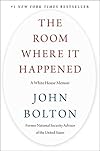
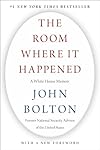
Author of The Room Where It Happened: A White House Memoir
About the Author
Image credit: John R Bolton. Photo courtesy of Chatham House.
Works by John R. Bolton
Surrender Is Not an Option: Defending America at the United Nations and Abroad (2007) 165 copies, 1 review
Associated Works
The New Leviathan: The State Versus the Individual in the 21st Century (2012) — Contributor — 10 copies
Tagged
Common Knowledge
- Other names
- Bolton, John Robert
- Birthdate
- 1948-11-20
- Gender
- male
- Education
- Yale Law School (JD|1974)
Yale College (AB|1970) - Occupations
- lawyer
diplomat
public official
public policy researcher
neoconservative - Organizations
- American Enterprise Institute
Fox News
Project for the New American Century
Jewish Institute for National Security Affairs
Committee for Peace and Security in the Gulf
Council on Foreign Relations (show all 12)
Federalist Society
Manhattan Institute for Policy Research
U.S. State Department
United Nations
U.S. Attorney General
Kirkland & Ellis - Nationality
- USA
- Birthplace
- Baltimore, Maryland, USA
- Associated Place (for map)
- Maryland, USA
Members
Reviews
Metamorpisis Sans Orange
Bolton starts his memoir as an outsider who, with a raised eyebrow or slight snicker, recounts being lauded and loved by the newly elected Donald Trump. Joining the reality show that is the Trump administration, Bolton believed himself to be among the adults protecting America from Trump, along with his children and cronies, from tearing up the Presidency like a group of high school kids whose parents are out of town. By the end of his time in the administration, and show more as reflected by the end of this memoir, Bolton is reduced to a whining clown whining about a whining clown. Thankfully one is orange, and the other wears a geriatric caterpillar under his nose, making one distinguishable from the others. show less
Bolton starts his memoir as an outsider who, with a raised eyebrow or slight snicker, recounts being lauded and loved by the newly elected Donald Trump. Joining the reality show that is the Trump administration, Bolton believed himself to be among the adults protecting America from Trump, along with his children and cronies, from tearing up the Presidency like a group of high school kids whose parents are out of town. By the end of his time in the administration, and show more as reflected by the end of this memoir, Bolton is reduced to a whining clown whining about a whining clown. Thankfully one is orange, and the other wears a geriatric caterpillar under his nose, making one distinguishable from the others. show less
https://nwhyte.livejournal.com/3429550.html
There have been a lot of White House memoirs in the last three and a half years. This is the only one I have read. I've been aware of John Bolton for a long time, as a particularly hardline (and reputedly unpleasant) activist on the Right of US foreign policy debates, who briefly served as UN ambassador under the junior Bush; and of course I've been in and out of the various Washington foreign policy institutions for years, but less so in the most show more recent period. This book, as if you didn't know, is Bolton's own account of his 17 months as National Security Adviser to President Trump.
I found it fascinating. I've seen a lot of reviews complaining that it is badly written. I disagree. I would say that Bolton takes no hostages - he assumes that the reader is already familiar with the ins and outs of US foreign policy, and with the detail of what Trump had done in his first two years in office (and what Obama did before him). Bolton barely even explains his own thinking on some of the crucial issues - he makes it clear that he hates the Iran deal and the Paris climate treaty, but only offers snippets of analysis in passing. So I felt some frustration about what is not there.
But what is there is fascinating. Bolton clearly kept good contemporaneous notes of all of his meetings and conversations, obviously with the intention of writing this book. (Trump even jokes with him about that at one point.) It's a dreadful picture of presidential disorganisation and ego, of decision systems which do not work because Trump himself refuses to be managed, of years of careful diplomacy up-ended by a single volatile outburst, and of opportunities lost. One does not have to sympathise with Bolton's political goals to sympathise with his frustration.
There are some very good set-piece accounts as well. The account of the NATO Brussels summit deserves to be made into a theatrical farce; very few details would need to be changed. The accounts of Trump's relations with North Korea are spine-chilling. The sections on Russia and China are very enlightening. The chapter on Venezuela is a record of a failure of US power projection, which Bolton attriubutes to mistakes largely made by Trump, but frankly from his own account it seems at least as important that the actors who the US supported on the ground were unable to deliver.
The chapter on Trump's last-minute decision in June 2019 to cancel a planned retaliation strike on Iran, with the title "Trump loses his way, and then his nerve", is particularly interesting because it actually shows a rather good side of Trump (which Bolton deeply disparages) - he doesn't actually like the idea of killing people, and the information that the US could be about to cause 150 Iranian deaths caused him to change his mind on authorising the strike. Bolton is of course right that the process of reaching the final decision was chaotic and wasteful of political capital, but I give Trump credit for his squeamishness. (Of course, this was motivated by the bad publicity that the casualites would generate, rather than any human sympathy for the potential victims, but we will take what we can get.)
Another specific point where (to my surprise) I found myself closer to Trump than to Bolton was the question of the planned Nord Stream 2 gas pipeline from Russia to Germany through the Baltic. It seems to me that this project dangerously increases Russian influence in the EU's energy market, and that there are many questions to be asked about it. Trump's hostility to it is more visceral, but comes from a similar suspicion of Russia (he is not as pro-Russian as some like to depict him, at least from Bolton's account). Bolton doesn't spell out his own position, but makes it clear that he disapproves of the extent to which Trump's attitude to Germany and to Angela Merkel is driven by this one issue.
I had hoped to see some discussion of a situation where I know Bolton's views are closer to mine than either of us is to the mainstream of EU and US foreign policy - the Western Sahara, where he worked with James Baker at the time when he came close to solving the comflict with Morocco. I had heard through the grapevine that he was exerting some pressure on Morocco at the time, but this may have been wishful thinking - there is no mention of it in the book, which suggests both that Bolton has moved on and that he did nothing about it when in the NSC, let alone bring it to Trump's attention.
Bolton ends by going into some detail on the impeachment process (which happened after he resigned in September 2019). Both left and right have attacked him for his behaviour here (he did not offer evidence to the House, but made himself available to the Senate, which did not avail itself of the offer). I found it difficult to get excited about the impeachment at the time - it was always clear that a supine Senate was going to acquit Trump, and truth be told the case was not as solid as it would have needed to be even in less partisan times. I also found it difficult to get excited by Bolton's account except to observe that his conscience clearly does trouble him, otherwise he would not have written at such length (and comparatively less lucidly than the rest of the book).
An interesting read, at least for those who are as wonkish as I am about international politics. show less
There have been a lot of White House memoirs in the last three and a half years. This is the only one I have read. I've been aware of John Bolton for a long time, as a particularly hardline (and reputedly unpleasant) activist on the Right of US foreign policy debates, who briefly served as UN ambassador under the junior Bush; and of course I've been in and out of the various Washington foreign policy institutions for years, but less so in the most show more recent period. This book, as if you didn't know, is Bolton's own account of his 17 months as National Security Adviser to President Trump.
I found it fascinating. I've seen a lot of reviews complaining that it is badly written. I disagree. I would say that Bolton takes no hostages - he assumes that the reader is already familiar with the ins and outs of US foreign policy, and with the detail of what Trump had done in his first two years in office (and what Obama did before him). Bolton barely even explains his own thinking on some of the crucial issues - he makes it clear that he hates the Iran deal and the Paris climate treaty, but only offers snippets of analysis in passing. So I felt some frustration about what is not there.
But what is there is fascinating. Bolton clearly kept good contemporaneous notes of all of his meetings and conversations, obviously with the intention of writing this book. (Trump even jokes with him about that at one point.) It's a dreadful picture of presidential disorganisation and ego, of decision systems which do not work because Trump himself refuses to be managed, of years of careful diplomacy up-ended by a single volatile outburst, and of opportunities lost. One does not have to sympathise with Bolton's political goals to sympathise with his frustration.
There are some very good set-piece accounts as well. The account of the NATO Brussels summit deserves to be made into a theatrical farce; very few details would need to be changed. The accounts of Trump's relations with North Korea are spine-chilling. The sections on Russia and China are very enlightening. The chapter on Venezuela is a record of a failure of US power projection, which Bolton attriubutes to mistakes largely made by Trump, but frankly from his own account it seems at least as important that the actors who the US supported on the ground were unable to deliver.
The chapter on Trump's last-minute decision in June 2019 to cancel a planned retaliation strike on Iran, with the title "Trump loses his way, and then his nerve", is particularly interesting because it actually shows a rather good side of Trump (which Bolton deeply disparages) - he doesn't actually like the idea of killing people, and the information that the US could be about to cause 150 Iranian deaths caused him to change his mind on authorising the strike. Bolton is of course right that the process of reaching the final decision was chaotic and wasteful of political capital, but I give Trump credit for his squeamishness. (Of course, this was motivated by the bad publicity that the casualites would generate, rather than any human sympathy for the potential victims, but we will take what we can get.)
Another specific point where (to my surprise) I found myself closer to Trump than to Bolton was the question of the planned Nord Stream 2 gas pipeline from Russia to Germany through the Baltic. It seems to me that this project dangerously increases Russian influence in the EU's energy market, and that there are many questions to be asked about it. Trump's hostility to it is more visceral, but comes from a similar suspicion of Russia (he is not as pro-Russian as some like to depict him, at least from Bolton's account). Bolton doesn't spell out his own position, but makes it clear that he disapproves of the extent to which Trump's attitude to Germany and to Angela Merkel is driven by this one issue.
I had hoped to see some discussion of a situation where I know Bolton's views are closer to mine than either of us is to the mainstream of EU and US foreign policy - the Western Sahara, where he worked with James Baker at the time when he came close to solving the comflict with Morocco. I had heard through the grapevine that he was exerting some pressure on Morocco at the time, but this may have been wishful thinking - there is no mention of it in the book, which suggests both that Bolton has moved on and that he did nothing about it when in the NSC, let alone bring it to Trump's attention.
Bolton ends by going into some detail on the impeachment process (which happened after he resigned in September 2019). Both left and right have attacked him for his behaviour here (he did not offer evidence to the House, but made himself available to the Senate, which did not avail itself of the offer). I found it difficult to get excited about the impeachment at the time - it was always clear that a supine Senate was going to acquit Trump, and truth be told the case was not as solid as it would have needed to be even in less partisan times. I also found it difficult to get excited by Bolton's account except to observe that his conscience clearly does trouble him, otherwise he would not have written at such length (and comparatively less lucidly than the rest of the book).
An interesting read, at least for those who are as wonkish as I am about international politics. show less
This is the most tedious book I've ever felt compelled to read. I probably would have skipped it if there hadn't been last-minute squabbles over prepublication security review, but in reality there was nothing particularly objectionable about the review (it was slightly slower than desired due to covid19, but made only the most minor of changes, all routine), and that basically summarizes the entire book: a tediously documented, probably entirely factual, and ultimately meaningless show more accounting of lots of decisions and discussions in the White House during Bolton's term as National Security Advisor.
My personal politics probably are fairly compatible with Bolton's -- while he's much more of a hawk/interventionist than I am, his analyses are generally reasonable -- you just need to apply a large correcting factor for the very high cost of most actions in blood and treasure, but he's at least reasonable at weighting different courses of action consistently.
Nothing in the book was particularly new -- that Trump makes decisions without a lot of deep discussion or debate, that his style is...jarring, and that he has been willing to do things which have been considered impossible or undesirable. Often, a lot of these actions have led to less-bad outcomes than the default or consensus action (particularly with respect to avoiding additional foreign wars), other times they're irrelevant, and sometimes bad (and then walked back or ignored by him, which seems to be a superpower most other politicians are unwilling to exercise themselves).
I really don't know of anyone who would enjoy the book. If you hate Trump, there's no real "dirt" on him in this book, and you presumably already hate Bolton. if you like Trump, Bolton isn't saying anything which will change your mind. It's probably a bit too narrowly scoped (and still unfinished) for someone interested in arms-length historical analysis of the geopolitics of the period. Maybe it's interesting to people who deeply care about the career of John Bolton, but given how he left, that career is pretty much over, so that is also a limited audience. Yet, large numbers of people will feel pressured to buy (and possibly read) this book, ultimately to disappointment. show less
My personal politics probably are fairly compatible with Bolton's -- while he's much more of a hawk/interventionist than I am, his analyses are generally reasonable -- you just need to apply a large correcting factor for the very high cost of most actions in blood and treasure, but he's at least reasonable at weighting different courses of action consistently.
Nothing in the book was particularly new -- that Trump makes decisions without a lot of deep discussion or debate, that his style is...jarring, and that he has been willing to do things which have been considered impossible or undesirable. Often, a lot of these actions have led to less-bad outcomes than the default or consensus action (particularly with respect to avoiding additional foreign wars), other times they're irrelevant, and sometimes bad (and then walked back or ignored by him, which seems to be a superpower most other politicians are unwilling to exercise themselves).
I really don't know of anyone who would enjoy the book. If you hate Trump, there's no real "dirt" on him in this book, and you presumably already hate Bolton. if you like Trump, Bolton isn't saying anything which will change your mind. It's probably a bit too narrowly scoped (and still unfinished) for someone interested in arms-length historical analysis of the geopolitics of the period. Maybe it's interesting to people who deeply care about the career of John Bolton, but given how he left, that career is pretty much over, so that is also a limited audience. Yet, large numbers of people will feel pressured to buy (and possibly read) this book, ultimately to disappointment. show less
Trump's support base - like those in Bethel - are violent old men and women who can't cope with change. They grew old knowing that they could be boss without any effort other than getting fat and owning guns. They've taught their kids the same racist tropes that have given them a sense of superiority. Now it's all falling to pieces and they think they can do something about it. The USA is on the brink thanks to the Sons and Daughters of Trump - and we may have to fight our own battle against show more our own far-right idiots. Fascism just kinda creeps up on yer, doesn’t it? Johnny-come-lately reveals in his book, for which he received millions, how awful it was to work for his lying, self-serving, uninformed and ill-tempered boss, but when it really mattered refused to testify under oath before the House Committee on Impeachment. He hid behind his boss's order not to do so and then waited for an invitation that never came from the Senate during Trump's trial. How utterly suspect is this man who cheered the Bush/Cheney disastrous invasion of Iraq, trashed the United Nations even after he became its ambassador and urged Trump who he secretly distrusted to invade Iran. "Everyone knew" (Trump's favourite phrase) that Donald J. Trump was unfit for the office the Electoral College gave him, yet Bolton followed the lead of Tillerson the former Secretary of State, Mattis the former Secretary of Defense, Kelly his former Chief of Staff, Sessions the former Attorney General and numerous others, into the halls of power and ended up resigning or getting fired with their tails between their legs. Pompeo may be next. Adjacent to Trump's video tape filled presidential library (he hates books) will be a store filled with actual books written by former aides and appointees describing their horrible tenure with the most corrupt and dishonest person ever to hold the high office of President of the United States. But it's not jut Bolton. It's every one of Trump's cabinet who have been sacked along the way. They all sold their soul to Trump, and when it inevitably went sour, started dishing out the dirt on him while at the same time pretending they were powerless to do anything about it. The truth is they were happy to ride the tiger while it lasted.
Small people in every respect. Republican leaders are complicit in supporting this idiot, but they are doing it for their own personal gain. How normal Americans can support this moron is what puzzles me (Nah. It does not puzzles me. I’m only trying to be polite. Innit?) show less
Small people in every respect. Republican leaders are complicit in supporting this idiot, but they are doing it for their own personal gain. How normal Americans can support this moron is what puzzles me (Nah. It does not puzzles me. I’m only trying to be polite. Innit?) show less
Lists
Awards


You May Also Like


Associated Authors
Statistics
- Works
- 4
- Also by
- 1
- Members
- 1,367
- Popularity
- #18,808
- Rating
- 3.1
- Reviews
- 39
- ISBNs
- 19
- Languages
- 2