
Heather Ann Thompson
Author of Blood in the Water: The Attica Prison Uprising of 1971 and Its Legacy
About the Author
Heather Ann Thompson received a bachelor's degree and master's degree from the University of Michigan and a PhD from Princeton University in 1995. Before joining the faculty of the University of Michigan in Ann Arbor in 2015, she taught history at the University of North Carolina, Charlotte from show more 1997 to 2009 and at Temple University from 2009 to 2015. She has written about the history of policing, mass incarceration, and the current criminal justice system for The New York Times, Newsweek, Time, The Atlantic, Salon, Dissent, NBC, New Labor Forum, The Daily Beast, and The Huffington Post. Her books include Whose Detroit?: Politics, Labor, and Race in a Modern American City and Blood in the Water: The Attica Prison Uprising of 1971, which won the Pulitzer Prize in History in 2017. She is also the editor of Speaking Out: Activism and Protest in the 1960s and 1970s. (Bowker Author Biography) show less
Image credit: via author's website
Works by Heather Ann Thompson
Fear and Fury: The Reagan Eighties, the Bernie Goetz Shootings, and the Rebirth of White Rage (2026) 76 copies, 3 reviews
Bullet and Burn 1 copy
Associated Works
Tagged
Common Knowledge
- Birthdate
- 1963-08-17
- Gender
- female
- Education
- University of Michigan
Princeton University - Organizations
- University of North Carolina, Charlotte
Temple University
University of Michigan - Relationships
- Wells, Jonathan Daniel (husband)
- Nationality
- USA
- Associated Place (for map)
- USA
Members
Reviews
Fear and Fury: The Reagan Eighties, the Bernie Goetz Shootings, and the Rebirth of White Rage by Heather Ann Thompson

Rating: 4.5* of five
The Publisher Says: In this masterful, groundbreaking work, Pulitzer Prize-winning author Heather Ann Thompson reveals how the infamous New York subway shooting of 1984 divided a nation, unveiling the potent cocktail of rage and resentment that ushered in a new era of white vigilante violence.
On December 22, 1984, white New Yorker Bernhard Goetz shot four Black teenagers at point-blank in a New York City subway car. Goetz slipped into the subway tunnels undetected, show more fleeing the city to evade capture. From the moment Goetz turned himself in, the narrative surrounding the shooting became a matter of extraordinary debate, igniting public outcry and capturing the attention of the nation.
While Goetz's guilt was never in question, media outlets sensationalized the event, redirecting public ire toward the victims themselves. In the end, it would take two grand juries and a civil suit to achieve justice on behalf of the four Black teenagers. For some, Goetz would go on to become a national hero, inciting a disturbing new chapter in American history. This brutal act revealed a white rage and resentment much deeper, larger, and more insidious than the actions of Bernie Goetz himself. Intensified by politicians and tabloid media, it would lead a stunning number of white Americans to celebrate vigilantism as a fully legitimate means for addressing racial fear, fracturing American race relations.
Drawing from never-before-seen and archival interviews, newspaper accounts, legal files, and more, Heather Ann Thompson sheds new light on the social and political conditions which set the stage for these events, delving into the lives of Goetz and his four victims—Darrell Cabey, Barry Allen, Troy Canty, and James Ramseur. Fear and Fury is the remarkable account and searing indictment of a crucial turning point in American history.
I RECEIVED A DRC FROM THE PUBLISHER VIA NETGALLEY. THANK YOU.
My Review: The most powerful, privileged, cosseted, spoiled class of people in the entire history of the planet feel aggrieved and put-upon by those hugely less fortunate than themselves. It is the single biggest victory ever won by a lie over the truth. This is the story of one of the most important moments in the long campaign to weaponize class struggle...downwards.
A similar, racialized effort has been just as stunningly successful, much of it supercharged by the crime committed by Goetz. There are now "stand your ground laws" in many states, one of which got George Zimmerman off a murder conviction in the case of Trayvon Martin. Zimmerman is now 42; Martin died at seventeen. Goetz is 79. Darrell Cabey is a paraplegic with the functional capacity of an eight-year-old. But Goetz is a hero to a lot of (mostly) white people because he shot a bunch of aggressive, stupid teenagers because he "felt threatened."
In reading this careful, unimpeachably sourced story of how this came to pass and the world that's followed the crime it details, I got angrier and angrier. It was my New York, the one I moved to, that was being described; yet I felt unfamiliar with it, unable to imagine myself in this city. I was admittedly young; I had little more than the rudiments of a social conscience, or an honest awareness of racial injustice; but to learn so very much I absolutely had no idea about or access to? Humbling. Infuriating, because of what I was learning.
If you're willing to go on a long, well-footnoted trip into the ugliest part of US white mens' psyches, if you'd like to know why I cheered and clapped when Hinckley made his attempt to rid us of Reagan, if you weren't even born when these events transpired and just wonder how shit got so fucked up in this country, read this book.
It's not light reading. It's serviceable writing, it never ignited my excitement; but it's not poorly done, not boring, not awkward. It does what this kind of non-fiction is meant to do. That's a good thing, if not a toe-tingling one. I hope you'll keep it in mind, get it from the library, see if you find a sale on it in one format or another. It's well worth your time. show less
The Publisher Says: In this masterful, groundbreaking work, Pulitzer Prize-winning author Heather Ann Thompson reveals how the infamous New York subway shooting of 1984 divided a nation, unveiling the potent cocktail of rage and resentment that ushered in a new era of white vigilante violence.
On December 22, 1984, white New Yorker Bernhard Goetz shot four Black teenagers at point-blank in a New York City subway car. Goetz slipped into the subway tunnels undetected, show more fleeing the city to evade capture. From the moment Goetz turned himself in, the narrative surrounding the shooting became a matter of extraordinary debate, igniting public outcry and capturing the attention of the nation.
While Goetz's guilt was never in question, media outlets sensationalized the event, redirecting public ire toward the victims themselves. In the end, it would take two grand juries and a civil suit to achieve justice on behalf of the four Black teenagers. For some, Goetz would go on to become a national hero, inciting a disturbing new chapter in American history. This brutal act revealed a white rage and resentment much deeper, larger, and more insidious than the actions of Bernie Goetz himself. Intensified by politicians and tabloid media, it would lead a stunning number of white Americans to celebrate vigilantism as a fully legitimate means for addressing racial fear, fracturing American race relations.
Drawing from never-before-seen and archival interviews, newspaper accounts, legal files, and more, Heather Ann Thompson sheds new light on the social and political conditions which set the stage for these events, delving into the lives of Goetz and his four victims—Darrell Cabey, Barry Allen, Troy Canty, and James Ramseur. Fear and Fury is the remarkable account and searing indictment of a crucial turning point in American history.
I RECEIVED A DRC FROM THE PUBLISHER VIA NETGALLEY. THANK YOU.
My Review: The most powerful, privileged, cosseted, spoiled class of people in the entire history of the planet feel aggrieved and put-upon by those hugely less fortunate than themselves. It is the single biggest victory ever won by a lie over the truth. This is the story of one of the most important moments in the long campaign to weaponize class struggle...downwards.
A similar, racialized effort has been just as stunningly successful, much of it supercharged by the crime committed by Goetz. There are now "stand your ground laws" in many states, one of which got George Zimmerman off a murder conviction in the case of Trayvon Martin. Zimmerman is now 42; Martin died at seventeen. Goetz is 79. Darrell Cabey is a paraplegic with the functional capacity of an eight-year-old. But Goetz is a hero to a lot of (mostly) white people because he shot a bunch of aggressive, stupid teenagers because he "felt threatened."
In reading this careful, unimpeachably sourced story of how this came to pass and the world that's followed the crime it details, I got angrier and angrier. It was my New York, the one I moved to, that was being described; yet I felt unfamiliar with it, unable to imagine myself in this city. I was admittedly young; I had little more than the rudiments of a social conscience, or an honest awareness of racial injustice; but to learn so very much I absolutely had no idea about or access to? Humbling. Infuriating, because of what I was learning.
If you're willing to go on a long, well-footnoted trip into the ugliest part of US white mens' psyches, if you'd like to know why I cheered and clapped when Hinckley made his attempt to rid us of Reagan, if you weren't even born when these events transpired and just wonder how shit got so fucked up in this country, read this book.
It's not light reading. It's serviceable writing, it never ignited my excitement; but it's not poorly done, not boring, not awkward. It does what this kind of non-fiction is meant to do. That's a good thing, if not a toe-tingling one. I hope you'll keep it in mind, get it from the library, see if you find a sale on it in one format or another. It's well worth your time. show less
Fear and Fury: The Reagan Eighties, the Bernie Goetz Shootings, and the Rebirth of White Rage by Heather Ann Thompson
This book is the definitive line drawn between the destructive impoverishment policies of Ronald Reagan and Bill Clinton; from Charles Bronson's "Death Wish" to Bernard Goetz to Guardian Angels to ICE; from the NY Daily News to Fox and Newsmax; from Giuliani to Trump; to Black Lives Matter and Occupy Wall Street. It's a fascinating recounting of the background and the trial of Bernie Goetz, an admitted racist and gun nut, who bought a gun in Florida illegally and shot four Black teenage boys show more on a NYC subway trip when one of them asked him for five dollars. Pent-up white rage set off by hard times and fear of people of color made Goetz a white cultural hero, just like Kyle Rittenhouse, who also got off scot-free from his one-man crime wave. The author's recounting of the Goetz trial, her extensive interviews with attorneys and the families of the victims, is riveting, and her analysis of the ebb and flow of racist actions, including the murders of George Floyd and Armaud Arbery, is convincing and insightful. The inclusion of the not guilty verdict for Daniel Penny, a white man who murdered the mentally ill Black panhandler Jordan Neely on the subway in 2024, almost 40 years to the day that Goetz fired his gun, is striking. This is true American history and this should be used as a high school and college textbook, rather than being erased. show less
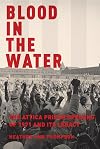
In Blood In the Water: The Attica Prison Uprising of 1971 and Its Legacy, Heather Ann Thompson traces the trajectory of the Attica Uprising from the events that precipitated it through the lengthy legal battles of just a few years prior to her publication. She describes in detail the State of New York’s efforts to cover up its own culpability for the brutality and death that resulted in the New York State Police’s retaking of the facility. Thompson sums up the goal of the uprising while show more discussing the observers’ efforts at meeting with prisoners. The chants of “Power to the People” were, according to Thompson, “what Attica, at its core, was all about. These disfranchised and seemingly disposable men were determined to stand together, in unity, to make some concrete changes to their lives” (pg. 111).
Discussing the beginning of the disaster, Thompson writes, “It was obvious to anyone who was at Attica that members of law enforcement were so riled up that it would be difficult, if not impossible, for them to do their job dispassionately should they be sent in to retake the prison” (pg. 153). She continues, “Whereas the National Guard had a clear plan already in place for bringing civil disturbances in confined areas under control, known as Operation Plan Skyhawk, the New York State Police had virtually no formal training for this sort of action” (pg. 165). Rockefeller and his subordinates feared the image of National Guardsmen storming the prison would too closely evoke Kent State. As the police readied, “although for full days had passed during which those in charge could have ensured that all protocols regarding the distribution of weapons were followed, none of the weapons now being readied for the retaking had been formally recorded. And thus, the men who were about to go into Attica were accountable to no one” (pg. 168).
Thompson describes the beginning of the cover-up following the retaking of the prison. She writes, NYSP “Captain Henry Williams went to great lengths to thwart every state effort to ask thorny questions about the actions of his men. And he went even further than that. In the immediate aftermath of the retaking, Williams took it upon himself to make sure as much evidence as possible was collected that might indicate that a prisoner committed a crime…while also making sure that nothing related to the shooting – shell casings, the weapons themselves – was collected” (pg. 288). In discussing Malcolm Bell’s attempt to apply justice evenly, Thompson writes that, despite efforts of NYSP to withhold evidence, “The one thing that [troopers’ statements] did provide, in a few instances, was evidence of which specific prisoners were shot by which specific troopers and, as important, evidence of which troopers had fired their weapons without justification and thus, in all likelihood, criminally” (pg. 409). She continues, “In the course of processing how it was that vital hindering cases had been allowed to implode, Bell eventually came to believe that a serious prosecution of members of law enforcement had in fact been set up to fail from the moment Simonetti had told him to switch his efforts from the shooter cases to cases of hindering the investigation back in August of 1974” (pg. 422). Further, “By the close of fall 1974, Bell had begun to worry that he had stumbled upon an outright conspiracy to protect Attica’s shooters, one that reached to the highest level of his own Attica investigation as well as to the office of the former governor, Nelson Rockefeller” (pg. 435). This led Bell to turn whistleblower in an attempt to expose the truth, though the State of New York managed to mitigate his revelations.
The state further betrayed the hostages, many of whom were state employees, by tricking them into accepting workman’s compensation in order to prevent them from filing a lawsuit. Thompson writes, “Without formally filing for workman’s compensation, the checks simply showed up soon after the retaking. Unbeknownst to the recipients, the instant that an Attica survivor or widow signed and cashed one of these checks, under New York state law they had ‘elected a remedy,’ which meant that they could no longer sue the state for damages” (pg. 518). In discussing the former hostages’ and their relatives’ attempts to sue the state, Thompson writes, “Getting a state official to acknowledge under oath who had shot John Monteleone, a hostage who had later died from that same shot, was huge. For the purposes of this lawsuit it confirmed just how excessive and brutal the shooting during the retaking had been. Of course it also confirmed that state officials were aware who had killed whom at Attica – the very point that Malcolm Bell had been trying to make when he went public back in 1975” (pg. 524).
Thompson concludes, “The Attica uprising of 1971 happened because ordinary men, poor men, disfranchised men, and men of color had simply had enough of being treated as less than human. That desire, and their fight, is by far Attica’s most important legacy” (pg. 570). Further, “The Attica prison uprising of 1971 shows the nation that even the most marginalized citizens will never stop fighting to be treated as human beings. It testifies to this irrepressible demand for justice. This is Attica’s legacy” (pg. 571). show less
Discussing the beginning of the disaster, Thompson writes, “It was obvious to anyone who was at Attica that members of law enforcement were so riled up that it would be difficult, if not impossible, for them to do their job dispassionately should they be sent in to retake the prison” (pg. 153). She continues, “Whereas the National Guard had a clear plan already in place for bringing civil disturbances in confined areas under control, known as Operation Plan Skyhawk, the New York State Police had virtually no formal training for this sort of action” (pg. 165). Rockefeller and his subordinates feared the image of National Guardsmen storming the prison would too closely evoke Kent State. As the police readied, “although for full days had passed during which those in charge could have ensured that all protocols regarding the distribution of weapons were followed, none of the weapons now being readied for the retaking had been formally recorded. And thus, the men who were about to go into Attica were accountable to no one” (pg. 168).
Thompson describes the beginning of the cover-up following the retaking of the prison. She writes, NYSP “Captain Henry Williams went to great lengths to thwart every state effort to ask thorny questions about the actions of his men. And he went even further than that. In the immediate aftermath of the retaking, Williams took it upon himself to make sure as much evidence as possible was collected that might indicate that a prisoner committed a crime…while also making sure that nothing related to the shooting – shell casings, the weapons themselves – was collected” (pg. 288). In discussing Malcolm Bell’s attempt to apply justice evenly, Thompson writes that, despite efforts of NYSP to withhold evidence, “The one thing that [troopers’ statements] did provide, in a few instances, was evidence of which specific prisoners were shot by which specific troopers and, as important, evidence of which troopers had fired their weapons without justification and thus, in all likelihood, criminally” (pg. 409). She continues, “In the course of processing how it was that vital hindering cases had been allowed to implode, Bell eventually came to believe that a serious prosecution of members of law enforcement had in fact been set up to fail from the moment Simonetti had told him to switch his efforts from the shooter cases to cases of hindering the investigation back in August of 1974” (pg. 422). Further, “By the close of fall 1974, Bell had begun to worry that he had stumbled upon an outright conspiracy to protect Attica’s shooters, one that reached to the highest level of his own Attica investigation as well as to the office of the former governor, Nelson Rockefeller” (pg. 435). This led Bell to turn whistleblower in an attempt to expose the truth, though the State of New York managed to mitigate his revelations.
The state further betrayed the hostages, many of whom were state employees, by tricking them into accepting workman’s compensation in order to prevent them from filing a lawsuit. Thompson writes, “Without formally filing for workman’s compensation, the checks simply showed up soon after the retaking. Unbeknownst to the recipients, the instant that an Attica survivor or widow signed and cashed one of these checks, under New York state law they had ‘elected a remedy,’ which meant that they could no longer sue the state for damages” (pg. 518). In discussing the former hostages’ and their relatives’ attempts to sue the state, Thompson writes, “Getting a state official to acknowledge under oath who had shot John Monteleone, a hostage who had later died from that same shot, was huge. For the purposes of this lawsuit it confirmed just how excessive and brutal the shooting during the retaking had been. Of course it also confirmed that state officials were aware who had killed whom at Attica – the very point that Malcolm Bell had been trying to make when he went public back in 1975” (pg. 524).
Thompson concludes, “The Attica uprising of 1971 happened because ordinary men, poor men, disfranchised men, and men of color had simply had enough of being treated as less than human. That desire, and their fight, is by far Attica’s most important legacy” (pg. 570). Further, “The Attica prison uprising of 1971 shows the nation that even the most marginalized citizens will never stop fighting to be treated as human beings. It testifies to this irrepressible demand for justice. This is Attica’s legacy” (pg. 571). show less
This book took me almost five months to read entirely, partially because it is a dense legal history spanning some forty years, and more importantly, it is a witness to a huge amount of past and present human suffering, to a level of abuse of power that remains hard to fathom, to many many people working relentlessly for a level of justice they know will and can only be inadequate. It's a hard book to read. It is an incredible piece of work, and I am deeply deeply grateful it exists. It is show more as close to the truth as most people today can access about what happened at Attica, and it sheds a light on so many related struggles, in the past and right now. show less
Awards


You May Also Like


Associated Authors
Statistics
- Works
- 5
- Also by
- 1
- Members
- 780
- Popularity
- #32,629
- Rating
- 4.4
- Reviews
- 10
- ISBNs
- 17
- Favorited
- 1