
Patrick Phillips (4) (1970–)
Author of Blood at the Root: A Racial Cleansing in America
For other authors named Patrick Phillips, see the disambiguation page.
About the Author
Patrick Phillips is currently a Henry Mitchell MacCracken Fellow at New York University.
Works by Patrick Phillips
Associated Works
Tagged
Common Knowledge
- Legal name
- Phillips, Patrick
- Birthdate
- 1970-07-30
- Gender
- male
- Occupations
- professor (English)
poet
translator
historian - Organizations
- Stanford University
Drew University - Nationality
- USA
- Birthplace
- Atlanta, Georgia, USA
- Places of residence
- Brooklyn, New York, USA
Members
Reviews
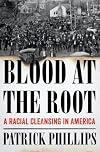
Heartbreaking telling of Forsyth, Georgia's unchecked racism, egregious cruelty, murder, fires and theft leading to the forced expulsion of all blacks beginning in 1912.
18-year old 'white' Mae Crow is missing; found raped and assaulted. Inexplicably no serious investigation was undertaken. Law and reason may have been on the books in government and in local courthouses but did little good in the daily lives of black citizens. Mae's assault and resulting death was huge in Forsyth. It was show more easy for whites who hated blacks to rile up mostly illiterate but some educated white townspeople that blacks were responsible; creating armed and violent mobs looking for blacks to lynch. Why find out who committed the crime when you have blacks conveniently living near Mae's family's farm? Hiram Parks Bell, white supremacist, forces Ernest Knox to 'confess' or be lynched, (a typical torture at that time), and brings him and Oscar Daniel to jail. Other black 'witnesses' are brought along as well. Thankfully, Mayor Charlie Harris prevents the evil Sheriff Bill Reid from lynching them all at once.
But after another white woman says she saw black men in her bedroom, Big Rob Edwards is found and brought to jail where Reid 'disappears' allowing white mob to break in, attack, shoot and lynch him!
Black citizens saw the anger and hatred and many left for Atlanta. White mobs threaten poor blacks to leave town. Black homes and churches are burned down so they have no place to live. Even after the Knox and Daniel joke of a trial, and their lynchings, white mobs continue and escalate threats to black farm owners, giving them little or no compensation to leave. Mayor Harris tries to get the governor to intervene but other than holding a few meetings, nothing is done to stop the threats, fires and expulsions! Wealthy white land-owners protect their black employees until the white mobs threaten them as well. The press reveals little of what is actually going on until years later. They report that Forsyth is a golly-gee great town, and any troubles reported are due to 'outsiders.'
Soon all black citizens are gone, for years and years! Any blacks who inadvertently stop in Forsyth are told to leave immediately, or in the case of Firefight Miguel Marcelli and his girl friend Shirley, get shot at and nearly killed in 1980!!
Civil Rights activists decide to hold a Brotherhood March in Forsyth in 1987. Group receives threatening calls but together with Hosea Williams they go ahead with plan but are greeted by approx. 2,500 racist whites who throw sticks and stones at them. Sheriff tells marchers he can't guarantee their safety as he doesn't have large enough staff. Second march includes many more marchers, and more protection for them. Williams sets up Coalition to End Fear and Intimidation in Forsyth County asking Forsyth to apologize and compensate black descendants for expulsion. Forsyth responds by saying that blacks are the ones causing trouble! But in 1988 the KKK is sued and takes a big hit financially which slows and cripples their racist endeavors.
Very slowly, blacks move into Forsyth. Sadly, a statue of Hiram Parks Bell, defender of white over black domination greets visitors! No sign or statue to note the historical illegal lynchings, fires, or expulsions of American citizens (except some documents in Forsyth's Courthouse)!
And were Mae Crow's attacker(s) ever discovered? show less
18-year old 'white' Mae Crow is missing; found raped and assaulted. Inexplicably no serious investigation was undertaken. Law and reason may have been on the books in government and in local courthouses but did little good in the daily lives of black citizens. Mae's assault and resulting death was huge in Forsyth. It was show more easy for whites who hated blacks to rile up mostly illiterate but some educated white townspeople that blacks were responsible; creating armed and violent mobs looking for blacks to lynch. Why find out who committed the crime when you have blacks conveniently living near Mae's family's farm? Hiram Parks Bell, white supremacist, forces Ernest Knox to 'confess' or be lynched, (a typical torture at that time), and brings him and Oscar Daniel to jail. Other black 'witnesses' are brought along as well. Thankfully, Mayor Charlie Harris prevents the evil Sheriff Bill Reid from lynching them all at once.
But after another white woman says she saw black men in her bedroom, Big Rob Edwards is found and brought to jail where Reid 'disappears' allowing white mob to break in, attack, shoot and lynch him!
Black citizens saw the anger and hatred and many left for Atlanta. White mobs threaten poor blacks to leave town. Black homes and churches are burned down so they have no place to live. Even after the Knox and Daniel joke of a trial, and their lynchings, white mobs continue and escalate threats to black farm owners, giving them little or no compensation to leave. Mayor Harris tries to get the governor to intervene but other than holding a few meetings, nothing is done to stop the threats, fires and expulsions! Wealthy white land-owners protect their black employees until the white mobs threaten them as well. The press reveals little of what is actually going on until years later. They report that Forsyth is a golly-gee great town, and any troubles reported are due to 'outsiders.'
Soon all black citizens are gone, for years and years! Any blacks who inadvertently stop in Forsyth are told to leave immediately, or in the case of Firefight Miguel Marcelli and his girl friend Shirley, get shot at and nearly killed in 1980!!
Civil Rights activists decide to hold a Brotherhood March in Forsyth in 1987. Group receives threatening calls but together with Hosea Williams they go ahead with plan but are greeted by approx. 2,500 racist whites who throw sticks and stones at them. Sheriff tells marchers he can't guarantee their safety as he doesn't have large enough staff. Second march includes many more marchers, and more protection for them. Williams sets up Coalition to End Fear and Intimidation in Forsyth County asking Forsyth to apologize and compensate black descendants for expulsion. Forsyth responds by saying that blacks are the ones causing trouble! But in 1988 the KKK is sued and takes a big hit financially which slows and cripples their racist endeavors.
Very slowly, blacks move into Forsyth. Sadly, a statue of Hiram Parks Bell, defender of white over black domination greets visitors! No sign or statue to note the historical illegal lynchings, fires, or expulsions of American citizens (except some documents in Forsyth's Courthouse)!
And were Mae Crow's attacker(s) ever discovered? show less
Blood at the Root by Patrick Phillips took me weeks to read. It's not an overly long book, the author writes well, and the story is a fascinating one, but Forsyth county is just a hundred miles from my home and a quick two hour drive away. It could just as easily have happened here.
Forsyth county lies just outside of Atlanta, Georgia and Patrick Phillips moved there with his family in the 1980s, when the county still didn't allow non-white people to live, or even pass through there. In show more 1987, his family went to march with Civil Rights campaigners seeking to integrate the county, but when the busloads of peaceful marchers were turned back by crowds of Forsyth county residents, Phillips and his family had to have the police escort them home. Then Phillips left for university and his hometown became just a colorful topic of conversation.
Years later, he has written a book about how in 1912, after one woman is discovered in bed with a black man and another is discovered murdered in the woods, angry mobs drove all African Americans from the county. And they and their descendants kept Forsyth county free of anyone not seen as white until the 1990s. Phillips is rigorous in his research and the story he tells is shocking and difficult to read about, but is tremendously important -- it's essential reading given how recently the county was integrated and how the attitudes still exist today. show less
Forsyth county lies just outside of Atlanta, Georgia and Patrick Phillips moved there with his family in the 1980s, when the county still didn't allow non-white people to live, or even pass through there. In show more 1987, his family went to march with Civil Rights campaigners seeking to integrate the county, but when the busloads of peaceful marchers were turned back by crowds of Forsyth county residents, Phillips and his family had to have the police escort them home. Then Phillips left for university and his hometown became just a colorful topic of conversation.
Years later, he has written a book about how in 1912, after one woman is discovered in bed with a black man and another is discovered murdered in the woods, angry mobs drove all African Americans from the county. And they and their descendants kept Forsyth county free of anyone not seen as white until the 1990s. Phillips is rigorous in his research and the story he tells is shocking and difficult to read about, but is tremendously important -- it's essential reading given how recently the county was integrated and how the attitudes still exist today. show less

This is the history many tried to suppress, ignore or forget - the legacy of racial cleansing in America. The author approaches it in microcosm by addressing the specific racial cleansing that occurred in his home county of Forsyth. After the murder of a young white woman, a series of black men are accused and summarily executed - some by the court and one by the mob. Afterwards, a group of angry, paranoid white men decided to have done with all black people. Riding out in the night they show more began to threaten, burn and even bomb black families. The unwritten law became: no blacks in Forsyth county. It remained relatively unchallenged for almost 100 years.
This book is dark, grim, and offers a look into the face of racism. All readers should examine their own hearts and try to do better. Not uplifting, but necessary. show less
This book is dark, grim, and offers a look into the face of racism. All readers should examine their own hearts and try to do better. Not uplifting, but necessary. show less

Song of the Closing Doors begins with the cancer diagnosis of the author’s friend and memories of their their youth when they were in love with the world, oblivious that it might end. Phillips recalls when they were seventeen, “in that year when all/we ever did is play.”
A few poems later, his sister discovers a dog’s leash in a coat pocket and cries. “Death is a god/damned thief.”
I think of my peers who have passed, friends lost early to disease or accident. Parents who died of show more cancer. We have the ashes of four dogs buried in the front garden. I live in my parent’s house and am haunted by Mom’s reflection in the mirror where I often watched her apply red lipstick. I remember the dogs waiting at the door, sleeping next to the bed.
Loss is inevitable. I am thankful for poets who put life’s grief into words.
Phillips writes about marriage and the momentary pleasures of life, the joy of pizza, and the man on the train who warns “y’all don’t understand yet,/ but you will.”
I understand. Doors are closing, time is short.
May the Living
who read this
still speak of the dead
with wild imprecision:
sins all forgotten,
rage overwritten,
as even our bitterest
enemies shed
great crocodile tears
and pretend.
I hereby forgive
all the bullshit
that follows a death.
If you’re reading this,
we were once friends.:
May the Living from Son of the Closing Doors by Patrick Phillips
Thanks to A. A. Knopf for a free book. show less
A few poems later, his sister discovers a dog’s leash in a coat pocket and cries. “Death is a god/damned thief.”
I think of my peers who have passed, friends lost early to disease or accident. Parents who died of show more cancer. We have the ashes of four dogs buried in the front garden. I live in my parent’s house and am haunted by Mom’s reflection in the mirror where I often watched her apply red lipstick. I remember the dogs waiting at the door, sleeping next to the bed.
Loss is inevitable. I am thankful for poets who put life’s grief into words.
Phillips writes about marriage and the momentary pleasures of life, the joy of pizza, and the man on the train who warns “y’all don’t understand yet,/ but you will.”
I understand. Doors are closing, time is short.
May the Living
who read this
still speak of the dead
with wild imprecision:
sins all forgotten,
rage overwritten,
as even our bitterest
enemies shed
great crocodile tears
and pretend.
I hereby forgive
all the bullshit
that follows a death.
If you’re reading this,
we were once friends.:
May the Living from Son of the Closing Doors by Patrick Phillips
Thanks to A. A. Knopf for a free book. show less
Lists
Awards


You May Also Like


Associated Authors
Statistics
- Works
- 5
- Also by
- 2
- Members
- 554
- Popularity
- #45,049
- Rating
- 4.3
- Reviews
- 17
- ISBNs
- 28
- Languages
- 1