
Charles S. Peirce (1839–1914)
Author of Philosophical Writings of Peirce
About the Author
Image credit: Charles Sanders Peirce
Series
Works by Charles S. Peirce
The Essential Peirce, Volume 1: Selected Philosophical Writings, 1867-1893 (1992) 217 copies, 1 review
Reasoning and the Logic of Things: The Cambridge Conferences Lectures of 1898 (Harvard Historical Studies) (1992) 65 copies
Collected Papers of Charles Sanders Peirce, Volumes I and II: Principles of Philosophy and Elements of Logic (1932) 28 copies
Pragmatism As a Principle and Method of Right Thinking: The 1903 Harvard Lectures on Pragmatism (1997) 26 copies
Collected Papers of Charles Sanders Peirce, Volumes V and VI: Pragmatism and Pragmaticism and Scientific Metaphysics (1935) 19 copies
Collected Papers of Charles Sanders Peirce, Volumes III and IV: Exact Logic (Published Papers) and the Simplest Mathematics (1933) 16 copies
Philosophy of Mathematics: Selected Writings (Selections from the Writings of Charles S. Peirce) (2010) 16 copies
Collected Papers of Charles Sanders Peirce, Volumes VII and VIII: Science and Philosophy and Reviews, Correspondence and Bibliography (1958) 15 copies
Writings of Charles S. Peirce: A Chronological Edition, Volume 8: 1890--1892 (Writings of Charles S Peirce) (2009) 9 copies
Os Pensadores: Peirce / Frege 7 copies
Semiotic & Significs: The Correspondence Between Charles S. Peirce & Victoria Lady Welby (1977) 6 copies
Collected papers - Africa 4 copies
Charles Sanders Peirce: Contributions to the Nation. Comp by Kenneth L. Ketner. Part 3: 1901-1908 (3d of a 4 Vol Set) (1979) 3 copies
Philosophical Writings of Peirce - Selected and Edited, with Intro., by J. Buchler. Dover. 1955. 3 copies
Escritos coligidos 3 copies
Peirce 2 copies
Letters to Lady Welby 2 copies
Charles Sanders Peirce: Contributions to the Nation. Comp by K.L. Ketner. Part 2: 1894-1900 (1978) 2 copies
Scritti di logica 2 copies
Obra filosófica reunida (1867-1893) (Seccion de Obras de Filosofia) (Spanish Edition) (2012) 2 copies
Semiótica e Filosofia 2 copies
Leibniz Rewritten 1 copy
Obra lógico semiótica 1 copy
Jasność i wyraźność 1 copy
Charles S. Peirce: The Logic of Interdisciplinarity - The Monist - Series (Deutsche Zeitschrift für Philosophie, Sonderbände) (2009) 1 copy
Scritti scelti 1 copy
The correspondence of Charles S. Peirce and the Open Court Publishing Company, 1890-1913 (2022) 1 copy
The essential writings. 1 copy
Scritti di filosofia 1 copy
MC-103 Divisão dos Signos 1 copy
El amor evolutivo : y otros ensayos sobre ciencia y religión / Charles S. Peirce ; edición y traducción de Sara Barrena. (1900) 1 copy
Abecedarium 1 copy
Semnificatie si actiune 1 copy
Associated Works
Tagged
Common Knowledge
- Legal name
- Peirce, Charles Sanders
- Birthdate
- 1839-09-10
- Date of death
- 1914-04-19
- Gender
- male
- Education
- Harvard University (B.A.|1859 | M.A.|1862 | B.S. summa cum laude|1863)
- Occupations
- philosopher
logician
mathematician
scientist
geodesist
pauper - Organizations
- United States Coast Survey
Johns Hopkins University
Metaphysical Club - Awards and honors
- Lowell Lectures
Harvard Lectures (1898)
Harvard Lectures (1903)
Harvard Lectures (1907)
American Academy of Arts and Sciences (1867)
National Academy of Sciences (1868) - Relationships
- Wright, Chauncey
James, William
Holmes, Oliver Wendell, Jr. (friend)
Fiske, John
Abbot, Francis Ellingwood
Everett, C. C. (show all 9)
Royce, Josiah
Howells, William Dean (friend)
Peirce, Benjamin (father) - Short biography
- American philosopher. Born in Cambridge, Massachusetts. The son of Harvard mathematician, Benjamin Peirce. Graduated from Harvard in 1859. He worked in the U.S. Coast and Geodetic Survery from 1860 to 1891. He taught logic at Johns Hopkins University, 1879 to 1894; and for three years was special lecturer in Philosophy of Science at Harvard. He also lectured at the Lowell Institute in Boston. Retired to Milford, Pennsylvania in 1887. Principal writings: The Collected Papers of C. S. Peirce, vols. 1-6 (ed. C. Hartshorne and P. Weiss), 1931-35; vols. 7-8 (ed. A. Burks), 1958. From: "Dictionary of Philosophy and Religion, Eastern and Western Thought" by W. L. Reese, Humanities Press, 1980.
- Cause of death
- cancer
- Nationality
- USA
- Birthplace
- Cambridge, Massachusetts, USA
- Places of residence
- Baltimore, Maryland, USA
- Place of death
- Milford, Pennsylvania, USA
- Associated Place (for map)
- USA
Members
Reviews

An important essay in understanding the origins of American Pragmatism. The aim is to pursue a notion of truth and an understanding of reality that remains connected to action and experience. It is possible for people to hold contrary notions of truth as long as each facilitates the fixing of belief and the completion of action. Until a circumstance arises where the difference between perceptions of truth matter, because they are contrary to a reality that exists independent of our belief in show more it, both perceptions are true. "Only practical distinctions have meaning" show less
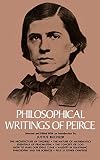
Prefiguring Karl Popper's falsifiability requirement and bringing a real-world,. scientific focus to discovery and exploration, "Verifiable" is one Peirce core tenet for worthy and valid hypotheses to consider:
Peirce refines this to one of his many neologisms: "Falibilism":
A master of the history of philosophy, I appreciate Peirce's summaries such as that of Descartes
I was a bit surprised to encounter the charlatan Eusapia Palladino I also met in
Illusions And Delusions Of The Supernatural And The Occult. She was apparently quite well known.
Peirce's Abduction presages Bayesian priors. This Peirce-ism is accompanied by obscure terms like the obsolete Moner, other obscurities, and more of his new words like Phaneron. Overall, while it can be difficult to get through the date and unusual language, this is an interesting overview of the development of Peirce's thought including his layout of the foundations of probability. show less
show more
What... is the end of an explanatory hypothesis? Its end is, through subjection to the test of experiment, to lead to the avoidance of all surprise and to the establishment of a habit of positive expectation that shall not be disappointed. Any hypothesis, therefore, may be admissible,
in the absence of any special reasons to the contrary, provided it be capable of experimental verification, and only in so far as it is capable of such verification. This is approximately the doctrine of pragmatism. But just here a broad question opens out before us. What are we to understand by experimental verification?
Peirce refines this to one of his many neologisms: "Falibilism":
...we cannot in any way reach perfect certitude nor exactitude. We never can be absolutely sure of any-thing, nor can we with any probability ascertain the exact value of any measure or general ratio.
This is my conclusion, after many years study of the logic of science; and it is the conclusion which others, of very different cast of mind, have come to, likewise. I believe I may say there is no tenable opinion regarding human knowledge which does not legitimately lead to this corollary. Certainly there is nothing new in it; and many of the greatest minds of all time have held it for true.
Indeed, most everybody will admit it until he begins to see what is involved in the admission-and then most people will draw back. It will not be admitted by persons utterly incapable of philosophical reflection. It will not be fully admitted by masterful minds developed exclusively in the direction of action and accustomed to claim practical infallibility in matters of business. These men will admit the incurable fallibility of all opinions readily enough; only, they will always make exception of their own. The doctrine of fallibilism will also be denied by those who fear its consequences for science, for religion, and for morality...
[...]
Though infallibility in scientific matters seems to me irresistibly comical, I should be in a sad way if I could not retain a high respect for those who lay claim to it, for they comprise the greater part of the people who have any conversation at all. When I say they lay claim to it, I mean they assume the functions of it quite naturally and unconsciously. The full meaning of the adage Humanum est errare, they have never waked up to. In those sciences of measurement which are the least subject to error-metrology, geodesy, and metrical astronomy-no man of self-respect ever now states his result, without affixing to it its probable error; and if this practice is not followed in other sciences it is because in those the probable errors are too vast to be estimated.
A master of the history of philosophy, I appreciate Peirce's summaries such as that of Descartes
DESCARTES is the father of modern philosophy, and the spirit of Cartesianism-that which principally distinguishes it from the scholasticism which it displaced-may be compendiously stated as follows:
1. It teaches that philosophy must begin with universal doubt; whereas scholasticism had never questioned fundamentals.
2. It teaches that the ultimate test of certainty is to be found in the individual consciousness; whereas scholasticism had rested on the testimony of sages and of the Catholic Church.
3. The multiform argumentation of the middle ages is replaced by a single thread of inference depending often upon inconspicuous premisses.
4. Scholasticism had its mysteries of faith, but undertook to explain all created things. But there are many facts which Cartesianism not only does not explain, but renders absolutely in-explicable, unless to say that "God makes them so" is to be regarded as an explanation.
In some, or all of these respects, most modern philosophers have been, in effect, Cartesians. Now without wishing to return to scholasticism, it seems to me that modern science and modern logic require us to stand upon a very different platform from this.
1. We cannot begin with complete doubt. We must begin with all the prejudices which we actually have when we enter upon the study of philosophy. These prejudices are not to be dispelled by a maxim, for they are things which it does not occur to us can be questioned. Hence this initial scepticism will be a mere self-deception, and not real doubt; and no one who follows the Cartesian method will ever be satisfied until he has formally recovered all those beliefs which in form he has given up. It is, therefore, as useless a preliminary as going to the North Pole would be in order to get to Constantinople by coming down regularly upon a meridian.
I was a bit surprised to encounter the charlatan Eusapia Palladino I also met in
Illusions And Delusions Of The Supernatural And The Occult. She was apparently quite well known.
Eusapia Palladino had been proved to be a very clever prestigiateuse and cheat, and was visited by a Mr. Carrington, whom I suppose to be so clever in finding out how tricks are done, that it is highly improbable that any given trick should long baffle him. In point of fact he has often caught the Palladino creature in acts of fraud. Some of her performances, however, he cannot explain; and thereupon he urges the theory that these are supernatural, or, as he prefers to phrase it, "supernormal." Well, I know how it is that when a man has been long intensely exercised and over-fatigued by an enigma, his common-sense will sometimes desert him; but it seems to me that the Palladino has simply been too clever for him, as no doubt she would be for me. The theory that there is anything "supernormal," or super anything but superchérie in the case, seems to me as needless as any theory I ever came across.
That is to say, granted that it is not yet proved that women who deceive for gain receive aid from the spiritual world, I think it more plausible that there are tricks that can deceive Mr. Carrington than that the Palladino woman has received such aid. By Plausible, I mean that a theory that has not yet been subjected to any test, although more or less surprising phenomena have occurred which it would explain if it were true, is in itself of such a character as to recommend it for further examination or, if it be highly plausible, justify us in seriously inclining toward belief in it, as long as the phenomena be inexplicable otherwise.
Peirce's Abduction presages Bayesian priors. This Peirce-ism is accompanied by obscure terms like the obsolete Moner, other obscurities, and more of his new words like Phaneron. Overall, while it can be difficult to get through the date and unusual language, this is an interesting overview of the development of Peirce's thought including his layout of the foundations of probability. show less
Not a bad read. Quite dry though. Peirce was a Scotist logician; and that doesn't make for an incredibly enjoyable read. My preference is for the more speculative metaphysical philosophies; but I don't mind studying rigorous epistemology on occasion.
Peirce was the founder of what came to be known as "pragmatism"; or as he later preferred to call it: "pragmaticism", to differentiate his approach from that of William James, who was influenced by Peirce. Peirce was also a pioneer in the study show more of semeiotics.
This book was cobbled together from numerous sources, including periodicals. It is rather a rough sketch of Peirce's output and one does get the feeling that much is lacking in the presentation; although, I must admit that it probably does merit reading more than once because his thought is often quite involved, more involved than can be fathomed from one reading alone. I have to say that one thing that caught my attention was his criticisms of Descartes, which are basically almost identical with my criticisms of him. Peirce spends a goodly amount of time dismissing different brands of philosophy in order to bolster pragmaticism and his more speculative semi-religious application he referred to as "agapism"; which is in some manner based on the New Testament, but which he also feels is in some sense practical and empirical.
Decent book. I doubt I'll be revisiting it anytime soon though. He does go over numerous subjects, including evolution, chance, probability, science, God, tychism etc. Too much to really elucidate in this review. If logic and epistemology are your cup of tea than Peirce is certainly worth reading show less
Peirce was the founder of what came to be known as "pragmatism"; or as he later preferred to call it: "pragmaticism", to differentiate his approach from that of William James, who was influenced by Peirce. Peirce was also a pioneer in the study show more of semeiotics.
This book was cobbled together from numerous sources, including periodicals. It is rather a rough sketch of Peirce's output and one does get the feeling that much is lacking in the presentation; although, I must admit that it probably does merit reading more than once because his thought is often quite involved, more involved than can be fathomed from one reading alone. I have to say that one thing that caught my attention was his criticisms of Descartes, which are basically almost identical with my criticisms of him. Peirce spends a goodly amount of time dismissing different brands of philosophy in order to bolster pragmaticism and his more speculative semi-religious application he referred to as "agapism"; which is in some manner based on the New Testament, but which he also feels is in some sense practical and empirical.
Decent book. I doubt I'll be revisiting it anytime soon though. He does go over numerous subjects, including evolution, chance, probability, science, God, tychism etc. Too much to really elucidate in this review. If logic and epistemology are your cup of tea than Peirce is certainly worth reading show less
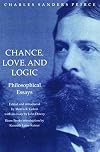
Peirce, credited with "inventing" pragmatism, is now recognized as one of the seminal American philosophers although he seems to be much more popular in Europe than in the U.S., oddly. Rorty, one of the most recent pragmatists tended to dismiss Perice as not quite being able to let go of the notion of an ahistorical truth, which, to Rorty, would condemn him utterly.
Habermas is a fan, as is Umberto Eco--Peirce also, luck would have it, invented "semiotics", Eco's specialty when he isn't show more writing novels.
This is a pretty good introduction to his work, available for free as an ebook--but the ebook is a rough scan with no proofreading, so contains many mispellings and superfluous characters and the rendering of the handful of formulas makes then useless. We shouldn't complain too much about free books, but if you're really interested spring for [The Essential Peirce]. show less
Habermas is a fan, as is Umberto Eco--Peirce also, luck would have it, invented "semiotics", Eco's specialty when he isn't show more writing novels.
This is a pretty good introduction to his work, available for free as an ebook--but the ebook is a rough scan with no proofreading, so contains many mispellings and superfluous characters and the rendering of the handful of formulas makes then useless. We shouldn't complain too much about free books, but if you're really interested spring for [The Essential Peirce]. show less
Awards

You May Also Like


Associated Authors
Statistics
- Works
- 151
- Also by
- 8
- Members
- 2,098
- Popularity
- #12,269
- Rating
- 4.0
- Reviews
- 11
- ISBNs
- 154
- Languages
- 12
- Favorited
- 15


