
Edward Everett Hale (1) (1822–1909)
Author of The Man Without a Country
For other authors named Edward Everett Hale, see the disambiguation page.
About the Author
Image credit: 1905 photograph (LoC Prints and Photographs, LC-USZ62-99518)
Works by Edward Everett Hale
Patriotic American stories;: The man without a country, by Edward Everett Hale; A message to Garcia, by Elbert Hubbard; (1999) 18 copies, 1 review
Kanzas and Nebraska: the history, geographical and physical characteristics, and political position of those territories (1977) 5 copies
One hundred years ago : how the war began. A series of sketches from original authorities (2019) 3 copies
If, yes, and perhaps. Four possibilities and six exaggerations with some bits of fact (2010) 3 copies
His level best, and other stories 3 copies
Stories of war told by soldiers 3 copies
Tarry at Home Travels 2 copies
Susan's escort, and others microform 2 copies
A family flight around home 1 copy
From thanksgiving to fast : fifteen sermons preached in the South Congregational Church, Boston 1 copy
The kingdom of God 1 copy
I am only one 1 copy
The First True Gentleman 1 copy
Associated Works
The Lincoln Anthology: Great Writers on His Life and Legacy from 1860 to Now (2008) — Contributor — 172 copies, 1 review
The Best American Humorous Short Stories [edited by Alexander Jessup] (1920) — Contributor — 78 copies, 1 review
The Man Without a Country and Other Stories [Airmont Books] (1971) — Contributor — 49 copies, 2 reviews
Homes of American Authors : Comprising Anecdotical, Personal, and Descriptive Sketches (1855) — Contributor — 2 copies
Tagged
Common Knowledge
- Birthdate
- 1822-04-03
- Date of death
- 1909-06-10
- Gender
- male
- Education
- Harvard College
- Occupations
- historian
clergyman
teacher
editor
Chaplain of the United States Senate - Awards and honors
- Phi Beta Kappa
Bowdoin Prize (1838)
Bowdoin Prize (1839) - Relationships
- Hale, Nathan (great-uncle)
Hale, Lucretia Peabody (sister)
Hale, Susan (sister) - Nationality
- USA
- Birthplace
- Boston, Massachusetts, USA
- Places of residence
- Boston, Massachusetts, USA
Worcester, Massachusetts, USA - Place of death
- Roxbury, Massachusetts, USA
- Burial location
- Forest Hills Cemetery, Jamaica Plain, Massachusetts, USA
- Associated Place (for map)
- Massachusetts, USA
Members
Reviews

A long short story (or novella to be generous) "The Man without a Country" by Edward Everett Hale is rightly an American classic. It explores the issues raised by patriotism as seen by an American writer in the mid-nineteenth century through a fictional tragedy. It also teaches us something about the history of American attitudes toward identity.
Philip Nolan, a fictional American army officer during the presidency of Thomas Jefferson, played a minor role in a historical conspiracy case in show more which former Vicepresident Aaron Burr 14arguably the first true psychopath in American politics, tried to carve his own empire out the American frontier. Nolan's courtmartial probably did not need to have such a draconian result as it did because of his minor role, but after Nolan stood up and yelled "Damn the United States! I never want to hear her name again!" his judges decided to grant his wish: He was put on a navy ship and was to be kept at sea for the rest of his life, never to hear about or see his country again.
Nolan lived this way for over fifty years. At first he treated his sentence as a lark, a paid cruise around the world, but during all that time, a number of incidents painfully reminded him of his psychological as well as physical imprisonment, and broke him so that he had to rebuild himself in order to maintain his sanity. (Not a small kaffkaesque touch is how even in this paean to American identity there is the recognition that an American government bureaucracy can lose justice between the cracks: after several years, the government no longer remembers Nolan's sentence 14or pretends not to remember; so his punishment goes on because no one ever decides to end it; the govenrment takes the position that Nolan does not exist and yet his punishment is to continue to be carried out.)
Among the reminders of his statelessness is an encounter with a slave ship. Although the United States continued to practice slavery, it outlawed the importation of slaves. This meant that the U.S. Navy was charged with stopping slave ships in the Atlantic. (The British Navy had been doing the same thing for a while before the U.S.) Nolan, as the only man on board able to interpret, helped find out whether the slaves would be willing to be freed on a nearby island; when the slaves began to cry that they wanted to go home to their own countries, Nolan could barely keep himself together; he too wished he could go home; and he persuaded the captain to take the Africans back to Africa.
Evidently, Hale believed 14or perhaps he just expresses the zeitgeist 14in Manifest Destiny (MD), the idea that America should stretch from sea to shining sea and perhaps acquire even more territory than that. His fictional narrator chides the administration of James Madison for not wanting to claim islands in the Pacific, and another character insists that the United States should claim Bermuda. Hale shows how MD was, indeed, a seductive ideology.
Hale's exploration of the meaning of patriotism still stimulates thought about a perennial question, and does so in an entertaining way. show less
Philip Nolan, a fictional American army officer during the presidency of Thomas Jefferson, played a minor role in a historical conspiracy case in show more which former Vicepresident Aaron Burr 14arguably the first true psychopath in American politics, tried to carve his own empire out the American frontier. Nolan's courtmartial probably did not need to have such a draconian result as it did because of his minor role, but after Nolan stood up and yelled "Damn the United States! I never want to hear her name again!" his judges decided to grant his wish: He was put on a navy ship and was to be kept at sea for the rest of his life, never to hear about or see his country again.
Nolan lived this way for over fifty years. At first he treated his sentence as a lark, a paid cruise around the world, but during all that time, a number of incidents painfully reminded him of his psychological as well as physical imprisonment, and broke him so that he had to rebuild himself in order to maintain his sanity. (Not a small kaffkaesque touch is how even in this paean to American identity there is the recognition that an American government bureaucracy can lose justice between the cracks: after several years, the government no longer remembers Nolan's sentence 14or pretends not to remember; so his punishment goes on because no one ever decides to end it; the govenrment takes the position that Nolan does not exist and yet his punishment is to continue to be carried out.)
Among the reminders of his statelessness is an encounter with a slave ship. Although the United States continued to practice slavery, it outlawed the importation of slaves. This meant that the U.S. Navy was charged with stopping slave ships in the Atlantic. (The British Navy had been doing the same thing for a while before the U.S.) Nolan, as the only man on board able to interpret, helped find out whether the slaves would be willing to be freed on a nearby island; when the slaves began to cry that they wanted to go home to their own countries, Nolan could barely keep himself together; he too wished he could go home; and he persuaded the captain to take the Africans back to Africa.
Evidently, Hale believed 14or perhaps he just expresses the zeitgeist 14in Manifest Destiny (MD), the idea that America should stretch from sea to shining sea and perhaps acquire even more territory than that. His fictional narrator chides the administration of James Madison for not wanting to claim islands in the Pacific, and another character insists that the United States should claim Bermuda. Hale shows how MD was, indeed, a seductive ideology.
Hale's exploration of the meaning of patriotism still stimulates thought about a perennial question, and does so in an entertaining way. show less

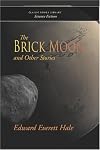
The Brick Moon is a short science-fiction story in which a group of American researchers attempt to solve “the longitude problem” by building and launching a second moon into space that people can use as a reference point when calculating their location. It is perhaps unintentionally hilarious for a 21st-century reader, but for me that’s part of its charm.
The Survivors Story [2/5] see Updates for others.
That was pretty good collection. The title story isn't really sci-fi although it does start off as a sort of knockoff of Earth to the Moon but ultimately, like several of the stories, its actually just a social commentary.
A number of the tales are about the benefits of a close-knit social group over the larger society. There's also a good bit of humour here and there and some really dark humour in two of stories. The final story the show more Survivors Story is actually quite experimental too.
I like the style of writing also but it can be a bit confusing at times due to the age of the stories. First half of the collection was better than the second IMO too.
Four christmas stories and a thanksgiving one if your looking for something seasonal.
Note: I read the gutenberg version and (as of this post) the story Ideals is garbled there due to part of it originally being in two columns. I fixed that and a small typo and added the story One Cent to the contents page from which it was missing and hyperlinked the contents while i was at it.
Fixed version can be found HERE . show less
That was pretty good collection. The title story isn't really sci-fi although it does start off as a sort of knockoff of Earth to the Moon but ultimately, like several of the stories, its actually just a social commentary.
A number of the tales are about the benefits of a close-knit social group over the larger society. There's also a good bit of humour here and there and some really dark humour in two of stories. The final story the show more Survivors Story is actually quite experimental too.
I like the style of writing also but it can be a bit confusing at times due to the age of the stories. First half of the collection was better than the second IMO too.
Four christmas stories and a thanksgiving one if your looking for something seasonal.
Note: I read the gutenberg version and (as of this post) the story Ideals is garbled there due to part of it originally being in two columns. I fixed that and a small typo and added the story One Cent to the contents page from which it was missing and hyperlinked the contents while i was at it.
Fixed version can be found HERE . show less

"Be careful what you wish for". Fictional tale of a man called Philip Nolan, who was tried and convicted in 1807 of association with Aaron Burr, who himself was on trial for treason. During the trial Nolan damned his country and expressed the wish to never hear the name of the United States again as long as he lived. His sentence was to have that wish granted, and he was ordered to spend the rest of his life aboard Navy ships, where he would be accorded the privileges of rank, but never show more allowed to hear a word about his country again. He died, therefore, unaware of the civil war which threatened the continued existence of the country he once renounced. Fanciful, implausible, intended to stir up patriotic fervor, and full of holes. show less
Lists
Awards


You May Also Like


Associated Authors
Statistics
- Works
- 83
- Also by
- 15
- Members
- 1,458
- Popularity
- #17,623
- Rating
- 3.4
- Reviews
- 21
- ISBNs
- 202
- Languages
- 1


