
David Whitley (1) (1984–)
Author of The Midnight Charter
For other authors named David Whitley, see the disambiguation page.
Series
Works by David Whitley
Tagged
Common Knowledge
- Birthdate
- 1984
- Gender
- male
- Education
- University of Oxford
- Occupations
- young adult writer
- Nationality
- England
UK - Birthplace
- Chester, Cheshire, England, UK
- Associated Place (for map)
- England, UK
Members
Reviews
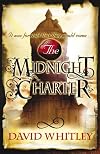
[I wrote this review in 2010]
**Good solid children's / YA fantasy fiction**
Very good original fantasy from this talented young writer. It reminds me of Philip Pullman's Northern Lights series, but is a quite different story. Mark and Lily are brought together by different sad circumstances and soon become firm friends. They live in servitude in the tower of the ancient and powerful astrologer Count Stelli. Lily is tasked with housekeeping duties and Mark with assisting the Count's grandson, show more Doctor Theo as he works to find cures for some nasty diseases, including a great plague. Very soon though they each have to start making their own choices, none of them easy, as dark and powerful forces show an uncommon level of interest in Mark and Lily and throws their beliefs and friendship into doubt.
David Whitely has created a setting for Mark and Lily's story which is a kind of capitalist utopia society - absolutely anything can be bought and sold within the city (emotions included, and children up to the age of 12) and people who lose the ability to earn their living are afforded no rights at all, not even to basic food and shelter. Charity just doesn't exist even as a concept and money is all that matters. At times I think the message overpowers the story just a fraction, but otherwise it's a very good, tightly written fantasy. Recommended for ages 10/11+. show less
**Good solid children's / YA fantasy fiction**
Very good original fantasy from this talented young writer. It reminds me of Philip Pullman's Northern Lights series, but is a quite different story. Mark and Lily are brought together by different sad circumstances and soon become firm friends. They live in servitude in the tower of the ancient and powerful astrologer Count Stelli. Lily is tasked with housekeeping duties and Mark with assisting the Count's grandson, show more Doctor Theo as he works to find cures for some nasty diseases, including a great plague. Very soon though they each have to start making their own choices, none of them easy, as dark and powerful forces show an uncommon level of interest in Mark and Lily and throws their beliefs and friendship into doubt.
David Whitely has created a setting for Mark and Lily's story which is a kind of capitalist utopia society - absolutely anything can be bought and sold within the city (emotions included, and children up to the age of 12) and people who lose the ability to earn their living are afforded no rights at all, not even to basic food and shelter. Charity just doesn't exist even as a concept and money is all that matters. At times I think the message overpowers the story just a fraction, but otherwise it's a very good, tightly written fantasy. Recommended for ages 10/11+. show less
Everything about THE MIDNIGHT CHARTER - the plot, the characters, and the setting - is engineered to deliver the author's anti-greed philosophy. It's simplistic, obvious, and exaggerated. As a result, the novel is no fun at all.
Marketing materials compare THE MIDNIGHT CHARTER to Philip Pullman's HIS DARK MATERIALS trilogy. The comparison is pure wishful thinking. Pullman created a rich, varied world, and he drew on a very complex theology (with frequent excursions to the deep literary well show more of John Milton's PARADISE LOST). Whitley's book is thin gruel in comparison. There's no spoonful of sugar to make the medicine go down - no whizzing spoon masquerading as an airplane heading for the hanger - just Whitley's dogged determination to tell us over and over again how brutal trade is, how antithetical to generosity and compassion, how inhumane.
I wasn't politically opposed to the message. I'd love to read a book that made the same point with more grace and subtlety. However, THE MIDNIGHT CHARTER has neither.
For anyone looking for something along these lines - a great book with a mildly industrial setting, maybe featuring an orphan - I suggest the MONSTER BLOOD TATTOO series by D.M. Cornish, starting with FOUNDLING. show less
Marketing materials compare THE MIDNIGHT CHARTER to Philip Pullman's HIS DARK MATERIALS trilogy. The comparison is pure wishful thinking. Pullman created a rich, varied world, and he drew on a very complex theology (with frequent excursions to the deep literary well show more of John Milton's PARADISE LOST). Whitley's book is thin gruel in comparison. There's no spoonful of sugar to make the medicine go down - no whizzing spoon masquerading as an airplane heading for the hanger - just Whitley's dogged determination to tell us over and over again how brutal trade is, how antithetical to generosity and compassion, how inhumane.
I wasn't politically opposed to the message. I'd love to read a book that made the same point with more grace and subtlety. However, THE MIDNIGHT CHARTER has neither.
For anyone looking for something along these lines - a great book with a mildly industrial setting, maybe featuring an orphan - I suggest the MONSTER BLOOD TATTOO series by D.M. Cornish, starting with FOUNDLING. show less

"Charity is nothing to do with buying the feeling of virtue; compassion is not something you can measure. It's there when we don't check that we're always getting the best deal, when we stop seeing others as traders or merchandise, and see them as people, as those who deserve to live. Charity knows that humanity is worth more than the market price."
The City of Agora is divided into districts, each named for a sign of the zodiac. Each district has it's distinct quality and nature, each one show more different from the one next to it. The people and the city are governed by one central government and director located within the city's glorious Directory of Receipts. Mark and Lily are two orphaned children growing up in this world where emotions are bottled and sold as drugs, where skills are traded, bartered, and exchanged as commodities, where the value of a human life is based solely on what they personally have to offer. Mark and Lily discover that being orphans is not the only thing they have in common and that the government is more connected to them than they had ever imagined. Together, they will uncover a secret that may threaten the very existence of the City of Agora, it's people, and the only place they've ever called home.
Reading this book felt like I was dropped off in the middle of nowhere and told to find my way to nowhere. It felt like reading the middle of a book, in the middle of a series, with no knowledge of the beginning and no clue of the ending. Halfway through the book I was so disoriented that I had to double check to ensure that I hadn't actually been reading the first book in the series. The most frustrating part of it all was that I really, really enjoyed the story since the concept was incredibly creative and intriguing, the characters interesting and fascinating, but I was left feeling very confused from the first to the last page. In the end, I really don't know what to make of the entire experience except that now I realized that I can like a book that seems to be missing context, I can get lost and still arrive, I can give a 2.5 star rating and still want to read the next book in the series. show less
The City of Agora is divided into districts, each named for a sign of the zodiac. Each district has it's distinct quality and nature, each one show more different from the one next to it. The people and the city are governed by one central government and director located within the city's glorious Directory of Receipts. Mark and Lily are two orphaned children growing up in this world where emotions are bottled and sold as drugs, where skills are traded, bartered, and exchanged as commodities, where the value of a human life is based solely on what they personally have to offer. Mark and Lily discover that being orphans is not the only thing they have in common and that the government is more connected to them than they had ever imagined. Together, they will uncover a secret that may threaten the very existence of the City of Agora, it's people, and the only place they've ever called home.
Reading this book felt like I was dropped off in the middle of nowhere and told to find my way to nowhere. It felt like reading the middle of a book, in the middle of a series, with no knowledge of the beginning and no clue of the ending. Halfway through the book I was so disoriented that I had to double check to ensure that I hadn't actually been reading the first book in the series. The most frustrating part of it all was that I really, really enjoyed the story since the concept was incredibly creative and intriguing, the characters interesting and fascinating, but I was left feeling very confused from the first to the last page. In the end, I really don't know what to make of the entire experience except that now I realized that I can like a book that seems to be missing context, I can get lost and still arrive, I can give a 2.5 star rating and still want to read the next book in the series. show less
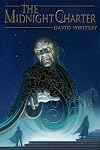
I tried to like this book. In fact, I tried to like it for nearly two months, and I never could. The book tells the story of two young adults in a Greek mythology-inspired world in which literally everything is for sale. No money? Sell your emotions. There's a machine for extracting them. Rough divorce settlement? You might have to give up your voice. Your ex husband can keep it in a vial around his neck. While this world sounds intriguing, the main characters are not. Their moral conflicts show more develop predictably, and they feel like wooden puppets of the plot. The author added some business with chosen ones and secret destinies, but the whole thing was too trite to really create suspense. I quit halfway through, and I'm not sorry. show less
Lists
Awards


You May Also Like


Associated Authors
Statistics
- Works
- 4
- Members
- 256
- Popularity
- #89,546
- Rating
- 3.5
- Reviews
- 20
- ISBNs
- 52
- Languages
- 6