
Rob Goodman
Author of A Mind at Play: How Claude Shannon Invented the Information Age
Works by Rob Goodman
Rome's Last Citizen: The Life and Legacy of Cato, Mortal Enemy of Caesar (2012) 211 copies, 2 reviews
Tagged
Common Knowledge
- Gender
- male
Members
Reviews
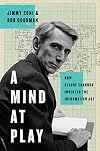
Claude Shannon's theory of information is one of the most important discoveries of the 20th century, up there with general relativity and the structure of DNA for things that reshaped the world. But the man himself was oddly self-effacing, an undoubted genius who cared little for the trappings of academic prestige and power, and who spent the latter part of his life tinkering with odd one-off devices while his disciples invented the practical applications of computing. A Mind at Play is a show more great biography of an unconventional past.
Shannon was born and raised in upstate Michigan, and was a strong if not top performing student. A chance fellowship for graduate work at MIT put him in contact with Vannevar Bush, and Bush's rooms of analogue computing machinery. Shannon had a magicians touch with devices, and more importantly the ability to see through the complexities of a problem to an underlying mathematics. Shannon was the first to apply a previously obscure branch of formal logic, Boolean operators, to electrical circuits, turning circuit design from an art to a science. Bush pushed him to do a PhD in genetics, where Shannon's equations for the evolution of traits in populations were far ahead of the field, and then saw him to a position at Bell Labs.
Shannon worked on military projects involving automatic gunsights and cryptography, was briefly married, and spent his evenings enjoying jazz and working on a private project on the fundamental nature of communication. His paper, when published in 1948, was like a starting gun, providing a formal basis for the new technology of computers which had been kick-started by the second World War.
Having created a field, Shannon entered a playful semi-retirement. He became a professor at MIT and worked on problems of interest, including a mechanical mouse that 'learned', a chess AI, wearable computers, and juggling and unicycles. By nature shy, he had little interest in leverage his intellectual authority for power and empire building, or even anything like a coherent research plan. He worked on what was interesting, and have advice to colleagues and students by asking provocative questions. Shannon life was made better by his wife Betty, a formidable mathematician in her own right, and children. He was diagnosed with Alzheimer's in 1983, and lived until 2001, in what can only be described as a pitiful shadow of his abilities.
A Mind at Play is a good, loving biography of a subject, whom for all his genius, had a clear purity. But the reason why I didn't give it five stars is that it seems clear that Shannon's tinkering was a clear mode of thought for him, and that his work at Bell Labs provided the impetus for information theory, and for whatever reason, this book fails to convey the joy of thinking with your hands. show less
Shannon was born and raised in upstate Michigan, and was a strong if not top performing student. A chance fellowship for graduate work at MIT put him in contact with Vannevar Bush, and Bush's rooms of analogue computing machinery. Shannon had a magicians touch with devices, and more importantly the ability to see through the complexities of a problem to an underlying mathematics. Shannon was the first to apply a previously obscure branch of formal logic, Boolean operators, to electrical circuits, turning circuit design from an art to a science. Bush pushed him to do a PhD in genetics, where Shannon's equations for the evolution of traits in populations were far ahead of the field, and then saw him to a position at Bell Labs.
Shannon worked on military projects involving automatic gunsights and cryptography, was briefly married, and spent his evenings enjoying jazz and working on a private project on the fundamental nature of communication. His paper, when published in 1948, was like a starting gun, providing a formal basis for the new technology of computers which had been kick-started by the second World War.
Having created a field, Shannon entered a playful semi-retirement. He became a professor at MIT and worked on problems of interest, including a mechanical mouse that 'learned', a chess AI, wearable computers, and juggling and unicycles. By nature shy, he had little interest in leverage his intellectual authority for power and empire building, or even anything like a coherent research plan. He worked on what was interesting, and have advice to colleagues and students by asking provocative questions. Shannon life was made better by his wife Betty, a formidable mathematician in her own right, and children. He was diagnosed with Alzheimer's in 1983, and lived until 2001, in what can only be described as a pitiful shadow of his abilities.
A Mind at Play is a good, loving biography of a subject, whom for all his genius, had a clear purity. But the reason why I didn't give it five stars is that it seems clear that Shannon's tinkering was a clear mode of thought for him, and that his work at Bell Labs provided the impetus for information theory, and for whatever reason, this book fails to convey the joy of thinking with your hands. show less
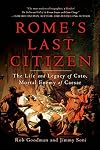
Fascinating biography of Cato the Younger, overlooked in our days but such a great influence on history, especially that of the U.S. No, he was not a "democrat" [not the political party but the general idea] as we understand it, but tried to hold on to the idea of "libertas" [freedom] and the Roman Republic, which were slipping away in the civil war between Caesar and Pompey, autocrats both. Rather than live under Caesar, in Utica on the African coast, he kills himself, a gruesome drawn-out show more death as described by Plutarch. A nugget of information I found that I had not known before--every American schoolchild knows the stirring words of Patrick Henry and Nathan Hale. No, they were not original with these men, but cribbed from Addison's Cato, a play VERY popular in the 18th century, with the theme of "death in defense of liberty". Also, the "unalienable rights" section from this play influenced the Declaration of Independence. So, who was Cato? This readable biography gives us the portrait of a stubborn man holding to his Stoic ideals, his probity and his principles, whether they agree with others' or not. All sides of the man are given, so we can reflect on him, the lessons his life teaches, and his importance through the ages.
This quotation from Lucan describes him perfectly: "Victrix causa diis placuit sed victa Catoni" [The victorious cause was dear to the gods, the lost cause to Cato.]
Highly recommended. show less
This quotation from Lucan describes him perfectly: "Victrix causa diis placuit sed victa Catoni" [The victorious cause was dear to the gods, the lost cause to Cato.]
Highly recommended. show less
For years, I have been reading references to Claude Shannon because of his involvement in so many critical developments in science, communications, Bell Labs, and even the stock market. About his sense of humor or his riding a unicycle through Bell Labs – while juggling (a favorite hobby). And about his groundbreaking, earth-shaking realization that all communication, from voice to music to documents to photos – is all data and could be treated the same way. Without this insight, I could show more not post this review today. But there was no way to get my fill of Claude Shannon – no biographies or documentaries of an American genius who lived until 2001! A Mind At Play begins to fill this yawning gap (and it seems a documentary is finally in the works as well).
Shannon was a natural. He simply did. Whatever caught his eye. He invented machines all his life, designed them, machined them, theorized their optimization, and cleared the air on numerous topics that concerned them. His great gift to us was his reductionism. He could look at a problem and strip away the redundancies, the tangents, the superfluities – and the noise. Especially the noise. The bare core that was left was now addressable and solvable. With that, he could add back the other factors as needed. It made his solutions elegant. This clarity of vision is dispiritingly rare. That a man of his many other abilities had it has benefitted the world disproportionately.
He was in it for the intellectual challenge. While other scientists won Nobel Prizes, fame, fortune, privilege and rank, Shannon shunned the limelight and kept working (and playing). “Down to Earth” doesn’t begin to describe him. His toy room served him to the end. He hated speeches, and preferred playing the clarinet (or chess) to lecturing. This was in no way a stock-standard scientist. His brilliance was evident to everyone throughout his long life. And he worked with all of the most brilliant.
My favorite story in the book is when his young daughter brought out a package of toothpicks and dropped them all over the wood plank floor. Rather than scold her or instruct her to clean it right up, Shannon observed: ”You know, you could calculate the value of pi from that.” I also liked the index finger he installed in the basement toy room. When his wife wanted him to come upstairs, she pulled the cord in the kitchen and the finger curled upward. This man makes for a fascinating biography.
Among his great discoveries was how to eliminate noise. Noise in the transmission of data corrupts it, making the message incomplete, wrong or unintelligible. Shannon broke down elements to their smallest, and assigned them numeric labels. If you gave (say) a letter a two digit equivalent, you would get a wrong letter if one of the digits was blurred by noise. By giving them longer strings of digits, they could tolerate noise and still be correct at the receiving end. This sort of outside the box thinking revolutionized countless industries.
We owe Claude Shannon a lot, and Soni & Goodman’s book takes a big first step in paying that debt.
David Wineberg show less
Shannon was a natural. He simply did. Whatever caught his eye. He invented machines all his life, designed them, machined them, theorized their optimization, and cleared the air on numerous topics that concerned them. His great gift to us was his reductionism. He could look at a problem and strip away the redundancies, the tangents, the superfluities – and the noise. Especially the noise. The bare core that was left was now addressable and solvable. With that, he could add back the other factors as needed. It made his solutions elegant. This clarity of vision is dispiritingly rare. That a man of his many other abilities had it has benefitted the world disproportionately.
He was in it for the intellectual challenge. While other scientists won Nobel Prizes, fame, fortune, privilege and rank, Shannon shunned the limelight and kept working (and playing). “Down to Earth” doesn’t begin to describe him. His toy room served him to the end. He hated speeches, and preferred playing the clarinet (or chess) to lecturing. This was in no way a stock-standard scientist. His brilliance was evident to everyone throughout his long life. And he worked with all of the most brilliant.
My favorite story in the book is when his young daughter brought out a package of toothpicks and dropped them all over the wood plank floor. Rather than scold her or instruct her to clean it right up, Shannon observed: ”You know, you could calculate the value of pi from that.” I also liked the index finger he installed in the basement toy room. When his wife wanted him to come upstairs, she pulled the cord in the kitchen and the finger curled upward. This man makes for a fascinating biography.
Among his great discoveries was how to eliminate noise. Noise in the transmission of data corrupts it, making the message incomplete, wrong or unintelligible. Shannon broke down elements to their smallest, and assigned them numeric labels. If you gave (say) a letter a two digit equivalent, you would get a wrong letter if one of the digits was blurred by noise. By giving them longer strings of digits, they could tolerate noise and still be correct at the receiving end. This sort of outside the box thinking revolutionized countless industries.
We owe Claude Shannon a lot, and Soni & Goodman’s book takes a big first step in paying that debt.
David Wineberg show less
I enjoyed this biography of the life of Claude Shannon, and in the process, I learned more about his lesser-known accomplishments: the first wearable computer, his works on chess (including a chess-playing "computer") and cryptography, and his early work on digital logic. His eccentricities also made for interesting anecdotes: the love of unicycles, juggling, and gadgets. A fun and easy read.
Lists
Computer Go Brrr (1)
Awards


You May Also Like


Associated Authors
Statistics
- Works
- 4
- Members
- 696
- Popularity
- #36,356
- Rating
- 4.2
- Reviews
- 10
- ISBNs
- 20