
Robin Waterfield
Author of The First Philosophers: The Presocratics and Sophists (Oxford World's Classics)
About the Author
Robin Waterfield is an independent scholar and translator, living in southern Greece. In addition to more than twenty-five translations of works of Greek literature, he is the author of numerous books, including Dividing the Spoils and Taken at the Flood.
Works by Robin Waterfield
The First Philosophers: The Presocratics and Sophists (Oxford World's Classics) (2000) — Translator — 458 copies, 4 reviews
Xenophon's Retreat: Greece, Persia, and the End of the Golden Age (2006) — Author — 159 copies, 5 reviews
The Rime of the Ancient Mariner: And Other Classic Stories in Verse (Puffin Classics - the Essential Collection) (1996) 21 copies
Lives of the Attic Orators: Texts from Pseudo-Plutarch, Photius and the Suda (2015) — Translator — 5 copies
Who Was Alexander the Great? 2 copies
Essays 1 copy
The World Classics Physics 1 copy
Associated Works
Roman Lives: A Selection of Eight Lives [Oxford World's Classics] (0002) — Translator, some editions — 545 copies, 1 review
Heracles and other plays — Translator, some editions — 2 copies
Tagged
Common Knowledge
- Legal name
- Waterfield, Robin Anthony Herschel
- Other names
- Waterfield, Robin A. H.
- Birthdate
- 1952-08-06
- Gender
- male
- Education
- Manchester University (Classics, 1974)
King's College, Cambridge (PhD, Greek philosophy) - Occupations
- classical scholar
translator
editor
children's fiction writer - Agent
- Hamilton, Bill (A. M. Heath literary agency)
- Relationships
- Waterfield, Kathryn (wife)
- Short biography
- Classical scholar and writer of children's adventure gamebooks.
- Nationality
- UK
- Places of residence
- Greece
Members
Reviews

Having tried and failed this gamebook on dozens of occasions, I took the opportunity to sit down with a cheat sheet and work my way through. What I found was that I had consistently taken wrong paths believing them to be correct and that where I thought I was going wrong was a complete red herring. Reading this as a story rather than a gamebook reveals an environmental body horror of a story, with the awfulness of the forest's death and the threat of the future, the modern, as a consequence show more of the demon's success. This isn't a popular gamebook, but I love it despite its difficulty, because of the vision of the author. show less

Waterfield takes a crack at trying to figure out why an ancient Greek polity executed a well-known philosopher. The task is difficult, not least because the primary sources on the trial and death of the philosopher are ‘intelligent fictions,’ their meaning distorted by time and distance. The charges brought up at trial―impiety and corrupting the youth of the city―are imprecise and much debated in subsequent commentaries. We do not know how the prosecution made its case against the show more philosopher, or what exactly the philosopher said in his own defense. Consequently, we don’t really know why the philosopher was put to death, though the accounts of his end have great literary merit, and the questions raised inspired whole fields of philosophical inquiry. The best we can do, writes Waterfield, is to develop an understanding of the legal, religious, and political context of the trial, and thereby uncover clues as to what the characters believed was at stake―whether the particular story we are told is true or not.
Waterfield avoids the kinds of facile analogies that pop historians frequently lean on because he knows that any apparent similarities between societies separated by thousands of years are merely superficial, and are rendered insignificant by the peculiarities defined by the historical context. What qualified as impiety in an ancient Greek city-state depended upon the beliefs and practices unique to that society. Waterfield’s version comes off as reinterpretation because he pays such careful attention to cultural idiosyncracies, like the apotropaic nature of the erect phallus, for instance. If the philosopher exploited the pedagogical possibilities of homoeroticism in a singular aristocratic milieu, this clarifies his association with the flamboyant and narcissistic younger man who became an emblem of the city’s failures in wartime. In a city-state corrupted by years of democracy and artificial egalitarianism, crippled by over-reach, incompetence and amorality, it is entirely plausible, says Waterfield, that there would emerge a dictatorship determined to implement a program of moral regeneration.
The greatest danger to government (democratic or authoritarian) is not the rabble, but a restless intellectual class. For Waterfield, the subtext for the philosopher’s trial was the general uncertainty of a polity in crisis, with old convictions undermined by years of war, displacement of the rural population into the city, decline in relative prosperity, polarization of rich and poor, episodes of civil violence and the questioning of traditional values. Such conditions set the thinkers off in search of solutions. For the philosopher, the political and moral reform of the city presupposed the reform of education and religion. What is the difference between convention and law? Do the gods really exist? How do we get a disinterested, responsible elite that can make philosophical understanding available as a guide to improving the imperfect cities of men? Is language arbitrary? Does a strawberry taste the same to everyone? The philosopher’s project of imagining a city managed by an ethical elite―'constructing a city in words’―coincided with an actual authoritarian program of renewal during a period of social upheaval. He looked guilty of something. show less
Waterfield avoids the kinds of facile analogies that pop historians frequently lean on because he knows that any apparent similarities between societies separated by thousands of years are merely superficial, and are rendered insignificant by the peculiarities defined by the historical context. What qualified as impiety in an ancient Greek city-state depended upon the beliefs and practices unique to that society. Waterfield’s version comes off as reinterpretation because he pays such careful attention to cultural idiosyncracies, like the apotropaic nature of the erect phallus, for instance. If the philosopher exploited the pedagogical possibilities of homoeroticism in a singular aristocratic milieu, this clarifies his association with the flamboyant and narcissistic younger man who became an emblem of the city’s failures in wartime. In a city-state corrupted by years of democracy and artificial egalitarianism, crippled by over-reach, incompetence and amorality, it is entirely plausible, says Waterfield, that there would emerge a dictatorship determined to implement a program of moral regeneration.
The greatest danger to government (democratic or authoritarian) is not the rabble, but a restless intellectual class. For Waterfield, the subtext for the philosopher’s trial was the general uncertainty of a polity in crisis, with old convictions undermined by years of war, displacement of the rural population into the city, decline in relative prosperity, polarization of rich and poor, episodes of civil violence and the questioning of traditional values. Such conditions set the thinkers off in search of solutions. For the philosopher, the political and moral reform of the city presupposed the reform of education and religion. What is the difference between convention and law? Do the gods really exist? How do we get a disinterested, responsible elite that can make philosophical understanding available as a guide to improving the imperfect cities of men? Is language arbitrary? Does a strawberry taste the same to everyone? The philosopher’s project of imagining a city managed by an ethical elite―'constructing a city in words’―coincided with an actual authoritarian program of renewal during a period of social upheaval. He looked guilty of something. show less
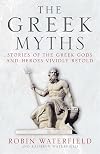
An amazingly evocative and eloquent introduction to the stories of Greek mythology. What is doubly impressive is that the writers also manage to make the book quite comprehensive: the only story that I can think of which was omitted was that of Narcissus and Echo. Every other myth that I am familiar with was covered, even if for some it was only a paragraph or so, and rest assured that the more important myths (such as the Labours of Heracles, the Trojan War and the Odyssey) are given their show more own lengthy chapters. It is remarkable that Robin and Kathryn Waterfield managed to fit in all these stories into such a small book: The Greek Myths, in my paperback edition at least, clocks in at just under 300 pages. (As a note on this, I have also had a good look at the hardback edition of the book. Though I was satisfied with the paperback edition, the hardback is much more impressive, with a great design and illustrations. If the gods could send me back in time like Heracles, I'd buy the hardback instead.)
Basically, if you have an interest in Greek mythology you'll gorge yourself on the Waterfields' book, even if sometimes you can be overwhelmed by all the names and the family ties. I've loved these stories since I was very young; the Usborne Illustrated Guide to Greek Myths and Legends was one of my most cherished possessions as a kid, and its illustrations are still my go-to reference point when imagining the heroes and the mythical beasts. Even so, there were still some things which came as a surprise to me. As a kid, I somehow always seemed to miss the bestiality element of the Minotaur story (see Pasiphae on page 125 of the Waterfields' book) and if I ever knew Heracles went around dressed as a woman (pages 162 and 165) I'd since forgotten it. The Waterfields present to us a warts-and-all retelling of the myths, and don't shy away from awkward stuff like the lower-class status of women and some of the heroes' more morally-suspect acts of violence. But, though disturbing, your brain sanitises it and accepts it as part of the story much as it would the gruesomeness of a Brothers Grimm story.
Aside from just providing an extremely readable account of the Greek myths, the Waterfields also gently introduce into the prose some analysis of the meaning behind the stories. As they mention in their Introduction, often these stories were meant as education as well as entertainment. Whilst the main moral of the Greek myths as a whole seems to be "don't mess with the gods", the Waterfields also convincingly suggest in their final chapter a much more life-affirming message which deserves to be read in their own words rather than summarised in this review.
But in the same lines, the Waterfields also remind us of something which, as I've grown older, I've come to find very interesting: in many ways, the Olympian gods are the bad guys. Maybe not villains as such, but they are often petty, jealous and fickle, and manipulate mortals for their own amusement. As the writers point out, it is Prometheus the Titan who is benevolent and paternal towards humankind; the Olympians do their best to ensure mortals are dependent on them. This is why they were so angry that Prometheus gave man the gift of fire. It is this often-adversarial relationship which I find most stimulating nowadays, though I of course still enjoy the stories simply for the adventure. It adds a whole new level of enjoyment for me - a satisfaction which the Waterfields are completely successful in fostering. It is why I find the Greek myths more endearing than, say, the Biblical myths. Note, for example, the role of Prometheus and Epimetheus in the creation of mankind (page 3). In contrast to the Biblical myth of Adam and Eve, in which man is created in God's own image, Epimetheus creates human beings as a 'foolish mistake'; they are in essence just a leftover lump of clay with no way of surviving in the harsh world until Prometheus chooses to nurture them. The gods are indifferent, and often antagonistic; humans are, to them, alternately a pest or a threat to their own dominance. It is this lack of hubris on the part of the ancient Greeks who first wrote these stories which I find very commendable; they didn't see themselves as God's chosen ones like the later Abrahamic religions did. Even though some of the Greek myths can be silly at times, our religion-dominated societies could learn a lesson in humility from these stories.
For this reason and for many others, the Greek myths have retained their relevance and influence throughout human history. Along with the Bible and the works of William Shakespeare, they are the dominant reference point for art and culture, and indeed were a major influence on both the Bard and the Bible's scribes. They are immensely important and immensely exciting, and the Waterfields have provided a book which impresses both the importance and the excitement of the stories on the reader. The book is eloquent, comprehensive and clearly written by two people with great love for their subject matter. For those looking to dip their toe into the rich waters of Greek mythology, I can hardly conceive of a more perfect book than this. show less
Basically, if you have an interest in Greek mythology you'll gorge yourself on the Waterfields' book, even if sometimes you can be overwhelmed by all the names and the family ties. I've loved these stories since I was very young; the Usborne Illustrated Guide to Greek Myths and Legends was one of my most cherished possessions as a kid, and its illustrations are still my go-to reference point when imagining the heroes and the mythical beasts. Even so, there were still some things which came as a surprise to me. As a kid, I somehow always seemed to miss the bestiality element of the Minotaur story (see Pasiphae on page 125 of the Waterfields' book) and if I ever knew Heracles went around dressed as a woman (pages 162 and 165) I'd since forgotten it. The Waterfields present to us a warts-and-all retelling of the myths, and don't shy away from awkward stuff like the lower-class status of women and some of the heroes' more morally-suspect acts of violence. But, though disturbing, your brain sanitises it and accepts it as part of the story much as it would the gruesomeness of a Brothers Grimm story.
Aside from just providing an extremely readable account of the Greek myths, the Waterfields also gently introduce into the prose some analysis of the meaning behind the stories. As they mention in their Introduction, often these stories were meant as education as well as entertainment. Whilst the main moral of the Greek myths as a whole seems to be "don't mess with the gods", the Waterfields also convincingly suggest in their final chapter a much more life-affirming message which deserves to be read in their own words rather than summarised in this review.
But in the same lines, the Waterfields also remind us of something which, as I've grown older, I've come to find very interesting: in many ways, the Olympian gods are the bad guys. Maybe not villains as such, but they are often petty, jealous and fickle, and manipulate mortals for their own amusement. As the writers point out, it is Prometheus the Titan who is benevolent and paternal towards humankind; the Olympians do their best to ensure mortals are dependent on them. This is why they were so angry that Prometheus gave man the gift of fire. It is this often-adversarial relationship which I find most stimulating nowadays, though I of course still enjoy the stories simply for the adventure. It adds a whole new level of enjoyment for me - a satisfaction which the Waterfields are completely successful in fostering. It is why I find the Greek myths more endearing than, say, the Biblical myths. Note, for example, the role of Prometheus and Epimetheus in the creation of mankind (page 3). In contrast to the Biblical myth of Adam and Eve, in which man is created in God's own image, Epimetheus creates human beings as a 'foolish mistake'; they are in essence just a leftover lump of clay with no way of surviving in the harsh world until Prometheus chooses to nurture them. The gods are indifferent, and often antagonistic; humans are, to them, alternately a pest or a threat to their own dominance. It is this lack of hubris on the part of the ancient Greeks who first wrote these stories which I find very commendable; they didn't see themselves as God's chosen ones like the later Abrahamic religions did. Even though some of the Greek myths can be silly at times, our religion-dominated societies could learn a lesson in humility from these stories.
For this reason and for many others, the Greek myths have retained their relevance and influence throughout human history. Along with the Bible and the works of William Shakespeare, they are the dominant reference point for art and culture, and indeed were a major influence on both the Bard and the Bible's scribes. They are immensely important and immensely exciting, and the Waterfields have provided a book which impresses both the importance and the excitement of the stories on the reader. The book is eloquent, comprehensive and clearly written by two people with great love for their subject matter. For those looking to dip their toe into the rich waters of Greek mythology, I can hardly conceive of a more perfect book than this. show less
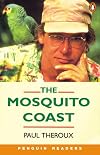
Despite this being a book read in honor of Father's Day, Charlie Fox's dad isn't the ideal father figure. He could fit into the role of Jack Torrance in Stephen King's The Shining. Allie Fox, from the town of Hadley in Massachusetts, doesn't trust the traditional school system, doesn't trust the government, doesn't trust his neighbors. He believes he can teach his children (Charlie, Jerry and the twins, Clover and April) all they need to know. He doesn't suffer fools and constantly tests his show more children's courage, especially eldest son Charlie's. He is in constant competition with other men ("How many push ups can you do?"); he is proud, defiant, and must not, absolutely cannot, be embarrassed in front of his family. Fed up with his own country, Papa Fox is easily swayed by Honduran migrant workers to pack up his family and move to the Mosquito Coast. Once there, Theroux threads a growing sense of unease throughout the pages. The first whiff of danger comes with Father jokes about throwing Mr. Haddy overboard and it is possible to believe he is mad enough to have done it. Like Kings's Jack Torrance, Allie Fox displays an escalating sense of craziness as time goes on. Paranoia grows like mold in the jungles of Honduras. It goes without saying that things don't end well for the Fox family; or maybe they do if you like endings like The Shining. show less
Lists
Awards

You May Also Like


Associated Authors
Statistics
- Works
- 45
- Also by
- 25
- Members
- 3,095
- Popularity
- #8,250
- Rating
- 3.9
- Reviews
- 40
- ISBNs
- 139
- Languages
- 11
- Favorited
- 2