

Géza Róheim (1891–1953)
Author of Fire in the Dragon and Other Psychoanalytic Essays on Folklore
About the Author
Works by Géza Róheim
Associated Works
Aspects of Alice: Lewis Carroll's Dream Child as Seen Through the Critics' Looking-glasses, 1865-1971 (1971) — Contributor — 124 copies, 3 reviews
Tagged
Common Knowledge
- Birthdate
- 1891-09-12
- Date of death
- 1953-06-07
- Gender
- male
- Nationality
- Hungary
- Associated Place (for map)
- Hungary
Members
Reviews

The only Freudian to have been originally trained in folklore and the first psychoanalytic anthropologist to carry out fieldwork, Geza Roheim (1891-1953) contributed substantially to the worldwide study of cultures. Combining a global perspective with encyclopedic knowledge of ethnographic sources, this Hungarian analyst demonstrates the validity of Freudian theory in both Western and non-Western settings. These seventeen essays, written between 1922 and 1953, are among Roheim's most show more significant published writings and are collected here for the first time to introduce a new generation of readers to his unique interpretations of myths, folktales, and legends. From Australian aboriginal mythology to Native American trickster tales, from the Grimm folktale canon to Hungarian fo... Source: Publisher
The tales in this book include, Tom, Tit, Tot, Fire in the Dragon, Mythology of Arnhem Land, Fairy Tale and Dreams, The Wolf and the Seven Kids, Hansel and Gretel, The Language of the Birds, Dame Holle: dream and folktale (Grimm no. 24) show less
The tales in this book include, Tom, Tit, Tot, Fire in the Dragon, Mythology of Arnhem Land, Fairy Tale and Dreams, The Wolf and the Seven Kids, Hansel and Gretel, The Language of the Birds, Dame Holle: dream and folktale (Grimm no. 24) show less
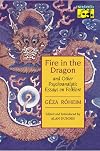
Book Description: Princeton University Press Princeton (1992). orig. cloth Minor rubbing, VG. 24x16cm, xxvi,194 pp

> Babelio : https://www.babelio.com/livres/Roheim-Les-portes-du-reve/1123823
> Roux Jean-Paul. G. Róheim. Les portes du rêve.
In: Revue de l'histoire des religions, tome 189, n°2, 1976. pp. 247-248.… ; (en ligne),
URL : https://www.persee.fr/doc/rhr_0035-1423_1976_num_189_2_6249
> LES PORTES DU RÊVES, de Géza Roheim. — « Les portes du rêve » sont, d’après Homère, la porte d’ivoire, par laquelle arrivent les songes véridiques, et la porte de corne, par laquelle entrent les show more songes dérisoires, apportant des paroles vaines l'(Odyssée, XIX, 560 à 569). Pour Roheim, les deux portes sont « l’une par laquelle la vie diurne s’introduit dans le rêve, et l’autre par où se glisse le rêve pour s’infiltrer dans notre existence diurne » (p. 203). C’est cette dernière que Roheim ouvre ici le plus largement, idéalisant quelque peu des ethnies et des pratiques qui intègrent complètement le rêve à la vie consciente. Cherchant à dépasser l’anthropologie descriptive du XIXe siècle, Roheim entre dans la recherche d’un discours qui serait celui de l’inconscient collectif. Savoir utiliser le rêve comme « voie royale d’accès à l’inconscient » lui semble une promesse de bonheur individuel et social.
Mais son intérêt se porte aussi sur l’origine commune des mythes et des croyances qui fondent l’humanité (thèse radicalement « romantique »), après l’exploration, dans un long premier chapitre sur Le rêve de base, du vécu corporel original du rêveur. En 1918, à Budapest, Freud encourage Roheim à développer sa recherche anthropologique – qui permet à la psychanalyse d’échapper à la relation inter-individuelle apparaissant comme une de ses limites – ayant lui-même publié Totem et tabou en 1912. Payot, 1973.
—Revue Française de Yoga, (17), Janvier 1998, (p. 323) show less
> Roux Jean-Paul. G. Róheim. Les portes du rêve.
In: Revue de l'histoire des religions, tome 189, n°2, 1976. pp. 247-248.… ; (en ligne),
URL : https://www.persee.fr/doc/rhr_0035-1423_1976_num_189_2_6249
> LES PORTES DU RÊVES, de Géza Roheim. — « Les portes du rêve » sont, d’après Homère, la porte d’ivoire, par laquelle arrivent les songes véridiques, et la porte de corne, par laquelle entrent les show more songes dérisoires, apportant des paroles vaines l'(Odyssée, XIX, 560 à 569). Pour Roheim, les deux portes sont « l’une par laquelle la vie diurne s’introduit dans le rêve, et l’autre par où se glisse le rêve pour s’infiltrer dans notre existence diurne » (p. 203). C’est cette dernière que Roheim ouvre ici le plus largement, idéalisant quelque peu des ethnies et des pratiques qui intègrent complètement le rêve à la vie consciente. Cherchant à dépasser l’anthropologie descriptive du XIXe siècle, Roheim entre dans la recherche d’un discours qui serait celui de l’inconscient collectif. Savoir utiliser le rêve comme « voie royale d’accès à l’inconscient » lui semble une promesse de bonheur individuel et social.
Mais son intérêt se porte aussi sur l’origine commune des mythes et des croyances qui fondent l’humanité (thèse radicalement « romantique »), après l’exploration, dans un long premier chapitre sur Le rêve de base, du vécu corporel original du rêveur. En 1918, à Budapest, Freud encourage Roheim à développer sa recherche anthropologique – qui permet à la psychanalyse d’échapper à la relation inter-individuelle apparaissant comme une de ses limites – ayant lui-même publié Totem et tabou en 1912. Payot, 1973.
—Revue Française de Yoga, (17), Janvier 1998, (p. 323) show less
Oct 6, 2019 (Edited)French
You May Also Like


Associated Authors
Statistics
- Works
- 27
- Also by
- 1
- Members
- 282
- Popularity
- #82,538
- Rating
- 3.2
- Reviews
- 3
- ISBNs
- 42
- Languages
- 5