
Thomas Forrest Kelly
Author of Early Music: A Very Short Introduction
About the Author
Thomas Forrest Kelly is professor of music at Harvard University. (Bowker Author Biography)
Image credit: Uncredited image from author's website
Works by Thomas Forrest Kelly
The century of Bach and Mozart : perspectives on historiography, composition, theory, and performance (2008) — Editor — 6 copies
Literature and arts B-51: first nights five performance premieres, volume two: scores (sourcebook) 1 copy
Tagged
Common Knowledge
- Birthdate
- 1943
- Gender
- male
- Education
- Groton School
University of North Carolina, Chapel Hill (AB|1964)
Schola Cantorum de Paris (diplôme de virtuosité 1966)
Royal Academy of Music (LRAM 1964)
Harvard University (A. M. 1970, PhD 1973) - Occupations
- musicologist
professor
musician - Organizations
- Castle Hill Festival (music director, 1973-83)
International Early Dance and Music Institute (director, 1982-84)
Cambridge Society for Early Music (music director, 1977-78) - Awards and honors
- Fulbright Scholarship
Ordre des Arts et des Lettres (Chevalier, 2010)
American Academy of Arts and Sciences (Fellow)
American Academy in Rome (Fellow)
Medieval Academy of America (Fellow)
Distinguished Alumnus Award from the University of North Carolina at Chapel Hill (2005) (show all 8)
honorary citizen of the city of Benevento, Italy
Early Music America Lifetime Achievement Award - Nationality
- USA
- Birthplace
- Greensboro, North Carolina, USA
- Associated Place (for map)
- North Carolina, USA
Members
Reviews
This review is written with a GPL 4.0 license and the rights contained therein shall supersede all TOS by any and all websites in regards to copying and sharing without proper authorization and permissions. Crossposted at WordPress, Blogspot & Librarything by Bookstooge’s Exalted Permission
Title: Early Music
Series: A Very Short Introduction
Author: Thomas Kelly
Rating: 3.5 of 5 Stars
Genre: Non-Fiction
Pages: 112
Words: 38.5K
Synopsis:
From Kobo.com
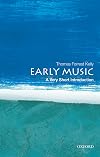
From Gregorian chant to Bach's Brandenburg show more Concerti, the music of the Medieval, Renaissance, and Baroque periods is both beautiful and intriguing, expanding our horizons as it nourishes our souls. In this Very Short Introduction, Thomas Forrest Kelly provides not only a compact overview of the music itself, but also a lively look at the many attempts over the last two centuries to revive it. Kelly shows that the early-music revival has long been grounded in the idea of spontaneity, of excitement, and of recapturing experiences otherwise lost to us--either the rediscovery of little-known repertories or the recovery of lost performing styles, with the conviction that, with the right performance, the music will come to life anew. Blending musical and social history, he shows how the Early Music movement in the 1960s took on political overtones, fueled by a rebellion against received wisdom and enforced conformity. Kelly also discusses ongoing debates about authenticity, the desirability of period instruments, and the relationship of mainstream opera companies and symphony orchestras to music that they often ignore, or play in modern fashion.
My Thoughts:
While not quite as “for the layman” as Anxiety was, this was still a cut above some of the other VSI books I've read. This book was full of musical terms, but Kelly made a valiant effort to define them (sometimes seeming at random though) and to write like he was trying to get me interested in the subject. I highly applaud his effort because even though I have zero interest in the subject of music (it is as interesting to me as “art”, that is, not at all) he did a great job of keeping me reading and giving me some little bits and bobs of info that should stick in my brain.
Reading this book made me think about my own history with music from elementary school up to the present day. I was going to do a detour and talk about that here in this review, but the more I think of it, the more it seems appropriate for it to have it's own post in my A History of ….. series. While I claim to have no interest in music, that doesn't mean I'm ignorant about it or think it is unimportant. I'll go so far as to say that outside of preaching of theology, music is one of the greatest shapers of philosophy.
I get whiplash every time I read this series. I never know if I'm going to get a good book or a real stinker. I mentioned Anxiety above, as a great one. I was looking over all the VSI books I've read and Entrepreneurship came across as the worst so far. I don't understand how the Oxford University Press came to publish both of these. It's almost like there is no oversite committee or general editor to keep them all uniform. It is very frustrating to my “ordered” soul. But books like this one keep me going in this series. It is worth digging through the midden to get gems like this.
★★★✬☆ show less
Title: Early Music
Series: A Very Short Introduction
Author: Thomas Kelly
Rating: 3.5 of 5 Stars
Genre: Non-Fiction
Pages: 112
Words: 38.5K
Synopsis:
From Kobo.com
From Gregorian chant to Bach's Brandenburg show more Concerti, the music of the Medieval, Renaissance, and Baroque periods is both beautiful and intriguing, expanding our horizons as it nourishes our souls. In this Very Short Introduction, Thomas Forrest Kelly provides not only a compact overview of the music itself, but also a lively look at the many attempts over the last two centuries to revive it. Kelly shows that the early-music revival has long been grounded in the idea of spontaneity, of excitement, and of recapturing experiences otherwise lost to us--either the rediscovery of little-known repertories or the recovery of lost performing styles, with the conviction that, with the right performance, the music will come to life anew. Blending musical and social history, he shows how the Early Music movement in the 1960s took on political overtones, fueled by a rebellion against received wisdom and enforced conformity. Kelly also discusses ongoing debates about authenticity, the desirability of period instruments, and the relationship of mainstream opera companies and symphony orchestras to music that they often ignore, or play in modern fashion.
My Thoughts:
While not quite as “for the layman” as Anxiety was, this was still a cut above some of the other VSI books I've read. This book was full of musical terms, but Kelly made a valiant effort to define them (sometimes seeming at random though) and to write like he was trying to get me interested in the subject. I highly applaud his effort because even though I have zero interest in the subject of music (it is as interesting to me as “art”, that is, not at all) he did a great job of keeping me reading and giving me some little bits and bobs of info that should stick in my brain.
Reading this book made me think about my own history with music from elementary school up to the present day. I was going to do a detour and talk about that here in this review, but the more I think of it, the more it seems appropriate for it to have it's own post in my A History of ….. series. While I claim to have no interest in music, that doesn't mean I'm ignorant about it or think it is unimportant. I'll go so far as to say that outside of preaching of theology, music is one of the greatest shapers of philosophy.
I get whiplash every time I read this series. I never know if I'm going to get a good book or a real stinker. I mentioned Anxiety above, as a great one. I was looking over all the VSI books I've read and Entrepreneurship came across as the worst so far. I don't understand how the Oxford University Press came to publish both of these. It's almost like there is no oversite committee or general editor to keep them all uniform. It is very frustrating to my “ordered” soul. But books like this one keep me going in this series. It is worth digging through the midden to get gems like this.
★★★✬☆ show less
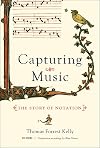
How do you make a book about the history of musical notation interesting to those who find the history of musical notation not at all interesting? Turn it into a small coffee table book. I do find it interesting, so I was already on board, but this book is as beautiful as it is interesting. So, it's not an academic-academic book, and you need to look elsewhere for such a thing; nor is it easy to get into, because Kelly's first few chapters are... well, disordered, to put it mildly. Once he show more gets on to the actual narrative though--rather than trying to convince you that the idea of notating music is, in itself, a great and counter-intuitive idea--it flows very nicely.
And it comes with a CD, which is a delightful reminder of my teenage years. show less
And it comes with a CD, which is a delightful reminder of my teenage years. show less
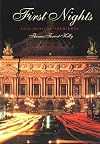
Brilliant, though the (small-ish) sections spent on the physical arrangement of the orchestras were, for the most part, totally lost on me. Worth the price for the chapters on Monteverdi and Stravinsky alone.
This book is a succinct summary of the early music movement. As someone who has played and listened to early music since the early 1980's, I can attest to it's accuracy and excellence. If you are wondering how "early music" is different from regular classical music, this book will give you the answer.
Lists
Awards

You May Also Like


Associated Authors
Statistics
- Works
- 21
- Members
- 471
- Popularity
- #52,266
- Rating
- 4.0
- Reviews
- 4
- ISBNs
- 41
- Languages
- 1