

Tsoknyi Rinpoche
Author of Why We Meditate: The Science and Practice of Clarity and Compassion
About the Author
Disambiguation Notice:
He is the third Tsoknyi Rinpoche, having been recognized by the 16th Karmapa as the reincarnation of Drubwang Tsoknyi II from Nangchen, Tibet. The second Tsoknyi Rinpoche was born early in the 20th century and was known for his teachings on Six Yogas of Naropa and Mahamudra. The first Drubwang Tsoknyi Rinpoche was a 19th century master born in Nangchen, eastern Tibet, and was a contemporary of the great masters of the time: Jamyang Khyentse, Jamgon Kongtrul, and Chokgyur Lingpa. He founded many retreat centers and Gebchak Nunnery in eastern Tibet.
Works by Tsoknyi Rinpoche
Fearless Simplicity: The Dzogchen Way of Living Freely in a Complex World (2003) 68 copies, 2 reviews
Associated Works
Dzogchen Essentials: The Path That Clarifies Confusion (2004) — Introduction, some editions — 35 copies
Tagged
Common Knowledge
- Other names
- Ринпоче, Цокньи
- Birthdate
- 1966-03-13
- Gender
- male
- Education
- Khampagar Monastery
Tergar Osel Ling Monastery - Organizations
- Pundarika Foundation (founder)
Drukpa Kagyu yogini order
Nyingma tradition of Tibetan Buddhism - Birthplace
- Nubri, Nepal
- Map Location
- Nepal
- Disambiguation notice
- He is the third Tsoknyi Rinpoche, having been recognized by the 16th Karmapa as the reincarnation of Drubwang Tsoknyi II from Nangchen, Tibet.
The second Tsoknyi Rinpoche was born early in the 20th century and was known for his teachings on Six Yogas of Naropa and Mahamudra.
The first Drubwang Tsoknyi Rinpoche was a 19th century master born in Nangchen, eastern Tibet, and was a contemporary of the great masters of the time: Jamyang Khyentse, Jamgon Kongtrul, and Chokgyur Lingpa. He founded many retreat centers and Gebchak Nunnery in eastern Tibet.
Members
Reviews
Fearless simplicity : the Dzogchen way of living freely in a complex world/Tsoknyi Rinpoche; Foreword by Sogyal Rinpoche ; Compiled and Translated by Erik sema Kunsang and Marcia Binder. : First Edition, 2003 by Drubwang Rinpoche
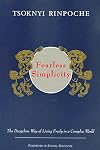
From Goodreads
"We have created a cage for ourselves out of our own emotions and our sense of duality and here we sit, day in and day out". The goal of dzogchen meditation is to break out of this cage so that we can liberate ourselves and help others. This isn't something we attain from the outside. But by dropping all of our conceptual attitudes we can realize our inherent buddha nature, or our original wakefulness. According to Tsonkyi Rinpoche, this motivation is critical to progressing in show more this spiritual practice. The essence of the teachings is the indivisibility of emptiness and compassion. Emptiness as the absence of an individual identity and compassion is bodhichitta -- The Bodhisattva compassion towards all beings. Like Yoga, he agrees that compassion will inevitably develop from emptiness, but until then we may as well pretend we are Bodhisattvas. Even if it's artificial, this will help to soften our hearts and make ourselves more gentle, peaceful and flexible -- essential for all progress, like salad dressing to a salad.
The dharma is the path and method to liberate us from delusion and be free of the three negative emotions of attachment, aggression and close mindedness. All of these negative emotions stem from what he calls the "granddad concept" -- the first concept of believing thoughts as true. One unique aspect of the Vajrayana path is the place of emotions. Teachers of this path believe that strong emotions are tied to our natural purity. Thus, instead of rejecting these emotions, using them as fuel can help light the fire of enlightenment. This is the diamond path of Vajrayana -- courageously facing emotions head on and using the dharma teachings to see through them. His preferred practice for dealing with these emotions is just letting them be, or jo-gom practice. By dropping all conceptual involvement in the emotion, over time it will naturally dissipate. Some of the other practices he touches on are taking refuge, shamatha meditation and ritual deity practice (such as the meditation and recitation on Vajrasattva). None of these practices are intended just to make us feel a bit better. They're all to help us wake up to our true nature in this very lifetime.
The second half of fearless simplicity focuses on awakening to mind essence -- the natural state of our mind where all issues naturally dissolve. Complete and total freedom from attachment, anger, closed mindedness and all negative emotions -- products of the deluded, dualistic, conceptual mind mind. This mind clings onto "I" and the ego as a concrete entity, chases after the magical "dream world" of samsara, and thrashes about caught up in all the shiny objects of the world. The natural state of mind essence, on the other hand, is free of this clinging. Instead it is empty, cognizant and intelligence. The practice of Dzogchen is releasing the concepts and limitations we've enveloped ourselves in and allowing this emptiness to naturally and gently permeate all.
The Vajrayana path is especially suitable for people with strong emotions. In a way, freeing strong emotions and using them to recognize your true nature is the essence of the path. Suppressing emotions is not the answer, as it will just perpetuate them further. Instead, the way to truly liberate emotions is to acknowledge their real, empty nature. The best way is to allow them to dissolve immediately upon arising. But more realistic is dropping all clinging, giving it some love and room, and letting it dissolve back into its essence. Ultimately, recognizing the true essence of emotions results in complete self confidence and fearlessness, as fear and anxiety was really of these emotions all along. Out of this new sense of ease, devotion to the path of dharma emerges and finally compassion and intelligence. It is a feeling of fearless simplicity. The fruits of this path are very different than the shiny objects of wealth and fame, but ultimately something even better: the end of samsara and all negative emotions.
Tsonkyi Rinpoche is a very clear & inspirational teacher. The more you trod this path, the simpler and brighter life will become. So unlike what many are persuaded to believe, the path of enlightenment isn't some painful trek up a mountain with an unknown height and near impossible goal. It's more like traveling a path that gets easier, more beautiful and more rewarding as you walk it with some nice reward at the end too. This book is a great sigh of relief, but also booster fuel for the practice. Stop taking yourself seriously, but also recognize the mind concocted suffering. The two are not in conflict. show less
"We have created a cage for ourselves out of our own emotions and our sense of duality and here we sit, day in and day out". The goal of dzogchen meditation is to break out of this cage so that we can liberate ourselves and help others. This isn't something we attain from the outside. But by dropping all of our conceptual attitudes we can realize our inherent buddha nature, or our original wakefulness. According to Tsonkyi Rinpoche, this motivation is critical to progressing in show more this spiritual practice. The essence of the teachings is the indivisibility of emptiness and compassion. Emptiness as the absence of an individual identity and compassion is bodhichitta -- The Bodhisattva compassion towards all beings. Like Yoga, he agrees that compassion will inevitably develop from emptiness, but until then we may as well pretend we are Bodhisattvas. Even if it's artificial, this will help to soften our hearts and make ourselves more gentle, peaceful and flexible -- essential for all progress, like salad dressing to a salad.
The dharma is the path and method to liberate us from delusion and be free of the three negative emotions of attachment, aggression and close mindedness. All of these negative emotions stem from what he calls the "granddad concept" -- the first concept of believing thoughts as true. One unique aspect of the Vajrayana path is the place of emotions. Teachers of this path believe that strong emotions are tied to our natural purity. Thus, instead of rejecting these emotions, using them as fuel can help light the fire of enlightenment. This is the diamond path of Vajrayana -- courageously facing emotions head on and using the dharma teachings to see through them. His preferred practice for dealing with these emotions is just letting them be, or jo-gom practice. By dropping all conceptual involvement in the emotion, over time it will naturally dissipate. Some of the other practices he touches on are taking refuge, shamatha meditation and ritual deity practice (such as the meditation and recitation on Vajrasattva). None of these practices are intended just to make us feel a bit better. They're all to help us wake up to our true nature in this very lifetime.
The second half of fearless simplicity focuses on awakening to mind essence -- the natural state of our mind where all issues naturally dissolve. Complete and total freedom from attachment, anger, closed mindedness and all negative emotions -- products of the deluded, dualistic, conceptual mind mind. This mind clings onto "I" and the ego as a concrete entity, chases after the magical "dream world" of samsara, and thrashes about caught up in all the shiny objects of the world. The natural state of mind essence, on the other hand, is free of this clinging. Instead it is empty, cognizant and intelligence. The practice of Dzogchen is releasing the concepts and limitations we've enveloped ourselves in and allowing this emptiness to naturally and gently permeate all.
The Vajrayana path is especially suitable for people with strong emotions. In a way, freeing strong emotions and using them to recognize your true nature is the essence of the path. Suppressing emotions is not the answer, as it will just perpetuate them further. Instead, the way to truly liberate emotions is to acknowledge their real, empty nature. The best way is to allow them to dissolve immediately upon arising. But more realistic is dropping all clinging, giving it some love and room, and letting it dissolve back into its essence. Ultimately, recognizing the true essence of emotions results in complete self confidence and fearlessness, as fear and anxiety was really of these emotions all along. Out of this new sense of ease, devotion to the path of dharma emerges and finally compassion and intelligence. It is a feeling of fearless simplicity. The fruits of this path are very different than the shiny objects of wealth and fame, but ultimately something even better: the end of samsara and all negative emotions.
Tsonkyi Rinpoche is a very clear & inspirational teacher. The more you trod this path, the simpler and brighter life will become. So unlike what many are persuaded to believe, the path of enlightenment isn't some painful trek up a mountain with an unknown height and near impossible goal. It's more like traveling a path that gets easier, more beautiful and more rewarding as you walk it with some nice reward at the end too. This book is a great sigh of relief, but also booster fuel for the practice. Stop taking yourself seriously, but also recognize the mind concocted suffering. The two are not in conflict. show less

Dzogchen instruction. Not an intro to meditation. Would not recommend this to someone who is not adept in their Tibetan Buddhist meditation. Book is a transcription of a retreat conducted by Tsoknyi Rinpoche. As such, it does not have the structure of an organized book of instruction but more like conversations including Q&A sessions with the attendees.

excellent on shamatha see pg 74
You May Also Like


Associated Authors
Statistics
- Works
- 9
- Also by
- 4
- Members
- 344
- Popularity
- #69,364
- Rating
- 4.2
- Reviews
- 5
- ISBNs
- 27
- Languages
- 7