
Morris Jastrow, Jr. (1861–1921)
Author of An Old Babylonian Version of the Gilgamesh Epic
About the Author
Works by Morris Jastrow, Jr.
Associated Works
Tagged
Common Knowledge
- Canonical name
- Jastrow, Morris, Jr.
- Birthdate
- 1861-08-13
- Date of death
- 1921-06-22
- Gender
- male
- Education
- University of Pennsylvania (BA|1881)
University of Leipzig (Ph.D|1884)
Sorbonne University - Occupations
- orientalist
Professor of semitic languages
librarian - Organizations
- American Oriental Society
University of Pennsylvania - Relationships
- Jastrow, Marcus (father)
Jastrow, Joseph (brother) - Nationality
- Poland (birth)
USA (residence) - Birthplace
- Warsaw, Poland
- Places of residence
- Philadelphia, Pennsylvania, USA
- Place of death
- Jenkintown, Pennsylvania, USA
- Associated Place (for map)
- Pennsylvania, USA
Members
Reviews
A Gentle Cynic: Being a Translation of the Book of Koheleth, Commonly Known as Ecclesiastes, its Origin, Growth, and Interpretation by Morris Jastrow, Jr.

The book of Ecclesiastes is composite. This is beyond question -- it has a section at the end in which a later writer talks about what the original writer said! Most would agree that three different authors added verses 12:9-14 to the book. And it is possible that there are other additions.
This book goes far beyond that. The appendix at the end lists about ninety different insertions, some of them of one or two words (glosses which are surely too short to identify clearly), some of them show more lasting for many verses (including even the larger part of the famous poem about a time and season for everything).
I can't help but think that this goes too far. Jastrow's analysis of the personality of Koheleth ("The Preacher") is probably mostly correct, but the literary analysis is simply too nitpicky. In many ways, this is an interesting book. But I would far rather see a commentary on Ecclesiastes-as-canonized than on Ecclesiastes-as-edited-by-Jastrow. Even if Koheleth did not write that there is a time to weep and a time to laugh, surely it is a point worth remembering!
And I do think that Jastrow sometimes gets things wrong, too. Take the thesis of the entire book: "Vanity of vanities, all is vanity." (An incredibly difficult phrase to translate -- in the Hebrew, the word means something like "mist" or "vapor" -- something as light as air, that mixes in air, that cannot be separated from air. But "Vapor of vapors, all is vapor" doesn't really get the point across. "Vanity of Vanities" -- nothing of nothings, but a thing on which we dote -- translated the feeling if not the words.) In the actual Hebrew text it opens the book, and it also closes the book except for all those silly accretions at the end. And yet Jastrow cuts it out at the beginning, thinking Koheleth saved it for the end as a summary. Yes, it's a summary, but it's also Koheleth's thesis. It needs to be at the beginning. And, in Jastrow's text, it isn't. That really is one edit too many. show less
This book goes far beyond that. The appendix at the end lists about ninety different insertions, some of them of one or two words (glosses which are surely too short to identify clearly), some of them show more lasting for many verses (including even the larger part of the famous poem about a time and season for everything).
I can't help but think that this goes too far. Jastrow's analysis of the personality of Koheleth ("The Preacher") is probably mostly correct, but the literary analysis is simply too nitpicky. In many ways, this is an interesting book. But I would far rather see a commentary on Ecclesiastes-as-canonized than on Ecclesiastes-as-edited-by-Jastrow. Even if Koheleth did not write that there is a time to weep and a time to laugh, surely it is a point worth remembering!
And I do think that Jastrow sometimes gets things wrong, too. Take the thesis of the entire book: "Vanity of vanities, all is vanity." (An incredibly difficult phrase to translate -- in the Hebrew, the word means something like "mist" or "vapor" -- something as light as air, that mixes in air, that cannot be separated from air. But "Vapor of vapors, all is vapor" doesn't really get the point across. "Vanity of Vanities" -- nothing of nothings, but a thing on which we dote -- translated the feeling if not the words.) In the actual Hebrew text it opens the book, and it also closes the book except for all those silly accretions at the end. And yet Jastrow cuts it out at the beginning, thinking Koheleth saved it for the end as a summary. Yes, it's a summary, but it's also Koheleth's thesis. It needs to be at the beginning. And, in Jastrow's text, it isn't. That really is one edit too many. show less
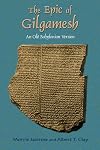
Though there is relatively little of actual verse here, it may be more instructive than reading the verse by itself, and has a very useful comparative analysis of different translations, tablets found in different times & places, and the interpretations of those tablets. Dry, but very informative.

Awards

You May Also Like


Associated Authors
Statistics
- Works
- 30
- Also by
- 1
- Members
- 234
- Popularity
- #96,590
- Rating
- 3.8
- Reviews
- 3
- ISBNs
- 66
- Languages
- 2