
Brian McGinty
Author of Lincoln's Greatest Case: The River, the Bridge, and the Making of America
About the Author
Brian McGinty, an attorney and historian, is the author of Lincoln's Greatest Case, John Brown's Trial, and The Body of John Merryman: Abraham Lincoln and the Suspension of Habeas Corpus. He lives in Scottsdale, Arizona.
Works by Brian McGinty
The Rest I Will Kill: William Tillman and the Unforgettable Story of How a Free Black Man Refused to Become a Slave (2016) 47 copies, 1 review
The Carrillos of San Diego 1 copy
Jazz: Red Hot & Cool 1 copy
Tagged
Common Knowledge
There is no Common Knowledge data for this author yet. You can help.
Members
Reviews
The Rest I Will Kill: William Tillman and the Unforgettable Story of How a Free Black Man Refused to Become a Slave by Brian McGinty
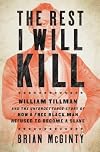
The Rest I Will Kill sounds like it will be an amazing true-life tale of danger and selfless heroism. After all, black men did not fight back against white men in the early 1860s. So, any story that refutes this idea has to be good. Right?
Unfortunately, Brian McGinty’s narrative is just…not good. Half of the book is setting the stage for the confrontation, educating readers on the early stages of the Civil War and establishing the mood in the North as well as the South. This is important show more and turns out to be the most interesting sections of the story because he discusses the early efforts at the Union blockade, maritime law, and the political quagmire that was the South seceding from the Union. Sadly, while this is a key section and sets the tone for Tillman’s later actions, Mr. McGinty barely scratches the surface on the political, social, and legal implications of the Civil War. Details are insufficient to truly understand anyone’s mindset at that time.
As for William Tillman, his harrowing adventure turns out to be less so. Mr. McGinty tries to impart the danger Tillman faces both before and after his mutiny, but he is not successful. Tillman becomes less a hero and more someone acting to save his own neck. While the reasons he does so are completely understandable, he is not someone who would ignite the nation behind his cause. It gets worse when he gets back to New York, as he quickly becomes a pawn in the world of maritime insurance and a spectacle that lines the pockets of P. T. Barnum. He kills to preserve his freedom but then foregoes some of that hard-won freedom by becoming subservient to insurance lawyers and Barnum himself.
The entire story is disappointing in its lack of details and Mr. McGinty’s inability to create any empathy for Tillman. In spite of Mr. McGinty’s attempts to portray Tillman as larger than life, Tillman remains little more than a caricature. You cannot empathize with him because you do not know who he is anymore than you know what he was thinking before, during, and after the brutal act which brought him a modicum of fame. It is a frustrating reading experience because one instinctively wants more than what Mr. McGinty provides.
Thrilling? No. Historically significant? Probably not. Mildly interesting? Yes. Thus is my lackluster response to Mr. McGinty’s story of William Tillman and his one moment of fame. show less
Unfortunately, Brian McGinty’s narrative is just…not good. Half of the book is setting the stage for the confrontation, educating readers on the early stages of the Civil War and establishing the mood in the North as well as the South. This is important show more and turns out to be the most interesting sections of the story because he discusses the early efforts at the Union blockade, maritime law, and the political quagmire that was the South seceding from the Union. Sadly, while this is a key section and sets the tone for Tillman’s later actions, Mr. McGinty barely scratches the surface on the political, social, and legal implications of the Civil War. Details are insufficient to truly understand anyone’s mindset at that time.
As for William Tillman, his harrowing adventure turns out to be less so. Mr. McGinty tries to impart the danger Tillman faces both before and after his mutiny, but he is not successful. Tillman becomes less a hero and more someone acting to save his own neck. While the reasons he does so are completely understandable, he is not someone who would ignite the nation behind his cause. It gets worse when he gets back to New York, as he quickly becomes a pawn in the world of maritime insurance and a spectacle that lines the pockets of P. T. Barnum. He kills to preserve his freedom but then foregoes some of that hard-won freedom by becoming subservient to insurance lawyers and Barnum himself.
The entire story is disappointing in its lack of details and Mr. McGinty’s inability to create any empathy for Tillman. In spite of Mr. McGinty’s attempts to portray Tillman as larger than life, Tillman remains little more than a caricature. You cannot empathize with him because you do not know who he is anymore than you know what he was thinking before, during, and after the brutal act which brought him a modicum of fame. It is a frustrating reading experience because one instinctively wants more than what Mr. McGinty provides.
Thrilling? No. Historically significant? Probably not. Mildly interesting? Yes. Thus is my lackluster response to Mr. McGinty’s story of William Tillman and his one moment of fame. show less
Awards


You May Also Like


Statistics
- Works
- 17
- Members
- 383
- Popularity
- #63,100
- Rating
- 3.9
- Reviews
- 1
- ISBNs
- 36