
Margot Mifflin
Author of The Blue Tattoo: The Life of Olive Oatman (Women in the West)
About the Author
Margot Mifflin is a journalist whose work has appeared in many publications, including the New York Times, the New Yorker, and Salon.com. The author of Bodies of Subversion: A Secret History of Women and Tattoo, she is an assistant professor in the English department of Lehman College of the City show more University of New York (CUNY) and directs the Arts and Culture program at CUNY's Graduate School of Journalism, where she also teaches. show less
Works by Margot Mifflin
Looking for Miss America: A Pageant’s 100-Year Quest to Define Womanhood (2020) 61 copies, 3 reviews
Becoming Mohave 1 copy
Tagged
Common Knowledge
- Birthdate
- 1960
- Gender
- female
- Occupations
- author
journalist
professor - Organizations
- City University of New York
- Agent
- Linda Chester
- Nationality
- USA
- Places of residence
- Nyack, New York, USA
- Associated Place (for map)
- New York, USA
Members
Reviews
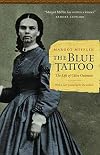
The book reads as a thorough investigation of the events themselves and the aftermath and contexts of all the re-tellings of the story...which is of Olive and her sister's kidnapping by a Native American tribe, their on-selling to a Mohave Tribe, their life with that tribe, and Olive's life after events led her to return to so-called civilised society. Her return to white society was made tricky owing to the visible evidence of her 'Indian' life - the blue tattooed chin - and all the show more implications that carried. That Olive managed to re acclimatise herself to modern society, and do well, was pretty amazing. And, I guess it shouldn't be surprising that her story became not her own, with various aspects of it suiting various male 'protectors' more than it suited her. show less
In the early 1850s, Olive Oatman was a typical girl heading west on a wagon train full of Mormons in search of gold and God. By the end of the decade, she was a white Indian with a chin tattoo, torn between two cultures. Orphaned at fourteen after her family was massacred by Yavapai Indians in northern Mexico (now southern Arizona), Oatman spent a year as a slave to her attackers before she was traded to the Mohaves, who tattooed her and raised her as their own. Four years later, under show more threat of war, the Mohaves delivered her back to the whites in exchange for horses, blankets, and beads. This much is true. But the fine points of Oatman's transformation from forty-nine to white savage have been replayed in countless books and articles - modern and Victorian - that read like Rashomans of revisionist history and romantic conjecture. show less
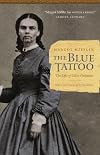
In the 1850s, Olive Oatman and her younger sister, Mary Ann, were taken captive by Native Americans in what was then New Mexico Territory. Most of the rest of their family was killed in what became known as the Oatman Massacre, Mary Ann later died of illness, and so Olive lived for a few years by herself among the Mohave people. She seems to have become part of the Mohave to a great extent, most vividly through the tattoos which give this book her name: the lines on her chin, common to many show more Mohave women, which Olive also bore. After a few years, Olive was ransomed back to the US government, and she became the subject of one of the melodramatic Indian captivity narratives so popular with white Americans.
Oatman's story is an interesting one, but Margot Mifflin doesn't quite do justice to it, and certainly doesn't do justice to the broader history of which it is part. I'm no specialist in American history, but even I could tell that Mifflin repeatedly fails to truly confront Euro-American settler violence and colonialism. Much of the historiography she draws on is dated, and is overwhelmingly grounded in a white perspective. (More than once I blinked at some of the quotations she used to begin chapters, generally dropped in without qualifier or context.) Mifflin claims to more accurately represent the cultures and histories of the Yavapai and Mohave peoples than have previous recounters of the Oatman , but often does so in language and via framings that seemed to me queasily close to the nineteenth-century Noble Savage narrative.
Essentially, this is pop history masquerading as a scholarly work, only thinly rooted in more rigorous work, and it's eyebrow-raising to me that it was published by a university press.
(Unlike what a number of other GR reviews state, there is no anti-Mormon/LDS agenda here—Mifflin is just not writing from a Mormon/LDS perspective. There is a difference.) show less
Oatman's story is an interesting one, but Margot Mifflin doesn't quite do justice to it, and certainly doesn't do justice to the broader history of which it is part. I'm no specialist in American history, but even I could tell that Mifflin repeatedly fails to truly confront Euro-American settler violence and colonialism. Much of the historiography she draws on is dated, and is overwhelmingly grounded in a white perspective. (More than once I blinked at some of the quotations she used to begin chapters, generally dropped in without qualifier or context.) Mifflin claims to more accurately represent the cultures and histories of the Yavapai and Mohave peoples than have previous recounters of the Oatman , but often does so in language and via framings that seemed to me queasily close to the nineteenth-century Noble Savage narrative.
Essentially, this is pop history masquerading as a scholarly work, only thinly rooted in more rigorous work, and it's eyebrow-raising to me that it was published by a university press.
(Unlike what a number of other GR reviews state, there is no anti-Mormon/LDS agenda here—Mifflin is just not writing from a Mormon/LDS perspective. There is a difference.) show less
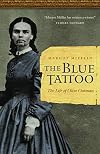
I agree with Elmore Leonard, this book was a winner.
The main point behind this particular book (because there have been many about the Oatman massacre) was to try and dispel the sensationalistic story that surrounded this (poor) woman once she was returned back to the "whites" from the Mohaves. When she left, her "adoptive mother" Topeka, cried. There is speculation, that similar to Cynthia Parker, Olive Oatman (OO) didn't want to come back to white society. There is good evidence that OO show more had assimilated, and was, to the best of her ability in her circumstances, happy. One way Mifflin sets out to prove this is the tattoo on OO's chin. This is done for members of the tribe (Mohave) and for no other reason. When getting the tattoo, one has to not move the mouth so as to not smudge or mar the markings for a certain period and one has to lie very still, etc. I.e. it takes cooperation, and OO's tattoo was perfect signaling she had been willing.
Also, while the nickname wasn't very flattering, OO was given one. Another example of OO's probable happiness, was one particular opportunity to escape that came about and OO did nothing. Mifflin did a great job dissecting the various facts around this event in which OO didn't show herself. This approach taken by Mifflin is one I really enjoyed, scrubbing facts against rumors.
Another of my favorite things in the story was the carefully extracted facts from articles, diaries, letters, even some of OO's own writings. Then, Mifflin would expertly weigh in, and reason whether various accounts or statements were true by using Yavapais (the tribe that murdered her family) and Mohave customs to determine what might have been true or embellished.
Bottom line, the most factual account of what probably occurred in 1851 and the following years, and a truly fascinating read. show less
The main point behind this particular book (because there have been many about the Oatman massacre) was to try and dispel the sensationalistic story that surrounded this (poor) woman once she was returned back to the "whites" from the Mohaves. When she left, her "adoptive mother" Topeka, cried. There is speculation, that similar to Cynthia Parker, Olive Oatman (OO) didn't want to come back to white society. There is good evidence that OO show more had assimilated, and was, to the best of her ability in her circumstances, happy. One way Mifflin sets out to prove this is the tattoo on OO's chin. This is done for members of the tribe (Mohave) and for no other reason. When getting the tattoo, one has to not move the mouth so as to not smudge or mar the markings for a certain period and one has to lie very still, etc. I.e. it takes cooperation, and OO's tattoo was perfect signaling she had been willing.
Also, while the nickname wasn't very flattering, OO was given one. Another example of OO's probable happiness, was one particular opportunity to escape that came about and OO did nothing. Mifflin did a great job dissecting the various facts around this event in which OO didn't show herself. This approach taken by Mifflin is one I really enjoyed, scrubbing facts against rumors.
Another of my favorite things in the story was the carefully extracted facts from articles, diaries, letters, even some of OO's own writings. Then, Mifflin would expertly weigh in, and reason whether various accounts or statements were true by using Yavapais (the tribe that murdered her family) and Mohave customs to determine what might have been true or embellished.
Bottom line, the most factual account of what probably occurred in 1851 and the following years, and a truly fascinating read. show less
Lists
Awards


You May Also Like


Statistics
- Works
- 4
- Members
- 614
- Popularity
- #40,945
- Rating
- 3.7
- Reviews
- 28
- ISBNs
- 17
