
J. Warner Wallace
Author of Cold-Case Christianity: A Homicide Detective Investigates the Claims of the Gospels
About the Author
J. Warner Wallace is a Dateline-featured cold-case homicide detective, popular national speaker, and bestselling author. Relying on over two decades of investigative experience, Wallace provides the tools needed to investigate the claims of Christianity and make a convincing case for the truth of show more the Christian worldview. Learn more at jwarnerwallace.com. show less
Works by J. Warner Wallace
Cold-Case Christianity: A Homicide Detective Investigates the Claims of the Gospels (2013) 898 copies, 6 reviews
God's Crime Scene: A Cold-Case Detective Examines the Evidence for a Divinely Created Universe (2015) 309 copies
Cold-Case Christianity for Kids: Investigate Jesus with a Real Detective (2016) 309 copies, 1 review
Forensic Faith: A Homicide Detective Makes the Case for a More Reasonable, Evidential Christian Faith (2017) 214 copies, 1 review
Person of Interest: Why Jesus Still Matters in a World that Rejects the Bible (2021) 209 copies, 3 reviews
Cold-Case Christianity (Updated & Expanded Edition): A Homicide Detective Investigates the Claims of the Gospels (2023) 114 copies, 1 review
The Truth in True Crime: What Investigating Death Teaches Us About the Meaning of Life (2024) 60 copies, 2 reviews
Cold-Case Christianity Participant's Guide: A Homicide Detective Investigates the Claims of the Gospels (2018) 28 copies
Forensic Faith Participant's Guide: A Homicide Detective Makes the Case for a More Reasonable, Evidential Christian Faith (2017) 28 copies
Person of Interest Investigator's Guide: Why Jesus Still Matters in a World that Rejects the Bible (2021) 18 copies
Forensic Faith Curriculum Kit: A Homicide Detective Makes the Case for a More Reasonable, Evidential Christian Faith (2017) 5 copies
Person of Interest 4 copies
Person of Interest Video Study : Why Jesus Still Matters in a World That Rejects the Bible (2021) 3 copies, 1 review
God's Crime Scene Video Series with Facilitator's Guide: A Cold-Case Detective Examines the Evidence for a Divinely Created Universe (2019) 2 copies
Cristianismo: Caso Resuelto (Un detective de homicidios investiga las afirmaciones de los Evangelios) (2019) 2 copies
The Truth in True Crime Investigator's Guide plus Streaming Video: What Investigating Death Teaches Us About the Meaning of Life? (2024) 2 copies
A 30-Minute Overview of Cold-Case Christianity: A Homicide Detective Investigates the Claims of the Gospels (Faith Blueprints) (2018) 1 copy
Tagged
Common Knowledge
- Birthdate
- 1961-06-16
- Gender
- male
- Nationality
- USA
- Birthplace
- Torrance, California, USA
- Associated Place (for map)
- California, USA
Members
Reviews
Truth in True Crime: What Investigating Death Teaches Us About the Meaning of Life by J. Warner Wallace
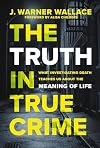
[Full disclosure: I was sent a free Advanced Reading Copy of the book for review from the publisher, but was under no obligation to share my thoughts about it. I was going to buy it anyway]
J. Warner Wallace has made a name for himself as "the Evidence Whisperer" - first on episodes of Dateline and then later in the pages of his written works. Cold-Case Christianity, God's Crime Scene, and Person Of Interest are about using the same type of reasoning detectives use to solve crimes to show show more that Christianity is true; how to identify qualified eyewitnesses, what counts as evidence, and the requirements for making a case. He also talks about the evidence we have for the Christian worldview.
But, Jim's latest book is different. The Truth In True Crime: What Investigating Death Teaches Us About The Meaning Of Life is the reflections on life that can only come from a homicide detective who also happens to be a trained pastor.
In the preface of the book, Wallace gives us his intent:
"The Truth In True Crime is intended to be a practical wisdom book (the kind of book one might pen for one's grandchildren) and a Christian evndeice book (the kind of book one might write for those who still doubt the explanatory power of Christianity)."
Most of us turn to J. Warner Wallace to talk about evidence and how to build cumulative cases for what we believe. But, this book is different. It's mostly pastoral. Reflective. This is Wallace reflecting on old cases, telling you what he learned about humanity, and doling out pastoral advice as only a wizened detective pastor could. We get to see Jim, the thinker, reflector, and philosopher rather than just Jim, the Evidence Whisperer.
J. Warner Wallace's work has been instrumental in how I think about evidence, what counts as evidence, and how to evaluate sources and claims. He has always used examples of cases in his books, but it's usually as illustrations to demonstrate how investigations are done and how we can use the same procedures to evaluate truth claims. But, in this book, they are used to tell us about life and human nature.
The book contains 15 chapters - each discussing a trait of human nature. Some of the topics include our nature for community, for worship, for a relationship with our Heavenly Father, and our longing for eternity. In each chapter, Wallace picks a previous homicide case that demonstrates the characteristics he covers in that chapter. For example, in his chapter on humans being created to work, he discusses a suspect who had never worked an honest day in his life, wanted nice things, and decided to get his money the "fast and easy way" by knocking off liquor stores. He had never been violent in his robberies. But, in the heat of the moment, he ended up murdering a shop owner and is in prison for the rest of his life. Had he possessed a proper understanding of the value of work, what it was for, how it could be life-fulfilling - and also didn't measure his success by the things he owned - he wouldn't be spending the rest of his life behind bars.
The book is full of these stories. As I read the book, I pictured what it would be like sitting around the dinner table, listening to a veteran detective reflect on what he learned about humanity from the cases he had worked on. The book is worth picking up for that wisdom alone.
Let's not forget, though, that J. Warner Wallace is a Christian apologist. As he likes to put it, he's a Christian case-maker whose role is to convince the jury that Christianity is true. In that regard, Jim's goal is to show that all of the traits he discusses are observable in human nature. And, if Christianity is false, then the way people act doesn't matter. But, these traits are evident in all of us - even to the casual observer. They are transcendent. They unite us because we all possess them. And, the only worldview that has explanatory power to make sense of everything we see and observe in human nature is Christianity.
While the Bible is cited frequently in the book, Wallace also brings in numerous secular studies as evidence for the claims he makes. The print version of the book has over 60 pages of citations - so it is well-researched. His main point here is that scientists, researchers, and doctors are publishing findings that reflect what was written in the pages of the Bible thousands of years ago. Based on Jim's observations, and the findings we have now the only story that makes sense of all of the evidence of these traits and desires is the Christian story. show less
J. Warner Wallace has made a name for himself as "the Evidence Whisperer" - first on episodes of Dateline and then later in the pages of his written works. Cold-Case Christianity, God's Crime Scene, and Person Of Interest are about using the same type of reasoning detectives use to solve crimes to show show more that Christianity is true; how to identify qualified eyewitnesses, what counts as evidence, and the requirements for making a case. He also talks about the evidence we have for the Christian worldview.
But, Jim's latest book is different. The Truth In True Crime: What Investigating Death Teaches Us About The Meaning Of Life is the reflections on life that can only come from a homicide detective who also happens to be a trained pastor.
In the preface of the book, Wallace gives us his intent:
"The Truth In True Crime is intended to be a practical wisdom book (the kind of book one might pen for one's grandchildren) and a Christian evndeice book (the kind of book one might write for those who still doubt the explanatory power of Christianity)."
Most of us turn to J. Warner Wallace to talk about evidence and how to build cumulative cases for what we believe. But, this book is different. It's mostly pastoral. Reflective. This is Wallace reflecting on old cases, telling you what he learned about humanity, and doling out pastoral advice as only a wizened detective pastor could. We get to see Jim, the thinker, reflector, and philosopher rather than just Jim, the Evidence Whisperer.
J. Warner Wallace's work has been instrumental in how I think about evidence, what counts as evidence, and how to evaluate sources and claims. He has always used examples of cases in his books, but it's usually as illustrations to demonstrate how investigations are done and how we can use the same procedures to evaluate truth claims. But, in this book, they are used to tell us about life and human nature.
The book contains 15 chapters - each discussing a trait of human nature. Some of the topics include our nature for community, for worship, for a relationship with our Heavenly Father, and our longing for eternity. In each chapter, Wallace picks a previous homicide case that demonstrates the characteristics he covers in that chapter. For example, in his chapter on humans being created to work, he discusses a suspect who had never worked an honest day in his life, wanted nice things, and decided to get his money the "fast and easy way" by knocking off liquor stores. He had never been violent in his robberies. But, in the heat of the moment, he ended up murdering a shop owner and is in prison for the rest of his life. Had he possessed a proper understanding of the value of work, what it was for, how it could be life-fulfilling - and also didn't measure his success by the things he owned - he wouldn't be spending the rest of his life behind bars.
The book is full of these stories. As I read the book, I pictured what it would be like sitting around the dinner table, listening to a veteran detective reflect on what he learned about humanity from the cases he had worked on. The book is worth picking up for that wisdom alone.
Let's not forget, though, that J. Warner Wallace is a Christian apologist. As he likes to put it, he's a Christian case-maker whose role is to convince the jury that Christianity is true. In that regard, Jim's goal is to show that all of the traits he discusses are observable in human nature. And, if Christianity is false, then the way people act doesn't matter. But, these traits are evident in all of us - even to the casual observer. They are transcendent. They unite us because we all possess them. And, the only worldview that has explanatory power to make sense of everything we see and observe in human nature is Christianity.
While the Bible is cited frequently in the book, Wallace also brings in numerous secular studies as evidence for the claims he makes. The print version of the book has over 60 pages of citations - so it is well-researched. His main point here is that scientists, researchers, and doctors are publishing findings that reflect what was written in the pages of the Bible thousands of years ago. Based on Jim's observations, and the findings we have now the only story that makes sense of all of the evidence of these traits and desires is the Christian story. show less
Forensic Faith: A Homicide Detective Makes the Case for a More Reasonable, Evidential Christian Faith by J. Warner Wallace
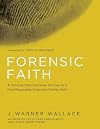
Many readers are likely familiar with Lee Strobel's The Case for ... series. His early work The Case For Christ, in fact, was recently made into a movie and released in theaters nationwide on April 7, 2017.
I read The Case for Christ many moons ago; while I remember reading and thinking generally positively about it, I don't recall it being as approachable as Wallace's Forensic Faith. The latter reads -- well, more like a crime scene than a book, and I appreciated that. It reads quickly, but show more packs a punch; it challenges me to do the research for myself.
The Case for Christ tells one man's story of becoming a Christian, and the evidence that convinced him -- the results of his findings, if you will. (Which is great, and absolutely necessary!) Forensic Faith, on the other hand, challenges the already-Christian to make that research their own: to dig deeply and ask, "Why do I - not Lee Strobel, not J. Warner Wallace, but I - believe? Why is Christianity true?"
Forensic Faith is the "why/how" counterpoint to The Case for Christ's "what"/data. You will find encouragement in your faith walk and, likely, more confidence and willingness to share your testimony and faith publicly. The experts say the best stories are those we are passionate about. Are you passionate about your faith? Do you pursue it and truly love God with all your mind?
I'd much rather be a little bit wiser in my faith and its whys and wherefores a year from now. How about you?
Disclaimer: I received a free eARC from the publisher. All opinions are my own. show less
I read The Case for Christ many moons ago; while I remember reading and thinking generally positively about it, I don't recall it being as approachable as Wallace's Forensic Faith. The latter reads -- well, more like a crime scene than a book, and I appreciated that. It reads quickly, but show more packs a punch; it challenges me to do the research for myself.
The Case for Christ tells one man's story of becoming a Christian, and the evidence that convinced him -- the results of his findings, if you will. (Which is great, and absolutely necessary!) Forensic Faith, on the other hand, challenges the already-Christian to make that research their own: to dig deeply and ask, "Why do I - not Lee Strobel, not J. Warner Wallace, but I - believe? Why is Christianity true?"
Forensic Faith is the "why/how" counterpoint to The Case for Christ's "what"/data. You will find encouragement in your faith walk and, likely, more confidence and willingness to share your testimony and faith publicly. The experts say the best stories are those we are passionate about. Are you passionate about your faith? Do you pursue it and truly love God with all your mind?
I'd much rather be a little bit wiser in my faith and its whys and wherefores a year from now. How about you?
Disclaimer: I received a free eARC from the publisher. All opinions are my own. show less
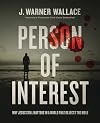
(ARC Review)
I’ve been working in Christian apologetics for many years now, and I’m familiar with most popular apologetics books and authors. And of all I’ve read so far, this is the book I didn’t know I needed. This book will easily be one of the most important popular apologetics books published within the last few years, and probably in the top 20 or so this century.
In this one book, Jim covers two disparate lines of study about Jesus: the fuse and the fallout.
For the fuse, he show more explains why Jesus came when He did. I’ve encountered this question many times and never seen such a clear, understandable, and comprehensive answer as this. Jim addresses that one line from multiple angles, including the development of language, culture, society, and theology before Jesus.
For the fallout, he demonstrates how Jesus has impacted culture outside of strictly religious aspects. Again, he approaches this one line from multiple different angles: art, music, education, science, and more. And, while I haven’t seen as many questions about this, I know this is an incredibly important line, and we need to pay it more attention.
This book is now one of my most common book recommendations, next to classics like Tactics by Greg Koukl and How to Read the Bible for All Its Worth by Fee and Stuart.
If you are interested in Christianity or the history of religion, you need to read this book. It doesn’t matter whether you are Christian or atheist, Muslim or Buddhist; you need to make this a priority to read.
If you are a Christian apologist, you need to add this to your library as soon as possible. This book will be invaluable in your ministry! show less
I’ve been working in Christian apologetics for many years now, and I’m familiar with most popular apologetics books and authors. And of all I’ve read so far, this is the book I didn’t know I needed. This book will easily be one of the most important popular apologetics books published within the last few years, and probably in the top 20 or so this century.
In this one book, Jim covers two disparate lines of study about Jesus: the fuse and the fallout.
For the fuse, he show more explains why Jesus came when He did. I’ve encountered this question many times and never seen such a clear, understandable, and comprehensive answer as this. Jim addresses that one line from multiple angles, including the development of language, culture, society, and theology before Jesus.
For the fallout, he demonstrates how Jesus has impacted culture outside of strictly religious aspects. Again, he approaches this one line from multiple different angles: art, music, education, science, and more. And, while I haven’t seen as many questions about this, I know this is an incredibly important line, and we need to pay it more attention.
This book is now one of my most common book recommendations, next to classics like Tactics by Greg Koukl and How to Read the Bible for All Its Worth by Fee and Stuart.
If you are interested in Christianity or the history of religion, you need to read this book. It doesn’t matter whether you are Christian or atheist, Muslim or Buddhist; you need to make this a priority to read.
If you are a Christian apologist, you need to add this to your library as soon as possible. This book will be invaluable in your ministry! show less
The truth in true crime : what investigating death teaches us about the meaning of life by J. Warner Wallace
[Full disclosure: I was sent a free Advanced Reading Copy of the book for review from the publisher, but was under no obligation to share my thoughts about it. I was going to buy it anyway]
J. Warner Wallace has made a name for himself as "the Evidence Whisperer" - first on episodes of Dateline and then later in the pages of his written works. Cold-Case Christianity, God's Crime Scene, and Person Of Interest are about using the same type of reasoning detectives use to solve crimes to show show more that Christianity is true; how to identify qualified eyewitnesses, what counts as evidence, and the requirements for making a case. He also talks about the evidence we have for the Christian worldview.
But, Jim's latest book is different. The Truth In True Crime: What Investigating Death Teaches Us About The Meaning Of Life is the reflections on life that can only come from a homicide detective who also happens to be a trained pastor.
In the preface of the book, Wallace gives us his intent:
"The Truth In True Crime is intended to be a practical wisdom book (the kind of book one might pen for one's grandchildren) and a Christian evndeice book (the kind of book one might write for those who still doubt the explanatory power of Christianity)."
Most of us turn to J. Warner Wallace to talk about evidence and how to build cumulative cases for what we believe. But, this book is different. It's mostly pastoral. Reflective. This is Wallace reflecting on old cases, telling you what he learned about humanity, and doling out pastoral advice as only a wizened detective pastor could. We get to see Jim, the thinker, reflector, and philosopher rather than just Jim, the Evidence Whisperer.
J. Warner Wallace's work has been instrumental in how I think about evidence, what counts as evidence, and how to evaluate sources and claims. He has always used examples of cases in his books, but it's usually as illustrations to demonstrate how investigations are done and how we can use the same procedures to evaluate truth claims. But, in this book, they are used to tell us about life and human nature.
The book contains 15 chapters - each discussing a trait of human nature. Some of the topics include our nature for community, for worship, for a relationship with our Heavenly Father, and our longing for eternity. In each chapter, Wallace picks a previous homicide case that demonstrates the characteristics he covers in that chapter. For example, in his chapter on humans being created to work, he discusses a suspect who had never worked an honest day in his life, wanted nice things, and decided to get his money the "fast and easy way" by knocking off liquor stores. He had never been violent in his robberies. But, in the heat of the moment, he ended up murdering a shop owner and is in prison for the rest of his life. Had he possessed a proper understanding of the value of work, what it was for, how it could be life-fulfilling - and also didn't measure his success by the things he owned - he wouldn't be spending the rest of his life behind bars.
The book is full of these stories. As I read the book, I pictured what it would be like sitting around the dinner table, listening to a veteran detective reflect on what he learned about humanity from the cases he had worked on. The book is worth picking up for that wisdom alone.
Let's not forget, though, that J. Warner Wallace is a Christian apologist. As he likes to put it, he's a Christian case-maker whose role is to convince the jury that Christianity is true. In that regard, Jim's goal is to show that all of the traits he discusses are observable in human nature. And, if Christianity is false, then the way people act doesn't matter. But, these traits are evident in all of us - even to the casual observer. They are transcendent. They unite us because we all possess them. And, the only worldview that has explanatory power to make sense of everything we see and observe in human nature is Christianity.
While the Bible is cited frequently in the book, Wallace also brings in numerous secular studies as evidence for the claims he makes. The print version of the book has over 60 pages of citations - so it is well-researched. His main point here is that scientists, researchers, and doctors are publishing findings that reflect what was written in the pages of the Bible thousands of years ago. Based on Jim's observations, and the findings we have now the only story that makes sense of all of the evidence of these traits and desires is the Christian story. show less
J. Warner Wallace has made a name for himself as "the Evidence Whisperer" - first on episodes of Dateline and then later in the pages of his written works. Cold-Case Christianity, God's Crime Scene, and Person Of Interest are about using the same type of reasoning detectives use to solve crimes to show show more that Christianity is true; how to identify qualified eyewitnesses, what counts as evidence, and the requirements for making a case. He also talks about the evidence we have for the Christian worldview.
But, Jim's latest book is different. The Truth In True Crime: What Investigating Death Teaches Us About The Meaning Of Life is the reflections on life that can only come from a homicide detective who also happens to be a trained pastor.
In the preface of the book, Wallace gives us his intent:
"The Truth In True Crime is intended to be a practical wisdom book (the kind of book one might pen for one's grandchildren) and a Christian evndeice book (the kind of book one might write for those who still doubt the explanatory power of Christianity)."
Most of us turn to J. Warner Wallace to talk about evidence and how to build cumulative cases for what we believe. But, this book is different. It's mostly pastoral. Reflective. This is Wallace reflecting on old cases, telling you what he learned about humanity, and doling out pastoral advice as only a wizened detective pastor could. We get to see Jim, the thinker, reflector, and philosopher rather than just Jim, the Evidence Whisperer.
J. Warner Wallace's work has been instrumental in how I think about evidence, what counts as evidence, and how to evaluate sources and claims. He has always used examples of cases in his books, but it's usually as illustrations to demonstrate how investigations are done and how we can use the same procedures to evaluate truth claims. But, in this book, they are used to tell us about life and human nature.
The book contains 15 chapters - each discussing a trait of human nature. Some of the topics include our nature for community, for worship, for a relationship with our Heavenly Father, and our longing for eternity. In each chapter, Wallace picks a previous homicide case that demonstrates the characteristics he covers in that chapter. For example, in his chapter on humans being created to work, he discusses a suspect who had never worked an honest day in his life, wanted nice things, and decided to get his money the "fast and easy way" by knocking off liquor stores. He had never been violent in his robberies. But, in the heat of the moment, he ended up murdering a shop owner and is in prison for the rest of his life. Had he possessed a proper understanding of the value of work, what it was for, how it could be life-fulfilling - and also didn't measure his success by the things he owned - he wouldn't be spending the rest of his life behind bars.
The book is full of these stories. As I read the book, I pictured what it would be like sitting around the dinner table, listening to a veteran detective reflect on what he learned about humanity from the cases he had worked on. The book is worth picking up for that wisdom alone.
Let's not forget, though, that J. Warner Wallace is a Christian apologist. As he likes to put it, he's a Christian case-maker whose role is to convince the jury that Christianity is true. In that regard, Jim's goal is to show that all of the traits he discusses are observable in human nature. And, if Christianity is false, then the way people act doesn't matter. But, these traits are evident in all of us - even to the casual observer. They are transcendent. They unite us because we all possess them. And, the only worldview that has explanatory power to make sense of everything we see and observe in human nature is Christianity.
While the Bible is cited frequently in the book, Wallace also brings in numerous secular studies as evidence for the claims he makes. The print version of the book has over 60 pages of citations - so it is well-researched. His main point here is that scientists, researchers, and doctors are publishing findings that reflect what was written in the pages of the Bible thousands of years ago. Based on Jim's observations, and the findings we have now the only story that makes sense of all of the evidence of these traits and desires is the Christian story. show less
You May Also Like


Associated Authors
Statistics
- Works
- 28
- Members
- 2,563
- Popularity
- #10,020
- Rating
- 4.5
- Reviews
- 16
- ISBNs
- 55
- Languages
- 2