
Kitson Jazynka
Author of Martin Luther King, Jr. (National Geographic Readers) (Level 3)
About the Author
Works by Kitson Jazynka
National Geographic Kids Mission: Wolf Rescue: All About Wolves and How to Save Them (2014) 63 copies
National Geographic Kids Mission: Panda Rescue: All About Pandas and How to Save Them (NG Kids Mission: Animal Rescue) (2016) 37 copies, 1 review
History's Mysteries: Freaky Phenomena: Curious Clues, Cold Cases, and Puzzles From the Past (2018) 22 copies
Tagged
Common Knowledge
There is no Common Knowledge data for this author yet. You can help.
Members
Reviews
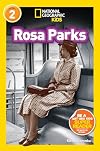
My feelings about easy reader biographies are pretty much the same as picture book biographies - I don't see the point. But I have a habit of buying every National Geographic easy reader that comes out because they're so popular so I purchased most of the biographies they put out, without even looking at them.
Then Rosa Parks was nominated for Cybils and I took it home to read. It completely blew me away and is everything I always vaguely imagined an easy biography should be.
The book starts show more with a simple explanation of segregation and how it affected every day life. Then it talks in simple terms about Rosa Parks' life as a child and the people who influenced her. There is a section that sets the scene for the pivotal events by relating things in the 1920s to today, from how much a bar of chocolate cost to games children played. The explanation of what could have happened to Parks is honest but not graphic. There are inset "Words to know" sections that explain difficult terms as they are introduced, like "boycott" and "protest." Additional facts about Rosa Parks' life are included as well as what happened after the bus boycott. There is a quiz and a pictorial glossary at the back of the book.
One of the things I really liked about this book was that it simplified and made relatable historical events and people without glossing over facts or leaving things out. The book mentions at one point that Rosa Parks was not the first or only person to refuse to give up their seat, but that she was important in sparking the boycott. The book explains segregation and the time period in a way that kids will be able to relate to. It also talks about how Rosa Parks continued to fight against inequality and racism, helping kids understand that these are current issues, not things that only happened a long time ago.
This is a level 2 reader and the main text is bold and simple. There are additional text boxes with smaller, more complex text, as well as captions, timelines, etc. A beginning reader could easily handle the central text with some help on the additions.
Verdict: My perennial gripe about biographies for young children is that they don't give them any context or any way to link to the people they are presenting. This book does an amazing job of not only explaining the context of Rosa Parks' life, but why she is important and matters today. It explained confusing terms, included lots of interesting photographs, and was well-written and interesting as well as conveying important information. I can't wait to use this in a book club and I'm really glad I bought the National Geographic easy reader biographies, if they all turn out to be like this one!
ISBN: 9781426321429; Published 2015 by National Geographic; Purchased for the library show less
Then Rosa Parks was nominated for Cybils and I took it home to read. It completely blew me away and is everything I always vaguely imagined an easy biography should be.
The book starts show more with a simple explanation of segregation and how it affected every day life. Then it talks in simple terms about Rosa Parks' life as a child and the people who influenced her. There is a section that sets the scene for the pivotal events by relating things in the 1920s to today, from how much a bar of chocolate cost to games children played. The explanation of what could have happened to Parks is honest but not graphic. There are inset "Words to know" sections that explain difficult terms as they are introduced, like "boycott" and "protest." Additional facts about Rosa Parks' life are included as well as what happened after the bus boycott. There is a quiz and a pictorial glossary at the back of the book.
One of the things I really liked about this book was that it simplified and made relatable historical events and people without glossing over facts or leaving things out. The book mentions at one point that Rosa Parks was not the first or only person to refuse to give up their seat, but that she was important in sparking the boycott. The book explains segregation and the time period in a way that kids will be able to relate to. It also talks about how Rosa Parks continued to fight against inequality and racism, helping kids understand that these are current issues, not things that only happened a long time ago.
This is a level 2 reader and the main text is bold and simple. There are additional text boxes with smaller, more complex text, as well as captions, timelines, etc. A beginning reader could easily handle the central text with some help on the additions.
Verdict: My perennial gripe about biographies for young children is that they don't give them any context or any way to link to the people they are presenting. This book does an amazing job of not only explaining the context of Rosa Parks' life, but why she is important and matters today. It explained confusing terms, included lots of interesting photographs, and was well-written and interesting as well as conveying important information. I can't wait to use this in a book club and I'm really glad I bought the National Geographic easy reader biographies, if they all turn out to be like this one!
ISBN: 9781426321429; Published 2015 by National Geographic; Purchased for the library show less
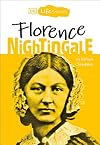
In this nicely-written and colorfully illustrated book for young adults, Kitson Jazynka discusses Florence Nightingale's early life and education and describes this amazing woman's many accomplishments. Florence was born in 1820, during the reign of Queen Victoria. Her affluent family lived in two beautiful homes; had enough servants to ensure that all their needs were met; took numerous trips abroad; and enjoyed social gatherings with their friends. Mr. and Mrs. Nightingale hoped that show more Florence and her sister, Parthenope, would marry well, but Florence had other ideas. From an early age, she was curious about the world around her, and was passionate about healing animals as well as people. Her superior education included the study of languages, science, history, and advanced mathematics.
Although she had a suitor, Ms. Nightingale chose to pursue nursing and devoted her considerable gifts to this vital profession. Florence's talents were not limited to nursing, however. She was also a great communicator, administrator, organizer, and visionary. Florence wrote monographs, letters, pamphlets, and statistical reports that helped spread the word about the importance of sanitation, compassion, skill, and wholesome food in helping the sick and injured to recover. She is particularly well-known for her tireless efforts during the Crimean War, and her advocacy for much-needed hospital reform. She taught others who followed in her footsteps, and soon "Nightingale nurses were requested to start schools all over the world, including Africa, Australia, and America."
This is an enlightening and readable work of non-fiction (which also contains an excellent index, timeline, and glossary) that is appropriate for youngsters in grades seven to nine. The allusions to soldiers suffering from grisly wounds may make it inappropriate for younger readers who might find some of the contents disturbing. One of this book's chief strengths is its depiction of a strong-willed female who was considerably ahead of her time. Instead of concerning herself with society's expectations, Nightingale pursued her calling and became a pioneer in her field. To this day, Florence Nightingale is an inspiration for women who serve as dedicated research scientists, physicians, physical and occupational therapist, and of course, nurses. show less
Although she had a suitor, Ms. Nightingale chose to pursue nursing and devoted her considerable gifts to this vital profession. Florence's talents were not limited to nursing, however. She was also a great communicator, administrator, organizer, and visionary. Florence wrote monographs, letters, pamphlets, and statistical reports that helped spread the word about the importance of sanitation, compassion, skill, and wholesome food in helping the sick and injured to recover. She is particularly well-known for her tireless efforts during the Crimean War, and her advocacy for much-needed hospital reform. She taught others who followed in her footsteps, and soon "Nightingale nurses were requested to start schools all over the world, including Africa, Australia, and America."
This is an enlightening and readable work of non-fiction (which also contains an excellent index, timeline, and glossary) that is appropriate for youngsters in grades seven to nine. The allusions to soldiers suffering from grisly wounds may make it inappropriate for younger readers who might find some of the contents disturbing. One of this book's chief strengths is its depiction of a strong-willed female who was considerably ahead of her time. Instead of concerning herself with society's expectations, Nightingale pursued her calling and became a pioneer in her field. To this day, Florence Nightingale is an inspiration for women who serve as dedicated research scientists, physicians, physical and occupational therapist, and of course, nurses. show less
In this nicely-written and colorfully illustrated book for young adults, Kitson Jazynka discusses Florence Nightingale's early life and education and describes this amazing woman's many accomplishments. Florence was born in 1820, during the reign of Queen Victoria. Her affluent family lived in two beautiful homes; had enough servants to ensure that all their needs were met; took numerous trips abroad; and enjoyed social gatherings with their friends. Mr. and Mrs. Nightingale hoped that show more Florence and her sister, Parthenope, would marry well, but Florence had other ideas. From an early age, she was curious about the world around her, and was passionate about healing animals as well as people. Her superior education included the study of languages, science, history, and advanced mathematics.
Although she had a suitor, Ms. Nightingale chose to pursue nursing and devoted her considerable gifts to this vital profession. Florence's talents were not limited to nursing, however. She was also a great communicator, administrator, organizer, and visionary. Florence wrote monographs, letters, pamphlets, and statistical reports that helped spread the word about the importance of sanitation, compassion, skill, and wholesome food in helping the sick and injured to recover. She is particularly well-known for her tireless efforts during the Crimean War, and her advocacy for much-needed hospital reform. She taught others who followed in her footsteps, and soon "Nightingale nurses were requested to start schools all over the world, including Africa, Australia, and America."
This is an enlightening and readable work of non-fiction (which also contains an excellent index, timeline, and glossary) that is appropriate for youngsters in grades seven to nine. The allusions to soldiers suffering from grisly wounds may make it inappropriate for younger readers who might find some of the contents disturbing. One of this book's chief strengths is its depiction of a strong-willed female who was considerably ahead of her time. Instead of concerning herself with society's expectations, Nightingale pursued her calling and became a pioneer in her field. To this day, Florence Nightingale is an inspiration for women who serve as dedicated research scientists, physicians, physical and occupational therapist, and of course, nurses. show less
Although she had a suitor, Ms. Nightingale chose to pursue nursing and devoted her considerable gifts to this vital profession. Florence's talents were not limited to nursing, however. She was also a great communicator, administrator, organizer, and visionary. Florence wrote monographs, letters, pamphlets, and statistical reports that helped spread the word about the importance of sanitation, compassion, skill, and wholesome food in helping the sick and injured to recover. She is particularly well-known for her tireless efforts during the Crimean War, and her advocacy for much-needed hospital reform. She taught others who followed in her footsteps, and soon "Nightingale nurses were requested to start schools all over the world, including Africa, Australia, and America."
This is an enlightening and readable work of non-fiction (which also contains an excellent index, timeline, and glossary) that is appropriate for youngsters in grades seven to nine. The allusions to soldiers suffering from grisly wounds may make it inappropriate for younger readers who might find some of the contents disturbing. One of this book's chief strengths is its depiction of a strong-willed female who was considerably ahead of her time. Instead of concerning herself with society's expectations, Nightingale pursued her calling and became a pioneer in her field. To this day, Florence Nightingale is an inspiration for women who serve as dedicated research scientists, physicians, physical and occupational therapist, and of course, nurses. show less
History's Mysteries: Curious Clues, Cold Cases, and Puzzles From the Past (National Geographic Kids) by Kitson Jazynka
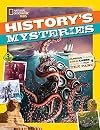
From cryptozoology to UFOs, there's something here for everyone. In National Geographic's History's Mysteries, there's an exciting variety of odd occurrences, including the latest findings and tantalizing hints at future evidence to come.
Seven chapters include vanished civilizations, deaths and disappearances, cryptids, strange phenomena, ancient monuments, codes and dead languages, and hidden treasure. Some of the featured mysteries are familiar and some are more esoteric. Stonehenge, show more Amelia Earhart, Anastasia, yetis, and flying saucers are all included. There are also older mysteries less well-known these days like the Mary Celeste and the lost colony of Roanoke. Then there are newer mysteries - a giant structure under the Sea of Galilee, modern codes, and the most recent discoveries at the "white city" in the Honduras.
Each spread is full of photographs, clips from original documents, and historical notes and interesting facts. There is a final interview with Chris Fisher, an archeologist involved in the discoveries in Honduras surrounding the "white city", and index, and credits.
While sometimes a little overly dramatic, this is a good variety of mysteries and secrets, including not just Western civilizations. In some cases (like the Kongamato), there is a bias towards Western "explorers" experience, rather than local knowledge. There are gaps in some cases where only white perspectives are discussed or mentioned.
Verdict: Good browsing material for kids who enjoy National Geographic's fact books and a start for kids who want to dig deeper into the subject. This is going to be a series, so I'll be interested in seeing what future titles cover.
ISBN: 9781426328718; Published November 2017 by National Geographic; Review copy provided by publisher; Donated to the library show less
Seven chapters include vanished civilizations, deaths and disappearances, cryptids, strange phenomena, ancient monuments, codes and dead languages, and hidden treasure. Some of the featured mysteries are familiar and some are more esoteric. Stonehenge, show more Amelia Earhart, Anastasia, yetis, and flying saucers are all included. There are also older mysteries less well-known these days like the Mary Celeste and the lost colony of Roanoke. Then there are newer mysteries - a giant structure under the Sea of Galilee, modern codes, and the most recent discoveries at the "white city" in the Honduras.
Each spread is full of photographs, clips from original documents, and historical notes and interesting facts. There is a final interview with Chris Fisher, an archeologist involved in the discoveries in Honduras surrounding the "white city", and index, and credits.
While sometimes a little overly dramatic, this is a good variety of mysteries and secrets, including not just Western civilizations. In some cases (like the Kongamato), there is a bias towards Western "explorers" experience, rather than local knowledge. There are gaps in some cases where only white perspectives are discussed or mentioned.
Verdict: Good browsing material for kids who enjoy National Geographic's fact books and a start for kids who want to dig deeper into the subject. This is going to be a series, so I'll be interested in seeing what future titles cover.
ISBN: 9781426328718; Published November 2017 by National Geographic; Review copy provided by publisher; Donated to the library show less
Lists
Awards


You May Also Like


Associated Authors
Statistics
- Works
- 24
- Members
- 2,526
- Popularity
- #10,157
- Rating
- 4.3
- Reviews
- 22
- ISBNs
- 113