
Alexandra Zapruder
Author of Anne Frank (National Geographic Readers) (Level 3)
About the Author
Alexandra Zapruder was on the founding staff of the United States Holocaust Memorial Museum and was writer and co-producer of I'm Still Here, an award-winning documentary for young people based on Salvaged Pages.
Works by Alexandra Zapruder
Tagged
Common Knowledge
- Birthdate
- 1969
- Gender
- female
- Education
- Smith College (1991)
- Relationships
- Abraham Zapruder (granddaughter)
Members
Reviews
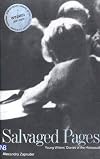
'A mark of the writer's place in the world, a gesture undertaken against obliteration',, August 30, 2014
This review is from: Salvaged Pages: Young Writers' Diaries of the Holocaust (Paperback)
A terribly moving work that brings the European Jews' suffering in the Holocaust to life. While Anne Frank's Diary is well-known, there were in fact numerous young Jewish people recording their lives in this period, and in this work we read selections from fourteen of them, placed in chronological show more order - from a German youth in 1939, suffering the first Nazi persecution and focussing on his Zionist group as a way out, through to a girl in Terezin ghetto in the last days, hoping they will survive till liberation.
The editor introduces each diary with a few pages of notes and biography as to the final outcome of the individual's life. In an insightful introduction, she contrasts her message - 'not to confuse the reading of them with the rescue of individual lives, even symbolically, but to allow them to be seen as the partial records that they are; and to contemplate at one and the same time what is before us and what is lost and irrecoverable' - with the efforts of other editors of similar works to try to put a positive spin on these heart-rending works ('the final impression is not of tragedy or despair but of the transendence of the human spirit and the eternity of the Jewish message', wrote one such introducer.)
After reading this, one's feelings are entirely of tragedy and despair. As one reads the diary of deeply religious Moshe Flinker, and his efforts to work out a scriptural explanation for the events; the highly intelligent Petr Ginz, confined to Terezin ghetto, and struggling to pursue what education he could there; the diary of Peter Feigl, a Catholic convert, kept for his parents - little knowing they lost their lives almost immediately he was sent away.... Others, more basic, as the privations kick in, focus on the desperate hunger, the cold; a family in hiding must rely on temperamental, unreliable locals to supply them...
An extremely well-constructed book that will remain with the reader forever. show less
This review is from: Salvaged Pages: Young Writers' Diaries of the Holocaust (Paperback)
A terribly moving work that brings the European Jews' suffering in the Holocaust to life. While Anne Frank's Diary is well-known, there were in fact numerous young Jewish people recording their lives in this period, and in this work we read selections from fourteen of them, placed in chronological show more order - from a German youth in 1939, suffering the first Nazi persecution and focussing on his Zionist group as a way out, through to a girl in Terezin ghetto in the last days, hoping they will survive till liberation.
The editor introduces each diary with a few pages of notes and biography as to the final outcome of the individual's life. In an insightful introduction, she contrasts her message - 'not to confuse the reading of them with the rescue of individual lives, even symbolically, but to allow them to be seen as the partial records that they are; and to contemplate at one and the same time what is before us and what is lost and irrecoverable' - with the efforts of other editors of similar works to try to put a positive spin on these heart-rending works ('the final impression is not of tragedy or despair but of the transendence of the human spirit and the eternity of the Jewish message', wrote one such introducer.)
After reading this, one's feelings are entirely of tragedy and despair. As one reads the diary of deeply religious Moshe Flinker, and his efforts to work out a scriptural explanation for the events; the highly intelligent Petr Ginz, confined to Terezin ghetto, and struggling to pursue what education he could there; the diary of Peter Feigl, a Catholic convert, kept for his parents - little knowing they lost their lives almost immediately he was sent away.... Others, more basic, as the privations kick in, focus on the desperate hunger, the cold; a family in hiding must rely on temperamental, unreliable locals to supply them...
An extremely well-constructed book that will remain with the reader forever. show less
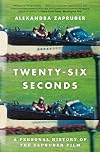
HISTORY/BIOGRAPHY
Alexandra Zapruder
Twenty-Six Seconds: A Personal History of the Zapruder Film
Twelve Books
Hardcover, 978-1-4555-7481-0 (also available as an ebook, an audio book, and on Audible), 480 pgs., $27.00
November 15, 2016
Twenty-Six Seconds: A Personal History of the Zapruder Film is a labor of loving curiosity for historian Alexandra Zapruder, who was ten months old when her grandfather Abraham Zapruder died. She feels as if she had always known, through a sort of osmosis, that he show more had taken a home movie of the assassination of President John F. Kennedy, but their family never talked about it. “[The film] was almost completely compartmentalized from our family identity, our stories, and our sense of ourselves,” Zapruder writes. She wanted to understand what effects association with the film had wrought on her family.
The death of Zapruder’s father was the additional impetus she needed, so she began the research. Zapruder collected files from her father’s attic, letters and photos from her aunt’s home in Dallas, documents from the family’s attorneys and the National Archives. She interviewed key players and conspiracy theorists alike, and was the first to be granted access to Life’s archival materials. Zapruder decided that her “family’s insistence on dignity and restraint when it came to talking publicly about the film had left a vacuum in the public story.”
Zapruder’s narrative is often highly technical, packed with minute detail. The film is twenty-six seconds long, consisting of 486 frames, each frame one-eighteenth of a second long. Zapruder addresses head-on the oppressive avalanche of press coverage and some of the claims made about her family: they were greedy, selfish, immoral, profiteers. Some of the insults came embellished with anti-Semitism. Zapruder is passionately protective of her loved ones, often to the point of defensiveness, but also quite funny: “[T]he film felt a bit like having an unsightly birthmark … something we were born with, but it didn’t define us. I was used to it and no longer particularly noticed. But I didn’t expect people to point it out, either.”
Zapruder includes rich detail of family history in Czarist Russia and Jewish Brooklyn. Small details are affecting. On the film, before the footage in Dealey Plaza, are images of Abe’s grandchildren and employees at his dress manufacturing plant. “The screen flickers again and they are in bright sunshine, outside on Dealey Plaza.” Zapruder evokes the tension and horror of the assassination. Scrupulous facts are woven into an intensely personal, sometimes painful, family history.
The family struggled through the years to “strike the right balance between personal legacy and public responsibility.” Thorny legal, ethical, and moral issues — sometimes mutually exclusive — are well and thoroughly discussed, such as “whether an individual’s interest in historically significant images should supersede a corporation’s right to control the content that it owned,” the “takings” clause of the fifth amendment to the U.S. Constitution, and copyright law, among many others.
Perhaps most fascinating, and most difficult to assess, is Zapruder’s exploration of the psychology of the film: we must “imagine a time before people were routinely bombarded with moving footage of violence multiple times a day.”
Twenty-Six Seconds is an important contribution to our understanding of history on a grand scale, and to the personal history of a private family reluctantly thrust into history’s spotlight. In the end, people wanted the film to do what it could not — provide the answers to what happened to JFK.
Originally published in Lone Star Literary Life. show less
Alexandra Zapruder
Twenty-Six Seconds: A Personal History of the Zapruder Film
Twelve Books
Hardcover, 978-1-4555-7481-0 (also available as an ebook, an audio book, and on Audible), 480 pgs., $27.00
November 15, 2016
Twenty-Six Seconds: A Personal History of the Zapruder Film is a labor of loving curiosity for historian Alexandra Zapruder, who was ten months old when her grandfather Abraham Zapruder died. She feels as if she had always known, through a sort of osmosis, that he show more had taken a home movie of the assassination of President John F. Kennedy, but their family never talked about it. “[The film] was almost completely compartmentalized from our family identity, our stories, and our sense of ourselves,” Zapruder writes. She wanted to understand what effects association with the film had wrought on her family.
The death of Zapruder’s father was the additional impetus she needed, so she began the research. Zapruder collected files from her father’s attic, letters and photos from her aunt’s home in Dallas, documents from the family’s attorneys and the National Archives. She interviewed key players and conspiracy theorists alike, and was the first to be granted access to Life’s archival materials. Zapruder decided that her “family’s insistence on dignity and restraint when it came to talking publicly about the film had left a vacuum in the public story.”
Zapruder’s narrative is often highly technical, packed with minute detail. The film is twenty-six seconds long, consisting of 486 frames, each frame one-eighteenth of a second long. Zapruder addresses head-on the oppressive avalanche of press coverage and some of the claims made about her family: they were greedy, selfish, immoral, profiteers. Some of the insults came embellished with anti-Semitism. Zapruder is passionately protective of her loved ones, often to the point of defensiveness, but also quite funny: “[T]he film felt a bit like having an unsightly birthmark … something we were born with, but it didn’t define us. I was used to it and no longer particularly noticed. But I didn’t expect people to point it out, either.”
Zapruder includes rich detail of family history in Czarist Russia and Jewish Brooklyn. Small details are affecting. On the film, before the footage in Dealey Plaza, are images of Abe’s grandchildren and employees at his dress manufacturing plant. “The screen flickers again and they are in bright sunshine, outside on Dealey Plaza.” Zapruder evokes the tension and horror of the assassination. Scrupulous facts are woven into an intensely personal, sometimes painful, family history.
The family struggled through the years to “strike the right balance between personal legacy and public responsibility.” Thorny legal, ethical, and moral issues — sometimes mutually exclusive — are well and thoroughly discussed, such as “whether an individual’s interest in historically significant images should supersede a corporation’s right to control the content that it owned,” the “takings” clause of the fifth amendment to the U.S. Constitution, and copyright law, among many others.
Perhaps most fascinating, and most difficult to assess, is Zapruder’s exploration of the psychology of the film: we must “imagine a time before people were routinely bombarded with moving footage of violence multiple times a day.”
Twenty-Six Seconds is an important contribution to our understanding of history on a grand scale, and to the personal history of a private family reluctantly thrust into history’s spotlight. In the end, people wanted the film to do what it could not — provide the answers to what happened to JFK.
Originally published in Lone Star Literary Life. show less
Zapruder, who works in the education department at the U.S. Holocaust Memorial Museum, has done a great service to history and the future. Her book deserves to become a standard in Holocaust studies classes, particularly those aimed at youth or focusing on individuals. The 14 diaries in this anthology most appearing in English for the first time detail the lives of teens and their families, some on the run, some in camps, some in hiding and some during the chilling last days in the ghettoes show more in Nazi-occupied Europe. Each is prefaced with a biography of its author, information on family background and, when known, his or her fate. Zapruder also provides other facts that would have been known to the diarists and their peers, providing readers with a more complete context. Their experiences and reactions vary widely. Peter Feigl's parents baptize him as a Catholic and send him to church, but eventually are forced to send him from Austria to France. He blames the Jewish-identified teens around him for the circumstances that have ripped him from his parents. In contrast, Belgian Moshe Flinker becomes more attached to traditional Judaism, but increasingly depressed. His last entry, in the fall of 1943, reads, "I am sitting facing the sun. Soon it will set; it is nearing the horizon. It is as red as blood, as if it were a bleeding wound. From where does it get so much blood? For days there has been a red sun, but this is not hard to understand. Is it not sufficient to weep, in these days of anguish?" These writings will certainly impress themselves on the memories of all readers.
For the millions who read The Diary of Anne Frank (1952), this collection of 14 Holocaust diaries by young people from all over Europe will extend the history beyond Anne's attic walls. Scholars will want this volume--editor Zapruder's research is meticulous, drawing on archives and museums across the world--but the intensely personal voices of these young people who record the unimaginable will also draw a general audience. In her clear overview and introductions to each diary, Zapruder gives historical context and biography and decries any message of consolation or redemption, pointing out that these stark narratives banish forever the stereotypes of sweet victim, beneficent rescuer, and unfeeling bystander; instead, they suggest the immense complexity of ordinary people. Some writers are dull; some write with heartbreaking power. One diarist focuses on hunger: he's absolutely obsessed with food. Another's anguish is the loneliness, the separation; she cannot forget having to leave her grandmother in the street. The places range from the Czech forests and the Lodz ghetto to Auschwitz and the horrific scenes at liberation. A landmark collection. show less
For the millions who read The Diary of Anne Frank (1952), this collection of 14 Holocaust diaries by young people from all over Europe will extend the history beyond Anne's attic walls. Scholars will want this volume--editor Zapruder's research is meticulous, drawing on archives and museums across the world--but the intensely personal voices of these young people who record the unimaginable will also draw a general audience. In her clear overview and introductions to each diary, Zapruder gives historical context and biography and decries any message of consolation or redemption, pointing out that these stark narratives banish forever the stereotypes of sweet victim, beneficent rescuer, and unfeeling bystander; instead, they suggest the immense complexity of ordinary people. Some writers are dull; some write with heartbreaking power. One diarist focuses on hunger: he's absolutely obsessed with food. Another's anguish is the loneliness, the separation; she cannot forget having to leave her grandmother in the street. The places range from the Czech forests and the Lodz ghetto to Auschwitz and the horrific scenes at liberation. A landmark collection. show less
TWENTY-SIX SECONDS
A Personal History of the Zapruder Film
ALEXANDRA ZAPRUDER
MY RATING ⭐️⭐️⭐️⭐️▫️
PUBLISHER Twelve/Hachette Audio
PUBLISHED November 16, 2016
SUMMARY
"They killed him. They killed him." Abraham Zapruder, cried. He was the first to know of John F. Kennedy's death. He saw it through the zoom lens of his double 8mm video camera on that bright, sunny day at Dealey Plaza. The motorcade passed right in front of him, then he heard the gunfire. It was the most horrific show more thing he had ever seen. Everyone around him was stunned. The news reports said that Kennedy was taken to Parkland Hospital. But Abe knew he was already dead.
Abe immediately determined that he had to get a copy of his film to the Secret Service. News reporters were hounding him for a copy. The afternoon of the assassination, Zapruder along with the Secret Service went to the Eastman Kodak processing facility near Love Field to develop the double 8mm color film. Later that day he and others took the developed film and had three copies made at the Jamieson Film Company. He delivered two of the three duplicate copies to the Secret Service that night. Abe kept the original film and the third copy of the duplicate. And the long story of the film begins.
Alexandra Zapruder, Abe's grandaughter, tells us her grandfather's story of that horrendous day that he filmed President Kennedy's motorcade in Dallas, Texas on November 22, 1963. This book is the untold family story behind what happened to the twenty-six seconds of original film footage of Kennedy's assassination. Alexandra uses personal family records, records from Life magazine who possessed the film for twelve years, other previously sealed archival sources, and interviews with family members and others who had contact with the film. She traces the films complex journey through history and most importantly, details the many controversies the family had to endure, with the media, the Federal government and the arts community.
This book is part biography, part family history, and part historical record. It shows how this historic film changed a family and raised some of the most important social, cultural, and moral questions of our time. The film was notably the most graphically violent of it's time. Add to that, it was the death of a beloved president. It fueled debates about privacy, copyrights, access, and ownership.
REVIEW
Sometimes you read a book that makes your heart pound in your chest. A book that you can't stop thinking about or talking about. This is one of those books. Of course it's encompasses an monumental event in US history. But the book is not about the assassination. It's only about the twenty-six second film of the assassination. The book was very educational, enlightening, and informative. I thought I knew all I needed to know about the Kennedy assassination. But I didn't know this story.
I am ever so thankful to Alexandra Zapruder for meticulously pouring over pages and pages of documentation, conducting interviews and bringing the history of the film to light. The result is a comprehensive narrative that has shaped much of today's thinking about access to such things in the future. The family faced a tremendous amount of controversy over the film. Owning such a thing, as shown in this book carries a tremendous amount of responsibility. Alexandra Zupruder clearly testifies to how her grandfather and her father carried out this responsibility.
Alexandra portrays her grandfather as an honorable man, whose only hope, in this horrific situation was to not cause any additional emotional harm to the Kennedy family by the exploitation of this film.
It is a well-written and thought-provoking book. But the book is long. Twenty-six Seconds is 480 pages and the audio is over 14 hours. So it's quite a commitment. I would have enjoyed it more had it been somewhat more concise, but cannot imagine what she could have possibly cut. show less
A Personal History of the Zapruder Film
ALEXANDRA ZAPRUDER
MY RATING ⭐️⭐️⭐️⭐️▫️
PUBLISHER Twelve/Hachette Audio
PUBLISHED November 16, 2016
SUMMARY
"They killed him. They killed him." Abraham Zapruder, cried. He was the first to know of John F. Kennedy's death. He saw it through the zoom lens of his double 8mm video camera on that bright, sunny day at Dealey Plaza. The motorcade passed right in front of him, then he heard the gunfire. It was the most horrific show more thing he had ever seen. Everyone around him was stunned. The news reports said that Kennedy was taken to Parkland Hospital. But Abe knew he was already dead.
Abe immediately determined that he had to get a copy of his film to the Secret Service. News reporters were hounding him for a copy. The afternoon of the assassination, Zapruder along with the Secret Service went to the Eastman Kodak processing facility near Love Field to develop the double 8mm color film. Later that day he and others took the developed film and had three copies made at the Jamieson Film Company. He delivered two of the three duplicate copies to the Secret Service that night. Abe kept the original film and the third copy of the duplicate. And the long story of the film begins.
Alexandra Zapruder, Abe's grandaughter, tells us her grandfather's story of that horrendous day that he filmed President Kennedy's motorcade in Dallas, Texas on November 22, 1963. This book is the untold family story behind what happened to the twenty-six seconds of original film footage of Kennedy's assassination. Alexandra uses personal family records, records from Life magazine who possessed the film for twelve years, other previously sealed archival sources, and interviews with family members and others who had contact with the film. She traces the films complex journey through history and most importantly, details the many controversies the family had to endure, with the media, the Federal government and the arts community.
This book is part biography, part family history, and part historical record. It shows how this historic film changed a family and raised some of the most important social, cultural, and moral questions of our time. The film was notably the most graphically violent of it's time. Add to that, it was the death of a beloved president. It fueled debates about privacy, copyrights, access, and ownership.
REVIEW
Sometimes you read a book that makes your heart pound in your chest. A book that you can't stop thinking about or talking about. This is one of those books. Of course it's encompasses an monumental event in US history. But the book is not about the assassination. It's only about the twenty-six second film of the assassination. The book was very educational, enlightening, and informative. I thought I knew all I needed to know about the Kennedy assassination. But I didn't know this story.
I am ever so thankful to Alexandra Zapruder for meticulously pouring over pages and pages of documentation, conducting interviews and bringing the history of the film to light. The result is a comprehensive narrative that has shaped much of today's thinking about access to such things in the future. The family faced a tremendous amount of controversy over the film. Owning such a thing, as shown in this book carries a tremendous amount of responsibility. Alexandra Zupruder clearly testifies to how her grandfather and her father carried out this responsibility.
Alexandra portrays her grandfather as an honorable man, whose only hope, in this horrific situation was to not cause any additional emotional harm to the Kennedy family by the exploitation of this film.
It is a well-written and thought-provoking book. But the book is long. Twenty-six Seconds is 480 pages and the audio is over 14 hours. So it's quite a commitment. I would have enjoyed it more had it been somewhat more concise, but cannot imagine what she could have possibly cut. show less
Lists
Awards

You May Also Like


Statistics
- Works
- 5
- Members
- 653
- Popularity
- #38,651
- Rating
- 4.0
- Reviews
- 11
- ISBNs
- 31
- Languages
- 3