
Philip Shenon
Author of A Cruel and Shocking Act: The Secret History of the Kennedy Assassination
About the Author
Philip Shenon was a reporter for The New York Times for more than twenty years. As a Washington correspondent, he covered the Pentagon, the Justice Department and the State Department. As a foreign correspondent, he reported from more than sixty countries and several warzones. He has written show more several books including The Commission: The Uncensored History of the 9/11 Investigation and A Cruel and Shocking Act: The Secret History of the Kennedy Assassination. (Bowker Author Biography) show less
Works by Philip Shenon
A Cruel and Shocking Act: The Secret History of the Kennedy Assassination (2013) 396 copies, 15 reviews
Jesus Wept: Seven Popes and the Battle for the Soul of the Catholic Church (2025) 57 copies, 2 reviews
Tagged
Common Knowledge
- Canonical name
- Shenon, Philip
- Other names
- SHENON, Philip
- Gender
- male
- Occupations
- journalist
- Organizations
- The New York Times
The Daily Beast - Nationality
- USA
- Places of residence
- Washington, D.C., USA
- Associated Place (for map)
- D.C., USA
Members
Reviews
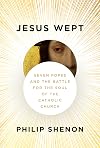
Papal biography through the lens of Vatican II. John XXIII is the hero it's impossible not to love. His anti-hero is Cardinal Alfredo Ottaviani, who reminded me of the Bad Cardinal in CONCLAVE. That movie floated through my mind frequently during this book.
I was occasionally zoning out over a lot of the details over 500 pages - the Vatican fights, the bios of minor players, all the sex abuse scandals and all the Latin American drama.
I had no idea how close we were to having the Church show more approving the use of birth control! And I had no idea what a wimpy and fearful and anti-reform personality Paul VI was - the first pope of my lifetime, from 1963-1978.
One thing I appreciated about the structure of the book was how every pope's life story was jumbled together chronologically - you learned all about Ratzinger and Wojtyla through the years of Vatican II while it was happening, for example; instead of just taking each pope in a vacuum getting his own section. I liked instead how this showed the flow of history and provided a lot of background of the popes before they were popes, situated within their times.
And boy, Paul VI was bad, but John Paul II was a real horror show in this book. I kept flashing back to something a girl said in one of my high school religion classes - this was the 80s - "He wants to take the church BACKWARD instead of forward; he won't even HEAR about women in the priesthood - I think he's one of the worst popes we've ever had!" You didn't come out and say this in religion class at my school... but the more I read about him, the more I thought, "Damn, you were right, Kerry!"
Unfortunately, John XXIII and the forward-looking hopes of Vatican II end up feeling like the aberration over recent history, rather than the other way around. The author has an agenda - this is not simply a book of papal biography, but a narrative about our loss when we lost John XXIII and what the Church could have been. He never makes this parallel, but I was certain thinking about JFK, who died within months of John XXIII, and also took with him the possibility of a much different course of history that we will never know the extent of.
Bergoglio (Francis I) was interesting. His humility was irresistible. Ratzinger (Benedict) was also interesting in how his reform-mindedness in youth turned to fear and shutting down of dissent during his papacy - interesting, but not likeable. There was a LOT about Ratzinger here. I was much more interested whenever we turned to Bergoglio. Guess I put Francis I as my 'favorite' pope since John XXIII. But the book ended during his reign and didn't cover our Leo. Who knows what his papacy may hold? We may get birth control yet? show less
I was occasionally zoning out over a lot of the details over 500 pages - the Vatican fights, the bios of minor players, all the sex abuse scandals and all the Latin American drama.
I had no idea how close we were to having the Church show more approving the use of birth control! And I had no idea what a wimpy and fearful and anti-reform personality Paul VI was - the first pope of my lifetime, from 1963-1978.
One thing I appreciated about the structure of the book was how every pope's life story was jumbled together chronologically - you learned all about Ratzinger and Wojtyla through the years of Vatican II while it was happening, for example; instead of just taking each pope in a vacuum getting his own section. I liked instead how this showed the flow of history and provided a lot of background of the popes before they were popes, situated within their times.
And boy, Paul VI was bad, but John Paul II was a real horror show in this book. I kept flashing back to something a girl said in one of my high school religion classes - this was the 80s - "He wants to take the church BACKWARD instead of forward; he won't even HEAR about women in the priesthood - I think he's one of the worst popes we've ever had!" You didn't come out and say this in religion class at my school... but the more I read about him, the more I thought, "Damn, you were right, Kerry!"
Unfortunately, John XXIII and the forward-looking hopes of Vatican II end up feeling like the aberration over recent history, rather than the other way around. The author has an agenda - this is not simply a book of papal biography, but a narrative about our loss when we lost John XXIII and what the Church could have been. He never makes this parallel, but I was certain thinking about JFK, who died within months of John XXIII, and also took with him the possibility of a much different course of history that we will never know the extent of.
Bergoglio (Francis I) was interesting. His humility was irresistible. Ratzinger (Benedict) was also interesting in how his reform-mindedness in youth turned to fear and shutting down of dissent during his papacy - interesting, but not likeable. There was a LOT about Ratzinger here. I was much more interested whenever we turned to Bergoglio. Guess I put Francis I as my 'favorite' pope since John XXIII. But the book ended during his reign and didn't cover our Leo. Who knows what his papacy may hold? We may get birth control yet? show less
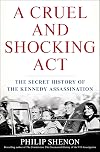
Shenon's A Cruel and Shocking Act is less about the Kennedy assassination than a history of the investigation of the assassination, specifically the work of the Warren commission. I've read a bit about the Kennedy assassination - most memorably, Vince Bugliosi's 1800-page, minute-by-minute account. But I'd never really thought about how the Warren Commission did its work. The interplay of politics and personalities Shenon presents was fascinating.
In the process of researching the show more Commission, Shenon got access to recently declassified documents that pointed him to the possibility that Oswald had significant contacts with Cuban diplomats and intelligence agents. And worse, the CIA, who likely knew this, deliberately hid it from the Warren Commission. Did Oswald have support from Cuba? Was he an agent of Cuba or the Soviet Union?
A Cruel and Shocking Act is best in the parts dealing with the people of the Warren Commission - the commissioners, the managers of the work, and the young, bright, energetic staffers who did the real work. This is where Shenon shines. show less
In the process of researching the show more Commission, Shenon got access to recently declassified documents that pointed him to the possibility that Oswald had significant contacts with Cuban diplomats and intelligence agents. And worse, the CIA, who likely knew this, deliberately hid it from the Warren Commission. Did Oswald have support from Cuba? Was he an agent of Cuba or the Soviet Union?
A Cruel and Shocking Act is best in the parts dealing with the people of the Warren Commission - the commissioners, the managers of the work, and the young, bright, energetic staffers who did the real work. This is where Shenon shines. show less
 This review was written for LibraryThing Early Reviewers.
A history of the Warren Commission, and through that, a history of the Kennedy assassination. It shows in painstaking detail that Oswald was the lone shooter. It is much more ambiguous on Oswald's motives. Shenon shows that the CIA did not share all of its info on Oswald and his connections to communists and meetings with communists in Mexico City prior to the assassination. Still, we do not know for certain what Oswald was doing, who he was talking to, and exactly why he shot Kennedy. show more Shenon doesn't come out and say it, but, I now believe that, at the very least, Oswald boasted he would kill Kennedy in a bid to be allowed into Cuba or back to the U.S.S.R. Basically, Oswald thought, if I kill the guy, the communists will see I am a serious revolutionary and I will be famous and fêted. I think some Cuban functionaries, some Soviet sources, and some CIA guys new of the threat in advance, but didn't think Oswald would do it. Then they covered their butts. That's the least and highly probable, I think, after reading this book. To push a little more, perhaps some communist functionaries pushed Oswald to do it, maybe even promised or gave support, but didn't think he'd really do it. And, one last thing, I think it's possible Oswald received some sort of sleeper agent training when he was in the Soviet Union. True, the Soviets considered Oswald a slob, dumb, and a poser, but he could be used as a useful idiot. A patsy. show less
I was sitting in an eighth-grade classroom just a few miles away from downtown Dallas when we received news that President Kennedy had been shot. Being of an impressionable age, thinking everything the Kennedys (especially Jackie) did was glamorous, and having such an unthinkable atrocity happen in my hometown fostered a keen interest in the Kennedy family and the facts and events surrounding the assassination ever since.
Consequently, I have sifted through a lot of information through books show more and documentaries over the years. I have heard all the conspiracy and the non-conspiracy theories, and have always regarded the Warren Commission as being something seriously sub-standard to the point of being a simple rubber stamp committee for Johnson. Therefore, I found this book not only an interesting, but fascinating, expose of the Commission. Shenan has certainly done his homework and outlines the Commission’s work step-by-step throughout the entire process. There is an absolute multitude of people involved, from committee members to junior lawyers to witnesses to FBI and CIA officials to Secret Service, etc., and it is hard to keep them all straight at times. But the author has done, in my opinion, a remarkable job of presenting a plethora of facts in a very readable—“page-turning” even—format. His chapters are short, and the action moves quickly in bite-size segments from place to place. I never felt bogged down with the tremendous amount of detail nor felt that the story line dragged—not an easy task!
This is an account, first and foremost, of the Commission, not the assassination. The personalities involved are portrayed warts and all—the ruthlessness of some, the disengagement of others, and the frustrations, the heavy-handedness, or the closemindedness of others. It seems that no one can trust anyone to be completely truthful and forthright—not the CIA, not the FBI, not the witnesses. Warren didn’t want the job, and his main agenda seems to be to get it over with as quickly as possible. Though it appears that there are certainly many who are after the truth at all costs (the young junior lawyers mainly), others have predrawn conclusions and are seemingly using the work of the Commission to support those to the exclusion of other evidence which might offer conflicting information.
At the end of the day, I have no more confidence in the Commission’s report than I did before. But it is an extremely interesting read and certainly provides an incredible amount of insight into process by which the Warren report evolves. show less
Consequently, I have sifted through a lot of information through books show more and documentaries over the years. I have heard all the conspiracy and the non-conspiracy theories, and have always regarded the Warren Commission as being something seriously sub-standard to the point of being a simple rubber stamp committee for Johnson. Therefore, I found this book not only an interesting, but fascinating, expose of the Commission. Shenan has certainly done his homework and outlines the Commission’s work step-by-step throughout the entire process. There is an absolute multitude of people involved, from committee members to junior lawyers to witnesses to FBI and CIA officials to Secret Service, etc., and it is hard to keep them all straight at times. But the author has done, in my opinion, a remarkable job of presenting a plethora of facts in a very readable—“page-turning” even—format. His chapters are short, and the action moves quickly in bite-size segments from place to place. I never felt bogged down with the tremendous amount of detail nor felt that the story line dragged—not an easy task!
This is an account, first and foremost, of the Commission, not the assassination. The personalities involved are portrayed warts and all—the ruthlessness of some, the disengagement of others, and the frustrations, the heavy-handedness, or the closemindedness of others. It seems that no one can trust anyone to be completely truthful and forthright—not the CIA, not the FBI, not the witnesses. Warren didn’t want the job, and his main agenda seems to be to get it over with as quickly as possible. Though it appears that there are certainly many who are after the truth at all costs (the young junior lawyers mainly), others have predrawn conclusions and are seemingly using the work of the Commission to support those to the exclusion of other evidence which might offer conflicting information.
At the end of the day, I have no more confidence in the Commission’s report than I did before. But it is an extremely interesting read and certainly provides an incredible amount of insight into process by which the Warren report evolves. show less
This review was written for LibraryThing Early Reviewers.Lists
Awards


You May Also Like


Associated Authors
Statistics
- Works
- 3
- Members
- 630
- Popularity
- #39,983
- Rating
- 4.1
- Reviews
- 20
- ISBNs
- 33
- Languages
- 7
- Favorited
- 1
