
Livia Bitton-Jackson
Author of I Have Lived a Thousand Years: Growing up in the Holocaust
About the Author
Works by Livia Bitton-Jackson
Saving What Remains: A Holocaust Survivor's Journey Home to Reclaim Her Ancestry (2009) 13 copies, 2 reviews
Tagged
Common Knowledge
- Canonical name
- Bitton-Jackson, Livia
- Legal name
- Freidmann, Livia Elvira
- Other names
- Friedmann, Elli
Jackson-Bitton, Livia
Jackson Bitton, Livia
Bitton Jackson, Livia - Birthdate
- 1931-02-28
- Gender
- female
- Education
- New York University (MA, 1963 | PhD, 1968)
Brooklyn College (BA, 1961) - Occupations
- cultural historian
Holocaust survivor
memoirist
professor - Organizations
- City University of New York
- Short biography
- Livia Bitton-Jackson was born Elvira "Elli" Friedmann to a Jewish family in Šamorín, Czechoslovakia, territory disputed with Hungary for years. She was 13 years old when Nazi Germany invaded in World War II. She was sent with her parents, Laura and Markus Friedmann, brother, and aunt to the Nagymagyar Ghetto. Her father was sent to a forced labor camp, and the others were transported to the death camp at Auschwitz. In June 1944, Livia and her mother were sent to the forced labor camp at Kraków-Płaszów. In August 1944, they were taken to Augsburg, Germany, to work at a factory assembly line. After this, they were sent to a subsidiary camp of Dachau, where they were reunited with her brother. Near the end of the war, as the Allies advanced, the three family members were taken by trains further into Germany. Despite the terrible conditions, they all survived. She returned to Czechoslovakia to learn that her father had died at Bergen-Belsen two weeks before liberation. In 1951, she and her mother emigrated to the USA to join her brother in New York City. She enrolled at New York University, where she earned a Ph.D. degree in Hebrew culture and Jewish history. Dr. Bitton-Jackson became a professor of history at City University of New York, where she taught for 37 years. In 1977, she married Dr. Leonard G. Jackson, an Irish-born physician, with whom she lives in Israel, commuting back to NYC. Her memoir I Have Lived a Thousand Years: Growing Up in the Holocaust, was published in 1997. She also wrote another memoir about her family, Saving What Remains (2009), and several other works of cultural history.
- Nationality
- Czechoslovakia (birth)
USA - Birthplace
- Samorin, Czechoslovakia
- Places of residence
- New York, New York, USA
Netanya, Israel
Members
Reviews

I Have Lived a Thousand Years is Livia Bitton-Jackson's (born Elli Friedmann) memoir of growing up during the Holocaust. Her story begins as the Nazis invade Budapest. Shortly thereafter, Elli and her family are forced into a ghetto which then leads to their imprisonment and forced labor in a seemingly endless litany of concentration camps.
Aimed more at a young adult audience, I Have Lived a Thousand Years is written in a present-tense first person style that is reminiscent of a girl's show more diary. Though it may be aimed a younger audience, it doesn't gloss over the painful details of a childhood lived under the impossible cruelty of the Nazis, though it doesn't always give quite as many vivid details as others I've read. Somehow, though, it is not the most violent and tortuous situations that leave the biggest impression but the more understated moments, like the image of Elli running barefoot outside realizing she didn't get to say good-bye to her father, possibly for the last time, or the sound of the old men in the ghetto constantly chanting the Psalms in the days after the younger men are taken away.
The conundrum of reviewing the Holocaust memoir is that you can't. I can't very well sit and say "I enjoyed this or that," but Bitton-Jackson's memories are vivid and well-told. After the first few chapters, the writing flows easily and for a story of such painful events, it is surprisingly difficult to put down. Even though I've read my fair share of Holocaust memoirs, I was staggered by many of Elli's experiences not least the sheer amount of places she and her mother are taken by train to do forced labor over a relatively short period of time. The only minor quibble I could make with the writing is that the most dramatic language seems to arrive well before the most dramatic events. The narrative, well before the family is experiencing ghettos and concentration camps, is peppered with "Oh my Gods" and "Will I ever...?" that seem to indicate extensive foreknowledge which seems a bit overblown in a book that is written from a present tense perspective and an unnecessary effort to create drama. Soon, though, the events change to suit the language. While the writing continues in the same way, the drama and tragedy are totally real and well-suited to the language, and there is no longer a need for it to be manufactured by portentous language. show less
Aimed more at a young adult audience, I Have Lived a Thousand Years is written in a present-tense first person style that is reminiscent of a girl's show more diary. Though it may be aimed a younger audience, it doesn't gloss over the painful details of a childhood lived under the impossible cruelty of the Nazis, though it doesn't always give quite as many vivid details as others I've read. Somehow, though, it is not the most violent and tortuous situations that leave the biggest impression but the more understated moments, like the image of Elli running barefoot outside realizing she didn't get to say good-bye to her father, possibly for the last time, or the sound of the old men in the ghetto constantly chanting the Psalms in the days after the younger men are taken away.
The conundrum of reviewing the Holocaust memoir is that you can't. I can't very well sit and say "I enjoyed this or that," but Bitton-Jackson's memories are vivid and well-told. After the first few chapters, the writing flows easily and for a story of such painful events, it is surprisingly difficult to put down. Even though I've read my fair share of Holocaust memoirs, I was staggered by many of Elli's experiences not least the sheer amount of places she and her mother are taken by train to do forced labor over a relatively short period of time. The only minor quibble I could make with the writing is that the most dramatic language seems to arrive well before the most dramatic events. The narrative, well before the family is experiencing ghettos and concentration camps, is peppered with "Oh my Gods" and "Will I ever...?" that seem to indicate extensive foreknowledge which seems a bit overblown in a book that is written from a present tense perspective and an unnecessary effort to create drama. Soon, though, the events change to suit the language. While the writing continues in the same way, the drama and tragedy are totally real and well-suited to the language, and there is no longer a need for it to be manufactured by portentous language. show less
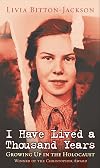
This memoir is about being Jewish in Czechoslovakia in the 1940s as more and more freedoms and possessions are removed from the Jews until they are finally shipped to Auschwitz. There are so many details here that I'd never heard of before. The Stars of David they had to wear could not be pinned to their clothing, they had to be sewn on with little stitches, so her mother sewed them on all their jackets and left their other clothes without. After they'd been transported to the ghetto, with show more the initial reduction in their belongs, they were then made to bring the authorities all their books, documents and photographs. When one woman tried to keep a little picture of her baby and was not allowed, she asked if she would get it back after the war. "Oh, yes" she was assured, "of course you'll get it back." Then the whole pile of belonging was burned in front of their owners. In the camp they were shaved not only of the hair on their heads but also of their underarm and pubic hair. They were not allowed inside the buildings during the day, so they had to keep their bald little bodies outside in the blazing sun. Bitton-Jackson was blond, blue eyed, and very fair. She burned so bad her face blistered all over. Again nothing I would have thought of. The book doesn't try to horrify with scenes of torture, the day to day life was quite horrific enough. show less
What sets Bitton-Jackson's Holocaust memoir apart from the others is that it is simultaneously poetic and graphic. Also, the entire book is written in the first-person which gives it a startling immediacy.
It has garnered hundreds of deservedly glowing reviews, both here and on Amazon, so I won't take the trouble of summarizing it but the following sections hit me upside the head:
Her short-lived joyful ethnic pride that she discovered in the Jewish ghetto:
"For the first time in my life, I show more am happy to be a Jew . . . The cock-feathered policement who had trampled on our sofas and our self-esteem, the Gentile neighbors who were afraid to say good-bye, the Jancsi Novaks, the kind, gentle friends who have not attempted to send a note of synpathy, the peasant wagon drivers who dutifully accepted wages from us for delivering us to the enemy . . . they all are on the other side of the fence. A tall fence separates us. A world separates us because they do not understand.
"But we, on this side of the fence, we understand. We put up sheets around bathtubs in the yard in order to take baths. We cook on open stoves, We stand in long lines for the toilet. No friendship or love binds as this deep, spontaneous, easy mutuality."
The graphic description of concentration camp food, clearer than any I've read elsewhere:
"I snatch the bread from Mommy's hand (she had refused to eat it) and begin to eat. The dry, mudlike lump turns into wet sand particles in my mouth. . .
"When the bowl of food is handed to me, I am unable to take a gulp. It is a dark green, thick mass in a battered washbowl crusted with dirt. No spoons. You tilt the bowl until the mass slides to the edge, then gulp. The dark mush smells and looks repulsive. The edge of the bowl is rusty and cracked and uneven with dried-on smut. My nausea returns in a flash."
And to add fodder to the eternal question of how much did war-time Germans outside the SS really know about the concentration camps, there is an interesting chapter titled "This Must be Heaven" in which some clearly astonished Wehrmacht officials running a Luftwaffe factory who have requested female laborers from Auschwitz don't recognize the arriving inmates as women, ask them where their luggage is (which causes much laughter among the inmates), and ask for their actual names. When one officer tells Bitton-Jackson's partially paralyzed mother not to worry, that "here you will get better. We will take good care of you" the daughter's response is "I am surely dreaming."
A stunning Holocaust memoir, simultaneously poetic and graphic. show less
It has garnered hundreds of deservedly glowing reviews, both here and on Amazon, so I won't take the trouble of summarizing it but the following sections hit me upside the head:
Her short-lived joyful ethnic pride that she discovered in the Jewish ghetto:
"For the first time in my life, I show more am happy to be a Jew . . . The cock-feathered policement who had trampled on our sofas and our self-esteem, the Gentile neighbors who were afraid to say good-bye, the Jancsi Novaks, the kind, gentle friends who have not attempted to send a note of synpathy, the peasant wagon drivers who dutifully accepted wages from us for delivering us to the enemy . . . they all are on the other side of the fence. A tall fence separates us. A world separates us because they do not understand.
"But we, on this side of the fence, we understand. We put up sheets around bathtubs in the yard in order to take baths. We cook on open stoves, We stand in long lines for the toilet. No friendship or love binds as this deep, spontaneous, easy mutuality."
The graphic description of concentration camp food, clearer than any I've read elsewhere:
"I snatch the bread from Mommy's hand (she had refused to eat it) and begin to eat. The dry, mudlike lump turns into wet sand particles in my mouth. . .
"When the bowl of food is handed to me, I am unable to take a gulp. It is a dark green, thick mass in a battered washbowl crusted with dirt. No spoons. You tilt the bowl until the mass slides to the edge, then gulp. The dark mush smells and looks repulsive. The edge of the bowl is rusty and cracked and uneven with dried-on smut. My nausea returns in a flash."
And to add fodder to the eternal question of how much did war-time Germans outside the SS really know about the concentration camps, there is an interesting chapter titled "This Must be Heaven" in which some clearly astonished Wehrmacht officials running a Luftwaffe factory who have requested female laborers from Auschwitz don't recognize the arriving inmates as women, ask them where their luggage is (which causes much laughter among the inmates), and ask for their actual names. When one officer tells Bitton-Jackson's partially paralyzed mother not to worry, that "here you will get better. We will take good care of you" the daughter's response is "I am surely dreaming."
A stunning Holocaust memoir, simultaneously poetic and graphic. show less
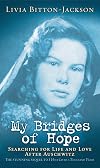
I went into this book not really knowing what to expect — I’m not sure how it ended up on my family’s shelves, but I noticed it one day and added it to my to-read list for the future. Now, I have no idea where my copy of this book is, but luckily, the library had a copy. This is a memoir about a teenage girl’s coming of age after she survives the Holocaust and struggles to make a life for herself and make sense of the world after what she suffered, and after the turmoil that her show more country is put in post-World War II. It’s written in a very easy-to-read manner, so I can see this being a great introduction to older children and middle-graders as to what different people had to deal with during this time. It’s also a pretty quick read and told in short segments, so it would be easy to include in a Holocaust curriculum, at least in part.
This is apparently book 2 in a series, and I love that it follows the aftermath of the Holocaust, which I don’t think is talked about quite as much — or at least, my teachers never focused on it as much as the Holocaust itself. I’ve never read much about what happened to Slovakia after the war, so I enjoyed this book for giving me that perspective and teaching me more about all the different countries and people who were affected by the Holocaust, and how the surrender of Germany didn’t lead to immediately fixing anti-Semitism. Livia tells her story with painstaking honesty, and it hurt to see how roughly Jewish people were treated even after the war, and how hard it was for them to reunite with family members who had already emigrated to the United States or other countries. For some, it was even impossible.
Overall, I recommend this for someone who’s looking to learn more about this time period and what people had to deal with. In a way, it was heartening to read, because the community came together for each other and all supported one other so that they could make a better life for themselves. It’s still horrifying that any people were ever treated the way Jewish people were treated during this time, but reading about someone overcoming that hate and being an integral part in building up her community was heartwarming.
Also posted on Purple People Readers. show less
This is apparently book 2 in a series, and I love that it follows the aftermath of the Holocaust, which I don’t think is talked about quite as much — or at least, my teachers never focused on it as much as the Holocaust itself. I’ve never read much about what happened to Slovakia after the war, so I enjoyed this book for giving me that perspective and teaching me more about all the different countries and people who were affected by the Holocaust, and how the surrender of Germany didn’t lead to immediately fixing anti-Semitism. Livia tells her story with painstaking honesty, and it hurt to see how roughly Jewish people were treated even after the war, and how hard it was for them to reunite with family members who had already emigrated to the United States or other countries. For some, it was even impossible.
Overall, I recommend this for someone who’s looking to learn more about this time period and what people had to deal with. In a way, it was heartening to read, because the community came together for each other and all supported one other so that they could make a better life for themselves. It’s still horrifying that any people were ever treated the way Jewish people were treated during this time, but reading about someone overcoming that hate and being an integral part in building up her community was heartwarming.
Also posted on Purple People Readers. show less
Lists
Awards


You May Also Like


Associated Authors
Statistics
- Works
- 10
- Members
- 2,411
- Popularity
- #10,639
- Rating
- 4.2
- Reviews
- 44
- ISBNs
- 50
- Languages
- 4
- Favorited
- 3