
Lila Perl (1921–2013)
Author of Four Perfect Pebbles: A Holocaust Story
About the Author
Lila Perl was born in Brooklyn, New York in 1921. She received a B. A. from Brooklyn College and pursued additional studies at both Columbia University and New York University. She started writing children's books when her two children were in elementary school. During her lifetime, she wrote more show more than 60 works of fiction and nonfiction. Her works include the Fat Glenda series, Isabel's War, Lilli's Quest, The Great Ancestor Hunt: The Fun of Finding Out Who You Are, To the Golden Mountain: The Story of the Chinese Who Built the Transcontinental Railroad, and Behind Barbed Wire: The Story of Japanese Internment During World War II. In 1996, she co-authored the memoir Four Perfect Pebbles: A Holocaust Story with Marion Bluementhal Lazan. She died in December 2013 at the age of 92. (Bowker Author Biography) show less
Series
Works by Lila Perl
From Top Hats to Baseball Caps, from Bustles to Blue Jeans: Why We Dress the Way We Do (1990) 23 copies
Don't Sing Before Breakfast, Don't Sleep in the Moonlight: Everyday Superstitions and How They Began (1988) 20 copies, 1 review
To the Golden Mountain: The Story of the Chinese Who Built the Transcontinental Railroad (Great Journeys) (2003) 18 copies, 1 review
Foods and festivals of the Danube lands: Germany, Austria, Czechoslovakia, Hungary, Yugoslavia, Bulgaria, Romania, Russia (1969) 6 copies
Living in Naples 2 copies
No tears for Rainey 2 copies
Mexico. 1 copy
Tagged
Common Knowledge
- Birthdate
- 1921
- Date of death
- 2013-12-04
- Gender
- female
- Education
- Brooklyn College (BA)
- Occupations
- memoirist
non-fiction author
children's book author
young adult writer - Relationships
- Perl, Martin L. (brother)
Lazan, Marion Blumenthal (co-author) - Nationality
- USA
- Birthplace
- Brooklyn, New York, USA
- Places of residence
- Brooklyn, New York, New York, USA
Beechhurst, New York, USA - Associated Place (for map)
- New York, USA
Members
Reviews
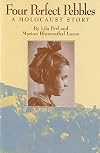
In the annals of man's cruelty to man, the Holocaust stands out for its sheer, industrial-scale coldness and horror. There is ample literature attesting to the awfulness of being condemned to death for the mere accident of being born to a Jewish parent. This book, another entry into that corwded segment, is aimed at young readers.
I don't know that any book about the Holocaust is something I want young readers to read. It's too huge and too vile a topic to make me feel comfortable introducing show more it to those whose lives are still in the vulnerable and bendable stage. I wouldn't let my child read this book, far better she should read the Marquis de Sade than this kind of material.
But the world disagrees with me. So I am renewedly glad that I have no young children. But I think this story is one that makes the idea of the Holocaust, its especial and unique evil in human history, more painfully poignantly real than any other literary work I've ever seen: This is the story of a child who went through the system with her family intact, until the bitter horrifying end of the tale. This is what the horrible, vile, evil, disgusting Germans wanted to destroy: A little girl, her mama, her papa, and her big brother.
Because they were Jews. show less
I don't know that any book about the Holocaust is something I want young readers to read. It's too huge and too vile a topic to make me feel comfortable introducing show more it to those whose lives are still in the vulnerable and bendable stage. I wouldn't let my child read this book, far better she should read the Marquis de Sade than this kind of material.
But the world disagrees with me. So I am renewedly glad that I have no young children. But I think this story is one that makes the idea of the Holocaust, its especial and unique evil in human history, more painfully poignantly real than any other literary work I've ever seen: This is the story of a child who went through the system with her family intact, until the bitter horrifying end of the tale. This is what the horrible, vile, evil, disgusting Germans wanted to destroy: A little girl, her mama, her papa, and her big brother.
Because they were Jews. show less

Although very informative, this is not the best biographical work about the Holocaust that I’ve read. So often the personal story of the Blumenthal family (which is supposed to be at the book’s centre) seems to be overshadowed by historical detail. A lot of facts are presented here about Hitler’s rise to power in Germany, the remarkable popularity of the Nazi party, the growing antisemitism in the country, Hitler’s annexation of Austria and Sudetenland in 1938, his subsequent show more takeover of the rest of Czechoslovakia, and his invasion of Poland in 1939, at which point World War II officially began. The Nuremberg Race Laws of 1935 are covered, as is Kristallnacht when Jewish businesses were vandalized and looted, and synagogues were burned.
What may be surprising to some readers, as it was to me, is just how few Jews there actually were in Germany at the time Hitler was developing and implementing his racist policies: only 500,000 in a population of 67 million, less than one percent of the citizenry. However, as the author Lila Perl notes, although the Jews were a small minority, they were a highly visible one, holding prominent positions in the professions (law and medicine), the arts, sciences, business, banking, merchandising, and publishing.
Perl presents the story of the Blumenthal family—parents Walter and Ruth and their young children, Albert and Marion—based on interviews with mother and daughter Ruth and Marion (and to a lesser extent, Albert) all three of whom emigrated to the US after the war. The Blumenthals were living in Hoya, Germany—running a family shoe store owned by Walter’s elderly parents—at the time the racist activity officially began in the country. They endured the boycotting of their Jewish business. (Hitler had ordered this nationwide action in April 1933). Walter could see the writing on the wall even then. He wanted to get out of Germany immediately, but his elderly parents couldn’t face the idea of leaving their home and business. Things only got worse, of course.
By the end of 1937, one quarter (130,000) of Germany’s Jews had emigrated, many to Holland, France, England, and the US. Before leaving, they were required to compensate the German government for the “privilege” of leaving. Only in 1938, after Albert and Marion’s grandparents died within a few weeks of each other, was the family able to begin working on getting the appropriate papers for immigrating to the US. This was not an easy task: in the 1920s, the US had tightened its admissions policy, drastically reducing the number of immigrants it would accept from Germany and Austria combined. The family moved from Hoya to Hanover and were notified that they were on the quota list, but it would take a year to get the required visas. It was now November 1938.
The Blumenthal family’s ordeal, it seems to me, is essentially a story of one piece of incredibly bad timing after another. After Kristallnacht, Walter was one of the 30,000 Jewish men rounded up to be sent to concentration camps. He spent 11 days in Buchenwald and was only released on the proviso that he’d be out of the country in three months. The family moved to Holland, thinking they could wait for their visas there. Before leaving, they paid for their passage to the United States on the Dutch Ship Nieuw Amsterdam.
Unlike the Jews who’d left Germany in the early 30s and were able to transfer their businesses and create fairly comfortable lives for themselves in a new country, the Blumenthals (and others like them) who left in the late 30s were homeless and had mostly been stripped of their possessions. They were moved from one crowded refugee centre to another. Because the Dutch Jewish population had exploded from 118,000 in the mid 1930s to 140,000 in 1938, the government set up a permanent refugee camp, Westerbork, which could accommodate 22 German-Jewish families in small self-contained row units. This is where the Blumenthals ended up.
By January 1940, the family had received their American visas and arranged to leave for the US in March 1940, but their sailing was delayed until June 1940 due to the huge demand for passage. Meanwhile, Hitler’s troops were sweeping across Europe—Denmark, Norway, Holland, Belgium, Luxembourg, and France. Rotterdam, one of the world’s largest seaports, was bombed. The Dutch surrendered. There were no more ocean liners to America, and the Blumenthals were trapped.
In Four Perfect Pebbles, Perl goes on to provide an account of the family’s four years in Westerbork, which underwent rapid transformation. The Dutch government added barracks to the family units already there. Each new building was designed to accommodate 300 people. Soon double that number would be filling those spaces. In 1942, what had once been a refugee camp for families turned into a filthy, crowded Nazi transit camp with watch towers. It was supervised by police and became a stop en route to concentration and extermination camps. Over the next two years, 100,000 Jews would be shipped from Westerbork to the most notorious of the Nazi camps—60,000 of them to Auschwitz alone.
While In Westerbork, Walter Blumenthal heard about and applied to an International Red Cross programme in which Jews being held by the Germans could be exchanged for German prisoners of war. They’d then be sent to Palestine. Alas, the train that was supposed to be taking the Blumenthals to a camp in Celle, Germany (where the exchange was to occur) ended up carrying them to Bergen Belsen instead. The family was placed in a subcamp, called Sternlager (Star camp), ostensibly for Jews awaiting exchange with German POWs. The Blumenthals’ names were never called. When Walter attempted to inquire about their status, given that he had all the necessary paperwork, he was struck by a German officer. Of the 1100 Jews sent to Bergen Belsen for exchange, only 221 would make it to Palestine.
I think it’s possible to argue that Bergen Belsen was one of the most horrific parts of the Blumenthals’ experience. After D-day in June 1944, as Russians began to close in from the east, the SS began driving prisoners into the interior of Germany. Over 3600 additional women were crammed into Bergen Belsen. In the winter of 1944-1945, the cold was intense and food was scarce; the only things that thrived were the lice. In addition to exposure and dysentery, there was lice-borne typhus, and the death toll mounted. Days after Marion received a serious burn to her leg (from boiling soup)—a wound which subsequently became seriously infected—the Blumenthals found themselves in the last group to be evacuated by train from Bergen Belsen.
This train—crammed with people suffering from typhus, diarrhea, TB, and pleurisy —was strafed by the Allies’ planes. It finally came a full stop after a week. The passengers were liberated close to the village of Tröbitz, and they moved into abandoned farmhouses. They were quarantined for two months until the typhus epidemic was over. At this point, Ruth weighed 74 lbs and ten-and-a-half year old Marion weighed 35 lbs. The girl’s infected leg was treated with penicillin at a Russian military hospital. The typhus deaths appeared to be in decline when a sudden second wave crashed upon them. It claimed Walter, who had to be buried by his young son. A mere day after that, the former prisoners learned they were to be repatriated. Stateless, the three remaining Blumenthals were to be returned to Holland.
The final chapters of Perl’s book focus on Ruth’s efforts to get her bearings and make decisions for her family’s future. Initially, she planned for the family to emigrate to Palestine, but in the end, the three were able to use their boat tickets from ten years before to sail to America. It was, of course, too late for Walter. Initially they were in Hoboken, New Jersey, but they ended up settling in Peoria, Illinois. And so began the challenge of a new life.
Before closing, I want to comment on the title of this book. While her parents were at work in Bergen Belsen, Marion spent her time fixated on finding four pebbles of roughly the same size. These would somehow ensure that her family would remain whole, endure Bergen Belsen, and maybe even survive every attempt by the Nazis to destroy them and other Jews.
As I mentioned, this is not the best account of the Holocaust I have read, mainly because I feel the personal voices are often lost among the facts. Even so, it’s a valuable contribution to the body of literature on the subject. I’m unaware of other biographies that provide detailed documentation about life in Westerbork, and I’ve encountered only two that concern a family’s remaining together for the duration of this terrible period.
Rating: 3.5 show less
What may be surprising to some readers, as it was to me, is just how few Jews there actually were in Germany at the time Hitler was developing and implementing his racist policies: only 500,000 in a population of 67 million, less than one percent of the citizenry. However, as the author Lila Perl notes, although the Jews were a small minority, they were a highly visible one, holding prominent positions in the professions (law and medicine), the arts, sciences, business, banking, merchandising, and publishing.
Perl presents the story of the Blumenthal family—parents Walter and Ruth and their young children, Albert and Marion—based on interviews with mother and daughter Ruth and Marion (and to a lesser extent, Albert) all three of whom emigrated to the US after the war. The Blumenthals were living in Hoya, Germany—running a family shoe store owned by Walter’s elderly parents—at the time the racist activity officially began in the country. They endured the boycotting of their Jewish business. (Hitler had ordered this nationwide action in April 1933). Walter could see the writing on the wall even then. He wanted to get out of Germany immediately, but his elderly parents couldn’t face the idea of leaving their home and business. Things only got worse, of course.
By the end of 1937, one quarter (130,000) of Germany’s Jews had emigrated, many to Holland, France, England, and the US. Before leaving, they were required to compensate the German government for the “privilege” of leaving. Only in 1938, after Albert and Marion’s grandparents died within a few weeks of each other, was the family able to begin working on getting the appropriate papers for immigrating to the US. This was not an easy task: in the 1920s, the US had tightened its admissions policy, drastically reducing the number of immigrants it would accept from Germany and Austria combined. The family moved from Hoya to Hanover and were notified that they were on the quota list, but it would take a year to get the required visas. It was now November 1938.
The Blumenthal family’s ordeal, it seems to me, is essentially a story of one piece of incredibly bad timing after another. After Kristallnacht, Walter was one of the 30,000 Jewish men rounded up to be sent to concentration camps. He spent 11 days in Buchenwald and was only released on the proviso that he’d be out of the country in three months. The family moved to Holland, thinking they could wait for their visas there. Before leaving, they paid for their passage to the United States on the Dutch Ship Nieuw Amsterdam.
Unlike the Jews who’d left Germany in the early 30s and were able to transfer their businesses and create fairly comfortable lives for themselves in a new country, the Blumenthals (and others like them) who left in the late 30s were homeless and had mostly been stripped of their possessions. They were moved from one crowded refugee centre to another. Because the Dutch Jewish population had exploded from 118,000 in the mid 1930s to 140,000 in 1938, the government set up a permanent refugee camp, Westerbork, which could accommodate 22 German-Jewish families in small self-contained row units. This is where the Blumenthals ended up.
By January 1940, the family had received their American visas and arranged to leave for the US in March 1940, but their sailing was delayed until June 1940 due to the huge demand for passage. Meanwhile, Hitler’s troops were sweeping across Europe—Denmark, Norway, Holland, Belgium, Luxembourg, and France. Rotterdam, one of the world’s largest seaports, was bombed. The Dutch surrendered. There were no more ocean liners to America, and the Blumenthals were trapped.
In Four Perfect Pebbles, Perl goes on to provide an account of the family’s four years in Westerbork, which underwent rapid transformation. The Dutch government added barracks to the family units already there. Each new building was designed to accommodate 300 people. Soon double that number would be filling those spaces. In 1942, what had once been a refugee camp for families turned into a filthy, crowded Nazi transit camp with watch towers. It was supervised by police and became a stop en route to concentration and extermination camps. Over the next two years, 100,000 Jews would be shipped from Westerbork to the most notorious of the Nazi camps—60,000 of them to Auschwitz alone.
While In Westerbork, Walter Blumenthal heard about and applied to an International Red Cross programme in which Jews being held by the Germans could be exchanged for German prisoners of war. They’d then be sent to Palestine. Alas, the train that was supposed to be taking the Blumenthals to a camp in Celle, Germany (where the exchange was to occur) ended up carrying them to Bergen Belsen instead. The family was placed in a subcamp, called Sternlager (Star camp), ostensibly for Jews awaiting exchange with German POWs. The Blumenthals’ names were never called. When Walter attempted to inquire about their status, given that he had all the necessary paperwork, he was struck by a German officer. Of the 1100 Jews sent to Bergen Belsen for exchange, only 221 would make it to Palestine.
I think it’s possible to argue that Bergen Belsen was one of the most horrific parts of the Blumenthals’ experience. After D-day in June 1944, as Russians began to close in from the east, the SS began driving prisoners into the interior of Germany. Over 3600 additional women were crammed into Bergen Belsen. In the winter of 1944-1945, the cold was intense and food was scarce; the only things that thrived were the lice. In addition to exposure and dysentery, there was lice-borne typhus, and the death toll mounted. Days after Marion received a serious burn to her leg (from boiling soup)—a wound which subsequently became seriously infected—the Blumenthals found themselves in the last group to be evacuated by train from Bergen Belsen.
This train—crammed with people suffering from typhus, diarrhea, TB, and pleurisy —was strafed by the Allies’ planes. It finally came a full stop after a week. The passengers were liberated close to the village of Tröbitz, and they moved into abandoned farmhouses. They were quarantined for two months until the typhus epidemic was over. At this point, Ruth weighed 74 lbs and ten-and-a-half year old Marion weighed 35 lbs. The girl’s infected leg was treated with penicillin at a Russian military hospital. The typhus deaths appeared to be in decline when a sudden second wave crashed upon them. It claimed Walter, who had to be buried by his young son. A mere day after that, the former prisoners learned they were to be repatriated. Stateless, the three remaining Blumenthals were to be returned to Holland.
The final chapters of Perl’s book focus on Ruth’s efforts to get her bearings and make decisions for her family’s future. Initially, she planned for the family to emigrate to Palestine, but in the end, the three were able to use their boat tickets from ten years before to sail to America. It was, of course, too late for Walter. Initially they were in Hoboken, New Jersey, but they ended up settling in Peoria, Illinois. And so began the challenge of a new life.
Before closing, I want to comment on the title of this book. While her parents were at work in Bergen Belsen, Marion spent her time fixated on finding four pebbles of roughly the same size. These would somehow ensure that her family would remain whole, endure Bergen Belsen, and maybe even survive every attempt by the Nazis to destroy them and other Jews.
As I mentioned, this is not the best account of the Holocaust I have read, mainly because I feel the personal voices are often lost among the facts. Even so, it’s a valuable contribution to the body of literature on the subject. I’m unaware of other biographies that provide detailed documentation about life in Westerbork, and I’ve encountered only two that concern a family’s remaining together for the duration of this terrible period.
Rating: 3.5 show less
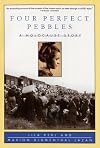
Marion describes her story as the one that Anne Frank might have told had she survived past March 1945. Both Anne and Marion spent time in Westerbork and later Bergen-Belsen. Of the 120,000 Jews detained in Westerbork, 102,000 perished before the end of World War II, 18,000 survived. Anne fell into the former group, Marion, the latter. While Anne’s story is typically read by pre-teens and early teenagers in the world today, Marion’s serves as an introduction for those who are just show more starting to ask their parents and teachers how people can be so mean and intolerant of one another.
In a society that is quickly becoming more divided and more intolerant, Marion’s message of hope, faith, and family strength, is even more important than it was when she first started discussing her experiences a couple decades ago. While most may brush off the striking similarities to the current president’s rise to power and the Nazis, it is hard for those who truly know their history to ignore. It is even harder for those who know that atrocities of WWII still ring loud in their older generation’s ears, and yet their younger generations engage in racist and destructive behavior.
Marion’s story is one of compassion and hope during one of the world’s worst times. My only reason for giving a less than superb rating is that brevity of the book. While written with young children (9-11 years old) in mind, there is only so much that one can remember about those years themselves, particularly 50 years later, as was the case when Marion & Lila wrote Four Perfect Pebbles and Marion recounted her childhood to Lila. Everyone always wants more from a good book, but at 160 pages, Four Perfect Pebbles is incredible concise. show less
In a society that is quickly becoming more divided and more intolerant, Marion’s message of hope, faith, and family strength, is even more important than it was when she first started discussing her experiences a couple decades ago. While most may brush off the striking similarities to the current president’s rise to power and the Nazis, it is hard for those who truly know their history to ignore. It is even harder for those who know that atrocities of WWII still ring loud in their older generation’s ears, and yet their younger generations engage in racist and destructive behavior.
Marion’s story is one of compassion and hope during one of the world’s worst times. My only reason for giving a less than superb rating is that brevity of the book. While written with young children (9-11 years old) in mind, there is only so much that one can remember about those years themselves, particularly 50 years later, as was the case when Marion & Lila wrote Four Perfect Pebbles and Marion recounted her childhood to Lila. Everyone always wants more from a good book, but at 160 pages, Four Perfect Pebbles is incredible concise. show less
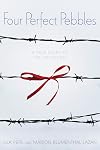
As a student of history, I have read a number of Holocaust stories (and am currently reading Night), and each one drives home the sad fact that people can be unspeakably cruel, and that this cruelness is so often off set by the incredible kindness of another. This dichotomy very much troubles me, and yet fills me with hope, because when I look at the balance I believe there are more people who are good, or are victims, or are silent than those who are evil. So the numbers seem to favor those show more who are not evil. Yet, the phenomenal amount of death and destruction and misery that is caused by the few that are evil is overwhelming. What bothers me as I read these stories is not so much the evil ones; I knew they existed during the Holocaust, and I know they exist now. What bothers me is the silent ones - an overwhelming number who could easily crush the evil ones, but who choose to remain silent. As the great parliamentarian Edmund Burke said, "The only thing necessary for the triumph of evil is for good men to do nothing." In every generation this lesson needs to be learned again. show less
Lists
Awards


You May Also Like


Associated Authors
Statistics
- Works
- 65
- Members
- 3,384
- Popularity
- #7,531
- Rating
- 3.8
- Reviews
- 30
- ISBNs
- 144
- Languages
- 3
- Favorited
- 1