
Gerda Weissmann Klein (1924–2022)
Author of All But My Life: A Memoir
About the Author
Image credit: WhiteHouse.gov (Obama Administration)
Works by Gerda Weissmann Klein
Tagged
Common Knowledge
- Birthdate
- 1924-05-08
- Date of death
- 2022-04-03
- Gender
- female
- Occupations
- Holocaust survivor
memoirist
historian
columnist
humanitarian
public speaker - Organizations
- Gerda and Kurt Klein Foundation
- Awards and honors
- Presidential Medal of Freedom
Academy Award
Emmy - Agent
- Leading Authorities speakers bureau
- Nationality
- USA
Poland (birth) - Birthplace
- Bielsko, Poland
- Places of residence
- Bielsko, Poland
Gross-Rosen concentration camp
Buffalo, New York, USA
Scottsdale, Arizona, USA - Place of death
- Phoenix, Arizona, USA
- Associated Place (for map)
- USA
Members
Reviews

As someone who is not a native speaker of English, Gerda Weissmann Klein writes masterfully. Her recollections of the time she spent as a young Jewish girl under Nazi rule are vividly, heartbreakingly eloquent. Klein spent the first part of the war with her parents in their home town of Beilitz, Poland, marginalized by the German invaders and forced to live with more and more hardship before finally being separated from them and sent to a series of work camps. After being forced to march show more from the final camp through the wintry wilderness of Germany to Czechoslovakia, she is finally liberated.
I guess I had a picture in my head of all the Jews being rounded up immediately at the start of the war, and spending the entire time in camps, which some were able to survive. I always wondered why, for the most part, they did not fight back. I realize after reading this book that this was a very inaccurate and uninformed idea. The marginalization happened so gradually and the propaganda was so overwhelming, plus people like Gerda had such a faith in humankind, thinking that people could not possibly be so cruel as to do the things they eventually ended up doing. I am ashamed that I never thought to learn more about this era prior to now.
Despite the horrid atrocity of the events in her life, Gerda writes with such sunniness and vitality that her story is not unbearably depressing. It is eminently readable and highly recommended.
The only thing I was bothered by while reading this was Klein's habit of telling what ended up happening to people as soon as we meet them, even though they continue to play into the story. For example, upon meeting Suse in the work camp, Gerda tells us Suse will die in the morning of the day they are liberated. Sues then continues to figure in to the story, all the while the reader knows she's doomed. This steals a little from the story, as the reader, already knowing Gerda will survive and Suse will not, has been spoiled by this knowledge. show less
I guess I had a picture in my head of all the Jews being rounded up immediately at the start of the war, and spending the entire time in camps, which some were able to survive. I always wondered why, for the most part, they did not fight back. I realize after reading this book that this was a very inaccurate and uninformed idea. The marginalization happened so gradually and the propaganda was so overwhelming, plus people like Gerda had such a faith in humankind, thinking that people could not possibly be so cruel as to do the things they eventually ended up doing. I am ashamed that I never thought to learn more about this era prior to now.
Despite the horrid atrocity of the events in her life, Gerda writes with such sunniness and vitality that her story is not unbearably depressing. It is eminently readable and highly recommended.
The only thing I was bothered by while reading this was Klein's habit of telling what ended up happening to people as soon as we meet them, even though they continue to play into the story. For example, upon meeting Suse in the work camp, Gerda tells us Suse will die in the morning of the day they are liberated. Sues then continues to figure in to the story, all the while the reader knows she's doomed. This steals a little from the story, as the reader, already knowing Gerda will survive and Suse will not, has been spoiled by this knowledge. show less
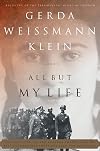
The authors book received many honors since publication. It was an HBO movie "One Survivor Remembers." It was the winner of an Emmy Award and the Academy Award for documentary short subject,
This is a stark, yet beautifully rendered book about an experience of the Holocaust. I've read many books about this subject, and this one stands out as one to highly recommend to those who have read, or want to read more about this horrific subject.
Excellently written in a clear, beautiful way of show more focusing on the author's life before, during and after the experience that many Jews underwent and were fortunate to live through, this book will remain on my book shelf as one most poignantly, clearly written books.
Remarkably, she survived despite so many close-call experiences of being shuffled from one camp to another to another with each one focusing on how she managed to survive so many atrocities, and still shine a bright light on the good of humanity, and the ways in which people helped her in both small and large ways in her path to hang on and day by day, experience by experience to keep courage in order to live.
She had a loving, wonderful childhood composed of loving parents and a very close brother. Sadly, of the four, she was the only one to survive. The beauty of this story is the depiction of cruelty while she hung on to the beauty of instances where her life was spared by those who had roles in the fabric of Hitler's plan of extermination of all Jews, and yet risked their lives to save those they were told to kill. And, as one by one she received word of the end of life for each family member, while trying to maintain a will to live.
Her story begins in 1939 as the raid on her beautiful, small town of Bielitz, previously thought of as a safe place, was raided when all too soon the reality that Hitler did indeed plan to systematically kill all that he deeded unworthy to live, and clearly depicts what she lived through in order to survive. show less
This is a stark, yet beautifully rendered book about an experience of the Holocaust. I've read many books about this subject, and this one stands out as one to highly recommend to those who have read, or want to read more about this horrific subject.
Excellently written in a clear, beautiful way of show more focusing on the author's life before, during and after the experience that many Jews underwent and were fortunate to live through, this book will remain on my book shelf as one most poignantly, clearly written books.
Remarkably, she survived despite so many close-call experiences of being shuffled from one camp to another to another with each one focusing on how she managed to survive so many atrocities, and still shine a bright light on the good of humanity, and the ways in which people helped her in both small and large ways in her path to hang on and day by day, experience by experience to keep courage in order to live.
She had a loving, wonderful childhood composed of loving parents and a very close brother. Sadly, of the four, she was the only one to survive. The beauty of this story is the depiction of cruelty while she hung on to the beauty of instances where her life was spared by those who had roles in the fabric of Hitler's plan of extermination of all Jews, and yet risked their lives to save those they were told to kill. And, as one by one she received word of the end of life for each family member, while trying to maintain a will to live.
Her story begins in 1939 as the raid on her beautiful, small town of Bielitz, previously thought of as a safe place, was raided when all too soon the reality that Hitler did indeed plan to systematically kill all that he deeded unworthy to live, and clearly depicts what she lived through in order to survive. show less
A painful, well-written book. Everyone should read at least one holocaust memoir in their adulthood. This one was well-done. It is painful. It's slightly different than other I've read (such as _Night_), because it spends a little more time discussion life after the concentration camps and the author's re-entry into "normal" life.
A side note: this book made me start thinking about the time period leading up to the war. I think I've read enough about the years 1940-1945. I need to find show more something good that covers Hitler's rise. How did it begin? We all look back and say, "Never again," but how are we to accomplish "never again?" What attitudes, beliefs, and prejudices do we hold that could allow this kind of circumstance, a leader like Hitler, to come to power today? show less
A side note: this book made me start thinking about the time period leading up to the war. I think I've read enough about the years 1940-1945. I need to find show more something good that covers Hitler's rise. How did it begin? We all look back and say, "Never again," but how are we to accomplish "never again?" What attitudes, beliefs, and prejudices do we hold that could allow this kind of circumstance, a leader like Hitler, to come to power today? show less
This book is the story of Gerda Wiessman Klein. She was a teenager during the holocaust. When it first starts, she attempts to carry on her normal life. However, she is soon separated from her family and sent to a concentration camp. At first the camps are tolerable, and she was spared so long as she worked hard. However, the long the war goes on, the camps become worse. The food rations are decreased and many are killed daily. At the end of the war, she is forced on a "Death march", in show more which prisons were marched for months without clothes and food. When she is liberated she meets an american soldier named Kurt. He ends up falling in love with her and marrying her. She then moves to the United States where she lives today.
I gave this book five stars. It is very inspirational. It tells the story of someone only a few years older than me, yet she does things I can not begin to imagine. I thought she did an excellent job of portraying the emotions she felt at the time, as only she felt them. I think it is remarkable that she spent so much time praising other people than herself in the book. She always said what was best about someone, not what was worst. I hope i can learn to have the same attitude as Gerda. show less
I gave this book five stars. It is very inspirational. It tells the story of someone only a few years older than me, yet she does things I can not begin to imagine. I thought she did an excellent job of portraying the emotions she felt at the time, as only she felt them. I think it is remarkable that she spent so much time praising other people than herself in the book. She always said what was best about someone, not what was worst. I hope i can learn to have the same attitude as Gerda. show less
Lists
You May Also Like


Associated Authors
Statistics
- Works
- 11
- Members
- 1,757
- Popularity
- #14,642
- Rating
- 4.3
- Reviews
- 52
- ISBNs
- 42
- Languages
- 1