
Helen Palmer (1899–1967)
Author of A Fish Out of Water
About the Author
Disambiguation Notice:
This is the author page for Helen Marion Palmer, children's book author and wife of Theodor Geisel. For the writer about enneagrams, please see Helen Palmer.
Image credit: via findagrave.com
Works by Helen Palmer
Tagged
Common Knowledge
- Canonical name
- Palmer, Helen
- Legal name
- Geisel, Helen Marion Palmer
- Birthdate
- 1899-09-16
- Date of death
- 1967-10-23
- Gender
- female
- Education
- University of Oxford
- Relationships
- Geisel, Theodore (husband)
- Nationality
- USA
- Birthplace
- Brooklyn, New York, USA
- Places of residence
- Amherst, Massachusetts, USA
Fresno, California, USA - Place of death
- La Jolla, California, USA
- Disambiguation notice
- This is the author page for Helen Marion Palmer, children's book author and wife of Theodor Geisel. For the writer about enneagrams, please see Helen Palmer.
- Associated Place (for map)
- USA
Members
Discussions
Children's Book about US Army in Name that Book (December 2015)
Reviews
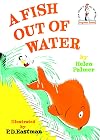
A Fish Out of Water is a beginner book written by Helen Palmer, based on a short story titled "Gustav, the Goldfish," written by Palmer's husband Dr. Seuss. In the book, a little boy (the unnamed narrator) buys a fish at the pet store and is instructed not to overfeed him. The boy comes home and tries to follow this advice but thinks his fish looks hungry still. After he pours a whole box of fish food into the bowl, Otto the fish begins to rapidly grow, quickly exceeding any container the show more boy moves him into next. As the situation threatens to get out of control, the boy calls in various reinforcements to help him with Otto.
This is a very fun story that moves quickly. I read it aloud when babysitting a 4-year-old and a 6-year-old, and both children were completely captivated by it, even the more rambunctious 6-year-old who did not sit put for any other story I read that evening. This isn't a book with a rhyming scheme or a whole lot of repetition, but it does have an easy cadence for reading aloud.
The words are by and large basic ones as the text is designed for emerging readers, but the overall story does not seem overly simplistic (i.e., an elementary school-age child would not think of it as "babyish"). Likewise, the illustrations by P.D. Eastman are fairly simple with a limited palette of oranges, greens, and grays. Yet they are lively and entertaining to look at while perfectly portraying the text with a few fun extras thrown in the details.
Even though the elements get rather fantastical, there's still enough truth at the core of this story that you could use as a cautionary tale for young children on proper care of their pets. But the silly elements also just make a fun story to share with the little ones who will be interested in hearing it or reading it on their own.
The only downside I can see to this book is that as a product of its time (and sadly, not a ton has changed in that respect), there are no female characters to be seen in its pages. A mother is mentioned in passing, but otherwise everyone is male - including the fish! There are also some less-than-PC words like "policeman" and "fireman" rather than "police officer" and "firefighter." If you're reading aloud, you could adjust the wording to fix this latter problem, but it's hard to get around the first one. show less
This is a very fun story that moves quickly. I read it aloud when babysitting a 4-year-old and a 6-year-old, and both children were completely captivated by it, even the more rambunctious 6-year-old who did not sit put for any other story I read that evening. This isn't a book with a rhyming scheme or a whole lot of repetition, but it does have an easy cadence for reading aloud.
The words are by and large basic ones as the text is designed for emerging readers, but the overall story does not seem overly simplistic (i.e., an elementary school-age child would not think of it as "babyish"). Likewise, the illustrations by P.D. Eastman are fairly simple with a limited palette of oranges, greens, and grays. Yet they are lively and entertaining to look at while perfectly portraying the text with a few fun extras thrown in the details.
Even though the elements get rather fantastical, there's still enough truth at the core of this story that you could use as a cautionary tale for young children on proper care of their pets. But the silly elements also just make a fun story to share with the little ones who will be interested in hearing it or reading it on their own.
The only downside I can see to this book is that as a product of its time (and sadly, not a ton has changed in that respect), there are no female characters to be seen in its pages. A mother is mentioned in passing, but otherwise everyone is male - including the fish! There are also some less-than-PC words like "policeman" and "fireman" rather than "police officer" and "firefighter." If you're reading aloud, you could adjust the wording to fix this latter problem, but it's hard to get around the first one. show less

A group of kids go to the zoo and do things no kid would ever be allowed to do, setting up some false expectations and perhaps forever ruining the notion of zoos to children forever.
"What would you do if you went to the zoo?" is the question posed to a number of children. One would want to play with a baby lion, another would make friends with a walrus, one would escort his brother around the petting zoo, another would help out with the baby elephant, the chimps, the penguins, and finally show more the titular seal. "Those are the things we would do at the zoo. And do you know something? We went there! And we did them."
Cruel, cruel world, giving children books featuring photos of real kids really doing these things. Playing with a lion cub like it was a kitten, spending time with the trainers while they care for and train walruses and elephants, waddling around with penguins and petting gazelles. It's no mystery why this book is no longer in print: think of the poor parents! Think of the poor zoos having to tell kids that, no, they don't just let kids wander around the exhibits just because they want to. Not these days, and I sincerely doubt they ever did.
No, what Palmer does is begin with this premise of asking kids what they would do – simple wishing, not harmful and not unusual – then presents these fantasies with photos that suggest these wishes are possible. Now, no one wants to bring up a kid's expectations only to let them down, but Palmer goes one step too far in the end by showing us a line-up of the kids featured throughout the book with the closing note that they really did these things. Perhaps a follow-up title would have been I Played Keep-Away From a Shark at the Aquarium!
If reading Why I Built the Boogle House planted the seed of catching my own wild pets, I Was Kissed by a Seal... no doubt made me excited the next time my parents told me we were going to the zoo. It wouldn't have been the same zoo in the book but why would I believe that all zoos were alike? Why not expect an all-access pass to any animal that captured my fancy?
Growing up in the 60s and 70s my generation experienced first-hand the repercussions of the lies of post-war America. The optimism of the 1950s that crumbled during the Vietnam era were largely the result of kids realizing that the world was nothing like the promises delivered to them on a regular basis. It isn't simply a question of being denied jet packs and space-age living, but the collection of promises we watched erode over time. It begins simply with a denial to play with lion cubs at the zoo but eventually includes the myths of family life as presented on TV, the casual lies of advertising, the college education as a guarantee of employment, the job for life and the retirement plan that takes care of all your needs. The sting of reality was impossible to ignore while our parents tried to explain to us the deaths of Bobby Kennedy and Dr. King, or why they would turn off the news when they heard any mention of the "conflict" in Southeast Asia. They couldn't even call it a war.
No, they could no longer offer beginning readers a world that never existed. The fantasy of I Wish That I Had Duck Feet is fine, escapism and childhood fancy could still be found in the reportage of a book like A Hole is to Dig, but none of this photo-realism to serve as false documentary.
Perhaps I'm being unfair to a cherished childhood memory. Perhaps the real reason the book went out of print, and rightly so. was because there wasn't a single non-white child in the bunch. That arrogance of the white default is still around in publishing, despite Ezra Jack Keats' The Snowy Day arriving a year after I Was Kissed by a Seal... proved that kids don't see color as a difference, they have to be taught it.
No matter what, I cannot shake the deep rivers of nostalgia this book opens up. Sadly, I can no longer see it with the same innocent eyes. show less
"What would you do if you went to the zoo?" is the question posed to a number of children. One would want to play with a baby lion, another would make friends with a walrus, one would escort his brother around the petting zoo, another would help out with the baby elephant, the chimps, the penguins, and finally show more the titular seal. "Those are the things we would do at the zoo. And do you know something? We went there! And we did them."
Cruel, cruel world, giving children books featuring photos of real kids really doing these things. Playing with a lion cub like it was a kitten, spending time with the trainers while they care for and train walruses and elephants, waddling around with penguins and petting gazelles. It's no mystery why this book is no longer in print: think of the poor parents! Think of the poor zoos having to tell kids that, no, they don't just let kids wander around the exhibits just because they want to. Not these days, and I sincerely doubt they ever did.
No, what Palmer does is begin with this premise of asking kids what they would do – simple wishing, not harmful and not unusual – then presents these fantasies with photos that suggest these wishes are possible. Now, no one wants to bring up a kid's expectations only to let them down, but Palmer goes one step too far in the end by showing us a line-up of the kids featured throughout the book with the closing note that they really did these things. Perhaps a follow-up title would have been I Played Keep-Away From a Shark at the Aquarium!
If reading Why I Built the Boogle House planted the seed of catching my own wild pets, I Was Kissed by a Seal... no doubt made me excited the next time my parents told me we were going to the zoo. It wouldn't have been the same zoo in the book but why would I believe that all zoos were alike? Why not expect an all-access pass to any animal that captured my fancy?
Growing up in the 60s and 70s my generation experienced first-hand the repercussions of the lies of post-war America. The optimism of the 1950s that crumbled during the Vietnam era were largely the result of kids realizing that the world was nothing like the promises delivered to them on a regular basis. It isn't simply a question of being denied jet packs and space-age living, but the collection of promises we watched erode over time. It begins simply with a denial to play with lion cubs at the zoo but eventually includes the myths of family life as presented on TV, the casual lies of advertising, the college education as a guarantee of employment, the job for life and the retirement plan that takes care of all your needs. The sting of reality was impossible to ignore while our parents tried to explain to us the deaths of Bobby Kennedy and Dr. King, or why they would turn off the news when they heard any mention of the "conflict" in Southeast Asia. They couldn't even call it a war.
No, they could no longer offer beginning readers a world that never existed. The fantasy of I Wish That I Had Duck Feet is fine, escapism and childhood fancy could still be found in the reportage of a book like A Hole is to Dig, but none of this photo-realism to serve as false documentary.
Perhaps I'm being unfair to a cherished childhood memory. Perhaps the real reason the book went out of print, and rightly so. was because there wasn't a single non-white child in the bunch. That arrogance of the white default is still around in publishing, despite Ezra Jack Keats' The Snowy Day arriving a year after I Was Kissed by a Seal... proved that kids don't see color as a difference, they have to be taught it.
No matter what, I cannot shake the deep rivers of nostalgia this book opens up. Sadly, I can no longer see it with the same innocent eyes. show less

One tow-headed boy's laundry list of what he intends to do includes a good deal of eating and pretty large amount of time hanging out with the Marines. Includes gun play.
This is perhaps Palmer and Fayman's finest collaboration and also it's most incendiary by modern standards. A boy – let's call him Timmy in honor the owner of TVs Lassie, a generic type of the era – is standing around telling a younger boy of his plans for his next day of leisure. The younger boy is attentive on this show more first page and we won't see him again until the last page.
Timmy has big plans. He's going to eat a breakfast that includes both donuts and pancakes, more pancakes than you'd probably eat at home in a year. Then he's going to work off those carbs by swimming, playing five games of tennis simultaneously, then beat an entire team at beach volleyball. A few ice cream sodas as a snack and then it's back to two-fisted bowling, water skiing, scuba diving, and a little wire walking.
Then things get interesting.
Timmy's going to fly around in a military jet, then in a military helicopter. Okay, so maybe this Timmy has a friend or relative in the military. No biggie. A massive lunch later and Timmy's off to get a haircut but... wait a minute. This barber is giving military buzz cuts. Four pages of the razor horror sends Timmy running down the railroad tracks vowing to keep his hair at all costs!
But then he hitches up with the Marines. "Did you ever play with the United States Marines?" he asks the reader. Why, no, Timmy. It never occurred to me that that was an option for a seven year old boy.
"Shooting! I'll got shooting with the United States Marines." And sure enough, Timmy's there, gun in hand. He's also at the firing range with a semi-automatic rifle. Niiice.
After yet another meal (because we all know how boys love to eat) Timmy goes through all the basic training, beating every Marine in sight, but finally making his escape to do other things on his list. No one holds Timmy down, not even the Marines! But that escape left him hungry, so Timmy eats a hundred miles of spaghetti which earns him a spot leading the Marine band, a fine finish to a bust Saturday.
Oh, and that other boy he was bragging to in the beginning? He's fast asleep on the last page. Yes, sir!
In some ways this book needs to be seen to be believed, but someone else has already uploaded it as a Flickr set which you can check out right here. You'll see, I didn't exaggerate the summary one bit.
It's interesting that no one considered it unusual to depict a boy talking about and joining up with a branch of the military, or handling real guns. It's entirely consistent with my memories growing up of reenacting the war movies we saw on TV and owning blank guns and water pistols. We cannot imagine putting a weapon in the hand of a child today, much less in the hands of a child in a beginning reader, yet boys today still do play at war and own water cannons and imitate the imaginary battles they see in video games. In that sense it almost feels hypocritical that books don't accurately reflect the world of the boy today, that we have gotten so politically correct that we feel the problems of the influence of violence somehow rested in books and not in a culture that continues to supply children with the tools and images of violence.
The same with food. I cannot imagine a book today "promoting" this sense of unbalanced and unbridled eating that takes place here, but what's beyond the images? This is a story of a boy bragging, and so naturally he isn't going to be bragging about getting his three-to-five servings of fruit and vegetables and making sure he doesn't exceed his 2000 calorie daily limit. And despite all the sugars and fats, this was 1963 and there wasn't a drop of high fructose corn syrup to trigger onset diabetes. The boy is active and there's no room for sitting around with video games eating empty snack calories, no fat-saturated fast foods to bring on childhood obesity. To our modern eyes we see the horrors of caloric excess but we fail to acknowledge that removing these images from books didn't make kids healthier. As with guns, the problems exist outside the book and rest with a culture of denial.
Something I didn't know until I did some digging was that in the pre- and early internet days the rumor was that this book had been banned by the good Dr. Seuss himself, primarily because it advocates suicide. WHAT?! Apparently, between all the guns and the phrase "Next Saturday I'm going to blow my head off!" (in reference to playing a tuba), along with the fact that Palmer committed suicide herself a few years later after developing cancer, the assumption was the book was... well, yo now how rumors go. Unfortunate wording aside, it's a pretty big stretch to read into that tuba playing as a coded message to kids.
So what have we learned this week from the mostly out-of-print oeuvre of Helen Palmer? If we strip away the photos – as much for their dated qualities as their racial bias – we have books that celebrate the childhood imagination at its most uninhibited. We saw boys using tools unsupervised and with the freedom to learn about and solve design problems through physical experience. We saw children fearlessly interacting with animals in a (mostly) respectful manner. We heard the natural exaggerations of childhood told in a realistic and authentic manner without judgment or moralizing. In short, the Palmer-Fayman books validated and mirrored the experiential world of beginning readers who, like most of us, want to see something we can relate to in our reading.
From an historical perspective these books seem bizarre, and at times it is hard to deny the amazement that catches us off guard when we see things like a child handling a gun. But at their core they are brave and bold, and more importantly honest, portrayals of a time when children's books trusted the reader's intelligence enough not to insult it was false safeties. These books did not assume or remove the role of the parent in teaching their children right from wrong. If anything these titles and their imagery remind us that reading, beginning reading, is not a passive activity meant to serve as a passive minder, reading is an activity meant to engender thought and meaning.
By making books "responsible" and "safe" for children we have abdicated our adult duties in knowing what our children are reading. We no longer need to worry if a book contains materials we object to, and if they do we threaten to sue the publisher or have them banned from a library or threaten a politician's next election by forcing them to take action. The irresponsibility we see in these books is really just the reflection of our own guilty conscious asking why we have chosen false battles in the name of protecting the children.
Finally, I should mention that Helen Palmer does still have one book in print called A Fish Out of Water (1961). Based on a story Dr. Seuss published in 1950 called "Gustav the Goldfish" (which will be part of a collection of new Seuss stories to be printed this fall), it is the story of a boy in charge of a pet shop who is warned not to overfeed the fish. When he does the fish grows to troubling proportions, causing the pet shop owner to come and (mysteriously) save the day. Unlike Palmer's other books it was illustrated by P.D. Eastman which manages to prevent it from looking aged. Also unlike other Palmer books the boys misbehavior results in catastrophies that require the help of adults (police officer, pet shop owner) to help him solve. The book ends with a moral message, the boy promising never to disobey and overfeed the fish.
This is the type of thing that is still safe. Obey authority figures, let adults solve your problems, and trust that fantasy illustrations aren't as dangerous as photographs. Perhaps the reason Seuss let his wife adapt the original in the first place was because even he knew it was lacking the subversive qualities that made his own work resonate with readers. show less
This is perhaps Palmer and Fayman's finest collaboration and also it's most incendiary by modern standards. A boy – let's call him Timmy in honor the owner of TVs Lassie, a generic type of the era – is standing around telling a younger boy of his plans for his next day of leisure. The younger boy is attentive on this show more first page and we won't see him again until the last page.
Timmy has big plans. He's going to eat a breakfast that includes both donuts and pancakes, more pancakes than you'd probably eat at home in a year. Then he's going to work off those carbs by swimming, playing five games of tennis simultaneously, then beat an entire team at beach volleyball. A few ice cream sodas as a snack and then it's back to two-fisted bowling, water skiing, scuba diving, and a little wire walking.
Then things get interesting.
Timmy's going to fly around in a military jet, then in a military helicopter. Okay, so maybe this Timmy has a friend or relative in the military. No biggie. A massive lunch later and Timmy's off to get a haircut but... wait a minute. This barber is giving military buzz cuts. Four pages of the razor horror sends Timmy running down the railroad tracks vowing to keep his hair at all costs!
But then he hitches up with the Marines. "Did you ever play with the United States Marines?" he asks the reader. Why, no, Timmy. It never occurred to me that that was an option for a seven year old boy.
"Shooting! I'll got shooting with the United States Marines." And sure enough, Timmy's there, gun in hand. He's also at the firing range with a semi-automatic rifle. Niiice.
After yet another meal (because we all know how boys love to eat) Timmy goes through all the basic training, beating every Marine in sight, but finally making his escape to do other things on his list. No one holds Timmy down, not even the Marines! But that escape left him hungry, so Timmy eats a hundred miles of spaghetti which earns him a spot leading the Marine band, a fine finish to a bust Saturday.
Oh, and that other boy he was bragging to in the beginning? He's fast asleep on the last page. Yes, sir!
In some ways this book needs to be seen to be believed, but someone else has already uploaded it as a Flickr set which you can check out right here. You'll see, I didn't exaggerate the summary one bit.
It's interesting that no one considered it unusual to depict a boy talking about and joining up with a branch of the military, or handling real guns. It's entirely consistent with my memories growing up of reenacting the war movies we saw on TV and owning blank guns and water pistols. We cannot imagine putting a weapon in the hand of a child today, much less in the hands of a child in a beginning reader, yet boys today still do play at war and own water cannons and imitate the imaginary battles they see in video games. In that sense it almost feels hypocritical that books don't accurately reflect the world of the boy today, that we have gotten so politically correct that we feel the problems of the influence of violence somehow rested in books and not in a culture that continues to supply children with the tools and images of violence.
The same with food. I cannot imagine a book today "promoting" this sense of unbalanced and unbridled eating that takes place here, but what's beyond the images? This is a story of a boy bragging, and so naturally he isn't going to be bragging about getting his three-to-five servings of fruit and vegetables and making sure he doesn't exceed his 2000 calorie daily limit. And despite all the sugars and fats, this was 1963 and there wasn't a drop of high fructose corn syrup to trigger onset diabetes. The boy is active and there's no room for sitting around with video games eating empty snack calories, no fat-saturated fast foods to bring on childhood obesity. To our modern eyes we see the horrors of caloric excess but we fail to acknowledge that removing these images from books didn't make kids healthier. As with guns, the problems exist outside the book and rest with a culture of denial.
Something I didn't know until I did some digging was that in the pre- and early internet days the rumor was that this book had been banned by the good Dr. Seuss himself, primarily because it advocates suicide. WHAT?! Apparently, between all the guns and the phrase "Next Saturday I'm going to blow my head off!" (in reference to playing a tuba), along with the fact that Palmer committed suicide herself a few years later after developing cancer, the assumption was the book was... well, yo now how rumors go. Unfortunate wording aside, it's a pretty big stretch to read into that tuba playing as a coded message to kids.
So what have we learned this week from the mostly out-of-print oeuvre of Helen Palmer? If we strip away the photos – as much for their dated qualities as their racial bias – we have books that celebrate the childhood imagination at its most uninhibited. We saw boys using tools unsupervised and with the freedom to learn about and solve design problems through physical experience. We saw children fearlessly interacting with animals in a (mostly) respectful manner. We heard the natural exaggerations of childhood told in a realistic and authentic manner without judgment or moralizing. In short, the Palmer-Fayman books validated and mirrored the experiential world of beginning readers who, like most of us, want to see something we can relate to in our reading.
From an historical perspective these books seem bizarre, and at times it is hard to deny the amazement that catches us off guard when we see things like a child handling a gun. But at their core they are brave and bold, and more importantly honest, portrayals of a time when children's books trusted the reader's intelligence enough not to insult it was false safeties. These books did not assume or remove the role of the parent in teaching their children right from wrong. If anything these titles and their imagery remind us that reading, beginning reading, is not a passive activity meant to serve as a passive minder, reading is an activity meant to engender thought and meaning.
By making books "responsible" and "safe" for children we have abdicated our adult duties in knowing what our children are reading. We no longer need to worry if a book contains materials we object to, and if they do we threaten to sue the publisher or have them banned from a library or threaten a politician's next election by forcing them to take action. The irresponsibility we see in these books is really just the reflection of our own guilty conscious asking why we have chosen false battles in the name of protecting the children.
Finally, I should mention that Helen Palmer does still have one book in print called A Fish Out of Water (1961). Based on a story Dr. Seuss published in 1950 called "Gustav the Goldfish" (which will be part of a collection of new Seuss stories to be printed this fall), it is the story of a boy in charge of a pet shop who is warned not to overfeed the fish. When he does the fish grows to troubling proportions, causing the pet shop owner to come and (mysteriously) save the day. Unlike Palmer's other books it was illustrated by P.D. Eastman which manages to prevent it from looking aged. Also unlike other Palmer books the boys misbehavior results in catastrophies that require the help of adults (police officer, pet shop owner) to help him solve. The book ends with a moral message, the boy promising never to disobey and overfeed the fish.
This is the type of thing that is still safe. Obey authority figures, let adults solve your problems, and trust that fantasy illustrations aren't as dangerous as photographs. Perhaps the reason Seuss let his wife adapt the original in the first place was because even he knew it was lacking the subversive qualities that made his own work resonate with readers. show less
This book by Helen Palmer (a children's author overshadowed by her far more famous spouse Dr. Seuss) asks the question: What would you do if you went to the zoo? The question is answered by a variety of elementary school age children, who discuss which animals they would visit and what they would do with them. For instance, one child would want to see the walrus and read a book to him. (Incidentally, the book in view is Dr. Seuss's If I Ran the Zoo.) Each scenario is illustrated by show more photographs of children from the Francis Parker School visiting the San Diego Zoo and getting to do some extra-special behind-the-scenes things that most visitors to zoos never get to do, such as feeding fish to the penguins in their habitat or playing ball with a baby lion. Having photographs rather than illustrations allows the reader to see this really happening, rather than having them immediately pooh-pooh it as impossible, as I would be wont to do without the photographic evidence. On the down side, the photographs also show just how dated this book is. Nevertheless, when I read it to my babysitting charge of 6 years old, he was completely engrossed with the book and didn't comment once on the unusual clothing of the children or anything like that. He was mostly enthralled by what the animals were doing. All in all, this book is an incredibly delightful look at things that are unlikely to happen again, and I found it very interesting. show less
Lists
You May Also Like


Associated Authors
Statistics
- Works
- 21
- Members
- 3,656
- Popularity
- #6,920
- Rating
- 4.1
- Reviews
- 30
- ISBNs
- 27
- Languages
- 3
- Favorited
- 2