
Tadasu Izawa
Author of The Little Red Hen (A Puppet Storybook)
About the Author
Series
Works by Tadasu Izawa
Dinosaurs (Preschool puppet books) 5 copies
Møte med julenissen 2 copies
The world of Japanese tattooing 2 copies
Bomberos 1 copy
Rödluvan 1 copy
Kittens 1 copy
De drie biggetjes 1 copy
Sim e não 1 copy
Associated Works
Tagged
Common Knowledge
Members
Reviews

Summary:
The little red hen and a group of other animals find a grain of wheat. She asks her friends, “Who will plant this wheat?” and they all said not me leaving the red hen to plant it. It continues with several different steps of processing the wheat until she makes a loaf of bread and along the way none of the other animals want to help her. It’s not until the bread is baked and finished that they want to help her eat the bread, in which the story ends where she doesn’t allow show more them to eat the bread- only her.
Personal Reaction:
I like this story because in my life, I am usually the little red hen. I have always hated group projects in school and such because I always got left with all the work and it isn’t fair that the others get to take credit in my work too. But, this particular storybook version of the story I thought was just fair. It was very plain and simple. I would say this version of this book is directed to younger kids than say 3rd or 4th grade.
Extension Ideas:
1) Discuss with the class how it is important that everyone participates in projects, or matters of everyday life. Also, discuss about why it was fair that the little red hen and her chicks got to eat the loaf of bread in the end of the book.
2) Have the students get into groups and have each group draw out a scene of the little red hen from the book. show less
The little red hen and a group of other animals find a grain of wheat. She asks her friends, “Who will plant this wheat?” and they all said not me leaving the red hen to plant it. It continues with several different steps of processing the wheat until she makes a loaf of bread and along the way none of the other animals want to help her. It’s not until the bread is baked and finished that they want to help her eat the bread, in which the story ends where she doesn’t allow show more them to eat the bread- only her.
Personal Reaction:
I like this story because in my life, I am usually the little red hen. I have always hated group projects in school and such because I always got left with all the work and it isn’t fair that the others get to take credit in my work too. But, this particular storybook version of the story I thought was just fair. It was very plain and simple. I would say this version of this book is directed to younger kids than say 3rd or 4th grade.
Extension Ideas:
1) Discuss with the class how it is important that everyone participates in projects, or matters of everyday life. Also, discuss about why it was fair that the little red hen and her chicks got to eat the loaf of bread in the end of the book.
2) Have the students get into groups and have each group draw out a scene of the little red hen from the book. show less
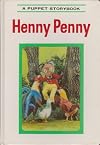
Henny Penny is a delightful story that begins with a hen who is hit on the head by a falling acorn; however, she immediately jumps to the conclusion that the sky is falling and that she must go a tell the King. While enroute, she meets several of the other farm animals and she alerts them to the impending danger. These animals ask Henny Penny if they can go with her to tell the King. They are tricked by a fox who lures them into a hillside cave on the pretense that it is a shortcut to the show more King. One by one the animals follow the fox into the cave and were gobbled up by the fox. The last animal to enter the cave before Henny Penny was a rooster named Cocky-Locky. He crowed just as the fox was about to gobble him up; however, his crow to Henny-Penny suggested that it was time for her to go home and lay her eggs, which is exactly what she did.
I love the names given to each of the animals; Henny-Penny, Cocky-Locky, Ducky-Daddles, Goosey-Poosey, Turkey-Lurkey, and Foxy-Woxy. The characters are so vividly colored with a simple text that even young children can understand.
Classroom extensions could include having the children draw their own Henny Penny by outling their hand on a sheet of paper and coloring it to resemble a chicken. Another idea is to print one copy of the cover. Print an inside page for each child. Have the children complete the sentence, "Henny- Penny you silly chicken the sky is not falling. It's ________." Have them draw an illustration to go with the sentence. After all the children completed their pages, assemble the pages and bind to make a book. show less
I love the names given to each of the animals; Henny-Penny, Cocky-Locky, Ducky-Daddles, Goosey-Poosey, Turkey-Lurkey, and Foxy-Woxy. The characters are so vividly colored with a simple text that even young children can understand.
Classroom extensions could include having the children draw their own Henny Penny by outling their hand on a sheet of paper and coloring it to resemble a chicken. Another idea is to print one copy of the cover. Print an inside page for each child. Have the children complete the sentence, "Henny- Penny you silly chicken the sky is not falling. It's ________." Have them draw an illustration to go with the sentence. After all the children completed their pages, assemble the pages and bind to make a book. show less

Not the best rendition of the poem but a treasure of my childhood...

Collage-type illustrations, reasonably realistic. Small vocabulary.
You May Also Like


Associated Authors
Statistics
- Works
- 66
- Also by
- 17
- Members
- 441
- Popularity
- #55,515
- Rating
- 3.8
- Reviews
- 9
- ISBNs
- 66
- Languages
- 5
- Favorited
- 1