

Babette Cole (1949–2017)
Author of Princess Smartypants
About the Author
Babette Cole was born in Jersey in the Channel Islands on September 10, 1950. She received a first-class degree and a distinction in animation from Canterbury College of Art in 1973. She got a job in children's television, working on programs including Bagpuss and Jackanory. She also designed show more greetings cards and illustrated stories by authors such as Joan Tate and Annabel Farjeon. Her first picture book, Basil Brush of the Yard, was published in 1977. She wrote and illustrated more than 150 children's books including Nungu and the Hippopotamus, Doctor Dog, Mummy Laid an Egg, The Smelly Book, Beware of the Vet, Two of Everything, Hair in Funny Places, and The Trouble with series. Princess Smartypants and Prince Cinders both won the Kate Greenaway medal. She died after a short illness that led to a collapsed lung on January 15, 2017 at the age of 66. (Bowker Author Biography) show less
Series
Works by Babette Cole
Babette Cole royal collection : Princess Smartypants, Prince Cinders, King Change-a-lot (1999) 14 copies
Silly Book,The 1 copy
Immer Ärger Mit Mama 1 copy
Una principessa indipendente 1 copy
Vera viervoeter 1 copy
ha-Nesikhah ḥokhmologyah 1 copy
Basil Brush of the Yard 1 copy
Associated Works
Illustration Magazine, Spring 2006 Issue 7. John Minton: Treasure and Tragedy (2006) — Contributor — 2 copies
Tagged
Common Knowledge
- Birthdate
- 1949-09-10
- Date of death
- 2017-01-15
- Gender
- female
- Education
- Canterbury College of Art
- Occupations
- children's author
book illustrator - Nationality
- UK
- Birthplace
- Jersey, Channel Islands
- Places of residence
- Jersey, Channel Islands
- Place of death
- Devon, England, UK
- Associated Place (for map)
- Devon, England, UK
Members
Reviews

A young boy describes the various things that set his mother apart in this amusing picture-book from British author/illustrator Babette Cole. From the hats she wears-witch's hats!—to her questionable method of dealing with the other attendees at PTA night—turning them into frogs—she has her own style, and her own way of doing things. When the boy's classmates come to his castle-like house to play, the enjoy themselves immensely, but their parents don't approve, and soon arrive to take show more them home. It is only when the school catches fire, and the boy's mother is first on the scene to save the day, that she is finally accepted by the other parents...
I have a high regard for Babette Cole's storytelling, and for her droll artwork, which never fails to amuse me. Despite this, and the fact that I have greatly appreciated those books from Cole that I have read, I don't seem to have made much of an effort to seek out more of her work. I'm not sure why that is, but after finding The Trouble With Mom completely delightful, I will have to remedy the oversight. The first of five picture-books exploring the "trouble" with various relatives (the original British title, naturally enough, was "The Trouble With Mum"), this book explores how the narrator's witchy mother stands out from the crowd. The word "witch" is never once used in the text, but it is clear from the artwork that that is what she is, and the disconnect between the matter-of-fact narrative and wildly expressive artwork is simply delicious. I loved Babette Cole's quirky, expressive characters, whether human or animal, and there were plenty of them here. I also appreciated the theme of accepting differences, both within our own families, and in the wider community, and found the eventual rapprochement between the witchy mother and the other parents charming. Recommended to fans of the author/artist, as well as to those who (like me) enjoy witchy picture-books. I read a copy of this online, but I think I may need to invest in a copy for my personal library! show less
I have a high regard for Babette Cole's storytelling, and for her droll artwork, which never fails to amuse me. Despite this, and the fact that I have greatly appreciated those books from Cole that I have read, I don't seem to have made much of an effort to seek out more of her work. I'm not sure why that is, but after finding The Trouble With Mom completely delightful, I will have to remedy the oversight. The first of five picture-books exploring the "trouble" with various relatives (the original British title, naturally enough, was "The Trouble With Mum"), this book explores how the narrator's witchy mother stands out from the crowd. The word "witch" is never once used in the text, but it is clear from the artwork that that is what she is, and the disconnect between the matter-of-fact narrative and wildly expressive artwork is simply delicious. I loved Babette Cole's quirky, expressive characters, whether human or animal, and there were plenty of them here. I also appreciated the theme of accepting differences, both within our own families, and in the wider community, and found the eventual rapprochement between the witchy mother and the other parents charming. Recommended to fans of the author/artist, as well as to those who (like me) enjoy witchy picture-books. I read a copy of this online, but I think I may need to invest in a copy for my personal library! show less
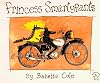
Princess Smartypants doesn't want to get married; she wants to take care of her pets (alligator-looking dragon, gigantic snail, etc.) and do what she pleases. So, she invents impossible tasks for her suitors, and when they fail, she sends them away. But then Prince Swashbuckle appears and accomplishes every task. So Princess Smartypants kisses him...and turns him into a frog. She lives happily ever after, with her pets, doing just what she pleases.
A humorous antidote to the show more prince-and-princess HEA.
See also: The Paper Bag Princess by Robert Munsch, Serious Trouble by Arthur Howard, Princess Cora and the Crocodile by Laura Amy Schlitz, The Princess in Black by Shannon Hale show less
A humorous antidote to the show more prince-and-princess HEA.
See also: The Paper Bag Princess by Robert Munsch, Serious Trouble by Arthur Howard, Princess Cora and the Crocodile by Laura Amy Schlitz, The Princess in Black by Shannon Hale show less
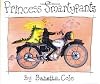
The queen wants Princess Smartypants to stop playing with her pets and start looking for a husband. Princess Smartypants responds by giving all of the princes who come to woo her different very specific and very difficult tasks to complete in order to win her hand. Each prince predictably fails. But what will happen when a very charming prince comes along and can ace all of the tests? Will Princess Smartypants have to marry after all?
This is a fantastic book to offset all of those princess show more fairytales that end “happily ever after” only after a marriage. There’s nothing wrong in and of itself with that type of ending, but it tells children there is only one path to happiness, when in real life that is not true for everyone. Here instead we have a princess who dreams not of true love but of having a castle of her own in which she can take care of her pets and do what she pleases. Princess Smartypants’s care for her pets shows that she’s not unfeeling; she just just does not want to be tied down in a marriage. In addition, the many tests that she dreams up show that she is quite clever. In fact, the 6-year-old I was reading the story with said at the end, “Princess Smartypants is quite tricky. “
The only thing I really didn’t like about this book is that the illustrations are far more cartoonish and extravagantly silly than what I would like. Yes, the book is silly at times; the princes all have punny names and the tasks they are set to do are all more than a little absurd. But regardless, I still feel like the illustrations are just far too ridiculous for me to fully enjoy the book. That being said, the two children I read it with (both boys, incidentally) were absolutely captivated by this book and kept requesting to hear it over and over again rather than books they had only heard once or not at all yet. So clearly this book does resonate with little ones, which I am certainly glad to observe. show less
This is a fantastic book to offset all of those princess show more fairytales that end “happily ever after” only after a marriage. There’s nothing wrong in and of itself with that type of ending, but it tells children there is only one path to happiness, when in real life that is not true for everyone. Here instead we have a princess who dreams not of true love but of having a castle of her own in which she can take care of her pets and do what she pleases. Princess Smartypants’s care for her pets shows that she’s not unfeeling; she just just does not want to be tied down in a marriage. In addition, the many tests that she dreams up show that she is quite clever. In fact, the 6-year-old I was reading the story with said at the end, “Princess Smartypants is quite tricky. “
The only thing I really didn’t like about this book is that the illustrations are far more cartoonish and extravagantly silly than what I would like. Yes, the book is silly at times; the princes all have punny names and the tasks they are set to do are all more than a little absurd. But regardless, I still feel like the illustrations are just far too ridiculous for me to fully enjoy the book. That being said, the two children I read it with (both boys, incidentally) were absolutely captivated by this book and kept requesting to hear it over and over again rather than books they had only heard once or not at all yet. So clearly this book does resonate with little ones, which I am certainly glad to observe. show less
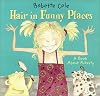
Girls and boys are always curious and sometimes even alarmed by the behaviour of their bodies as they grow up. Puberty being a particularly unsettling time, Babette Cole has made this the subject of the fifth title in her bestselling series of 'family dilemmas'. Who else but Babette would have the temerity to tackle this subject in a picture book and the genius to carry it off! In "Hair in Funny Places" her artwork is without exaggeration some of the best she has ever done: it is brilliant. show more The text takes the form of a conversation between a small girl and her teddy bear, and is ingenious and funny. It is the behaviour of Mr and Mrs Hormone (wonderfully depicted) which is responsible for and plays havoc with the physical and emotional states of girls and boys throughout puberty. This book is bound to be controversial but Babette has never taken the conventional path and her readers love her for her outrageous approach to little mentioned topics. show less
Lists
Awards


You May Also Like


Associated Authors
Statistics
- Works
- 90
- Also by
- 10
- Members
- 4,877
- Popularity
- #5,155
- Rating
- 3.8
- Reviews
- 173
- ISBNs
- 460
- Languages
- 20
- Favorited
- 4