
Ruth Crawford Seeger (1901–1953)
Author of American Folk Songs for Children
About the Author
Works by Ruth Crawford Seeger
Out of Our Fathers' House: Based on Eve Merriam's "Growing up Female in America: Ten Lives" (1975) — Composer — 12 copies
Portrait [CD] 2 copies
Chamber and vocal music 1 copy
Associated Works
Tagged
Common Knowledge
- Legal name
- Seeger, Ruth Porter Crawford
- Birthdate
- 1901-07-03
- Date of death
- 1953-11-18
- Gender
- female
- Education
- American Conservatory of Music
- Occupations
- composer
folk music collector - Relationships
- Seeger, Charles (husband)
Seeger, Peggy (daughter)
Seeger, Pete (step-son) - Short biography
- Ruth Crawford Seeger, née Porter, was born and raised in small towns in the Midwest and Florida to which her father, a Methodist minister, traveled for work. She began piano lessons at the age of 11 and decided to pursue formal music studies in order to work as a piano teacher. In 1921, she entered the American Conservatory of Music in Chicago, Illinois. After changing her focus first to becoming a concert pianist, she then chose composition. She is considered both as the most important American woman composer of the 20th century, and as a major figure in the study and preservation of American folk music. She was active as a composer primarily during the 1920s and 1930s and as a folk music specialist from the late 1930s until her death. She was a prominent member of a group of American composers known as the "ultra-moderns," and her work influenced later composers.
- Nationality
- USA
- Birthplace
- East Liverpool, Ohio, USA
- Places of residence
- Chicago, Illinois, USA
Berlin, Germany
Paris, France
Washington, D.C., USA - Place of death
- Washington, D.C., USA
- Associated Place (for map)
- USA
Members
Reviews
American folk songs for children : in home, school and nursery school; a book for children, parents and teachers by Ruth Crawford Seeger
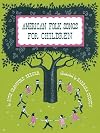
Ruth Crawford Seeger was a serious scholar of American folk music, who listened obsessively to field recordings of American folk song, and made hundreds of transcriptions, including for the definitive Lomax collections. She was also a brilliant composer in her own right. Finally, she was a mother and a volunteer preschool teacher who had great insight into young children.
She brings all these talents and abilities to her work on this brilliant book. Her choice of songs is superb, and will show more keep children singing while also keeping adults engaged. She combines her deep understanding of the folk process with her knowledge of preschool education to give you hints and tips for adapting the songs to the children you're working with. The piano accompaniments are simple enough to be playable even by ham-handed people like me -- but the simplicity is deceptive, for in many places she manages to suggest harmonic and rhythmic possibilities that will stretch your musical imagination (and the children's musical imaginations, too!).
My well-worn copy of the book belonged to my mother, and she used it while she was a kindergarten and preschool teacher. Half a century later, I can still use these timeless songs with children with great success. Quite simply, one of the best children's music books you can get. show less
She brings all these talents and abilities to her work on this brilliant book. Her choice of songs is superb, and will show more keep children singing while also keeping adults engaged. She combines her deep understanding of the folk process with her knowledge of preschool education to give you hints and tips for adapting the songs to the children you're working with. The piano accompaniments are simple enough to be playable even by ham-handed people like me -- but the simplicity is deceptive, for in many places she manages to suggest harmonic and rhythmic possibilities that will stretch your musical imagination (and the children's musical imaginations, too!).
My well-worn copy of the book belonged to my mother, and she used it while she was a kindergarten and preschool teacher. Half a century later, I can still use these timeless songs with children with great success. Quite simply, one of the best children's music books you can get. show less
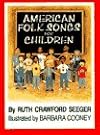
This is not a book/CD selection to listen to passively. The point is to listen to and learn the songs so you and your children can sing them throughout the day, on your own, naturally and as freely as breathing.
There's nothing exceptionally 'professional' or polished about it, so children won't be programmed to think they can only sing the songs one right way.
I knew it was a success and exactly what we'd wanted when our children began including snatches of songs in the family language- show more leaping off the porch to check the mail while singing, "I got a letter this morning...;" spotting a sister finally arriving home and larking about with, "Here she comes so fresh and fair...;" dancing around with a doll (or a real baby) and singing, 'What'll we do with the baby? What'll we do with the baby..."
For us, folk music is participatory, not passive entertainment, and this book encourages participation. show less
There's nothing exceptionally 'professional' or polished about it, so children won't be programmed to think they can only sing the songs one right way.
I knew it was a success and exactly what we'd wanted when our children began including snatches of songs in the family language- show more leaping off the porch to check the mail while singing, "I got a letter this morning...;" spotting a sister finally arriving home and larking about with, "Here she comes so fresh and fair...;" dancing around with a doll (or a real baby) and singing, 'What'll we do with the baby? What'll we do with the baby..."
For us, folk music is participatory, not passive entertainment, and this book encourages participation. show less

Unlike the Lomax's usual approach, this is a very scholarly work. It makes no attempt at being usable as a songbook, and instead consists of exact-as-possible transcriptions made from field recordings. The book would be fairly superfluous if those recordings were readily available, but since they're not (although they were at the time the book was first published), this is an excellent resource - albeit a poor second to the many field recordings which are available. The real fun I got from show more reading the book, though, was from the stories occasionally included between songs; as they say in the introduction, "these people have a lot to say and a lot to remember, and that is why this book is mostly in quotation marks." show less
Sheet music (and some folk lyrics without music). More songs collected by Lomax, c. 1941, but in this second volume more than half come with sheet music, plus anecdotes from the folks contributing the songs. Though I probably won't learn more than a couple of these songs (since I neither attend "play parties" or belong to a chain gang), I do feel like it's another national treasure of historical import.
Awards

You May Also Like


Associated Authors
Statistics
- Works
- 18
- Also by
- 2
- Members
- 390
- Popularity
- #62,075
- Rating
- 4.4
- Reviews
- 8
- ISBNs
- 25
- Languages
- 1