

Mark O'Connell (3) (1979–)
Author of To Be a Machine: Adventures Among Cyborgs, Utopians, Hackers, and the Futurists Solving the Modest Problem of Death
For other authors named Mark O'Connell, see the disambiguation page.
About the Author
Mark O'Connell is an Irish author and teacher, born in 1979 and based in Dublin. He earned his PhD in English Literature from Trinity College Dublin. His academic work on, John Banville's Narcissistic Fiction, was published in 2013. From 2011 to 2012 he was an Irish Research Council Postdoctoral show more Fellow at Trinity College and taught contemporary literature. His debut book, To Be a Machine: Adventures Among Cyborgs, Utopians, Hackers and the Futurists Solving the Modest Problem of Death, was published in 2017 and won for him the 2018 Wellcome Book Prize. (Bowker Author Biography) show less
Image credit: via Penguin Random House
Works by Mark O'Connell
To Be a Machine: Adventures Among Cyborgs, Utopians, Hackers, and the Futurists Solving the Modest Problem of Death (2018) 340 copies, 14 reviews
Notes from an Apocalypse: A Personal Journey to the End of the World and Back (2020) 238 copies, 9 reviews
Associated Works
Tagged
Common Knowledge
- Birthdate
- 1979-06-23
- Gender
- male
- Education
- Trinity College, Dublin (PhD | English)
- Nationality
- Ireland
- Birthplace
- Kilkenny, Ireland
- Places of residence
- Dublin, Ireland
- Associated Place (for map)
- Ireland
Members
Reviews
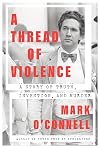
Every once in a while the universe makes it so that you read one book that prepares you for another one. A couple of months ago, I read Janet Malcom's intricate, thoughtful meditation or reporting and interviewing, "The Journalist and the Murderer." It's well-nigh impossible not to think of that book while reading Mark O'Connell's "A Thread of Violence."
O'Connell describes to the reader how he contrived to bump into, and then establish a relationship with Malcom Macarthur, perhaps modern show more Ireland's most infamous murderer. In 1982, Macarthur murdered a nurse and a young farmer as part of a preposterous scheme to hold up a bank. He was later found in the private apartment of a friend, a minister of the government. The crimes themselves were brutal, but the story is, in a sense, as weird as that summary makes it sound. Macarthur, an arty aristocratic dilettante, was running out of money and hatched his scheme in part because he had never held a job. It seems that he decided that if the IRA could rob banks, he could rob one, too. One of the investigating officers perceptively called Macarthur's actions "a frenzy of tomfoolery." The fact that he never thought to remove his signature bowtie does not really say much for Macarthur's relationship with reality.
O'Connell is good at describing Macarthur's background and how it might have contributed to his crime. It's fair to say that growing up in an emotionally cold environment with a possibly abusive father did little for Macarthur's development. He's also good at describing why this incident shocked Ireland -- a small, relatively safe country -- so much. But -- getting back to Janet Malcom -- we see O'Connell wrestle with the same questions that Joe McGinnis did when he wrote "Fatal Vision" about potential murderer Jeffrey R. MacDonald. O'Connell is clued into Macarthur's verbal evasions and various ellisons, but he also wants to keep him talking and is keenly aware that Macarthur, a free man but a social pariah, would like somebody to talk to. O'Connell also senses that, under most circumstances, it wouldn't be unthinkable that he might enjoy Macarthur's company, at least for a while. As McGinnis did, O'Connell struggles to keep his personal feelings separate from his professional identity, but hits a wall when, as always, the interview process slowly devolves into rote repetition. As Malcolm noted, humans are complex, but they're often unimaginative when they tell their own stories. O'Connell knows what he's got, though: the first real look that the Irish public have ever gotten at a particularly notorious murderer and, by and large, his book succeeds. "A Thread of Violence" gives us a good idea of who Malcolm Macarthur is, offers more than plausible rationales for why he did what he did, and, perhaps most importantly, comes to a halt before it gets too repetitive or it is taken over completely by its own subject. Recommended to both j-school students, true crime fans, and lovers of quality narrative nonfiction. show less
O'Connell describes to the reader how he contrived to bump into, and then establish a relationship with Malcom Macarthur, perhaps modern show more Ireland's most infamous murderer. In 1982, Macarthur murdered a nurse and a young farmer as part of a preposterous scheme to hold up a bank. He was later found in the private apartment of a friend, a minister of the government. The crimes themselves were brutal, but the story is, in a sense, as weird as that summary makes it sound. Macarthur, an arty aristocratic dilettante, was running out of money and hatched his scheme in part because he had never held a job. It seems that he decided that if the IRA could rob banks, he could rob one, too. One of the investigating officers perceptively called Macarthur's actions "a frenzy of tomfoolery." The fact that he never thought to remove his signature bowtie does not really say much for Macarthur's relationship with reality.
O'Connell is good at describing Macarthur's background and how it might have contributed to his crime. It's fair to say that growing up in an emotionally cold environment with a possibly abusive father did little for Macarthur's development. He's also good at describing why this incident shocked Ireland -- a small, relatively safe country -- so much. But -- getting back to Janet Malcom -- we see O'Connell wrestle with the same questions that Joe McGinnis did when he wrote "Fatal Vision" about potential murderer Jeffrey R. MacDonald. O'Connell is clued into Macarthur's verbal evasions and various ellisons, but he also wants to keep him talking and is keenly aware that Macarthur, a free man but a social pariah, would like somebody to talk to. O'Connell also senses that, under most circumstances, it wouldn't be unthinkable that he might enjoy Macarthur's company, at least for a while. As McGinnis did, O'Connell struggles to keep his personal feelings separate from his professional identity, but hits a wall when, as always, the interview process slowly devolves into rote repetition. As Malcolm noted, humans are complex, but they're often unimaginative when they tell their own stories. O'Connell knows what he's got, though: the first real look that the Irish public have ever gotten at a particularly notorious murderer and, by and large, his book succeeds. "A Thread of Violence" gives us a good idea of who Malcolm Macarthur is, offers more than plausible rationales for why he did what he did, and, perhaps most importantly, comes to a halt before it gets too repetitive or it is taken over completely by its own subject. Recommended to both j-school students, true crime fans, and lovers of quality narrative nonfiction. show less
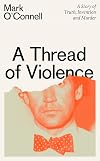
GUBU—an acronym for "grotesque, unusual, bizarre, and unprecedented"—is a term that entered the Irish cultural lexicon in the 1980s in the wake of a series of horrific crimes that almost brought down the government of the time. Malcolm MacArthur—a bow-tie-sporting, would-be-intellectual with an Anglo-Irish accent and a lifestyle that outstretched his means—murdered two people as part of a cock-eyed bank robbery scheme, but his arrest in the home of Ireland's then Attorney General put show more paid to that. The fall-out from all of this created a media sensation, so much so that even though I wasn't alive at the time of the murders I do remember hearing about them growing up.
In A Thread of Violence, Mark O'Connell tries to both unpack what happened in the summer of 1982 and, through a series of conversations with MacArthur, to come to a better understanding of why he did what he did. In showing the contexts which shaped MacArthur's life and the public response to his crimes, O'Connell is successful; in his grapplings with MacArthur himself, he is less so. MacArthur's aesthetic quirks and the faded glamour of his landed gentry background helped to give his case a sordid allure—as O'Connell points out more than once, no one would have fixated on what happened so much if MacArthur had been from the Dublin inner city—and a sense that there must be something complex, sophisticated, multi-layered there to figure out. But I don't think it's that hard to understand what happened, at least on an intellectual level: MacArthur was raised with an over-weening sense of entitlement and class privilege, and when he no longer had the money to enable the life of leisure he felt he deserved, he lashed out in anger. Bridie Gargan and Donal Dunne just happened to be the people in his way when he did so. Sociopaths aren't that complicated, no matter how much pop culture might push us to believe otherwise. MacArthur is fairly banal, but O'Connell doesn't seem able to let himself accept that.
Then again, he does have a book to sell.
I might be somewhat less cynical about that aspect of things if O'Connell's musings on the interconnections between fiction and reality, and the impossibility of truly knowing or reconstructing things which happened in the past hadn't been so... well, at the "bright undergraduate" level. Critiquing the Rankean wie es eigentlich gewesen ist stance isn't exactly what you'd call a new stance at this point. show less
In A Thread of Violence, Mark O'Connell tries to both unpack what happened in the summer of 1982 and, through a series of conversations with MacArthur, to come to a better understanding of why he did what he did. In showing the contexts which shaped MacArthur's life and the public response to his crimes, O'Connell is successful; in his grapplings with MacArthur himself, he is less so. MacArthur's aesthetic quirks and the faded glamour of his landed gentry background helped to give his case a sordid allure—as O'Connell points out more than once, no one would have fixated on what happened so much if MacArthur had been from the Dublin inner city—and a sense that there must be something complex, sophisticated, multi-layered there to figure out. But I don't think it's that hard to understand what happened, at least on an intellectual level: MacArthur was raised with an over-weening sense of entitlement and class privilege, and when he no longer had the money to enable the life of leisure he felt he deserved, he lashed out in anger. Bridie Gargan and Donal Dunne just happened to be the people in his way when he did so. Sociopaths aren't that complicated, no matter how much pop culture might push us to believe otherwise. MacArthur is fairly banal, but O'Connell doesn't seem able to let himself accept that.
Then again, he does have a book to sell.
I might be somewhat less cynical about that aspect of things if O'Connell's musings on the interconnections between fiction and reality, and the impossibility of truly knowing or reconstructing things which happened in the past hadn't been so... well, at the "bright undergraduate" level. Critiquing the Rankean wie es eigentlich gewesen ist stance isn't exactly what you'd call a new stance at this point. show less
There is a plotline in the movie Broadcast News I kept thinking about as I listened to this. For those who have not seen the movie (you should, it is really good though a bit dated) the action takes place in the DC newsroom of one of the big networks. Holly Hunter is a scrupulous, rule following, brilliant but very black and white producer. William Hurt is the very handsome, not so smart but very dedicated reporter/anchor everyone loves, and Albert Brooks is the intrepid field reporter, show more smartest guy in every room, diligent, brave, yet still somehow a bit of a nebish. In this storyline Hunter learns that Hurt (with whom she is romantically involved) had forced himself to cry so the cameraperson could film it and the editor could flash to him crying as this woman tells her story of being raped to pull at the viewer's heartstrings. He makes the story about him. Hunter goes ballistic because a cardinal rule of reporting is that it is about the subject, never about the reporter. The reporter is there to bring out the information and be invisible and the audience can decide how they feel themselves.
I related this bit of film summary because, though this book is a very good piece of literary true crime for the most part, it is the author, Mark O'Connell who is at the center of it rather than the murderer Malcolm Macarthur. Macarthur murdered two people in 1982 and was released just before Covid lockdown. At the beginning O'Connell shares many reasons for his fascination with Macarthur. He goes on for a bit about Macarthur's "aristocratic forehead" his foppish hair, his bearing and gait and how as a result Macarthur does not look like a murderer. Really? Do murderers have darker skin? Do they have the aged skin of a laborer who works outside? Are they poorly dressed due to poverty? I do understand that O'Connell is grappling with the idea that murderers may look and act like him. Trinity educated men with money and consequent leisure (this is a central topic throughout the book) who travel through life acquiring knowledge to no particular end and consorting with other men of this ilk. It is a potentially interesting topic for a memoir. I recently read The Best Minds which I loved, and it addresses some similar issues (though it is a very different book and story in all other ways.) Both authors are asking "Why did this person who is so much like me do this when I could never do so. The Best Minds was, in large part" clearly a memoir though it is blended with other genres. This though is not a memoir. O'Connell does not share enough of himself for this to work as a memoir, and too much of himself to be reportage. I know that lines between genres get greyer and greyer all the time, often to wonderful effect. Here this was done to more varying effect. Because O'Connell leans into his own life so hard in the first 25% of the book I did not feel like the book was about the crime or its impact at all, until suddenly it was. After that first quarter O'Connell began to blend self examination with the examination of the crime, its victims (not just those murdered, but all the others who felt its impact) and the murderer himself.
I liked that for the portions where O'Connell is actually talking with Macarthur he did keep that journalistic distance. He made clear that his observations were his observations. They were not fact, but rather perception. This is something that is very rarely done in true crime, and one of the reasons I rarely read true crime. One other thing I liked was that all discussion of the crime itself did maintain distance. True crime is often revoltingly lurid. It tries to put you there as the crimes happen. Firstly, who wants to be there? Secondly, no one knows what happened in most crimes, if there were witnesses there would be little mystery to write about. True crime books often tell you what the victims are thinking and feeling in the moment. No one knows that though. What the reader is usually getting in these depictions is what some true crime enthusiast made up for their "entertainment. ." None of that happens here. O'Connell is scrupulous about including only fact, and then clearly saying that his perception of the event is X and he thinks that because of A.B, and C, but he can't know for sure. I loved that approach.
I need to mention one thing -- O'Connell's interviews with Macarthur happened during Covid lockdown. It is very much a part of the story that both the author and the subject were starved for company and industry. This deep dive with a man whom O'Connell, seemingly quite rightly, often compares to Tom Ripley would likely not have happened in any other time. (The story here is quite different from Talented Mr. Ripley, but Macarthur's cold wholly logical inhuman approach to achieving a set end, and the tragically illogical results that follow are strikingly similar to the inner Ripley.)
In the end, O'Connell gets to some truly universal questions, some existential questions, and I found those questions very compelling. It is all pretty metaphysical. If the tree falls and you don't see it or hear it it still happened, but not to you. O'Connell is brilliant, interesting, and so thoughtful about the topic and his prose is just phenomenal.
I started out annoyed and a little bored with this book but was eventually drawn into it. I came to understand why O'Connell approached it this way. I wish he would have laid out the story a bit more clearly in the beginning and fitted in bits of info about himself rather than introducing into the text huge chunks of information about himself at the start, but the book ended up being an extremely thoughtful and compelling read that led me to think about many things including what happens if we bifurcate basic humanity from efficient problem-solving. (Something most of us do all the time and will do more with the rise of generative AI.) Recommended for sure. show less
I related this bit of film summary because, though this book is a very good piece of literary true crime for the most part, it is the author, Mark O'Connell who is at the center of it rather than the murderer Malcolm Macarthur. Macarthur murdered two people in 1982 and was released just before Covid lockdown. At the beginning O'Connell shares many reasons for his fascination with Macarthur. He goes on for a bit about Macarthur's "aristocratic forehead" his foppish hair, his bearing and gait and how as a result Macarthur does not look like a murderer. Really? Do murderers have darker skin? Do they have the aged skin of a laborer who works outside? Are they poorly dressed due to poverty? I do understand that O'Connell is grappling with the idea that murderers may look and act like him. Trinity educated men with money and consequent leisure (this is a central topic throughout the book) who travel through life acquiring knowledge to no particular end and consorting with other men of this ilk. It is a potentially interesting topic for a memoir. I recently read The Best Minds which I loved, and it addresses some similar issues (though it is a very different book and story in all other ways.) Both authors are asking "Why did this person who is so much like me do this when I could never do so. The Best Minds was, in large part" clearly a memoir though it is blended with other genres. This though is not a memoir. O'Connell does not share enough of himself for this to work as a memoir, and too much of himself to be reportage. I know that lines between genres get greyer and greyer all the time, often to wonderful effect. Here this was done to more varying effect. Because O'Connell leans into his own life so hard in the first 25% of the book I did not feel like the book was about the crime or its impact at all, until suddenly it was. After that first quarter O'Connell began to blend self examination with the examination of the crime, its victims (not just those murdered, but all the others who felt its impact) and the murderer himself.
I liked that for the portions where O'Connell is actually talking with Macarthur he did keep that journalistic distance. He made clear that his observations were his observations. They were not fact, but rather perception. This is something that is very rarely done in true crime, and one of the reasons I rarely read true crime. One other thing I liked was that all discussion of the crime itself did maintain distance. True crime is often revoltingly lurid. It tries to put you there as the crimes happen. Firstly, who wants to be there? Secondly, no one knows what happened in most crimes, if there were witnesses there would be little mystery to write about. True crime books often tell you what the victims are thinking and feeling in the moment. No one knows that though. What the reader is usually getting in these depictions is what some true crime enthusiast made up for their "entertainment. ." None of that happens here. O'Connell is scrupulous about including only fact, and then clearly saying that his perception of the event is X and he thinks that because of A.B, and C, but he can't know for sure. I loved that approach.
I need to mention one thing -- O'Connell's interviews with Macarthur happened during Covid lockdown. It is very much a part of the story that both the author and the subject were starved for company and industry. This deep dive with a man whom O'Connell, seemingly quite rightly, often compares to Tom Ripley would likely not have happened in any other time. (The story here is quite different from Talented Mr. Ripley, but Macarthur's cold wholly logical inhuman approach to achieving a set end, and the tragically illogical results that follow are strikingly similar to the inner Ripley.)
In the end, O'Connell gets to some truly universal questions, some existential questions, and I found those questions very compelling. It is all pretty metaphysical. If the tree falls and you don't see it or hear it it still happened, but not to you. O'Connell is brilliant, interesting, and so thoughtful about the topic and his prose is just phenomenal.
I started out annoyed and a little bored with this book but was eventually drawn into it. I came to understand why O'Connell approached it this way. I wish he would have laid out the story a bit more clearly in the beginning and fitted in bits of info about himself rather than introducing into the text huge chunks of information about himself at the start, but the book ended up being an extremely thoughtful and compelling read that led me to think about many things including what happens if we bifurcate basic humanity from efficient problem-solving. (Something most of us do all the time and will do more with the rise of generative AI.) Recommended for sure. show less
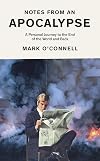
There are a lot of people who think our time is up. That is what Notes From An Apocalypse explores. It is a very dark depressing journey, which fortunately ends on a note of hope. Mark O’Connell is a very self-conscious writer. He is aware of the contradictions in everyday life, the conflicts in his own being, and the privilege he enjoys as a white, middle class Irish author. His examination of where we seem to be heading exploits all of those things in his own personality. For example, he show more points out the invention of the ship was also the invention of the shipwreck. Every silver lining, as they say…
O’Connell focuses on doom. He drives himself to depression researching things like preppers, who are stocking up for a Mad Max future of every man for himself. He notes the obvious selfishness of it, ignoring the suffering in the world or even the neighborhood in favor of guns, powdered imitation foods, and bunkers. It’s a white, patriarchal vision he can’t relate to. But then, O’Connell is a self-proclaimed socialist, so he carries the weight of the world on his shoulders. He says: “What had made America great was the western progress of white migrants. It was the northern progress of nonwhite migrants that threatened it.”
He visits a developer selling those bunkers in South Dakota, and traces the route of Peter Thiel, who bought himself a New Zealand passport and lots of land to protect himself from the end times he also thinks are coming in his lifetime – just not in New Zealand, apparently. O’Connell says “the freedom to act purely in one’s own interest, without having to consider the interests of others […} seemed to me the most bloodless and decrepit conception of freedom imaginable […] The notion of escaping ”beyond politics” was, in other words, inescapably political. It was a dream of dissolving all entanglements with, and obligations towards, other people. This amounted to nothing less, in my view, than the dissolving of life itself.”
Then, way beyond New Zealand, the Mars people come under scrutiny. They think moving to Mars and living entirely underground will give them freedom, no government, no regulations, and a new life under a cold planet. O’Connell doesn’t state the obvious, but if that’s what will save humanity, they could burrow under Montana and achieve the same thing in proper gravity, air and water.
O’Connell goes so far as to visit Chernobyl, a depressing monument turned into a tourist trap, exhibiting all the trappings of the set of a sci-fi endtimes film. Basically, he goes to the ends of the earth to find who is preparing for the end of the world, and what that might look like.
And he tells it all to his therapist, who spends her time trying to point him towards cheerier thoughts. She also has to deal with his fear of moths. The thought of one brushing against his skin is enough to make him leave the room. It’s a very different premise for a book, but O’Connell is an intelligent analyst, and he makes it work.
In the end (of the book), it is his two young children, possessing no agenda of their own, who give him hope and inspiration that not only must life go on, but that this is the only time for life to go on. There are no options offered.
David Wineberg show less
O’Connell focuses on doom. He drives himself to depression researching things like preppers, who are stocking up for a Mad Max future of every man for himself. He notes the obvious selfishness of it, ignoring the suffering in the world or even the neighborhood in favor of guns, powdered imitation foods, and bunkers. It’s a white, patriarchal vision he can’t relate to. But then, O’Connell is a self-proclaimed socialist, so he carries the weight of the world on his shoulders. He says: “What had made America great was the western progress of white migrants. It was the northern progress of nonwhite migrants that threatened it.”
He visits a developer selling those bunkers in South Dakota, and traces the route of Peter Thiel, who bought himself a New Zealand passport and lots of land to protect himself from the end times he also thinks are coming in his lifetime – just not in New Zealand, apparently. O’Connell says “the freedom to act purely in one’s own interest, without having to consider the interests of others […} seemed to me the most bloodless and decrepit conception of freedom imaginable […] The notion of escaping ”beyond politics” was, in other words, inescapably political. It was a dream of dissolving all entanglements with, and obligations towards, other people. This amounted to nothing less, in my view, than the dissolving of life itself.”
Then, way beyond New Zealand, the Mars people come under scrutiny. They think moving to Mars and living entirely underground will give them freedom, no government, no regulations, and a new life under a cold planet. O’Connell doesn’t state the obvious, but if that’s what will save humanity, they could burrow under Montana and achieve the same thing in proper gravity, air and water.
O’Connell goes so far as to visit Chernobyl, a depressing monument turned into a tourist trap, exhibiting all the trappings of the set of a sci-fi endtimes film. Basically, he goes to the ends of the earth to find who is preparing for the end of the world, and what that might look like.
And he tells it all to his therapist, who spends her time trying to point him towards cheerier thoughts. She also has to deal with his fear of moths. The thought of one brushing against his skin is enough to make him leave the room. It’s a very different premise for a book, but O’Connell is an intelligent analyst, and he makes it work.
In the end (of the book), it is his two young children, possessing no agenda of their own, who give him hope and inspiration that not only must life go on, but that this is the only time for life to go on. There are no options offered.
David Wineberg show less
Lists
Awards


You May Also Like


Associated Authors
Statistics
- Works
- 4
- Also by
- 1
- Members
- 759
- Popularity
- #33,503
- Rating
- 3.8
- Reviews
- 32
- ISBNs
- 83
- Languages
- 10