
Robert Greenberger
Author of Doomsday World
About the Author
Robert Greenberger lives in Fairfield, Connecticut. (Bowker Author Biography)
Series
Works by Robert Greenberger
The DC Comics Encyclopedia, Updated and Expanded Edition (2008) — Contributor — 254 copies, 3 reviews
DC Comics Super Heroines: 100 Greatest Moments: Highlights from the History of the World's Greatest Super Heroines (100 Greatest Moments of DC Comics) (2018) 34 copies
Justice League: 100 Greatest Moments: Highlights from the History of the World's Greatest Superheroes (100 Greatest Moments of DC Comics) (2018) 32 copies
Batman: 100 Greatest Moments: Highlights from the History of The Dark Knight (100 Greatest Moments of DC Comics) (2019) 27 copies, 4 reviews
DC Comics Super-Villains: 100 Greatest Moments: Highlights from the History of the World's Greatest Super-Villains (100 Greatest Moments of DC Comics) (2019) 19 copies
Gespensterschiff / Planet des Untergangs / Die Augen der Betrachter. Star Trek (1994) — Contributor — 19 copies
Juan Ponce de Leon: The Exploration of Florida and the Search for the Fountain of Youth (2003) 12 copies
The Bataan Death March: World War II Prisoners in the Pacific (Snapshots in History) (2009) 10 copies
Flash: 100 Greatest Moments: Highlights from the History of the Scarlet Speedster (Volume 8) (100 Greatest Moments of DC Comics, 8) (2020) 9 copies, 1 review
Thrilling Adventure Yarns 2021 2 copies
Who's Who in Star Trek #2 2 copies
Thrilling Adventure Yarns 2026 2 copies
TOUT L'ART DE WONDER WOMAN 1 copy
The Ugly Little Bloke 1 copy
Associated Works
Webslinger: Unauthorized Essays On Your Friendly Neighborhood Spider-man (Smart Pop series) (2007) — Contributor — 28 copies
Women of Marvel: Celebrating Seven Decades Magazine — Contributor — 2 copies
Back Issue 148 (2023) — Interviewer "Adam Kubert, Colorist to the Stars, Section Two: Adam Kubert Interview"; Interviewer "Creators of Two Worlds, Section One: Richard Bruning Interview" — 1 copy
Tagged
Common Knowledge
- Legal name
- Greenberger, Robert Edward
- Other names
- Greenberger, Bob
- Birthdate
- 1958-07-24
- Gender
- male
- Occupations
- writer
editor - Short biography
- https://en.wikipedia.org/wiki/Robert_G...
- Nationality
- USA
- Birthplace
- Brooklyn, New York, USA
- Associated Place (for map)
- New York, USA
Members
Reviews
The Further Adventures of Sherlock Holmes - Murder at Sorrow's Crown (Further Adventures of Sherlock Holmes (Paperback)) by Steven Savile
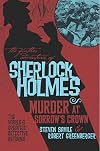
In London during the summer of 1881, and still early in their now legendary partnership, Doctor Watson schedules a number of appointments for bored, brilliant detective Sherlock Holmes, who has been unable as of late to find a case worthy of his considerable talents. After the string of potential clients are turned away one by one, an unscheduled caller arrives—bringing with her an intriguing case, naturally.
Hermione Frances Sara Wynter, an elderly widow, has been unable to obtain a show more satisfactory answer from the Admiralty as to the whereabouts of her son, Lieutenant Norbert Wynter. Norbert was due home one month previous aboard the HMS Dido after fighting in the war against the Boers in South Africa.
However, all of Mrs. Wynter's initial inquiries to the Admiralty went unanswered until finally, they revealed that Norbert had been classified as missing in action and a deserter. His mother, of course, refused to believe such an outlandish accusation.
Holmes accepts the case and, together with Watson, sets forth to interrogate, beleaguer, and otherwise annoy the Admiralty into providing information on Lieutenant Wynter. Soon, it becomes clear that something is amiss, especially since Wynter was listed as missing in action in February, yet continued to receive a paycheck until July.
When Holmes and Watson are attacked on the street by men sent by someone at the Admiralty, the detective is certain that a government cover-up is at play and, as Holmes is often quoted as saying, "The game is afoot!"
An investigation into the missing officer leads Holmes and Watson to a web of conspiracy that involves the death of former Prime Minister Benjamin Disraeli, the now defunct East India Company, and much more.
Savile and Greenberger deftly capture the characters and relationship of Holmes and Watson in a plot that was well-conceived and unfurled at a perfect pace. I was pleased to see the inclusion of Holmes's "street Arabs," aka The Baker Street Irregulars, as well as Scotland Yard Inspector Gregson over the more famous Lestrade, the latter making only a cameo appearance. I have absolutely nothing against Lestrade, of course, but I appreciate the nod being given to the more minor recurring Gregson. show less
Hermione Frances Sara Wynter, an elderly widow, has been unable to obtain a show more satisfactory answer from the Admiralty as to the whereabouts of her son, Lieutenant Norbert Wynter. Norbert was due home one month previous aboard the HMS Dido after fighting in the war against the Boers in South Africa.
However, all of Mrs. Wynter's initial inquiries to the Admiralty went unanswered until finally, they revealed that Norbert had been classified as missing in action and a deserter. His mother, of course, refused to believe such an outlandish accusation.
Holmes accepts the case and, together with Watson, sets forth to interrogate, beleaguer, and otherwise annoy the Admiralty into providing information on Lieutenant Wynter. Soon, it becomes clear that something is amiss, especially since Wynter was listed as missing in action in February, yet continued to receive a paycheck until July.
When Holmes and Watson are attacked on the street by men sent by someone at the Admiralty, the detective is certain that a government cover-up is at play and, as Holmes is often quoted as saying, "The game is afoot!"
An investigation into the missing officer leads Holmes and Watson to a web of conspiracy that involves the death of former Prime Minister Benjamin Disraeli, the now defunct East India Company, and much more.
Savile and Greenberger deftly capture the characters and relationship of Holmes and Watson in a plot that was well-conceived and unfurled at a perfect pace. I was pleased to see the inclusion of Holmes's "street Arabs," aka The Baker Street Irregulars, as well as Scotland Yard Inspector Gregson over the more famous Lestrade, the latter making only a cameo appearance. I have absolutely nothing against Lestrade, of course, but I appreciate the nod being given to the more minor recurring Gregson. show less
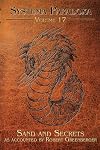
Ella is studying at the Moscow University for a three-month internship studying at the Zoological Museum. She is planning on graduate school after this internship. Then, she meets Rodion, an older grad student there, who fancies her so they strike up a friendship. While he is a bit of a Russian chauvinist, which she finds off-putting, she finds his personality charming overall.
As their relationship deepens, he introduces her to the legend of the Mongolian Death Worm and shows her the show more desiccated remains of what might be one. It is a creature shrouded in myth and no one has confirmed its actual existence. But now, Rodion is going on an expedition to search for one and wants her to come along for the ride as part of her field research.
Swayed by his arguments for field research, he helps her make arrangements to go along. Fortunately, they are both traveling with some experienced guides, soldiers for protection, and three scientists. They take an arduous trek into the Gobi desert in search of proof of the Death Worm. The funding for this trip allows them ten days in the desert to try to find something.
As Ella learns more about the Russian culture and myths, their group soon finds possible signs of the Death Worm. What is so important about this expedition received funding anyway? And will happen if they succeed in their search for a Death Worm? And are they willing to put their lives and reputations on the line to find what they’re looking for?
The author has done much research into Russian culture, the Gobi desert, and scientific research methods. How the researchers interact, university politics impacting studies and more all feel authentic and added to the depths of the story and all the different cultures contained in it.
In this story, the author adds in all the folklore about the Mongolian Death Worm and the myths that have sprung up around it. Now, add in the dangerousness and ferocity of the Death Worm. The author expertly builds the tension over the course of this narrative, exploring these myths and questioning whether they are chasing something that doesn’t exist. The story adds some unexpected twists and turns to it while ratcheting up the tension as the reader wonders if they will succeed in their quest.
At first, I thought the ending was going to go in one direction, which would have been emotionally satisfying if it had happened. But then the ending went in a superior direction, upped the intensity, and turned into a thrilling direction that just knocked me over with how astonishing and surprising it was. The finale was pure nightmare fuel that stayed with me long after I finished reading it! Plus, it wrapped up in such a way that paid off a lingering subplot in an unexpected way.
The dating and courtship of Ella and Rodion at the beginning of the story took up some space and didn’t feel necessary initially. However, it grew on me and deepened both characters as a result of it. Their relationship impacted their interactions during their field expedition to the Gobi desert as well. But from a plot and a character standpoint, was included for crucial reasons which remain to be seen until you have finished reading.
Having read this author before on multiple occasions, choosing to read this story was an easy decision. I found this to be a satisfying novella with a terrific, mysterious, and deadly cryptid, strong characters, and a swift storytelling pace that engaged me throughout the entire novella.
Please note I received a review copy of this ebook through LibraryThing. show less
As their relationship deepens, he introduces her to the legend of the Mongolian Death Worm and shows her the show more desiccated remains of what might be one. It is a creature shrouded in myth and no one has confirmed its actual existence. But now, Rodion is going on an expedition to search for one and wants her to come along for the ride as part of her field research.
Swayed by his arguments for field research, he helps her make arrangements to go along. Fortunately, they are both traveling with some experienced guides, soldiers for protection, and three scientists. They take an arduous trek into the Gobi desert in search of proof of the Death Worm. The funding for this trip allows them ten days in the desert to try to find something.
As Ella learns more about the Russian culture and myths, their group soon finds possible signs of the Death Worm. What is so important about this expedition received funding anyway? And will happen if they succeed in their search for a Death Worm? And are they willing to put their lives and reputations on the line to find what they’re looking for?
The author has done much research into Russian culture, the Gobi desert, and scientific research methods. How the researchers interact, university politics impacting studies and more all feel authentic and added to the depths of the story and all the different cultures contained in it.
In this story, the author adds in all the folklore about the Mongolian Death Worm and the myths that have sprung up around it. Now, add in the dangerousness and ferocity of the Death Worm. The author expertly builds the tension over the course of this narrative, exploring these myths and questioning whether they are chasing something that doesn’t exist. The story adds some unexpected twists and turns to it while ratcheting up the tension as the reader wonders if they will succeed in their quest.
At first, I thought the ending was going to go in one direction, which would have been emotionally satisfying if it had happened. But then the ending went in a superior direction, upped the intensity, and turned into a thrilling direction that just knocked me over with how astonishing and surprising it was. The finale was pure nightmare fuel that stayed with me long after I finished reading it! Plus, it wrapped up in such a way that paid off a lingering subplot in an unexpected way.
The dating and courtship of Ella and Rodion at the beginning of the story took up some space and didn’t feel necessary initially. However, it grew on me and deepened both characters as a result of it. Their relationship impacted their interactions during their field expedition to the Gobi desert as well. But from a plot and a character standpoint, was included for crucial reasons which remain to be seen until you have finished reading.
Having read this author before on multiple occasions, choosing to read this story was an easy decision. I found this to be a satisfying novella with a terrific, mysterious, and deadly cryptid, strong characters, and a swift storytelling pace that engaged me throughout the entire novella.
Please note I received a review copy of this ebook through LibraryThing. show less
 This review was written for LibraryThing Early Reviewers.
The 2011 Winnie the Pooh animated movie is fairly strong based on the sheer amount of wordplay, visual gags, and slapstick crammed into its mere 63 minutes. With eight credited writers, I get the feeling it was like a sitcom writers' room where everyone was brainstorming jokes and situations both cheap and clever. It helps that this is another Pooh film that actually draws on the original A. A. Milne source material, loosely adapting three different chapters (see below) wherein Eeyore's show more loses his tail, a busy Backson may have made off with Christopher Robin, and a pit dug to capture the beast captures Pooh instead. (In a bit of Disney recycling, the Backson chapter was also the very loose starting point for a previous film, Pooh's Grand Adventure: The Search for Christopher Robin.) My only disappointment with the film is that the songs are simply good, not nearly as catchy as the stuff written by the Sherman Brothers or Carly Simon.
This adaptation is a graphic novel that makes use of frames from the original movie for illustrations. A veritable army of creators led by Robert Greenberger clipped and pasted the art into a six-panel grid and copied the movie script word-for-word directly into the word balloons. It is a faithful recreation of the movie on paper, but actually took my daughter and me two or three times longer to read than it did for us to watch the movie.
As we read, we found scenes in the movie that lasted a few seconds elongate to minutes as each frame of action gets the exact same size panel. So, for instance, Pooh taking a couple steps can last a whole page, doffing his cap is another full page -- all as if the film is unrolling in slow motion. And since most of the film's visual gags are included, there are a lot of nearly wordless pages, but they still take a while to "read" as you decipher the pantomime from stills that were designed to have dozens of images between them to help any particular nanosecond make sense.
It is interesting though to see an adaptation that actually does a full adaptation of a film's musical sequences. Usually in this sort of thing songs are skipped entirely or are referenced with just a line or two, often pretending that the character is just saying the lines instead of breaking into song and dance. But here we get the full lyrics of every song (except, curiously, Zooy Deschanel's closing credits original song) and the full choreography. But unlike the movie I couldn't absorb the music and visuals simultaneously, so there was a bit of a dissonance as I read the words and then looked at the pictures.
So I'm going to chalk this up as an interesting failure. It's not a pleasant reading experience, but it is still at least a novel experience. And the script from the movie is good regardless of how much the pacing is thrown off in this format.
FOR REFERENCE:
Cinestory Credits:
Adaptation, Design, Lettering, Layout and Editing:
Robert Greenberger, Ester Salguero, Eduardo Alpuente, Alberto Garrido, Heidi Roux, Aaron Sparrow, Carolynn Prior, Robert Simpson, Amy Weingartner, Stephanie Alouche.
Original Film Credits:
Directed by Stephen J. Anderson (as Stephen Anderson) and Don Hall.
Story by Stephen J. Anderson (as Stephen Anderson), Clio Chiang, Don Dougherty, Don Hall, Kendelle Hoyer, Brian Kesinger, Nicole Mitchell, and Jeremy Spears.
Based on the "Winnie the Pooh" works by A. A. Milne and E. H. Shepard.
Original songs by Kristen Anderson-Lopez and Robert Lopez. "Winnie the Pooh" and "The Wonderful Thing about Tiggers" written by Richard M. Sherman and Robert B. Sherman. "So Long" written and performed by Zooey Deschanel
Source material:
• Winnie-the-Pooh Chapter Four: In Which Eeyore Loses a Tail and Pooh Finds One
• Winnie-the-Pooh Chapter Five: In Which Piglet Meets a Heffalump
• The House at Pooh Corner Chapter Five: In Which Rabbit Has a Busy Day, and We Learn What Christopher Robin Does in the Mornings
(My Pooh Project: I love Winnie the Pooh, and so does my wife. Having a daughter gave us a chance to indoctrinate her into the cult by buying and reading her every Pooh book we came across. How many is that? I’m going to count them this year by reading and reviewing one every day and seeing which month I finally run out. Track my progress here:
https://www.goodreads.com/review/list/23954351-rod-brown?ref=nav_mybooks&she... ) show less
This adaptation is a graphic novel that makes use of frames from the original movie for illustrations. A veritable army of creators led by Robert Greenberger clipped and pasted the art into a six-panel grid and copied the movie script word-for-word directly into the word balloons. It is a faithful recreation of the movie on paper, but actually took my daughter and me two or three times longer to read than it did for us to watch the movie.
As we read, we found scenes in the movie that lasted a few seconds elongate to minutes as each frame of action gets the exact same size panel. So, for instance, Pooh taking a couple steps can last a whole page, doffing his cap is another full page -- all as if the film is unrolling in slow motion. And since most of the film's visual gags are included, there are a lot of nearly wordless pages, but they still take a while to "read" as you decipher the pantomime from stills that were designed to have dozens of images between them to help any particular nanosecond make sense.
It is interesting though to see an adaptation that actually does a full adaptation of a film's musical sequences. Usually in this sort of thing songs are skipped entirely or are referenced with just a line or two, often pretending that the character is just saying the lines instead of breaking into song and dance. But here we get the full lyrics of every song (except, curiously, Zooy Deschanel's closing credits original song) and the full choreography. But unlike the movie I couldn't absorb the music and visuals simultaneously, so there was a bit of a dissonance as I read the words and then looked at the pictures.
So I'm going to chalk this up as an interesting failure. It's not a pleasant reading experience, but it is still at least a novel experience. And the script from the movie is good regardless of how much the pacing is thrown off in this format.
FOR REFERENCE:
Cinestory Credits:
Adaptation, Design, Lettering, Layout and Editing:
Robert Greenberger, Ester Salguero, Eduardo Alpuente, Alberto Garrido, Heidi Roux, Aaron Sparrow, Carolynn Prior, Robert Simpson, Amy Weingartner, Stephanie Alouche.
Original Film Credits:
Directed by Stephen J. Anderson (as Stephen Anderson) and Don Hall.
Story by Stephen J. Anderson (as Stephen Anderson), Clio Chiang, Don Dougherty, Don Hall, Kendelle Hoyer, Brian Kesinger, Nicole Mitchell, and Jeremy Spears.
Based on the "Winnie the Pooh" works by A. A. Milne and E. H. Shepard.
Original songs by Kristen Anderson-Lopez and Robert Lopez. "Winnie the Pooh" and "The Wonderful Thing about Tiggers" written by Richard M. Sherman and Robert B. Sherman. "So Long" written and performed by Zooey Deschanel
Source material:
• Winnie-the-Pooh Chapter Four: In Which Eeyore Loses a Tail and Pooh Finds One
• Winnie-the-Pooh Chapter Five: In Which Piglet Meets a Heffalump
• The House at Pooh Corner Chapter Five: In Which Rabbit Has a Busy Day, and We Learn What Christopher Robin Does in the Mornings
(My Pooh Project: I love Winnie the Pooh, and so does my wife. Having a daughter gave us a chance to indoctrinate her into the cult by buying and reading her every Pooh book we came across. How many is that? I’m going to count them this year by reading and reviewing one every day and seeing which month I finally run out. Track my progress here:
https://www.goodreads.com/review/list/23954351-rod-brown?ref=nav_mybooks&she... ) show less

This book collects what seems to be most, and perhaps all, of the cover art to its date (2013) for the various Dynamite comics based on the Mars of Edgar Rice Burroughs. The page size is large, about twice that of a US comic book, and all of the reproductions are in full color on glossy paper. There is a text introduction discussing the history of depictions of the Martian princess Dejah Thoris and her world, with some thoroughness and detail. But for most of the book, the only text is the show more identification of the artists and original publication info for each image.
As a comics publisher, Dynamite has the annoying practice of producing comics with alternate cover art, presumably in an effort to get fans to buy multiple copies of single issues. In this book, though, they do collect all of the alternates along with the basic cover art, and they include "risque" covers (originally available as retailer premiums), which are often variants of other cover art in which the princess is en déshabillé. However, the character (as originally delineated by Burroughs) wears so little clothing in the first place that such a difference often amounts to little more than whether her nipples are golden or flesh colored!
The quality of the art is not uniform, but the good stuff is awesome, and hardly any are miserable. Artists whose work I particularly favor include Joe Jusko, Paul Renaud, Wagner Reis, Lucio Parillo, and Jay Anacleto.
This book really is beautifully produced, and it's worth more to me than all of the original Dynamite comics combined, with its generous size and text-free presentation. The title is accurate: although there are some well-imagined tharks, Martian apes, and banths, and John Carter appears occasionally, the clear focus throughout is on the paragon of Barsoomian pulchritude herself. show less
As a comics publisher, Dynamite has the annoying practice of producing comics with alternate cover art, presumably in an effort to get fans to buy multiple copies of single issues. In this book, though, they do collect all of the alternates along with the basic cover art, and they include "risque" covers (originally available as retailer premiums), which are often variants of other cover art in which the princess is en déshabillé. However, the character (as originally delineated by Burroughs) wears so little clothing in the first place that such a difference often amounts to little more than whether her nipples are golden or flesh colored!
The quality of the art is not uniform, but the good stuff is awesome, and hardly any are miserable. Artists whose work I particularly favor include Joe Jusko, Paul Renaud, Wagner Reis, Lucio Parillo, and Jay Anacleto.
This book really is beautifully produced, and it's worth more to me than all of the original Dynamite comics combined, with its generous size and text-free presentation. The title is accurate: although there are some well-imagined tharks, Martian apes, and banths, and John Carter appears occasionally, the clear focus throughout is on the paragon of Barsoomian pulchritude herself. show less
Lists
Awards


You May Also Like


Associated Authors
Statistics
- Works
- 101
- Also by
- 32
- Members
- 4,963
- Popularity
- #5,054
- Rating
- 3.5
- Reviews
- 53
- ISBNs
- 160
- Languages
- 6
- Favorited
- 1
