
About the Author
Works by Nick Hunt
Where the Wild Winds Are: Walking Europe's Winds from the Pennines to Provence (2017) 155 copies, 3 reviews
Walking the Woods and the Water: In Patrick Leigh Fermor's footsteps from the Hook of Holland to the Golden Horn (2014) 144 copies, 4 reviews
Associated Works
Heaven's Breath: A Natural History of the Wind (New York Review Books Classics) (1984) — Introduction, some editions — 256 copies, 4 reviews
Tagged
Common Knowledge
- Birthdate
- 20th century
- Gender
- male
- Education
- University of East Anglia
- Occupations
- storyteller
editor
memoirist - Relationships
- Hunt, John (1) (great-uncle)
- Nationality
- UK
- Places of residence
- Bristol, Gloucestershire, England, UK
London, England, UK
Mexico
USA
Spain
Members
Reviews
Walking the Woods and the Water: In Patrick Leigh Fermor's footsteps from the Hook of Holland to the Golden Horn by Nick Hunt
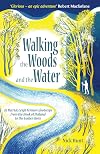
A few years ago, I read the first of Patrick Leigh Fermor's books about his magnificent walk across Europe in 1933 and thoroughly enjoyed it. This was a perfect follow up - a modern homage to PLF's wonderful pilgrimage as Nick Hunt seeks to recreate his historic walk in modern Europe, walking from the Hook of Holland to the Golden Horn in Istanbul.
Whilst the comparisons with PLF's walk were hugely interesting (the huge changes to the landscape often forced him on a different route to PLF's show more original), his own experiences were equally fascinating and a unique travelogue of the differing cultures across the different European countries. The further east he went the more interesting I found it as I haven't been to some of the countries he walked through. Hunt had done his homework, so his observations intelligently couple his experiences with the history and politics of the lands he was walking through.
What makes this a standout travelogue is the uniqueness of his endeavour - to travel across the entirety of Europe mostly by foot makes for an experience few other travellers can write about, and I enjoyed every minute of travelling with him. I would have liked to have understood some of the logistics of his travels a little more, as he tends to brush over the details a nosy Parker such as myself would like to know (he claims he didn't pre-plan his route, so just how much did he use a smartphone to find his way, for instance), but it probably would have taken some of the romance out of reading about his adventure, so I accept the omission of some of the practicalities I wondered about.
4 stars - a much recommended travelogue to many of Europe's hidden corners. show less
Whilst the comparisons with PLF's walk were hugely interesting (the huge changes to the landscape often forced him on a different route to PLF's show more original), his own experiences were equally fascinating and a unique travelogue of the differing cultures across the different European countries. The further east he went the more interesting I found it as I haven't been to some of the countries he walked through. Hunt had done his homework, so his observations intelligently couple his experiences with the history and politics of the lands he was walking through.
What makes this a standout travelogue is the uniqueness of his endeavour - to travel across the entirety of Europe mostly by foot makes for an experience few other travellers can write about, and I enjoyed every minute of travelling with him. I would have liked to have understood some of the logistics of his travels a little more, as he tends to brush over the details a nosy Parker such as myself would like to know (he claims he didn't pre-plan his route, so just how much did he use a smartphone to find his way, for instance), but it probably would have taken some of the romance out of reading about his adventure, so I accept the omission of some of the practicalities I wondered about.
4 stars - a much recommended travelogue to many of Europe's hidden corners. show less

I was hoping to read this after having taken several walks in the Welsh mountains. Unfortunately, I'd tweaked my back and that wasn't a sensible option, but the reading was. The surmise is that the author sets out to walk in 4 European landscapes that are the only ones of their geographic categorisation in the continent. They are exceptional and sit as outcrops of land. These include tundra, steppe, desert and temperate jungle. In each he walks through the landscape and explores not just the show more place but the culture and origins of the place. He explores the area, the impact of people and climate change on the area and tries to take lessons and comparisons between them. It was interesting to read, even if I have no desire to be lost in either a snowstorm or a desert. It was, from his reports, getting harder to find the outlands, as he describes them, as human activity is encroaching ever more. At times I thought him a little foolhardy, but he survives to write this book and make some interesting and though provoking observations along the way. show less
Walking the Woods and the Water: In Patrick Leigh Fermor's footsteps from the Hook of Holland to the Golden Horn by Nick Hunt
https://nwhyte.livejournal.com/2844587.html
If a thing is worth doing, it's probably worth doing again, and Nick Hunt replicated Patrick Leigh Fermor's 1933-34 walk, as far as possible, in 2011. The world has changed, and the Netherlands, Germany, Austria, Hungary, Bulgaria, Romania and Turkey have all changed too since 1934. The journey changes the writer as well; the pace of walking is of course far different to the more usual speed of travel today, and enables him to engage with the locals show more in a way that we casual tourists who drop in and out of hotels, pubs and restaurants will never get. Some of it is depressing - the relationship between Hungarians and Romanians is never going to be smooth; war, Communism, industrialisation and ethnic homogenisations have reshaped and destroyed large parts of the landscape that Leigh Fermor knew, particularly the homes of the Hungarian nobles who he visited and made love to. At the same time, crucially, Hunt is travelling across a continent at peace, and unlikely to return to war; where Leigh Fermor caught a moment in time as the old order entered its terminal disintegration, Hunt captures societies picking themselves up - some more slowly than others - after the disasters of the twentieth century. It is a rather hopeful account. show less
If a thing is worth doing, it's probably worth doing again, and Nick Hunt replicated Patrick Leigh Fermor's 1933-34 walk, as far as possible, in 2011. The world has changed, and the Netherlands, Germany, Austria, Hungary, Bulgaria, Romania and Turkey have all changed too since 1934. The journey changes the writer as well; the pace of walking is of course far different to the more usual speed of travel today, and enables him to engage with the locals show more in a way that we casual tourists who drop in and out of hotels, pubs and restaurants will never get. Some of it is depressing - the relationship between Hungarians and Romanians is never going to be smooth; war, Communism, industrialisation and ethnic homogenisations have reshaped and destroyed large parts of the landscape that Leigh Fermor knew, particularly the homes of the Hungarian nobles who he visited and made love to. At the same time, crucially, Hunt is travelling across a continent at peace, and unlikely to return to war; where Leigh Fermor caught a moment in time as the old order entered its terminal disintegration, Hunt captures societies picking themselves up - some more slowly than others - after the disasters of the twentieth century. It is a rather hopeful account. show less
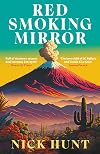
It is 1521 by the Frankish year, and Eli ben Abram is unsettled. His world is much like ours, with the key difference being that the Reconquista of Spain never happened, and the discovery of the New World was made by merchants working for the Caliphate of Cordoba, here to trade rather than conquer.
In Tenochtitlan, Eli is an outsider twice over: a Moor among the Mexica, a Jew among the Moors. He is married to the Nahua translator Malinala (an alternative version of Cortez' translator La show more Malinche). Amidst the bustling trade and human sacrifices of the city, Eli has carved out a little slice of peace, and a world where his boundaries are much wider than they are under the Caliph's Laws--boundaries so wide he can almost forget them.
Yet, rumors are unsettled. The Moorish fanatic Benmassoud is reported to have arrived on the coast with an army to end the trade in sinful goods like tobacco and chocolate. Plague is spreading through Tenochtitlan. Popocatépetl is erupting. The other merchants have requested that Eli gain an audience with the Emperor Moctezuma. And worst of all, Malinala is evasive, often absent on business she will not explain, and Eli will not ask.
Red Smoking Mirror is a fantastic piece of mood and setting, a mediation on exile and the ties that bind very different people. Yet it is also not really a novel, Eli is a great observer, but a shockingly passive protagonist. This is a really good book, but it's missing some element that would make it great. show less
In Tenochtitlan, Eli is an outsider twice over: a Moor among the Mexica, a Jew among the Moors. He is married to the Nahua translator Malinala (an alternative version of Cortez' translator La show more Malinche). Amidst the bustling trade and human sacrifices of the city, Eli has carved out a little slice of peace, and a world where his boundaries are much wider than they are under the Caliph's Laws--boundaries so wide he can almost forget them.
Yet, rumors are unsettled. The Moorish fanatic Benmassoud is reported to have arrived on the coast with an army to end the trade in sinful goods like tobacco and chocolate. Plague is spreading through Tenochtitlan. Popocatépetl is erupting. The other merchants have requested that Eli gain an audience with the Emperor Moctezuma. And worst of all, Malinala is evasive, often absent on business she will not explain, and Eli will not ask.
Red Smoking Mirror is a fantastic piece of mood and setting, a mediation on exile and the ties that bind very different people. Yet it is also not really a novel, Eli is a great observer, but a shockingly passive protagonist. This is a really good book, but it's missing some element that would make it great. show less
Lists
Non-fiction (1)
Awards

You May Also Like


Statistics
- Works
- 10
- Also by
- 1
- Members
- 439
- Popularity
- #55,771
- Rating
- 3.8
- Reviews
- 13
- ISBNs
- 26
- Languages
- 3