
Suzanne Weyn
Author of The Bar Code Tattoo
About the Author
Series
Works by Suzanne Weyn
Indiana Jones Collector's Edition: Raiders of the Lost Ark / Temple of Doom / Last Crusade (2008) 67 copies
The imaginative mathematician: Albert Einstein (McGraw-Hill reading : leveled Books) (2001) 47 copies
The case of the missing math teacher (McGraw-Hill reading :Leveled books) (2001) 29 copies, 1 review
Magpie's Mystery 16 copies
Space Buzz 4 copies
Forever Angels-4 Volume Boxed Set: Katie's Angel, Ashley's Lost Angel, Christina's Dancing Angel, and the Baby Angel (1996) 2 copies
The Trickster Rabbit 2 copies
Waiting to Catch Fire 2 copies
The Monster's Riddle 2 copies
Un accidente aforunado 2 copies
Ben and Bell 1 copy
California Artist at Work 1 copy
The Littles Sticker Book 1 copy
La tierra de la abundancia 1 copy
¡que siga la funcion! 1 copy
The Bar Code Omnibus: The Bar Code Tattoo, The Bar Code Prophecy, The Bar Code Rebellion (1972) 1 copy
Looney Tunes: A Bumpy Ride 1 copy
Disney's the Little Mermaid: Four Novels : Green-Eyed Pearl/Nefazia Visits the Palace/Reflections of Arsulu/the Same Old Song (1993) 1 copy
A Ilha das Sereias 1 copy
Associated Works
Tagged
Common Knowledge
- Birthdate
- 1955-07-06
- Gender
- female
- Education
- Nassau Community College
Binghamton University, New York, USA
Pace University - Occupations
- author
editor
writing teacher - Nationality
- USA
- Birthplace
- Flushing, New York, USA
- Places of residence
- New York, USA
- Associated Place (for map)
- New York, USA
Members
Reviews

Familiar story, but executed with skillBy Suzanne Weyn, a well-known Young Adult author, Reincarnation follows a pair of soul mates from the stone age to modern times. Weyn does a very good job of developing the complexities of reincarnation as the book progresses so that with each chapter, the reader gains more insight into the wheel of rebirth, as she terms it. One of the book's more intriguing insights is a brief glimpse into the life of the soul between show more incarnations.Spiritual/metaphysical content: Very high. The book walks through the multiple phases of reincarnation as it follows a boy and a girl who first meet in prehistoric times. It draws consistent themes throughout the various lives, including demonstrating how not only soul mates tend to incarnate together but also family and friends who help them learn and grow over time. The plot employs enough variety to make the reincarnation theme plausible, such as shifting genders and occasionally misaligning time frames. In addition, the story demonstrates how certain weaknesses and talents also carry across multiple lifetimes. As the pair experience more lifetimes and become more spiritually and socially sophisticated, the book introduces more metaphysical themes. As each incarnation progresses, the couple learn to conquer their fears and recognize their love more readily. The reader gradually gleans more information about life between lives as well.My take: I liked this book very much. Weyn does an excellent job of developing the complexities of reincarnation as the book progresses so that with each chapter, the reader gains more insight into the wheel of rebirth, as she terms it. Of course, it's difficult for the story to be other than predictable, but Weyn is able to capture the lovers’ emotions across time so that the reader is drawn into the story. Her insight into various time periods, from Greek civilization to the Salem witch trials, also gives the book variety and spice. Several of the twentieth-century stories seemed particularly vibrant, including the tale of a young singer in Paris that echoes the Josephine Baker story and the challenges of racial integration in the mid-1960s. As new age fiction, this is one of the better contemporary novels I have come across, with a compelling story line and a strong grounding in metaphysics.For more reviews of new age novels, see Fiction For A New Age. show less

Budding journalist Jane Taylor grew up in an unconventional household. Her mother is a prominent medium in Spirit Vale, a town dedicated to communing with the dead. Jane herself is agnostic on the question - while she's definitely seen instances of her mother's trickery, she also has seen moments that she's not sure how else to explain.
Since a terrifying encounter during an earthquake when she was young, Jane has been fascinated with the life and inventions of Nikola Tesla. It's only show more natural, then, that when she has a chance to enter a journalism competition, she travels to New York to ask him for an interview. And this is the very trip that sets things in motion - Jane encounters Nikola's handsome assistant, Thad, and her sister Mimi meets Benjamin Guggenheim's mistress Ninette who invites Mimi to travel with them, and who is eventually responsible (at least in part) for the family's trip on the ill-fated Titanic. Because, of course, we have to end up on the Titanic - it's in the subtitle, it's on the cover, and it's foretold!
For a novel billed as being about the Titanic (including several references and foreboding prophecies), we barely spend time aboard, and we spend even less time with the sinking due to a bit of a weird plot twist that didn't seem to fit with the rest of the story for me. This was most disappointing because I was interested in several of the themes of the novel (classism which cuts both ways, race, science vs. spiritualism) - some of which I found new and unusual based on my reading about the disaster thus far (though I grew weary of Gilded Age Celebrity Name-dropping - the Astors, the Guggenheims, Sir Arthur Conan Doyle, Harry Houdini, not to mention Tesla), and which I would have enjoyed seeing play out during the course of the disaster.
Given that Thad is pretty convinced that anyone who has money can only be a selfish jerk (Thad, you are NOT a bad person if you would like to have a lobster dinner, drink champagne and sleep in an incredibly fancy hotel room for once and BOOK it would have been nice to challenge him on this), I would have thought that the sinking of the Titanic, with the steerage passengers kept locked below while the ship filled with water and half-empty lifeboats being sent off so there was no class-mixing, would have been a great way to drive this point home - but class differentiation is only lightly touched upon and we spend next to no time dealing with the consequences of the iceberg due to the aforementioned odd plot twist.
Another theme that is raised, but promptly relegated to the background, is the issue of race, especially in Gilded Age America. A significant character turns out to be of Haitian descent - though the character's light skin allows this heritage to remain hidden unless revealed. The character struggles with a sense of identity and whether there is a need for deception in some scenes, but for all this spends most of the book passing as Caucasian and therefore avoiding any problems which made me wonder that the author included this plot thread (which I would have liked to see explored in more depth)at all.
Ultimately, though, I was most disappointed by the cop-out (in this reader's opinion) of not actually having anyone experience the horrors of the shipwreck. There is barely a mention of all those trapped in steerage. And there is little discussion of the bodies in the water, the ridiculously empty lifeboats or the trauma of survivors' guilt. I know that some may consider these aspects "done to death", but it seems to me a novel billed as about the Titanic that simply glosses over all of these points is doing the inherent drama of the setting a disservice.
More at A Hoyden's Look at Literature. show less
Since a terrifying encounter during an earthquake when she was young, Jane has been fascinated with the life and inventions of Nikola Tesla. It's only show more natural, then, that when she has a chance to enter a journalism competition, she travels to New York to ask him for an interview. And this is the very trip that sets things in motion - Jane encounters Nikola's handsome assistant, Thad, and her sister Mimi meets Benjamin Guggenheim's mistress Ninette who invites Mimi to travel with them, and who is eventually responsible (at least in part) for the family's trip on the ill-fated Titanic. Because, of course, we have to end up on the Titanic - it's in the subtitle, it's on the cover, and it's foretold!
For a novel billed as being about the Titanic (including several references and foreboding prophecies), we barely spend time aboard, and we spend even less time with the sinking due to a bit of a weird plot twist that didn't seem to fit with the rest of the story for me. This was most disappointing because I was interested in several of the themes of the novel (classism which cuts both ways, race, science vs. spiritualism) - some of which I found new and unusual based on my reading about the disaster thus far (though I grew weary of Gilded Age Celebrity Name-dropping - the Astors, the Guggenheims, Sir Arthur Conan Doyle, Harry Houdini, not to mention Tesla), and which I would have enjoyed seeing play out during the course of the disaster.
Given that Thad is pretty convinced that anyone who has money can only be a selfish jerk (Thad, you are NOT a bad person if you would like to have a lobster dinner, drink champagne and sleep in an incredibly fancy hotel room for once and BOOK it would have been nice to challenge him on this), I would have thought that the sinking of the Titanic, with the steerage passengers kept locked below while the ship filled with water and half-empty lifeboats being sent off so there was no class-mixing, would have been a great way to drive this point home - but class differentiation is only lightly touched upon and we spend next to no time dealing with the consequences of the iceberg due to the aforementioned odd plot twist.
Another theme that is raised, but promptly relegated to the background, is the issue of race, especially in Gilded Age America. A significant character turns out to be of Haitian descent - though the character's light skin allows this heritage to remain hidden unless revealed. The character struggles with a sense of identity and whether there is a need for deception in some scenes, but for all this spends most of the book passing as Caucasian and therefore avoiding any problems which made me wonder that the author included this plot thread (which I would have liked to see explored in more depth)at all.
Ultimately, though, I was most disappointed by the cop-out (in this reader's opinion) of not actually having anyone experience the horrors of the shipwreck. There is barely a mention of all those trapped in steerage. And there is little discussion of the bodies in the water, the ridiculously empty lifeboats or the trauma of survivors' guilt. I know that some may consider these aspects "done to death", but it seems to me a novel billed as about the Titanic that simply glosses over all of these points is doing the inherent drama of the setting a disservice.
More at A Hoyden's Look at Literature. show less
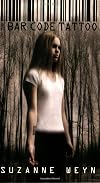
The BarCode Tattoo. Everybody is getting it. The new ID for everyone over the age of 17. They say it will make your life easier, and soon you won't be able to do anything or go anywhere without one - especially when the Government starts to criminalize those who've refused to get one.
Kayla knows something isn't right with the BarCode, since her father killed himself because of it. After her mother set fire to their home in an attempt to burn off her own, Kayla must flee for her life as she show more is now being accused of horrible crimes that stem from her being untattooed, which in itself is now a criminal offense. On the run, she meets up with a group of resistors called “Decode” and hides out in the Adirondack Mountains with them while preparing for a revolution and discovering the sinister truth about what's REALLY in the BarCode tattoos.
In this futuristic dystopian novel there are no more American Presidents - just Corporate Dictators, Fascist Regimes, Border Walls, Billionaires running the United States Government into the ground, Human and Civil rights being stripped from the population daily, and a growing resistance movement. This book was written in 2004 but takes place in 2025. The last time I read this book was in 2021, and it was crazy the amount of parallels I was seeing to the American political climate back then. Now it is just plain SCARY how alike the real world has become to the dystopian world of the novel.
While the pace of the book switched from being fast and action packed to slow and repetitive, the overall plot line worked nicely, and gives you all the background information for the next book (Which is where all the good action is in terms of moving the plot along). show less
Kayla knows something isn't right with the BarCode, since her father killed himself because of it. After her mother set fire to their home in an attempt to burn off her own, Kayla must flee for her life as she show more is now being accused of horrible crimes that stem from her being untattooed, which in itself is now a criminal offense. On the run, she meets up with a group of resistors called “Decode” and hides out in the Adirondack Mountains with them while preparing for a revolution and discovering the sinister truth about what's REALLY in the BarCode tattoos.
In this futuristic dystopian novel there are no more American Presidents - just Corporate Dictators, Fascist Regimes, Border Walls, Billionaires running the United States Government into the ground, Human and Civil rights being stripped from the population daily, and a growing resistance movement. This book was written in 2004 but takes place in 2025. The last time I read this book was in 2021, and it was crazy the amount of parallels I was seeing to the American political climate back then. Now it is just plain SCARY how alike the real world has become to the dystopian world of the novel.
While the pace of the book switched from being fast and action packed to slow and repetitive, the overall plot line worked nicely, and gives you all the background information for the next book (Which is where all the good action is in terms of moving the plot along). show less
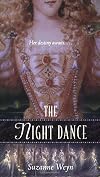
This was an interesting retelling of the Grimm Brothers' The Twelve Dancing Princesses, which took the original fairy tale and combined it with Arthurian legend, making the boy who figures out the mystery behind the girls' worn out shoes one of Arthur's Knights of the Round Table. In this story, the girls are the daughter of a self-made Count, who met their mother near a lake in the forest. The woman turns out to be Vivienne, the Lady of the Lake, and Arthur's aunt. She's trapped in the lake show more by Morgan Le Fay, causing Ethan, the husband, to think she left him. This makes him extremely overprotective of his daughters, whom he raises in a walled-in manor house.
I liked how the author switched the viewpoint of the narrator throughout, although it did get kind of clunky in some spots. Rowena (the youngest daughter) and Bevidere (the Knight) were my favorites, though. I've always had a problem with the lack of feeling that the sisters have for the men they end up tricking, causing them to lose their lives, and was glad that Weyn only had two men attempt it (view spoiler). I'm actually using this fairy tale as one of the stories I'm going to tell for my Storytelling class in Grad school, and have read many MANY versions of this story in preparation. This was definitely one of the more interesting ones. show less
I liked how the author switched the viewpoint of the narrator throughout, although it did get kind of clunky in some spots. Rowena (the youngest daughter) and Bevidere (the Knight) were my favorites, though. I've always had a problem with the lack of feeling that the sisters have for the men they end up tricking, causing them to lose their lives, and was glad that Weyn only had two men attempt it (view spoiler). I'm actually using this fairy tale as one of the stories I'm going to tell for my Storytelling class in Grad school, and have read many MANY versions of this story in preparation. This was definitely one of the more interesting ones. show less
Lists
Awards


You May Also Like


Associated Authors
Statistics
- Works
- 205
- Also by
- 1
- Members
- 13,699
- Popularity
- #1,693
- Rating
- 3.5
- Reviews
- 263
- ISBNs
- 443
- Languages
- 6
- Favorited
- 4
