
Sok-Yong Hwang
Author of At Dusk
About the Author
Image credit: 황석영
Works by Sok-Yong Hwang
bianca come la luna 1 copy
바리데기 1 copy
Tagged
Common Knowledge
- Legal name
- 황석영
- Other names
- Hwang Seok-yeong
Hwang Sŏgyŏng - Birthdate
- 1943-01-04
- Gender
- male
- Occupations
- Ecrivain
- Nationality
- South Korea
- Birthplace
- Xinjing, Mandshukuo, China
- Places of residence
- Seoul, South Korea
- Associated Place (for map)
- South Korea
Members
Reviews
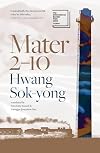
Well…wouldn’t you know it. The little I knew about the Korean war from my U.S. education was shamefully wrong. No wonder governments and the people who shill for them are afraid of writers.
In her piece for The Nation marking the 70th anniversary of the Armistice between the bifurcated Koreas, Grace M. Cho states that “writers such as Hyun Ki-Young and Hwang Sok-Yong, who shed light on civilian massacres through their fictional works, faced imprisonment, torture, and exile. To be a show more south Korean citizen who did not actively disavow communism or who was related to a suspected communist was to risk a terrible fate at the hands of the state.”
Hwang Sok-yong faced some or all of that for his works. The brilliant Mater 2-10 is my first encounter with his writing.
Mater 2-10 is a multi-generational novel that highlights the struggles of the Korean people and workers for independence from Imperial powers and against the oppression of elite capitalism and the state mechanisms that support it. The clever narrative mechanism to relate the story is a striking worker staging a sit-in atop a factory chimney and his conversations with the ghosts of his ancestors and other family acquaintances who take him back generations to tell the story of his family and nation(s). I had no real idea of how the Koreans were used and suffered from the imperial Japanese and U.S. occupations. I highly recommend this book to anyone trying to fill in the huge holes in how most of us understand this history.
I’ll be on the lookout for other books of his, especially the one about his reluctant service in the Republic of Korea Marine Corps supporting the U.S. show less
In her piece for The Nation marking the 70th anniversary of the Armistice between the bifurcated Koreas, Grace M. Cho states that “writers such as Hyun Ki-Young and Hwang Sok-Yong, who shed light on civilian massacres through their fictional works, faced imprisonment, torture, and exile. To be a show more south Korean citizen who did not actively disavow communism or who was related to a suspected communist was to risk a terrible fate at the hands of the state.”
Hwang Sok-yong faced some or all of that for his works. The brilliant Mater 2-10 is my first encounter with his writing.
Mater 2-10 is a multi-generational novel that highlights the struggles of the Korean people and workers for independence from Imperial powers and against the oppression of elite capitalism and the state mechanisms that support it. The clever narrative mechanism to relate the story is a striking worker staging a sit-in atop a factory chimney and his conversations with the ghosts of his ancestors and other family acquaintances who take him back generations to tell the story of his family and nation(s). I had no real idea of how the Koreans were used and suffered from the imperial Japanese and U.S. occupations. I highly recommend this book to anyone trying to fill in the huge holes in how most of us understand this history.
I’ll be on the lookout for other books of his, especially the one about his reluctant service in the Republic of Korea Marine Corps supporting the U.S. show less
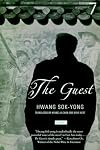
This book is the kind of book I think of as a disruptor. The kind of book that intrudes on life and the reading of other books with a force that can’t be ignored. It tells of a morbid tale, and one that’s too ancient and has repeated itself with such maddening ubiquity. That of humans, who for their varying beliefs, ideologies, wants, selfishness, sense of righteousness, the reasons and justifications never ending, take it upon themselves to kill others. It is a story that one hears show more quite a few times growing up, if one happens to have been a refugee who could have suffered the same fate of suffering and death that so many have suffered for millennia. It’s an exhaustingly painful and familiar story.
Ryu Yosop immigrated to the United States of America from Korea. For decades he has lived without returning to his homeland, made a life for himself in Brooklyn, New York, and is a pastor of a church. His brother, Yohan, lives in New Jersey, and both are Christians, and both suppress memories of a war they witnessed and partook in in different ways. Yosop finally decides to return to Korea and contend with the past. This is a bold and courageous book that seeks to understand those who suffer heinous acts of war, and those who commit them.
After the end of Japanese imperialism with the end of the second world war, Korea, which suffered its share of tragedies in this period, finds itself yet again in the face of tragedy. Communism has taken root in the country. The landed, mostly Christian, who now have to acquiesce parts of land and contend with new rules and laws either move South or begrudgingly continue living tense lives. When the various Christian youth groups sense the possibility of taking back power, with the support of the American army, begin killing and butchering. It’s a stark story that’s difficult to summarize, yet Sok-Yong tells it with such simplicity and seamlessness.
Among the similar features of the familiar stories I grew up with of war and the ones in this tale is what’s termed as intimate killing. When those who grew up together, and know each other intimately, decide to take up arms and kill those who they know. It is a more sinister affair than that of strangers killing another, even if the means and ends are the same.
“The place was full of familiar faces, especially for those of us from the same villages. We knew all about each other's family situations, everything down to the littlest details, like who'd been beaten up by whom and who teased whom when we were kids.”
This book particularly reminded me of my grandmother. She lost those close to her in various ways that war kills: her husband, whom she’d been separated from when they fled to different parts of the country, died when the medicine used to treat his chronic ailments was no longer available to him; her daughter, who was killed by soldiers at the very end of the war, which must have been a different kind of pain, to be so close to the end and to lose a loved one; her son who had been killed by the men he lived and grew up with on the same street, those he had played with as a child and known, and how they had returned to the same street and lived there, life continuing, I presume, as it usually does even after tragedy.
I tried understanding such grief and pain and loss and tragedy, and I can never quite wrap my head around it, even now that I’m no longer a child, and the stories have worn out in parts with time. Hwang Sok-Yong, however, plunges right into the grime, the pain, the despair, the horrors. Not with the aim of sensationalizing, as I’ve had problems with books that tell of horrors sometimes do, but with a great effort of understanding. show less
Ryu Yosop immigrated to the United States of America from Korea. For decades he has lived without returning to his homeland, made a life for himself in Brooklyn, New York, and is a pastor of a church. His brother, Yohan, lives in New Jersey, and both are Christians, and both suppress memories of a war they witnessed and partook in in different ways. Yosop finally decides to return to Korea and contend with the past. This is a bold and courageous book that seeks to understand those who suffer heinous acts of war, and those who commit them.
After the end of Japanese imperialism with the end of the second world war, Korea, which suffered its share of tragedies in this period, finds itself yet again in the face of tragedy. Communism has taken root in the country. The landed, mostly Christian, who now have to acquiesce parts of land and contend with new rules and laws either move South or begrudgingly continue living tense lives. When the various Christian youth groups sense the possibility of taking back power, with the support of the American army, begin killing and butchering. It’s a stark story that’s difficult to summarize, yet Sok-Yong tells it with such simplicity and seamlessness.
Among the similar features of the familiar stories I grew up with of war and the ones in this tale is what’s termed as intimate killing. When those who grew up together, and know each other intimately, decide to take up arms and kill those who they know. It is a more sinister affair than that of strangers killing another, even if the means and ends are the same.
“The place was full of familiar faces, especially for those of us from the same villages. We knew all about each other's family situations, everything down to the littlest details, like who'd been beaten up by whom and who teased whom when we were kids.”
This book particularly reminded me of my grandmother. She lost those close to her in various ways that war kills: her husband, whom she’d been separated from when they fled to different parts of the country, died when the medicine used to treat his chronic ailments was no longer available to him; her daughter, who was killed by soldiers at the very end of the war, which must have been a different kind of pain, to be so close to the end and to lose a loved one; her son who had been killed by the men he lived and grew up with on the same street, those he had played with as a child and known, and how they had returned to the same street and lived there, life continuing, I presume, as it usually does even after tragedy.
I tried understanding such grief and pain and loss and tragedy, and I can never quite wrap my head around it, even now that I’m no longer a child, and the stories have worn out in parts with time. Hwang Sok-Yong, however, plunges right into the grime, the pain, the despair, the horrors. Not with the aim of sensationalizing, as I’ve had problems with books that tell of horrors sometimes do, but with a great effort of understanding. show less
Princess Bari is a fast paced, melancholy meditation on suffering and human cruelty, adversity and forgiveness, and shared humanity across different experiences and cultures. The story is told from the point of view of Bari, a girl who escapes from North Korea and survives increasingly bleak circumstances that don't let up through the entire novel. The main narrative is interspersed with scenes focused on Bari's gift, a sort of psychic ability that becomes a dissociative coping mechanism at show more times and a way to maintain a connection to lost loved ones who help guide her through her challenging reality. Bari herself is a fairly stoic and matter-of-fact narrator, and the action of the plot was rapid, which helped keep my focus on Bari and her humanity rather than simply her experiences as a victim or refugee--it underlined her desires and agency in a very relatable way. show less
 This review was written for LibraryThing Early Reviewers.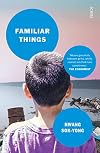
[b:Familiar Things|33148672|Familiar Things|Hwang Sok-yong|https://i.gr-assets.com/images/S/compressed.photo.goodreads.com/books/1493332395l/33148672._SY75_.jpg|53838592] is by the same author as [b:Mater 2-10|61921635|Mater 2-10|Hwang Sok-yong|https://i.gr-assets.com/images/S/compressed.photo.goodreads.com/books/1678280130l/61921635._SY75_.jpg|97614487] and both novels focus on the people left behind by South Korea's economic transformations. The former is shorter, of more limited scope but show more equal perspicacity. It follows a teenage boy as he and his mother move to Flower Island, a huge landfill at the edge of Seoul. They move into a shack and become trash pickers, sorting the capital city's garbage into different types for recycling. It's horrible and often dangerous work, something conveyed with visceral descriptions.
Giving the point of view to a teenager makes for a powerful narrative. Bugeye, as he is nicknamed, explores the limits of the garbage dump and befriends other kids who live there. He also encounters the ghosts of farmers who lived on Flower Island before it was a landfill, in a vividly uncanny scene. Another memorable sequence involves a trip into Seoul that Bugeye takes with his best friend/adopted brother, which highlights the contrast between daily life in the rubbish dump and in the city. I found [b:Familiar Things|33148672|Familiar Things|Hwang Sok-yong|https://i.gr-assets.com/images/S/compressed.photo.goodreads.com/books/1493332395l/33148672._SY75_.jpg|53838592] a powerful and tragic portrait of people trapped in poverty and forgotten by a wealthy society. The writing and translation are observant and moving in their depiction of people aware that they have been thrown away. show less
Giving the point of view to a teenager makes for a powerful narrative. Bugeye, as he is nicknamed, explores the limits of the garbage dump and befriends other kids who live there. He also encounters the ghosts of farmers who lived on Flower Island before it was a landfill, in a vividly uncanny scene. Another memorable sequence involves a trip into Seoul that Bugeye takes with his best friend/adopted brother, which highlights the contrast between daily life in the rubbish dump and in the city. I found [b:Familiar Things|33148672|Familiar Things|Hwang Sok-yong|https://i.gr-assets.com/images/S/compressed.photo.goodreads.com/books/1493332395l/33148672._SY75_.jpg|53838592] a powerful and tragic portrait of people trapped in poverty and forgotten by a wealthy society. The writing and translation are observant and moving in their depiction of people aware that they have been thrown away. show less
Lists
Awards


You May Also Like


Associated Authors
Statistics
- Works
- 26
- Members
- 902
- Popularity
- #28,435
- Rating
- 3.8
- Reviews
- 37
- ISBNs
- 112
- Languages
- 14
