
Jordan D. Paper
Author of The Deities Are Many: A Polytheistic Theology
About the Author
Jordan Paper is Professor Emeritus at York University (Toronto) and a Fellow at the Centre for Studies in Religion and Society at the University of Victoria (BC), Canada.
Works by Jordan D. Paper
Tagged
Common Knowledge
- Birthdate
- 1938-12-03
- Gender
- male
- Education
- University of Wisconsin (Ph.D|1971)
Members
Reviews
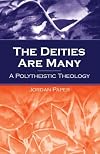
Good especially for presenting Taoism as an indigenous ancestral and polytheistic religion. The author himself became "Taoist" by learning the language, culture ,and marrying into it. As I have attempted to explain to others in the past. Taoism is simply not very accessible to westerners. And reading the Tao Te Ching does not make one a Taoist. That being said I own three translation of the I Ching, the Cleary Translation of the Tao te Ching and other Taoist titles for understanding that show more facet of Chinese culture. show less
The Deities Are Many: A Polytheistic Theology (S U N Y Series in Religious Studies) by Jordan D. Paper
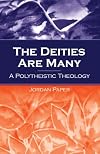
I finished the book just to convince myself that the first impression was correct. It is rather hard to believe that the author comes from religious studies, history of religious ideas or comparative religion background. Perhaps I am wrong, as I have not read professional academic papers by this gentleman, but the book is amateurish at best.
As a polytheist he is confused, although I empathize with him on grounds of my personal convictions. I've read volumes on Chinese religion and in this show more matter I would suggest consulting John Lagerweys and Marc Kalinowskis work. Also -as for pagans, or nobilitas and their theology, or the traditional Graeco-Roman traditions, I'd strongly suggest researching relevant mysteries, academic books and in-depth studies of their pertaining socio-historical minset.
As a heathen, I strongly sympathize with Mr. Jordan D. Paper, as an academically-inclined pagan, I must protest over such mistreatment of the topic, a personal ride sprinkled with fun-facts. The most interesting and valuable parts were the citations at the beginning of each chapter (thanks for the spoiler of Apuleian Metamorphoses, thanks Isis that I have read it beforehand some years ago)
There is no systematic outline of theologies, deologies, doxologies, philosophies and various traditions are brought up in a mixed-up fashion. I believe such a work should and must exist, but it should be a multi-volume work presented up to the standards of TheSCRA (Thesaurus Cultuus et Rituus Antiquorum).
If I'd like to present pagan outlines of my classical beliefs, that would be unwise to present this book to a Christian, a Muslim, a Jew to convince them that I don't believe in a rabble of nonsense. There is no strictness, precision of thought, even for a compact book like this. A promising topic was unfortunately discarded. Personally, I think this book should be avoided if one wishes an outline or an introduction to pagan theologies, I would rather recommend general classical reception books (offered by Brill series, for example) or highly esteemed academic works for each tradition separately. show less
As a polytheist he is confused, although I empathize with him on grounds of my personal convictions. I've read volumes on Chinese religion and in this show more matter I would suggest consulting John Lagerweys and Marc Kalinowskis work. Also -as for pagans, or nobilitas and their theology, or the traditional Graeco-Roman traditions, I'd strongly suggest researching relevant mysteries, academic books and in-depth studies of their pertaining socio-historical minset.
As a heathen, I strongly sympathize with Mr. Jordan D. Paper, as an academically-inclined pagan, I must protest over such mistreatment of the topic, a personal ride sprinkled with fun-facts. The most interesting and valuable parts were the citations at the beginning of each chapter (thanks for the spoiler of Apuleian Metamorphoses, thanks Isis that I have read it beforehand some years ago)
There is no systematic outline of theologies, deologies, doxologies, philosophies and various traditions are brought up in a mixed-up fashion. I believe such a work should and must exist, but it should be a multi-volume work presented up to the standards of TheSCRA (Thesaurus Cultuus et Rituus Antiquorum).
If I'd like to present pagan outlines of my classical beliefs, that would be unwise to present this book to a Christian, a Muslim, a Jew to convince them that I don't believe in a rabble of nonsense. There is no strictness, precision of thought, even for a compact book like this. A promising topic was unfortunately discarded. Personally, I think this book should be avoided if one wishes an outline or an introduction to pagan theologies, I would rather recommend general classical reception books (offered by Brill series, for example) or highly esteemed academic works for each tradition separately. show less
The Spirits Are Drunk: Comparative Approaches to Chinese Religion (SUNY S (SUNY series in Chinese Philosophy and Culture) by Jordan D. Paper
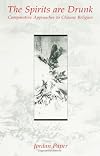
Never realized how much of my concept of Chinese religion was informed by western Christian biases (I mean. I didn't realize to what extent). Was particularly fascinated by the chapter on Christianity interpreted through a Chinese cultural lens.
The Deities Are Many: A Polytheistic Theology (S U N Y Series in Religious Studies) by Jordan D. Paper
how monotheism distorts polytheism and how polytheism actually works, by practicing polytheist who is also a scholar
You May Also Like


Statistics
- Works
- 11
- Members
- 237
- Popularity
- #95,613
- Rating
- 3.8
- Reviews
- 6
- ISBNs
- 27