
Lu Xun (1881–1936)
Author of Selected Stories
About the Author
A writer, essayist, translator, poet, and literary theorist and critic, Lu Hsun was born in the Chekiang Province of an educated family whose fortunes were in decline. He went to Japan to study Western medicine, but he dropped out of Sendai Medical College in 1906 after seeing news slides of show more Japanese soldiers decapitating Chinese in Manchuria. He made a decision to cure the "souls" of his countrymen rather than their bodies and chose literature as his medium. Lu Hsun returned to China in 1909 and watched the progress of the 1911 revolution with dismay. His spirits were raised somewhat in 1917 when the magazine New Youth raised the banner of literary revolution. He joined the ranks of the new writers with his short story "Diary of a Madman." Several more stories soon followed, the most famous of which was "The True Story of Ah Q" in the early 1920's. In 1926, after one of many periodic bouts of depression, Lu Hsun traveled for a while in the south and then settled in Shanghai, where he was greeted as a doyen on the literary scene. However, although many young writers wanted to become his disciples, he had an ambivalent attitude toward them and often became bitter or angry when he disagreed with their theories. The League of Left-Wing Writers was founded in 1930 and promptly took him as their leader. But from the beginning, relations were quite strained, and, by the time he died in 1936, he was completely alienated from these men who would later sing his praises. The extent of Lu Hsun's work and his high standards laid the foundation for modern Chinese literature, and he is still considered to be China's greatest twentieth-century writer in the People's Republic. His stories are satiric, unflinchingly realistic, disturbing, and brilliantly crafted in tone and style. In addition to this rich legacy, he also translated a number of European works of literature and theoretical studies on art and literature into Chinese, and he helped to introduce modern art to China. (Bowker Author Biography) show less
Series
Works by Lu Xun
The Real Story of Ah-Q and Other Tales of China: The Complete Fiction of Lu Xun (2009) 378 copies, 4 reviews
Lu Xun xiao shuo ji ci hui = Lu Xun xiao shuo ji, vocabulary = Selected short stories of Lu Xun (1987) 8 copies
Noveloj de Lusin 8 copies
Chinese century literary classic picture book ( Series 4) (set all five) [paperback](Chinese Edition) (2000) 5 copies
La falsa libertà 5 copies
Chinese modern literature classic picture book (Volume 1): Herbs Garden (Paperback)(Chinese Edition) (2010) 4 copies
Lu Hsun: Writing for the Revolution From Chinese Literature Magazine (Modern China Series, 2) (1976) 4 copies
Tagebuch eines Verrückten: und andere Erzählungen: und andere Erzhlungen (Unionsverlag Taschenbücher) (2020) 3 copies
朝花夕拾 3 copies
Nouvelles choisies 2 copies
Lu Classics Collection (Paperback) 2 copies
Dã Thảo 2 copies
Lu Xün Xiao Shuo Ji Ci Hui: Vocabulary (Selected Short Stories of Lu Xün) (Mandarin_chinese Edition) (1979) 2 copies
Lu Xun Prose Collection ('Lu Xun San Wen Ji', in Traditional Chinese, NOT in English) (1995) 2 copies
In tiefer Nacht geschrieben: Auswahl 2 copies
歷史故事新編 2 copies
Voilà ce que je lui ai fait 2 copies
Selected Stories by Lu Xun (Gems of Chinese Literature) (English and Chinese Edition) (1999) 2 copies
La vie et la mort injustes des femmes: Anthologie (Collection "Mille et une femmes") (French Edition) (1985) 2 copies
Cultura e società in Cina 2 copies
Divórcio 1 copy
Short Stories 1 copy
阿Q正传(五幕剧) 1 copy
鲁迅小说插图集 1 copy
Повести ; Рассказы 1 copy
CIGLIK 1 copy
集外集拾遗 1 copy
集外集拾遗补编 1 copy
汉文学史纲要 1 copy
Berättelser 1 copy
从百草园到三味书屋 1 copy
Vrava (Stories by Lu Xun) 1 copy
Dialettica della famiglia. Genesi, struttura e dinamica di un'istituzione repressiva (1974) — Contributor — 1 copy, 1 review
魯迅精品集 4: 朝花夕拾 1 copy
魯迅小說選 1 copy
吶喊 1 copy
唐宋傳奇記 1 copy
阿Q正传一零八图 1 copy
鲁迅经典-朝花夕拾 野草 1 copy
唐宋傳奇集 1 copy
鲁迅-呐喊·彷徨 1 copy
魯迅詩箋選集 1 copy
阿Q正傳 1 copy
Medicine 1 copy
Chinese Literature 1 copy
The true story of Ah Q 1 copy
Stories and Sketches 1 copy
伤逝 1 copy
The Power of Weakness (LING) 1 copy
Do Amar Kahaniyan 1 copy
鲁迅选集, 第二版, Lǔxùn zuòpǐn xuǎn 1 copy
鲁迅选集, 第三版, Lǔxùn zuòpǐn xuǎn 1 copy
鲁迅选集, 第四版, Lǔxùn zuòpǐn xuǎn 1 copy
Lu Xun's legacy : printmaking in modern China : an exhibition of prints from the collection of The Muban Educational Trust (2020) 1 copy
Een kleine gebeurtenis 1 copy
“Upstairs in a Wineshop” 1 copy
鲁迅选集, 第一版, Lǔxùn zuòpǐn xuǎn 1 copy
La falsa libertà 1 copy
Oeuvres choisies Volume I 1 copy
Oeuvres choisies, Volume II 1 copy
يوميات مجنون 1 copy
Oeuvres choisies, Volume III 1 copy
Oeuvres choisies, Volume IV 1 copy
Silent China 1 copy
6 volumes of Lu Xun 1 copy
Selected Works 1 copy
Poemas 1 copy
Storm in a Teacup, by Lu Xun: Bilingual Edition, English and Chinese 风波 (Lu Xun 鲁迅 Bilingual Study Series Book 6) 1 copy, 1 review
Tomorrow, by Lu Xun: Bilingual Edition, English and Chinese 明天 (Lu Xun 鲁迅 Bilingual Study Series Book 4) 1 copy, 1 review
A Happy Family, by Lu Xun: Bilingual Edition, English and Chinese 幸福的家庭 (Lu Xun 鲁迅 Bilingual Study Series Book 12) 1 copy, 1 review
Village Opera, by Lu Xun: Bilingual Edition, English and Chinese 社戏 (Lu Xun 鲁迅 Bilingual Study Series Book 9) 1 copy, 1 review
Truyện ngắn Lỗ Tấn 1 copy
New Year Sacrifice, by Lu Xun: Bilingual Edition, English and Chinese 祝福 (Lu Xun 鲁迅 Bilingual Study Series Book 10) 1 copy, 1 review
Professor Kao 1 copy
Benediction 1 copy
Elektitaj noveloj 1 copy
TREGIME 1 copy
Benopeta Ofero 1 copy
La véridique histoire d'Ah Q / édition bilingue: Chinois-français, pinyin & notes (French Edition) (2015) 1 copy
Lu Xun: Selected Works 1 copy
Is-Sejha 1 copy
Pagal Ki Diary 1 copy
Lu Xun classcis collection Call to arms Dawn Blossoms Plucked at Dusk (Chinese Edition) (2010) 1 copy
Haykırış 1 copy
XX a. rytų proza 1 copy
Lu Shun - 2 1 copy
Associated Works
The Story and Its Writer: An Introduction to Short Fiction (1976) — Contributor — 1,214 copies, 3 reviews
World Poetry: An Anthology of Verse from Antiquity to Our Time (1998) — Contributor — 499 copies, 2 reviews
Oogst Der Tijden. keur uit de werken van schrijvers en dichters aller volken en eeuwen (1940) — Contributor — 12 copies
Tagged
Common Knowledge
- Canonical name
- Lu Xun
- Legal name
- 周树人
- Other names
- Sin, Lou
Lu Hsun
Zhou Zhangshou
Zhou Yucai
Shùrén - Birthdate
- 1881-09-25
- Date of death
- 1936-10-19
- Gender
- male
- Education
- Jiangnan Naval Academy (1889 | 1890)
Jiangnan Military Academy (School of Mines and Railways)
Kobun Gakuin
Tohoku University (MD | 1904 | 1906 | dropped out) - Occupations
- teacher (Hangzhou High School)
teacher (Shaoxing No. 1 High School)
assistant secretary (1926 | Ministry of Education in Nanjing)
lecturer (Peking University)
lecturer (Beijing Normal University)
writer (show all 12)
poet
lecturer (1926 | Xiamen University)
lecturer (1926 | Zhongshan University)
editor (New Youth magazine)
editor (Sprouts magazine)
translator (Dead Souls) - Organizations
- Chinese League of Left-Wing Writers (co-founder)
- Awards and honors
- Asteroid Namesake (233547 2007 JR27)
Lu Xun Literary Prize - Relationships
- Zhou Zuoren (brother)
- Nationality
- China
- Birthplace
- Shaoxing, China
- Places of residence
- Shaoxing, Zhejiang, China (1881)
Sendai, Miyagi, Japan (1904)
Tokyo, Japan (1906)
Hangzhou, Zhejiang, China
Beijing, China
Xiamen, Fujian (show all 8)
Guangzhou, Guangdong, China
Shanghai, China (1927) - Place of death
- Shanghai, China
- Burial location
- Lu Xun Park, Shanghai, China
- Associated Place (for map)
- China
Members
Reviews
The Real Story of Ah-Q and Other Tales of China: The Complete Fiction of Lu Xun (Penguin Classics) by Lu Xun
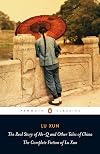
Even strongly ideological authors know that in order to reach a popular audience, their political ideas have to be layered underneath palatable narratives and relatable characters. Great writers like Steinbeck or Zola did this well; the mark of hacks like Ayn Rand is their inability to let their messages flow smoothly from the story and to say what they mean without shouting at the reader. Lu Xun set himself a real challenge with his work here - short stories can be an even more difficult show more medium than novels to make political points, just because each story has to spend proportionately more time on character development and so forth. Not that it's impossible - Varlam Shalamov's short stories in Kolyma Tales are in a way far more effective at conveying the grim brutality of the gulag system than Solzhenitsyn's more famous works precisely because Shalamov's points seem to emerge from the stories far more organically - but often the author has to hope that it's the subtle shared connections between stories that make the difference rather than any single moment within an individual story, the overall themes emerging in the manner of the rhythm of the clacking wheels of a train on a long journey.
Lu's efforts succeed here in exactly that way, the cumulative effects growing stronger with each story. He wrote these stories in the 1910s and 20s as China was taking some halfhearted steps to awaken itself from its centuries-long torpor, and lurking in the background of just about every one of them are some consistent themes: the gargantuan ineptitude of government bureaucracy, the humiliating obsequiousness of the powerless towards the powerful, the pathetic poverty of village life, the absurdities of slavish devotion to Confucianism, the suffocating incuriosity of the Chinese people, and the necessity of radical changes at all levels of society if China were to ever start addressing them. I always respect authors who are willing to make bold criticisms of their own societies, because nothing is artistically easier or more temptingly lucrative than to simply give people what's familiar and flattering to their own prejudices. But these short stories, which are often very funny in their amused chronicling of universal human foibles, are incredibly uncomplimentary to basically every aspect of what at the time was a catatonic and stagnant culture, and Lu deserves real credit for his Nikolai Gogol-esque portraits that are instantly relatable even as they depict people at their worst and least likable.
The Penguin Classics edition I have groups three different short story collections together: Outcry, Hesitation, and Old Stories Retold, with the title story halfway through the first collection. Each tale has innumerable tiny details that make them feel much larger than their actual half-dozen-ish pages, odd names like "Seven-Pounds" and loving descriptions of dirt and filth giving the impression that the reader is peering in at a succession of tiny fishbowls, the characters stuck swimming in tiny circles like firmly oppressed goldfish. Sometimes the townsfolk suffer crushing tragedies, sometimes minor misfortunes; Lu always finds a way to keep focus on the "idiocy of rural life", and yet he never puts any polemics or multi-page rants on the page, merely gentle irony at how funny all this senselessness is.
Ah-Q's story itself is one of the best examples. Its eponymous hero is an Ignatius P. Reilly-type loser who suffers endless humiliations yet always finds "moral victories" at the end of each one. He does menial odd jobs throughout town, always messing things up while thinking himself far above whatever he's doing, leaping from blunder to blunder and desperately searching for people even weaker than he is to bully so he can feel better about himself, until he has a final encounter with the authorities that he can't cringe his way out of. Apparently Marxists had a complicated relationship with the part where Ah-Q decides to be a revolutionary but then sleeps through his chance to join them; I personally thought that his poor luck there was a perfect complement to his general cowardice. "Village Opera" is another one of my favorites from the first collection for the way it folds a funny criticism of Chinese opera into an evocative example of childhood nostalgia, or "A Small Incident", where a man involved in a rickshaw accident ponders his own callousness and willingness to (literally) trample over other people to get where he needs to.
The stories are even stronger in Hesitation, the second collection, I think because Lu had gotten more experienced but also because they're slightly longer and give him more room to work in. "The Loner" is a long and moving look at a curiously arms-length friendship "bracketed at its beginning and end by funerals", with both the narrator and his somewhat distant friend's lives going through ups and down of fortune until fate decides to taketh away from the friend as surely as it had giveth to him. It's quite sad, but the next one, "In Memoriam", is by far the saddest, and possibly the best, of the whole lot. Its depiction of the breakdown of two people's love and "poor but happy" marriage under the stresses of their terrible poverty and the weight of society's outdated norms is heartbreaking. But Lu is also able to throw in hilarious bits like the guy in "The Divorce" who's trying to sell "an 'anus-stopper': used by the ancients in burials, to stop up the anus of the deceased", which keeps the whole thing from getting too gloomy.
Interestingly, the preface to the 30s-era third collection "Old Stories Retold" mentions that it took by far the longest to write. It's a mixture of retellings of well-known episodes from Chinese mythology with historical fiction vignettes. One of the best moments is at the end of "Gathering Ferns", where a woman, who had inadvertently caused the starvation deaths of two brothers who were on a sort of hunger strike against a king they disliked, tells a made-up story about a magic deer they had offended to the other townspeople to absolve herself of blame: "'Heaven was so disgusted by their greed, he told the roe deer to stop coming. They deserved to starve! I had nothing to do with it - they brought it on themselves, the greedy wretches.' Her audiences always sighed as she concluded her story – the worry lifting from their bodies. Now, if ever they thought of the brothers, they were hazy figures, squatted at the foot of a cliff, their white-bearded mouths gaping open to devour the deer." It's a great example of the desperate urge to avoid responsibility people have, and how eager we all are to swallow anything as long as it has a moral that fits our prejudices.
The collection and the book closes with "Bringing Back the Dead", a funny sendup of Daoism which wryly recasts the myth of Job as a joking discussion between philosopher Zhuangzi and the God of Fate that ends with a very confused, helpless resurrected corpse. I was struck by the irony of Lu spending all this time writing about China's religious heritage and symbols of the past when his main literary goal had been to show how absurd China's decadence and stagnation was, but I suppose it makes sense that only someone who really loved the country, senile mythology, ideology, and all, could have had the proper perspective to write such scathing takedowns of its effects on people. To use an American example, it reminded me a bit of the story of the Duke and the Dauphin in Mark Twain's Huckleberry Finn, where only someone who actually cared about the country could make a story of people's ignorance and gullibility so affectionate and amusing. It's easy to see why later reformers and revolutionaries liked his work so much, but though it's unfortunate that this book contains essentially all the fiction he ever wrote since it means there's not any more to read, there's enough great material in here to shame plenty of lesser authors who wrote far more. show less
Lu's efforts succeed here in exactly that way, the cumulative effects growing stronger with each story. He wrote these stories in the 1910s and 20s as China was taking some halfhearted steps to awaken itself from its centuries-long torpor, and lurking in the background of just about every one of them are some consistent themes: the gargantuan ineptitude of government bureaucracy, the humiliating obsequiousness of the powerless towards the powerful, the pathetic poverty of village life, the absurdities of slavish devotion to Confucianism, the suffocating incuriosity of the Chinese people, and the necessity of radical changes at all levels of society if China were to ever start addressing them. I always respect authors who are willing to make bold criticisms of their own societies, because nothing is artistically easier or more temptingly lucrative than to simply give people what's familiar and flattering to their own prejudices. But these short stories, which are often very funny in their amused chronicling of universal human foibles, are incredibly uncomplimentary to basically every aspect of what at the time was a catatonic and stagnant culture, and Lu deserves real credit for his Nikolai Gogol-esque portraits that are instantly relatable even as they depict people at their worst and least likable.
The Penguin Classics edition I have groups three different short story collections together: Outcry, Hesitation, and Old Stories Retold, with the title story halfway through the first collection. Each tale has innumerable tiny details that make them feel much larger than their actual half-dozen-ish pages, odd names like "Seven-Pounds" and loving descriptions of dirt and filth giving the impression that the reader is peering in at a succession of tiny fishbowls, the characters stuck swimming in tiny circles like firmly oppressed goldfish. Sometimes the townsfolk suffer crushing tragedies, sometimes minor misfortunes; Lu always finds a way to keep focus on the "idiocy of rural life", and yet he never puts any polemics or multi-page rants on the page, merely gentle irony at how funny all this senselessness is.
Ah-Q's story itself is one of the best examples. Its eponymous hero is an Ignatius P. Reilly-type loser who suffers endless humiliations yet always finds "moral victories" at the end of each one. He does menial odd jobs throughout town, always messing things up while thinking himself far above whatever he's doing, leaping from blunder to blunder and desperately searching for people even weaker than he is to bully so he can feel better about himself, until he has a final encounter with the authorities that he can't cringe his way out of. Apparently Marxists had a complicated relationship with the part where Ah-Q decides to be a revolutionary but then sleeps through his chance to join them; I personally thought that his poor luck there was a perfect complement to his general cowardice. "Village Opera" is another one of my favorites from the first collection for the way it folds a funny criticism of Chinese opera into an evocative example of childhood nostalgia, or "A Small Incident", where a man involved in a rickshaw accident ponders his own callousness and willingness to (literally) trample over other people to get where he needs to.
The stories are even stronger in Hesitation, the second collection, I think because Lu had gotten more experienced but also because they're slightly longer and give him more room to work in. "The Loner" is a long and moving look at a curiously arms-length friendship "bracketed at its beginning and end by funerals", with both the narrator and his somewhat distant friend's lives going through ups and down of fortune until fate decides to taketh away from the friend as surely as it had giveth to him. It's quite sad, but the next one, "In Memoriam", is by far the saddest, and possibly the best, of the whole lot. Its depiction of the breakdown of two people's love and "poor but happy" marriage under the stresses of their terrible poverty and the weight of society's outdated norms is heartbreaking. But Lu is also able to throw in hilarious bits like the guy in "The Divorce" who's trying to sell "an 'anus-stopper': used by the ancients in burials, to stop up the anus of the deceased", which keeps the whole thing from getting too gloomy.
Interestingly, the preface to the 30s-era third collection "Old Stories Retold" mentions that it took by far the longest to write. It's a mixture of retellings of well-known episodes from Chinese mythology with historical fiction vignettes. One of the best moments is at the end of "Gathering Ferns", where a woman, who had inadvertently caused the starvation deaths of two brothers who were on a sort of hunger strike against a king they disliked, tells a made-up story about a magic deer they had offended to the other townspeople to absolve herself of blame: "'Heaven was so disgusted by their greed, he told the roe deer to stop coming. They deserved to starve! I had nothing to do with it - they brought it on themselves, the greedy wretches.' Her audiences always sighed as she concluded her story – the worry lifting from their bodies. Now, if ever they thought of the brothers, they were hazy figures, squatted at the foot of a cliff, their white-bearded mouths gaping open to devour the deer." It's a great example of the desperate urge to avoid responsibility people have, and how eager we all are to swallow anything as long as it has a moral that fits our prejudices.
The collection and the book closes with "Bringing Back the Dead", a funny sendup of Daoism which wryly recasts the myth of Job as a joking discussion between philosopher Zhuangzi and the God of Fate that ends with a very confused, helpless resurrected corpse. I was struck by the irony of Lu spending all this time writing about China's religious heritage and symbols of the past when his main literary goal had been to show how absurd China's decadence and stagnation was, but I suppose it makes sense that only someone who really loved the country, senile mythology, ideology, and all, could have had the proper perspective to write such scathing takedowns of its effects on people. To use an American example, it reminded me a bit of the story of the Duke and the Dauphin in Mark Twain's Huckleberry Finn, where only someone who actually cared about the country could make a story of people's ignorance and gullibility so affectionate and amusing. It's easy to see why later reformers and revolutionaries liked his work so much, but though it's unfortunate that this book contains essentially all the fiction he ever wrote since it means there's not any more to read, there's enough great material in here to shame plenty of lesser authors who wrote far more. show less
药 Medicine by Lu Xun

Och, right in the feels. At first, the story seems to not have much meaning, but the ending was a powerful commentary - the title is what this story boils down to regarding the commentary and the author's own history. No disrespect intended, but I am fucking glad I did not live in this time or place (late 1910s, early 20s China as the political and cultural landscape was shifting after the abdication of the Emperor and before the founding of Communist China.
This review is for the actual short story, not the photo edition. This is a bittersweet story about two young people who try to make it in the world, but ultimately fail due to their constant struggles. And not gonna lie, even though I'm a cat person, I felt sorry for that poor dog.
The Real Story of Ah-Q and Other Tales of China: The Complete Fiction of Lu Xun (Penguin Classics) by Lu Xun
Lu Xun was an important writer in China in the first half of the 20th century. His reputation was then heightened posthumously when Mao championed him as a cultural saint. This translation of his complete works by Julia Lovell presents a welcome opportunity to engage with his work, for many English readers perhaps for the first time.
Many of the stories here reveal the literary influence on Lu Xun of late 19th century Russian and European writers. His protagonists are often victims of an show more uncaring world. We witness their suffering and their sometimes vain struggles to achieve small modicums of peace and happiness. Often fate acts in a near-absurdist fashion. And reality, when it must be faced, is almost invariably harsh. And yet there is a poignancy in their sufferings. I will undoubtedly long recall many of these scenes.
I’m glad I had a chance to read these works and learn a little about Lu Xun’s life. Certainly recommended for anyone interested in China’s literary scene in the 20th century. show less
Many of the stories here reveal the literary influence on Lu Xun of late 19th century Russian and European writers. His protagonists are often victims of an show more uncaring world. We witness their suffering and their sometimes vain struggles to achieve small modicums of peace and happiness. Often fate acts in a near-absurdist fashion. And reality, when it must be faced, is almost invariably harsh. And yet there is a poignancy in their sufferings. I will undoubtedly long recall many of these scenes.
I’m glad I had a chance to read these works and learn a little about Lu Xun’s life. Certainly recommended for anyone interested in China’s literary scene in the 20th century. show less
Lists
Must read (1)
Hidden Classics (1)
Awards


You May Also Like


Associated Authors
Statistics
- Works
- 296
- Also by
- 15
- Members
- 2,455
- Popularity
- #10,442
- Rating
- 4.0
- Reviews
- 47
- ISBNs
- 419
- Languages
- 19
- Favorited
- 10