
Naoki Higashida
Author of The Reason I Jump
About the Author
Naoki Higashida was born in 1992 and was diagnosed with autism at the age of five. He graduated from high school in 2011. He is an advocate, motivational speaker, and the author of The Reason I Jump. (Bowker Author Biography)
Works by Naoki Higashida
Fall Down 7 Times Get Up 8: A Young Man's Voice from the Silence of Autism (2017) 201 copies, 20 reviews
Tagged
Common Knowledge
- Canonical name
- Higashida, Naoki
- Legal name
- 東田直樹
- Birthdate
- 1992-08-12
- Gender
- male
- Occupations
- writer
poet - Nationality
- Japan
- Birthplace
- Kimitsu, Chiba Prefecture, Japan
- Places of residence
- Kisarazu, Chiba Prefecture, Japan
- Associated Place (for map)
- Chiba Prefecture, Japan
Members
Reviews
The Reason I Jump: The Inner Voice of a Thirteen-Year-Old Boy with Autism by Naoki Higashida (August 27,2013) by Naoki Higashida
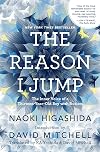
It's always great to get new perspectives and open your mind a little. This book was written by a 13 year old boy with autism and it has some of my favorite quotes I've ever read.
"Every single thing has its own unique beauty. People with autism get to cherish this beauty, as if it's a kind of blessing given to us. Wherever we go, whatever we do, we can never be completely lonely. We may look like we're not with anyone, but we're always in the company of friends." - reading these words show more opened my mind to a different world and it was really cemented with the short story Naoki Higashida wrote that was included at the end of his Q&A session throughout the entire book.
What I got out of this book is that people with autism have a mind that feels like it's on a different reality than ours. We think we see things clearly and vividly when the reality is that they have a much more heightened perception around them. Sometimes what we see as a struggle is just them being overwhelmed by every detail we overlook.
We all have different ways of coping with our emotions and so do they: "Everybody has a heart that can be touched by something. Crying isn't necessarily about sadness or meltdowns or being upset. I'd like you to bear that in mind, if you would" ---I mean how relatable is that? This boy that had struggled with communicating in general being able to really break down feelings and emotions much better than most people I know absolutely blew my mind. I highly recommend this.
The only thing that stops me from giving this a perfect review is that I feel like something was lost in translation but I know how hard it can be giving the same feeling and meaning to a different language. It just makes me wish I knew Japanese and just read it in its original text. show less
"Every single thing has its own unique beauty. People with autism get to cherish this beauty, as if it's a kind of blessing given to us. Wherever we go, whatever we do, we can never be completely lonely. We may look like we're not with anyone, but we're always in the company of friends." - reading these words show more opened my mind to a different world and it was really cemented with the short story Naoki Higashida wrote that was included at the end of his Q&A session throughout the entire book.
What I got out of this book is that people with autism have a mind that feels like it's on a different reality than ours. We think we see things clearly and vividly when the reality is that they have a much more heightened perception around them. Sometimes what we see as a struggle is just them being overwhelmed by every detail we overlook.
We all have different ways of coping with our emotions and so do they: "Everybody has a heart that can be touched by something. Crying isn't necessarily about sadness or meltdowns or being upset. I'd like you to bear that in mind, if you would" ---I mean how relatable is that? This boy that had struggled with communicating in general being able to really break down feelings and emotions much better than most people I know absolutely blew my mind. I highly recommend this.
The only thing that stops me from giving this a perfect review is that I feel like something was lost in translation but I know how hard it can be giving the same feeling and meaning to a different language. It just makes me wish I knew Japanese and just read it in its original text. show less
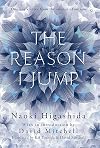
At the age of 13, in 2007, a Japanese boy named Naoki Higashida was asked to answer a series of questions about autism based on his own experience of the condition. Naoki's austim is sufficiently severe that he communicates by pointing to letters on an alphabet grid, rather than verbally. The answers that he gave were combined with a handful of his original short stories into this short, insightful book which has recently been issued in English translation.
As a parent to an autistic boy who show more will also turn 13 this year, I can say that most of this book rings very true and helps illuminate our own family's experiences. But what impresses me most about this text is the way that this young writer was able to put words to situations and struggles that often seem ineffable from the outside. A brief but memorable read and an easy recommendation. show less
As a parent to an autistic boy who show more will also turn 13 this year, I can say that most of this book rings very true and helps illuminate our own family's experiences. But what impresses me most about this text is the way that this young writer was able to put words to situations and struggles that often seem ineffable from the outside. A brief but memorable read and an easy recommendation. show less

Of my six standing reasons to read a book, three applied to Higashida's 7/8: an informed account of something I know little about; an empathetic window into life as lived by people different than me; a glimpse of a new (to me) way of experiencing the world. If Higashida's text fulfilled even just one of these, I would understand the world --and my place in it-- a little better.
7/8 delivered on all three and rekindles my interest in Higashida's earlier book.
A question arose part-way through: show more how do non-verbal people gain mastery over words without the practise of speaking? I have no doubt they do attain mastery: this book is itself ample proof. What I don't have is insight into that path (and presumably it has myriad forms). Is reading the key path, or merely one among many? (How does one learn to read without first speaking: undoubtedly it happens; what is it like?) I further assume there must be some practise in place of speech: listening, certainly; reading; writing or using the alphabet board. All of this uncovered my own assumptions, perhaps speaking is less important than I thought. I wonder how much reading Higashida does, and how he learned it.
Reminiscent somehow of Jules Renard's essays in On Nature: the compactness of Higashida's observations? How he evokes an idea so economically? Sentimental without being saccharine.
//
There are included a few line drawings: two of vases (accompanying the "Mothers Day" essay), one of a gate (in "The Gate"). Each section page has floral watermarks. Higashida's? show less
7/8 delivered on all three and rekindles my interest in Higashida's earlier book.
A question arose part-way through: show more how do non-verbal people gain mastery over words without the practise of speaking? I have no doubt they do attain mastery: this book is itself ample proof. What I don't have is insight into that path (and presumably it has myriad forms). Is reading the key path, or merely one among many? (How does one learn to read without first speaking: undoubtedly it happens; what is it like?) I further assume there must be some practise in place of speech: listening, certainly; reading; writing or using the alphabet board. All of this uncovered my own assumptions, perhaps speaking is less important than I thought. I wonder how much reading Higashida does, and how he learned it.
Reminiscent somehow of Jules Renard's essays in On Nature: the compactness of Higashida's observations? How he evokes an idea so economically? Sentimental without being saccharine.
//
There are included a few line drawings: two of vases (accompanying the "Mothers Day" essay), one of a gate (in "The Gate"). Each section page has floral watermarks. Higashida's? show less
 This review was written for LibraryThing Early Reviewers.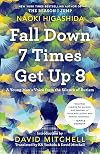
This book, like its predecessor, offers a unique view into the mind of a young man with autism. His wry observations and interesting anecdotes show us that much of what we think we understand about those diagnosed with ASD is very limited and stereotypical. I loved this insight into a world that is the same as mine but from a very different perspective. As someone who lives with a child with ASD, this was a fascinating read.
This review was written for LibraryThing Early Reviewers.Lists
Awards


You May Also Like


Associated Authors
Statistics
- Works
- 4
- Members
- 2,468
- Popularity
- #10,389
- Rating
- 3.8
- Reviews
- 161
- ISBNs
- 66
- Languages
- 16
