
Jim Rugg
Author of The Plain Janes
About the Author
Image credit: via Hachette
Series
Works by Jim Rugg
Steck-Vaughn Lynx: Leveled Readers Grade 5 Escape from Nazi Berlin (Lynx2) (2006) — Illustrator — 20 copies
Mixed Up 3 copies
Rambo 3.5 3 copies
Drawings 030413 1 copy
BW 1 copy
The Guild #3 1 copy
The Guild #2 1 copy
The Guild #1 1 copy
Street Angel Xmas Special 1 copy
Number XX 1 copy
Associated Works
American Cult: A Graphic History of Religious Cults in America from the Colonial Era to Today (2021) — Contributor, some editions — 110 copies, 4 reviews
Femme Magnifique: 50 Magnificent Women who Changed the World (2018) — Contributor — 62 copies, 2 reviews
Femme Magnifique: 10 Magnificent Women who Changed the World (2019) — Author; Illustrator — 4 copies, 1 review
Tagged
Common Knowledge
- Birthdate
- 1977-02-01
- Gender
- male
- Nationality
- USA
- Birthplace
- Pittsburgh, Pennsylvania, USA
- Associated Place (for map)
- Pennsylvania, USA
Members
Reviews
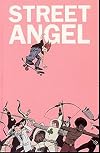
You are required to love a comic that features a rogue geologist as a villain. Yes.
Street Angel is the story of a homeless 13-year old world-class skateboarder and ninja fighter. She lives in a world of (the aforementioned) ninjas and scientists, but her world is also chock full of Aztec gods, Conquistadores, Irish astronauts, Satanists, and the headaches that come with being homeless. This volume collects the five issues of the series as well as short stories, covers, and a wealth of pinups show more and sketches. And it is a thing of beauty.
The stories in Street Angel happen free of context and, blessedly, continuity. Each story seems to happen in its own little universe of fun. I suspect that Rugg (artist and co-writer) and Maruca (co-writer) weren't so interested in telling a grand, linear story; they were mostly concerned with figuring out how comics work. They needed to figure out the rules, and then they needed to break them completely.
The collection I own is called "volume one" in the indicia. I pray that there will be a second some day. show less
Street Angel is the story of a homeless 13-year old world-class skateboarder and ninja fighter. She lives in a world of (the aforementioned) ninjas and scientists, but her world is also chock full of Aztec gods, Conquistadores, Irish astronauts, Satanists, and the headaches that come with being homeless. This volume collects the five issues of the series as well as short stories, covers, and a wealth of pinups show more and sketches. And it is a thing of beauty.
The stories in Street Angel happen free of context and, blessedly, continuity. Each story seems to happen in its own little universe of fun. I suspect that Rugg (artist and co-writer) and Maruca (co-writer) weren't so interested in telling a grand, linear story; they were mostly concerned with figuring out how comics work. They needed to figure out the rules, and then they needed to break them completely.
The collection I own is called "volume one" in the indicia. I pray that there will be a second some day. show less
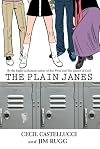
Recommended reading for the teen who aspires to more in life than what her peer group tells her she should.
Jane and her parents flee for the suburbs after Jane survives a street bomb attack in Metro City. The event has forever colored her perspective and she no longer identifies with the run-of-the-mill high school atmosphere. She ignores invitations from the popular girls to sit with them and instead discovers her “tribe,” a trio of girls all also named Jane and rejects in their own show more ways: one is brainy, another is a bench-warming athlete, and the other a heavy-set drama diva. The tribe sets out to make their mark in a world they feel sorely needs it: they create “People Loving Art in Neighborhoods,” or PLAIN. Their mission is to create public art by stealth. The art attacks take the town and school by storm, leading to a curfew and a suspension of school activities. The story culminates in PLAIN’s big New Year’s Eve art project. show less
Jane and her parents flee for the suburbs after Jane survives a street bomb attack in Metro City. The event has forever colored her perspective and she no longer identifies with the run-of-the-mill high school atmosphere. She ignores invitations from the popular girls to sit with them and instead discovers her “tribe,” a trio of girls all also named Jane and rejects in their own show more ways: one is brainy, another is a bench-warming athlete, and the other a heavy-set drama diva. The tribe sets out to make their mark in a world they feel sorely needs it: they create “People Loving Art in Neighborhoods,” or PLAIN. Their mission is to create public art by stealth. The art attacks take the town and school by storm, leading to a curfew and a suspension of school activities. The story culminates in PLAIN’s big New Year’s Eve art project. show less
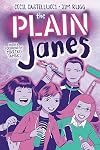
I was so prepared to call this quirky and tryhard, but it’s actually charming. I love the conversations about being afraid of how the world is going (look, we’re in a worldwide pandemic right now) but fighting to see the beauty in it. Of course, I also enjoyed the conversations about the different methods of art, controlled and poised and explosive and combative, etc. Payne is really rough around the edges, but she added a fun layer to the plainness.
I’m glad Jane’s PTSD and anxiety show more after the incident are treated realistically, and I liked her mom’s development. The “evil adults” who wanna ruin all artistic expressions trope felt a bit cliché here, but it works, I guess. The Janes are all flat archetypes, but that also works I suppose. The book feels like a conversation-piece to me more so than a character or plot-driven story, but I liked it.
3.5 show less
I’m glad Jane’s PTSD and anxiety show more after the incident are treated realistically, and I liked her mom’s development. The “evil adults” who wanna ruin all artistic expressions trope felt a bit cliché here, but it works, I guess. The Janes are all flat archetypes, but that also works I suppose. The book feels like a conversation-piece to me more so than a character or plot-driven story, but I liked it.
3.5 show less
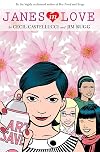
I think I like this even better than the first (though that weird pheromone scene was out of place). It delved more deeply into various issues--art, love, friendship, and mental illness.
Lists
Awards


You May Also Like


Associated Authors
Statistics
- Works
- 37
- Also by
- 20
- Members
- 1,914
- Popularity
- #13,442
- Rating
- 3.9
- Reviews
- 119
- ISBNs
- 59
- Languages
- 2
- Favorited
- 1