
Jim Williams (5) (1947–)
Author of Scherzo: Murder and Mystery in 18th Century Venice
For other authors named Jim Williams, see the disambiguation page.
About the Author
Image credit: Jim Williams
Works by Jim Williams
Knife Edge: An Anthology of Crime, Thriller, Mystery and Suspense Stories (2013) 21 copies, 6 reviews
Tagged
Common Knowledge
Members
Reviews

There is quite a lot going on in this story, which is inhabited by lots (and lots) of interesting characters, each as quirky as the other. The writing is witty, the story fast-paced and very interesting. After finishing the novel I did some 'research' into the Austro-Hungarian Empire, which I knew next to nothing about.
Not that any background knowledge about said Empire, or World War I, is needed, as events and characters were quite satisfactorily explained in the story.
'Is this a serious show more or a comic novel? Does it matter?' Is one of the questions in the 'How much did you get about this book section' at the end of the novel (which I usually skip)
My answer to this would be to say that it does not matter ; the novel is enjoyable on a great many levels, even though I have to admit it is quite funny.
Although I usually dislike comparing authors to each other, the writing reminded me somwhat of Reginald Hill. Seeing as Hill is one of my favourite authors, that is a recommendation for the novel. show less
Not that any background knowledge about said Empire, or World War I, is needed, as events and characters were quite satisfactorily explained in the story.
'Is this a serious show more or a comic novel? Does it matter?' Is one of the questions in the 'How much did you get about this book section' at the end of the novel (which I usually skip)
My answer to this would be to say that it does not matter ; the novel is enjoyable on a great many levels, even though I have to admit it is quite funny.
Although I usually dislike comparing authors to each other, the writing reminded me somwhat of Reginald Hill. Seeing as Hill is one of my favourite authors, that is a recommendation for the novel. show less
 This review was written for LibraryThing Early Reviewers.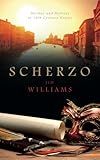
This book is so much more than it appears on the surface. Yes there is a murder mystery, but it's the back story and the two main characters that push this book into the realm of the amazing. The setting is 18 century Venice. The main storyteller is a eunuch by the name of Ludovico, who describes himself as a preening coward. His counterpart and the foil to this extremely colourful character is Monsieur Arouet. Mr. Arouet is a taciturn, mysterious person who appears in Venice and somehow show more falls right into the middle of the murder of an upper class Venetian. Monsieur Arouet sets out to try solve this murder that seems to be part of some secret ceremony, and he uses Ludovico to help him as Ludovico has access into some of the upper class Venetian homes that he doesn't. The descriptions of Venice as it would have been in the 18 century are extremely realistic. And do we ever get a realistic look into the 18 century Venetian underworld while we follow Ludovico around! It was an era of extremes. Much richness and lavishness, and much poverty and despair. And it's not always the poor people who commit terrible crimes. The rich go to extreme lengths to cover up their numerous misdeeds and debaucheries. The word "scherzo" apparently means "joke" and this book is that too. It is so colourfully written and so realistic that it's like watching a play. I loved Ludovico. We see him as a young man of 21 who has been cruelly mutilated in order that he will retain his beautiful singing voice. He is insecure and almost expects everyone to hold him in contempt, but as he works with Monsieur Arouet he matures and and becomes a man who finds his place in his madcap world. I received this book as an early reviewer book, and am so glad that I did because I don't think I would have read it otherwise. I loved it! show less
This review was written for LibraryThing Early Reviewers.I recently found myself reading a couple of books about Venice, and like all people in love with culture, I consider Venice a high point. I have spent a lot of time just down the same coast. I speak Italian reasonably well, altho the Venetian dialect is actually impenetrable to me. I was last in Venice a couple of years ago with my kids. We saw a little of the biennale. Yes! We happened to be there on a rainy and therefore deserted summer evening. We took advantage of the opportunity to take show more a gondola ride minus the usual crowds. It was very dark, very quiet, and quite grim. We saw rats down an alley tearing at the garbage. It was a rare moment that allowed us to get a glimpse of pre-20th century Venice, and proved to be very useful visual background for novels about historical Venice.
So, Scherzo: Murder and Mystery in 18th Century Venice is an ebook reissue, seemingly with a limited distribution budget and yet was a book I wanted to get back to whenever I found a moment. (Actually Williams laughingly mentions that his publisher nominated the book for the Booker prize, which only goes to show that he did not expect it to be successful.) Williams has provided a great flavour of the city, and an wonderful sense of the movement of polyglots around the European capitals in the 18thC. Scherzo has a judicious number of Italian words liberally sprinkled throughout and also quite a number of words and phrases in Latin and Greek, glossed for the reader within the narrative. I noted a few of them as keepers. All in all, handled very naturally, with word play and translation intrinsically important, rather than as foreign words appearing salted on top of the story.
Side note on tech: it was a great advantage to read Scherzo as an ebook. I could highlight and make marginal notes, but instead of having to search by rifling thru pages, in an ebook (I use the Kindle app across a number of devices) you can tap a button and see all your highlights and notes in a lovely list. There is also a way to save your notes to Evernote, where they could be filed and tagged usefully. I still have to actually implement it, but I have gotten as far as looking up the instructions.
Williams has also written an essay about his inspiration. In Writing Whodunnits, Notes on writing Murder Mysteries he says:
I have no general theory about writing murder mysteries, but however one divides the genre, there seem to be three possible foci for the narrative. The first is the identification of the murderer along with resolution of ancillary mysteries such as the exact method, place and timing of the murder. The second is the process of detection itself, whether through exploration of the character of the detective, or police procedures and forensic science. The third is the background leading to the murder, which means an investigation of the psychology of the murderer or the dynamics of a set of relationships that will lead to the murder. These three approaches aren't mutually exclusive, but any novel will tend to emphasize one of them.
Williams places Scherzo mainly in the third category, which is the particular sub genre he favours. I have written before about genre fulfillment, and here is a lovely statement about how to judge it by John Cawelti in Adventure, Mystery, and Romance: Formula Stories as Art and Popular Culture. In his chapter The Study of Literary Formulas he says:
…we can evaluate the works in two different ways: a) by the way in which they fulfill or fail to fulfill the full artistic effect of that particular type of construction… [and]…b) the way in which the individual work deviates from the flat standard of the genre to accomplish some unique individual expression or effect.
This is the way snobby elitist readers, such as I, read genre fiction: looking for genre thrills rather than literature. With this book we are actually in genre-mash-up territory–historical/foreign/mysteries. Scherzo succeeds wildly. A lover of Venice or mysteries can enjoy many books. A reader who is also a llover of reading and writing would really enjoy Scherzo. show less
So, Scherzo: Murder and Mystery in 18th Century Venice is an ebook reissue, seemingly with a limited distribution budget and yet was a book I wanted to get back to whenever I found a moment. (Actually Williams laughingly mentions that his publisher nominated the book for the Booker prize, which only goes to show that he did not expect it to be successful.) Williams has provided a great flavour of the city, and an wonderful sense of the movement of polyglots around the European capitals in the 18thC. Scherzo has a judicious number of Italian words liberally sprinkled throughout and also quite a number of words and phrases in Latin and Greek, glossed for the reader within the narrative. I noted a few of them as keepers. All in all, handled very naturally, with word play and translation intrinsically important, rather than as foreign words appearing salted on top of the story.
Side note on tech: it was a great advantage to read Scherzo as an ebook. I could highlight and make marginal notes, but instead of having to search by rifling thru pages, in an ebook (I use the Kindle app across a number of devices) you can tap a button and see all your highlights and notes in a lovely list. There is also a way to save your notes to Evernote, where they could be filed and tagged usefully. I still have to actually implement it, but I have gotten as far as looking up the instructions.
Williams has also written an essay about his inspiration. In Writing Whodunnits, Notes on writing Murder Mysteries he says:
I have no general theory about writing murder mysteries, but however one divides the genre, there seem to be three possible foci for the narrative. The first is the identification of the murderer along with resolution of ancillary mysteries such as the exact method, place and timing of the murder. The second is the process of detection itself, whether through exploration of the character of the detective, or police procedures and forensic science. The third is the background leading to the murder, which means an investigation of the psychology of the murderer or the dynamics of a set of relationships that will lead to the murder. These three approaches aren't mutually exclusive, but any novel will tend to emphasize one of them.
Williams places Scherzo mainly in the third category, which is the particular sub genre he favours. I have written before about genre fulfillment, and here is a lovely statement about how to judge it by John Cawelti in Adventure, Mystery, and Romance: Formula Stories as Art and Popular Culture. In his chapter The Study of Literary Formulas he says:
…we can evaluate the works in two different ways: a) by the way in which they fulfill or fail to fulfill the full artistic effect of that particular type of construction… [and]…b) the way in which the individual work deviates from the flat standard of the genre to accomplish some unique individual expression or effect.
This is the way snobby elitist readers, such as I, read genre fiction: looking for genre thrills rather than literature. With this book we are actually in genre-mash-up territory–historical/foreign/mysteries. Scherzo succeeds wildly. A lover of Venice or mysteries can enjoy many books. A reader who is also a llover of reading and writing would really enjoy Scherzo. show less
This review was written for LibraryThing Early Reviewers.When the steamer 'The Kildonian Castle' calls at the small British-held island of Madeira, most of the passengers alighting expect only a brief layover before continuing their route to South Africa. But a mysterious saboteur prevents the 'Castle' from continuing its journey, and its stranded passengers find themselves in the midst of a flurry of strange events. A man that is clearly a newcomer to the island yet that nobody recalls seeing on the ship is murdered in broad daylight, an angel show more appears on a stormy night, a porcelain cup disappears from its owner's collection, and there is talk of the exiled Austria-Hungarian Emperor being menaced by vengeful assassins...
This baroque novel is a true delight to read. Told from the point of view of a veteran soldier and ruined British wine merchant of dubious morals, the story slowly unfolds its unexpected twists amongst quirky characters, with the decadence of a post-WWI British colony in the background, all the while bein infused by dark humor and a thoughtful reflection on the state of man after a ghastly war. Brilliant, entertaining, droll, and serious. show less
This baroque novel is a true delight to read. Told from the point of view of a veteran soldier and ruined British wine merchant of dubious morals, the story slowly unfolds its unexpected twists amongst quirky characters, with the decadence of a post-WWI British colony in the background, all the while bein infused by dark humor and a thoughtful reflection on the state of man after a ghastly war. Brilliant, entertaining, droll, and serious. show less
This review was written for LibraryThing Early Reviewers.You May Also Like


Statistics
- Works
- 12
- Members
- 304
- Popularity
- #77,405
- Rating
- 3.3
- Reviews
- 60
- ISBNs
- 74
- Languages
- 2

