
Heidi Jon Schmidt
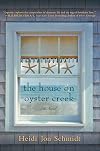
Author of The House on Oyster Creek: A Novel
About the Author
Heidi Jon Schmidt lives in Provincetown, Massachusetts, where she teaches at the Provincetown Arts center. (Bowker Author Biography)
Works by Heidi Jon Schmidt
Associated Works
Tagged
Common Knowledge
- Gender
- female
Members
Reviews
If you've ever been to Wellfleet, or outer Cape Cod, you'll realize Schmidt has captured the feeling of being there entirely, in it's glory and desolation. Charlotte, the main character and wonderfully written outsider, moves with her family to the Cape, determined to connect her solely cerebral husband to something from his past and elicit emotion from him if it kills her. She finds love in ways she didn't expect and couldn't pursue- the oysterman Darryl. Schmidt walks the line of love and show more obligation, family, class, and New England mentality with skill and grace. Lovely novel. show less
 This review was written for LibraryThing Early Reviewers.
I loved this story! Novels set on the eastern seaboard are among my favorites, and this one did not disappoint. Although I grew up in a small town in Michigan and not Massachusetts, the people are the same. Everyone knows everyone. Family trees twist in and out of each other in intricacies only locals would understand. Loyalties and betrayals span decades and are never really forgotten. This is the backdrop for Heidi Jon Schmidt’s story where the reader is reminded of the effect an show more individual decision can have on others... in this case a whole community. Charlotte's innocuous-seeming decision to move to Oyster Point, and the need to sell part of her husband's land to accomplish this, sets in motion huge ramifications for the local oyster farmers and sides are quickly taken. Complicating matters further is the attraction between Charlotte and Darryl and the friction and apathy in Charlotte's marriage to Henry. The author's descriptive style made me know the characters and see their surroundings. A well-told story of interpersonal relationships on many levels, I recommend it! show less
This review was written for LibraryThing Early Reviewers.**This is an advance reading copy provided by Library Thing**
Love can cause us to do some really dumb shit. Take Charlotte for example. Emotional, naive, and needy Charlotte fell in love with an idea--the romantic notion that she could somehow emotionally connect with and save Henry Tradescombe, the distant, reclusive, excessively liberal, and aggressive intellectual of some noted repute as a journalist. In return, Charlotte would be sculpted and molded by Henry, who is twenty years her show more senior, and gain entree into the world of the New York intellectual elite. What she gets instead is a petulant and sadistic husband who worries more about global warming, the Bush administration, and quoting obscure poets than he does about his own wife or daughter. Of course, Charlotte doesn't come to realize this until years later. She is resigned to her fate, however, because she at least has her four year old daughter, Fiona, and a life that, however emotionally starved it may be, is one of comfortable wealth and reputation that many would envy.
Charlotte's life is thrown into upheaval, however, when Henry inherits his family estate on Cape Cod and Charlotte, in a sudden act of defiance against Henry's neglect, takes the reins and moves the family to the house of Henry's childhood. While adapting to life on the New England coast, Charlotte meets Darryl Stead, an oyster farmer and jack of all trades who--you guessed it--"completes her." Now Charlotte is torn between her obligation to her marriage and her longing for Darryl. To complicate matters, by selling off a piece of the property to a wealthy prick, she may have single-handedly destroyed the entire economic system upon which Darryl and the other oyster farmers depend. Ain't love grand?
Some things I liked:
1) Schmidt perfectly captures the distrust of newcomers (especially of a higher socio-economic class) inherent in rural small-town America. The town of Wellfleet closes ranks against Charlotte when it becomes evident that she wants to be part of the community, believing that her romantic notion of pastoral life is just a whim that she can indulge in because her wealth allows her to try on lifestyles as easily as trying on designer clothing.
2) The characters are, for the most part, realistic. There were some stereotyped town eccentrics, but Schmidt does an excellent job of portraying the inner-life of a woman who worries that she may have made the wrong choices in life and it may be too late to do anything about that without destroying the web of relationships that are delicately attached to her. Her struggle between what's right for her family and what's right for her is real and authentic. I can even see how she would fall for Henry, ass though he is. Who hasn't had the "crush on teacher" syndrome, however fleetingly? It's just that most of us have these crushes while we're still in high school and are thus jailbait to the object of our affection (which tends to effectively thwart any romantic entanglements).
3) This is a nice "slice of life" book that avoids depicting life on Cape Cod as quaint and idealistic. Schmidt shows the back-breaking labor, the desperation, and the poverty of families just trying to make ends meet. These are the people who are left behind everytime the tourist season ends to face the bleak realities of winter and survival. It was also interesting to read about life in a New England fishing community, a place to which I have never been, and Schmidt provides just the right amount of detail in this respect.
4) The novel avoids the cliched ending that I thought it was careening toward and had a more mature, realistic resolution that I expected. That's all I'll say other than I thought the ending was perfect and satisfying.
Some things I didn't like:
1) Despite all her protestations to the contrary, I saw Charlotte's attraction to Darryl as a repeat of what had happened years earlier with Henry. Again, Charlotte is in love with the idea more than the man; this time she's in love with the hard-working, salt-of-the-earth, brawny shouldered working class man who will take her away from her stilted marriage and awaken passion in her that she's never known (okay, it doesn't say that, but I was getting strong whiffs of this stank with or without it being directly stated). Darryl is damaged goods and Charlotte has set herself up to once again save the man who can't be saved--which she spends the better half of the novel doing. To which I could only shake my head and think, "Stupid girl."
2) Some disjointed leaps in time and sudden, unexpected switches in the point of view made it somewhat confusing. Not overly so, but just enough to irritate the piss out of me as I tried to pick up the thread of the narrative once again.
3) Every time Charlotte and Darryl had one of their heart-to-heart talks, the dialogue read like a trite script submitted to Lifetime. For your groaning pleasure:
"I just want to come over there and drag you up the stairs and . . . make love to you. . . . " He spoke so roughly she likely should have been frightened, but naturally she was thrilled.
"I want you just as badly! I think about you all the time. I think, if we'd met each other when we were younger . . . but . . . "
"If you knew me back then you'd have spit in my face."
"I'd have made love to you like it was my religion."
Puke, buzzard, puke. Nothing triggers my gag reflex like this kind of romantic nonsense. (Granted, my idea of romance is a little along the lines of Ash in Army of Darkness saying "Gimme some sugar, baby" while revving up the chainsaw that has replaced his arm. But I digress.)
Overall, this is a quick, enjoyable read when Charlotte and Darryl aren't trading sweet nothings. Because Schmidt has done so many other things so well in the novel, I'm willing to forgive that. show less
Love can cause us to do some really dumb shit. Take Charlotte for example. Emotional, naive, and needy Charlotte fell in love with an idea--the romantic notion that she could somehow emotionally connect with and save Henry Tradescombe, the distant, reclusive, excessively liberal, and aggressive intellectual of some noted repute as a journalist. In return, Charlotte would be sculpted and molded by Henry, who is twenty years her show more senior, and gain entree into the world of the New York intellectual elite. What she gets instead is a petulant and sadistic husband who worries more about global warming, the Bush administration, and quoting obscure poets than he does about his own wife or daughter. Of course, Charlotte doesn't come to realize this until years later. She is resigned to her fate, however, because she at least has her four year old daughter, Fiona, and a life that, however emotionally starved it may be, is one of comfortable wealth and reputation that many would envy.
Charlotte's life is thrown into upheaval, however, when Henry inherits his family estate on Cape Cod and Charlotte, in a sudden act of defiance against Henry's neglect, takes the reins and moves the family to the house of Henry's childhood. While adapting to life on the New England coast, Charlotte meets Darryl Stead, an oyster farmer and jack of all trades who--you guessed it--"completes her." Now Charlotte is torn between her obligation to her marriage and her longing for Darryl. To complicate matters, by selling off a piece of the property to a wealthy prick, she may have single-handedly destroyed the entire economic system upon which Darryl and the other oyster farmers depend. Ain't love grand?
Some things I liked:
1) Schmidt perfectly captures the distrust of newcomers (especially of a higher socio-economic class) inherent in rural small-town America. The town of Wellfleet closes ranks against Charlotte when it becomes evident that she wants to be part of the community, believing that her romantic notion of pastoral life is just a whim that she can indulge in because her wealth allows her to try on lifestyles as easily as trying on designer clothing.
2) The characters are, for the most part, realistic. There were some stereotyped town eccentrics, but Schmidt does an excellent job of portraying the inner-life of a woman who worries that she may have made the wrong choices in life and it may be too late to do anything about that without destroying the web of relationships that are delicately attached to her. Her struggle between what's right for her family and what's right for her is real and authentic. I can even see how she would fall for Henry, ass though he is. Who hasn't had the "crush on teacher" syndrome, however fleetingly? It's just that most of us have these crushes while we're still in high school and are thus jailbait to the object of our affection (which tends to effectively thwart any romantic entanglements).
3) This is a nice "slice of life" book that avoids depicting life on Cape Cod as quaint and idealistic. Schmidt shows the back-breaking labor, the desperation, and the poverty of families just trying to make ends meet. These are the people who are left behind everytime the tourist season ends to face the bleak realities of winter and survival. It was also interesting to read about life in a New England fishing community, a place to which I have never been, and Schmidt provides just the right amount of detail in this respect.
4) The novel avoids the cliched ending that I thought it was careening toward and had a more mature, realistic resolution that I expected. That's all I'll say other than I thought the ending was perfect and satisfying.
Some things I didn't like:
1) Despite all her protestations to the contrary, I saw Charlotte's attraction to Darryl as a repeat of what had happened years earlier with Henry. Again, Charlotte is in love with the idea more than the man; this time she's in love with the hard-working, salt-of-the-earth, brawny shouldered working class man who will take her away from her stilted marriage and awaken passion in her that she's never known (okay, it doesn't say that, but I was getting strong whiffs of this stank with or without it being directly stated). Darryl is damaged goods and Charlotte has set herself up to once again save the man who can't be saved--which she spends the better half of the novel doing. To which I could only shake my head and think, "Stupid girl."
2) Some disjointed leaps in time and sudden, unexpected switches in the point of view made it somewhat confusing. Not overly so, but just enough to irritate the piss out of me as I tried to pick up the thread of the narrative once again.
3) Every time Charlotte and Darryl had one of their heart-to-heart talks, the dialogue read like a trite script submitted to Lifetime. For your groaning pleasure:
"I just want to come over there and drag you up the stairs and . . . make love to you. . . . " He spoke so roughly she likely should have been frightened, but naturally she was thrilled.
"I want you just as badly! I think about you all the time. I think, if we'd met each other when we were younger . . . but . . . "
"If you knew me back then you'd have spit in my face."
"I'd have made love to you like it was my religion."
Puke, buzzard, puke. Nothing triggers my gag reflex like this kind of romantic nonsense. (Granted, my idea of romance is a little along the lines of Ash in Army of Darkness saying "Gimme some sugar, baby" while revving up the chainsaw that has replaced his arm. But I digress.)
Overall, this is a quick, enjoyable read when Charlotte and Darryl aren't trading sweet nothings. Because Schmidt has done so many other things so well in the novel, I'm willing to forgive that. show less
This review was written for LibraryThing Early Reviewers.Probably the most distracting aspect of Schmidt's style of writing was her almost fanatical need to portray Henry as the older, colder, and uncaring husband. I get it. Schmidt wants the reader to cheer Charlotte on when she meets a man more to her liking, more to her temperament, more to her everything. You aren't supposed to hate the damsel in distress. You aren't even allowed to dislike her. In order to make the damsel's potential affair acceptable said damsel's husband needs to be bad. show more Very bad. If the husband is really awful you wind up begging, praying for that knight in shining armor. In an attempt to make Henry bad I think Schmidt went overboard. As a result Henry became a caricature of the very worst. In the first chapter alone (we're talking 13 pages) there were over 24 negative words associated with Henry.
However...once I got beyond page 14 I loved The House on Oyster Creek. Charlotte can be a little self righteous at times but after putting up with Henry all those years she deserves to be. While House on Oyster Creek focuses on Charlotte as she makes her way the book is really about the entire community she joins. Schmidt is extremely accurate when introducing Charlotte to the new community. when it comes to a tight knit community there will always be this Them and Us attitude.
I will admit this story ended exactly how I wanted it to. show less
However...once I got beyond page 14 I loved The House on Oyster Creek. Charlotte can be a little self righteous at times but after putting up with Henry all those years she deserves to be. While House on Oyster Creek focuses on Charlotte as she makes her way the book is really about the entire community she joins. Schmidt is extremely accurate when introducing Charlotte to the new community. when it comes to a tight knit community there will always be this Them and Us attitude.
I will admit this story ended exactly how I wanted it to. show less
This review was written for LibraryThing Early Reviewers.You May Also Like


Associated Authors
Statistics
- Works
- 6
- Also by
- 3
- Members
- 187
- Popularity
- #116,276
- Rating
- 3.5
- Reviews
- 27
- ISBNs
- 15
