
Claude Seignolle (1917–2018)
Author of The Accursed: Two Diabolical Tales
About the Author
Works by Claude Seignolle
The Ghoulbird 3 copies
Contes sorciers 2 copies
Promenades à travers les traditions populaires languedociennes des Cévennes à la mer (2001) 2 copies
GUIDE LEBEY 1997 REST..PARIS 1 copy
A l'enseigne de l'étrange 1 copy
Les âmes aigries 1 copy
Le Faucheur 1 copy
Le Chupador 1 copy
Le millième cierge 1 copy
L'éxécution 1 copy
Delphine 1 copy
Ce que me raconta Jacob 1 copy
Pauvre Sonia ! 1 copy
Et si c'était ! 1 copy
L'homme qui savait d'avance 1 copy
Pris entre Dieu et diable 1 copy
Le miroir 1 copy
Le Matagot 1 copy
Un bel ensorcelé 1 copy
Comme une odeur de loup 1 copy
La mémoire du bois 1 copy
L'Isabelle 1 copy
Deux dents, pas plus... 1 copy
Le Christ est vengé 1 copy
Le bout du monde 1 copy
Non, pas moi ! 1 copy
Les Gorel 1 copy
Un exorcisme 1 copy
Un hasard minutieux 1 copy
Associated Works
La dimension fantastique, Tome 1 : Treize nouvelles de Hoffmann à Claude Seignolle (1998) — Contributor — 80 copies, 2 reviews
Tagged
Common Knowledge
- Canonical name
- Seignolle, Claude
- Legal name
- Seignolle, Claude
- Other names
- Starcante
- Birthdate
- 1917-06-25
- Date of death
- 2018-07-13
- Gender
- male
- Awards and honors
- Prix Alfred Verdaguer (2008)
- Nationality
- France
- Birthplace
- Périgueux, Dordogne, France
- Associated Place (for map)
- Dordogne, France
Members
Reviews

The Accursed gathers two of Seignolle’s first novellas, written between 1945 and 1948. Both of them deal with the intersection between rural life and the supernatural, thus claiming an honorary seat in this aggregate that we tend to name folk horror.
A past consisting of desperately hard work makes stiff digging
As can be deduced from the title, both Accursed novellas deal with young women marked by some sort of sinister contact with the supernatural. In Malvenue, the fate of the heroine show more with the strange mark on the forehead seems to be intertwined with a very old statue that her father’s plowshare dragged from the earth almost a year before she was born; as the current crop is burnt, the shadow of the tragic and mysterious events that transpired 20 years ago falls upon the present. In Marie the Wolf, the namesake heroine is anointed as a newborn child by a wolf-drover, thus gaining a channel of mostly involuntary interaction with the predator animals.
Both of these stories take place in the French province of Sologne, which is revealed as a rough, swampy rural environment, dotted with forest remnants and small farmhouses which throng into larger communities during the various festivals that mark the wheel of the year. Nature is full of life, omnipotent, relentless and beautiful. Life in rural Sologne isn’t idealized – the hard farm work leaves visible scars on body and soul, and religiosity may create new wounds or cause old ones to fester. However, this idyllic life does manage to charm the reader through its harmonious navigation of the surrounding world, as well as the way it touches and reveals the majestic and full-of-awe aspects of the place – in the same way that the plowshare of the Malvenue protagonist’s father unveils the buried statue.
Both of the novellas’ core plot is seemingly simple, almost fit, one could say, for the Sologne’s idyllic environment, without ever falling into simplicity – a direct efficiency is dominant. However, as the stories slowly unfurl upon a variety of axes (temporal, genealogical, spatial), a complex creation is revealed. The Gothic genre hovers over the pages like one of Sologne’s energetic clouds – its presence is testified by the tragic character of fate, the inter-genealogical trickling of sin and the osmosis of place and characters.
Such a wailing voice that it seemed to be grated on the rough ceiling of the stars
The two stories are full of images of the relationship between folk and the uncanny (we see for instance the healing ritual suggested by a local wizard to the heroine’s father – swallowing a paper with magic symbols written on it), as well as manifestations of the supernatural itself. The climax of the latter is the image of the headless saint that spreads out her shroud-sheets in the nocturnal swamp. Claude Seignolle knows well how folk and supernatural feed into each other. Thus he doesn’t isolate the uncanny, neither does he exhibit it (both of which would render it a harmless curio), but instead he focuses on sharpening its existing aspects.
A frequent motif in folk horror is the use of a protagonist that is a stranger to the setting. That hero turns essentially into a vehicle for the reader (an avatar) who follows a path parallel to said character – the customs, whims and secrets of the place are revealed into two fronts at the same time: the narrative and the real. This technique is undoubtedly helpful. But the need for a medium extends the distance between the reader and the heart of the story: the presented community. As a result, the latter tends to become exoticized and lose part of its realness.
Claude Seignolle selects a different path. The book’s characters are mostly simple farmers, always local and embedded in the landscape, which is ultimately revealed as the real protagonist. The narration is rooted in the two communities where the two stories transpire, and unfurls with almost dizzying jumps from a local person to another, thus composing a seething mosaic of personalities. The place’s secrets gush through their partakers and shine through.
A laugh made up of cutting, calcinating blades
The author’s greatest strength lies in the language used in these two early works, through which he attains a phenomenal depiction of the countryside. The French province comes spectacularly alive through the narration’s deep activity. The writing’s expressiveness is somewhat rough, simple, almost clumsy in places and utterly descriptive, resembling the peasants described; this is corporal writing, in harmony with the experience of these people who live inside the world and not in an imaginary pulpit beyond. The only dissonance lies in the moments when the underlying narrator makes his presence known through prophetic sentences (something that no-one in the story can know at this point) or commentary of actions just described.
The writing’s articulation occasionally evokes a pleasant sense of disharmony. At these moments, it seems to follow an intuitive train of thought which ends up as the subcutaneous exponent of a charming innocence. The language exudes authenticity, not through the obsolete mimicry of parlance, but by embedding nature in writing itself. It’s not only the fresh (and somewhat weird for the modern reader) metaphors which originate in nature and the daily life of the characters, accentuating the reader’s immersion. The landscape itself has a fully active role in the text, emerging from every nook of the narration.
There follow two typical excerpts, one from each novella:
“The sun mounted the sky and beat down like a furnace. Its rays hammered on the Breton's bare head but nothing could put a stop to his growing madness. He was surrounded by life. A flight of larks twittered in the deep of the sky. A cuckoo threw out its changeless notes. From the wood came the crunching of cartwheels. In the distance, the cowbells of the la Noue herd scattered their tinkle on the air. A bonfire of dead grass sent its incense far and wide.”
“They were sitting outside. Some on benches they had brought out, others on the ground which for once wasn't clamouring for something to be done to it. The night and the silence gave the mother the raw materials of mystery that she needed for telling her tale. The night provided the setting that each wanted; the silence took over from the story-teller whenever she paused, and knew better than she did how to keep curiosity at boiling-point.”
Claude Signolle was an unexpected surprise of the biggest caliber. The quality and the enchanting prose of The Accursed’s two stories makes me seek out his other two books that are available in English. Folk horror excellency. show less
A past consisting of desperately hard work makes stiff digging
As can be deduced from the title, both Accursed novellas deal with young women marked by some sort of sinister contact with the supernatural. In Malvenue, the fate of the heroine show more with the strange mark on the forehead seems to be intertwined with a very old statue that her father’s plowshare dragged from the earth almost a year before she was born; as the current crop is burnt, the shadow of the tragic and mysterious events that transpired 20 years ago falls upon the present. In Marie the Wolf, the namesake heroine is anointed as a newborn child by a wolf-drover, thus gaining a channel of mostly involuntary interaction with the predator animals.
Both of these stories take place in the French province of Sologne, which is revealed as a rough, swampy rural environment, dotted with forest remnants and small farmhouses which throng into larger communities during the various festivals that mark the wheel of the year. Nature is full of life, omnipotent, relentless and beautiful. Life in rural Sologne isn’t idealized – the hard farm work leaves visible scars on body and soul, and religiosity may create new wounds or cause old ones to fester. However, this idyllic life does manage to charm the reader through its harmonious navigation of the surrounding world, as well as the way it touches and reveals the majestic and full-of-awe aspects of the place – in the same way that the plowshare of the Malvenue protagonist’s father unveils the buried statue.
Both of the novellas’ core plot is seemingly simple, almost fit, one could say, for the Sologne’s idyllic environment, without ever falling into simplicity – a direct efficiency is dominant. However, as the stories slowly unfurl upon a variety of axes (temporal, genealogical, spatial), a complex creation is revealed. The Gothic genre hovers over the pages like one of Sologne’s energetic clouds – its presence is testified by the tragic character of fate, the inter-genealogical trickling of sin and the osmosis of place and characters.
Such a wailing voice that it seemed to be grated on the rough ceiling of the stars
The two stories are full of images of the relationship between folk and the uncanny (we see for instance the healing ritual suggested by a local wizard to the heroine’s father – swallowing a paper with magic symbols written on it), as well as manifestations of the supernatural itself. The climax of the latter is the image of the headless saint that spreads out her shroud-sheets in the nocturnal swamp. Claude Seignolle knows well how folk and supernatural feed into each other. Thus he doesn’t isolate the uncanny, neither does he exhibit it (both of which would render it a harmless curio), but instead he focuses on sharpening its existing aspects.
A frequent motif in folk horror is the use of a protagonist that is a stranger to the setting. That hero turns essentially into a vehicle for the reader (an avatar) who follows a path parallel to said character – the customs, whims and secrets of the place are revealed into two fronts at the same time: the narrative and the real. This technique is undoubtedly helpful. But the need for a medium extends the distance between the reader and the heart of the story: the presented community. As a result, the latter tends to become exoticized and lose part of its realness.
Claude Seignolle selects a different path. The book’s characters are mostly simple farmers, always local and embedded in the landscape, which is ultimately revealed as the real protagonist. The narration is rooted in the two communities where the two stories transpire, and unfurls with almost dizzying jumps from a local person to another, thus composing a seething mosaic of personalities. The place’s secrets gush through their partakers and shine through.
A laugh made up of cutting, calcinating blades
The author’s greatest strength lies in the language used in these two early works, through which he attains a phenomenal depiction of the countryside. The French province comes spectacularly alive through the narration’s deep activity. The writing’s expressiveness is somewhat rough, simple, almost clumsy in places and utterly descriptive, resembling the peasants described; this is corporal writing, in harmony with the experience of these people who live inside the world and not in an imaginary pulpit beyond. The only dissonance lies in the moments when the underlying narrator makes his presence known through prophetic sentences (something that no-one in the story can know at this point) or commentary of actions just described.
The writing’s articulation occasionally evokes a pleasant sense of disharmony. At these moments, it seems to follow an intuitive train of thought which ends up as the subcutaneous exponent of a charming innocence. The language exudes authenticity, not through the obsolete mimicry of parlance, but by embedding nature in writing itself. It’s not only the fresh (and somewhat weird for the modern reader) metaphors which originate in nature and the daily life of the characters, accentuating the reader’s immersion. The landscape itself has a fully active role in the text, emerging from every nook of the narration.
There follow two typical excerpts, one from each novella:
“The sun mounted the sky and beat down like a furnace. Its rays hammered on the Breton's bare head but nothing could put a stop to his growing madness. He was surrounded by life. A flight of larks twittered in the deep of the sky. A cuckoo threw out its changeless notes. From the wood came the crunching of cartwheels. In the distance, the cowbells of the la Noue herd scattered their tinkle on the air. A bonfire of dead grass sent its incense far and wide.”
“They were sitting outside. Some on benches they had brought out, others on the ground which for once wasn't clamouring for something to be done to it. The night and the silence gave the mother the raw materials of mystery that she needed for telling her tale. The night provided the setting that each wanted; the silence took over from the story-teller whenever she paused, and knew better than she did how to keep curiosity at boiling-point.”
Claude Signolle was an unexpected surprise of the biggest caliber. The quality and the enchanting prose of The Accursed’s two stories makes me seek out his other two books that are available in English. Folk horror excellency. show less
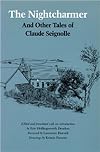
In contrast to the two novellas of The Accursed which were steeped in rural life, the stories of this collection vary in their subject matter and setting. From Poe-like (Night Horses, Starfish) terror to armchair horror (Nightcharmer), (almost) urban legendry (Hitching a Ride) and modern suspense (). Folk horror is not absent; three of the stories are of the writing and setting hue characteristic of Sologne. Seignolle is here revealed as a flexible writer with a wide palette.
The show more Nightcharmer: The protagonist visits the tower of a secluded nobleman who collects embalmed animals. There he learns about the Nightcharmer, a legendary bird residing in the surrounding marshland, its cry dangerously enchanting.
Armchair horror meets folklore. The language is very different from the rustic intensity of The Accursed. Still, nature plays a big role in the story. 3/5
A Dog Story: Two soldiers in the trenches of the Maginot line meet a sickly, starving dog, which is extremely difficult to get rid of.
A harsh, almost painful little story. The hell of battle trenches is described in an extreme realism, the dog itself revealed as a symbol of the unglorified nature of war. A tough read. 3/5
The Healer: A village healer with the power of absorbing diseases into his body, and then neutralizing them.
Language-wise it is a return to the rural prose of the Accursed. Bombastic natural metaphors and personifications. Seignolle weaves shamanic lore into the plot, while also drawing with ominous and uncomfortable strokes. Excellent material. 4/5
Starfish: After a face plastic surgery, a starlet temporarily retires to a mansion. There she succumbs to her vainglorious curiosity.
Something out of Poe with a hint of tragic Greek mythology (Aegeus), this is an effective little story. 3/5
The Outsider: After the suicide of the village smith a strange outsider takes up his trade, reawakening the occult power of the forge.
A magnificent example of folk writing, this brooding novelette (by far the lengthier of the book's stories) is rural Seignolle at his best. Amazing, highly symbolic imagery of a mythological aspect, a viscous language grounded in nature and country life and a tragic story which traverses seamlessly the line between reality and legend. The book's high point, by far. 5/5
The Last Rites: Concerning the remains of a pious nun on her way to sainthood and an unfaithful wife.
This one feels slightly disjointed. Part of the rural cycle, it doesn't manage to balance or resolve its plot threads. 2/5
Hitching a Ride: Bored with his lonely car voyage, the protagonist picks up a strange hitchhiker.
A short and effective piece of writing that falls somewhere between an urban legend and a fable. Weird and refreshing. 3.5/5
Night Horses: To reach his fiancee, the protagonist sets off on a nocturnal trek through the countryside, despite being warned against it by the locals. At some point he is picked up by an uncanny carriage.
This story sets off in a highly satisfying way and proceeds so, stumbling only at the (somewhat Poe-esque) ending. I feel that it could be much better if it stayed at the countryside and poured more fuel onto the folklore department. Still, a very enjoyable reading. 4/5
All in all a very solid collection with an unparalleled high point at The Outsider. show less
The show more Nightcharmer: The protagonist visits the tower of a secluded nobleman who collects embalmed animals. There he learns about the Nightcharmer, a legendary bird residing in the surrounding marshland, its cry dangerously enchanting.
Armchair horror meets folklore. The language is very different from the rustic intensity of The Accursed. Still, nature plays a big role in the story. 3/5
A Dog Story: Two soldiers in the trenches of the Maginot line meet a sickly, starving dog, which is extremely difficult to get rid of.
A harsh, almost painful little story. The hell of battle trenches is described in an extreme realism, the dog itself revealed as a symbol of the unglorified nature of war. A tough read. 3/5
The Healer: A village healer with the power of absorbing diseases into his body, and then neutralizing them.
Language-wise it is a return to the rural prose of the Accursed. Bombastic natural metaphors and personifications. Seignolle weaves shamanic lore into the plot, while also drawing with ominous and uncomfortable strokes. Excellent material. 4/5
Starfish: After a face plastic surgery, a starlet temporarily retires to a mansion. There she succumbs to her vainglorious curiosity.
Something out of Poe with a hint of tragic Greek mythology (Aegeus), this is an effective little story. 3/5
The Outsider: After the suicide of the village smith a strange outsider takes up his trade, reawakening the occult power of the forge.
A magnificent example of folk writing, this brooding novelette (by far the lengthier of the book's stories) is rural Seignolle at his best. Amazing, highly symbolic imagery of a mythological aspect, a viscous language grounded in nature and country life and a tragic story which traverses seamlessly the line between reality and legend. The book's high point, by far. 5/5
The Last Rites: Concerning the remains of a pious nun on her way to sainthood and an unfaithful wife.
This one feels slightly disjointed. Part of the rural cycle, it doesn't manage to balance or resolve its plot threads. 2/5
Hitching a Ride: Bored with his lonely car voyage, the protagonist picks up a strange hitchhiker.
A short and effective piece of writing that falls somewhere between an urban legend and a fable. Weird and refreshing. 3.5/5
Night Horses: To reach his fiancee, the protagonist sets off on a nocturnal trek through the countryside, despite being warned against it by the locals. At some point he is picked up by an uncanny carriage.
This story sets off in a highly satisfying way and proceeds so, stumbling only at the (somewhat Poe-esque) ending. I feel that it could be much better if it stayed at the countryside and poured more fuel onto the folklore department. Still, a very enjoyable reading. 4/5
All in all a very solid collection with an unparalleled high point at The Outsider. show less
An inexpensive collection of supernatural tales by Seignolle, little known in the English speaking world, but highly regarded in France both for his work as a folklorist and for his superb ghost stories. The translation is top-notch, and the pieces here draw their power from Seignoll's masterful evocation of rural France, its people, traditions and superstitions. Fans of classic era British supernatural writers such as Algernon Blackwood, Arthur Machen and M.R. James will recognise a kindred show more spirit here, and will want to search out his short novel 'The Possessed'. show less

A guy's life is ruined after he buys a piece of ugly furniture.
Awards

You May Also Like


Associated Authors
Statistics
- Works
- 106
- Also by
- 3
- Members
- 316
- Popularity
- #74,770
- Rating
- 3.9
- Reviews
- 11
- ISBNs
- 92
- Languages
- 7
- Favorited
- 1