

Tom Holland (1) (1968–)
Author of Rubicon: The Last Years of the Roman Republic
For other authors named Tom Holland, see the disambiguation page.
Series
Works by Tom Holland
In the Shadow of the Sword: The Birth of Islam and the Rise of the Global Arab Empire (2012) 1,130 copies, 20 reviews
Æthelflæd: A Ladybird Expert Book: England’s Forgotten Founder (The Ladybird Expert Series) (2019) 26 copies
la Malediction des Pharaons 1 copy
Troy 1 copy
Brexit 1 copy
Stephen Fry and Troy 1 copy
Tom Holland Collection 5 Books Set (In The Shadow Of The Sword, Rubicon, Dynasty, Millennium, Persian Fire) (2018) 1 copy
The Shadow of The Sward 1 copy
Associated Works
The Twelve Caesars (0120) — Introduction, some editions; Translator, some editions — 7,448 copies, 85 reviews
Tagged
Common Knowledge
- Canonical name
- Holland, Tom
- Legal name
- Holland, Thomas
- Birthdate
- 1968-01-05
- Gender
- male
- Education
- Queens' College, University of Cambridge (BA)
Canford School
Chafyn Grove School - Occupations
- historian
novelist
translator - Organizations
- Society of Authors
Classical Association - Awards and honors
- Royal Society of Literature (Fellow, 2016)
Runciman Award (2006)
Hessell-Tiltman Prize (2004) - Relationships
- Holland, James (brother)
- Nationality
- UK
- Birthplace
- Oxford, Oxfordshire, England, UK
- Places of residence
- London, Middlesex, England, UK
Broad Chalke, Wiltshire, England, UK - Map Location
- England, UK
Members
Discussions
The Birth of Islam, has Holland got it right? in History: On learning from and writing history (September 2015)
New Herodotus in Ancient History (November 2013)
Tom Holland's In the Shadow of the Sword in Ancient History (July 2012)
"The Persian Way of War": A new essay by Tom Holland in Ancient History (June 2012)
Rubicon by Tom Holland in Ancient History (December 2009)
Reviews
In the Shadow of the Sword: The Battle for Global Empire and the End of the Ancient World by Tom Holland
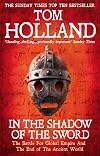
Tom Holland has made quite the name for himself with his narrative histories. His first, [b:Rubicon: The Last Years of the Roman Republic|91017|Rubicon The Last Years of the Roman Republic|Tom Holland|https://images.gr-assets.com/books/1320470983s/91017.jpg|87825], is about the rise of Julius Caesar and the transformation of Rome from the Republic it had been to the Empire usually envisioned by those of us raised on Hollywood sword and sandal epics and the UK history syllabus.
Here, Holland show more covers a far more complex and controversial era of history, the world of late antiquity centred on what we now refer to as the Middle East. This fits in nicely with my current undertaking of patching the massive holes left in my knowledge of world history by the aforementioned UK school syllabus. It particularly snuggles like a jigsaw piece against [a:Judith Herrin|280510|Judith Herrin|https://images.gr-assets.com/authors/1287143216p2/280510.jpg]’s superlative history of [b:Byzantium|2166088|Byzantium The Surprising Life of a Medieval Empire|Judith Herrin|https://images.gr-assets.com/books/1329504991s/2166088.jpg|2171615] which, naturally, focused on that great city itself and the world beyond only inasmuch as it bore directly upon it.
The setting here is the Eastern edge of the late Roman Empire where it abuts the most Westerly of the great Asian empires - initially the Parthians, then succeeded by the Sassanians. Each, much to the surprise of most people with a Western Classical education, was easily a match for mighty Rome and inflicted at least as many defeats and humiliations upon it as it upon them (the most striking of which is the fate of Emperor Valerian who, after being captured by the Parthians, spent the rest of his life being used by King Shapur I as a stool to mount his house and, on his death, having his skin flayed and gilded as a throneroom trophy).
Holland throws in vignettes like this to wonderful effect - such as the introductory account of the bloodthirsty religions zeal of Yusuf As’ar Yath’ar, before ending with the startling line “So perished… the last Jewish king to rule in Arabia.”
The author spends most of the book with background of how the two great empires grew and changed through the first 600 years or so of the Common Era - more detail on the Sassanids as Rome is more familiar to his audience, although he sketches in such things as the Gothic conquest of Italy and Spain and refers to a few things with which we are more likely to be familiar to ground the narrative. He takes us through the difficulties that Parthia has with the ‘barbarians’ on its Northern and Eastern frontiers that it massively underestimates and leads to its collapse (if I’ve learnt one thing from reading history, it is NEVER pursue bands of mobile mounted archers however much the taunt you), along with an overview of their culture and religion.
Along with this, as part of the timeline of Constantinople, we are shown the rise of Christianity in Palestine - the response of Rome to the various Hebrew insurrections, leading ultimately to expulsion from Jerusalem, the foundation of the Holy Land as a place of pilgrimage from Europe following Constantine’s conversion, the ascetic monks such as Simeon on his pillar. We also get a potted history of the schisms of Christianity, Nicea and Chalcedon, the Arians and the Copts.
Then, in the third part of the book, we are introduced again to that fragment of the region under the control of neither superpower. To the south of the fractious border is Arabia, a land considered barbarous by both Romans and Sassanians, although they are both also quite happy to pay the tribes as mercenaries. This disregard despite the fact that this area has housed the kingdom of Sheba, made wealthy beyond imagining by being the major supplier of Frankincense but fallen on hard times by the rise of Christianity and their dislike of such pagan practices as the burning of incense. From this area comes a third force, one which gives some editions of this book its alternative (and rather inflammatory) subtitle, “The Birth of Islam and the Rise of the Global Arab Empire”.
And this is where the controversy comes in. Holland shows how Islam rose not only as a political force as much as a religious one, but that it was a melange of the Hebraic history of the Arabian peninsula (as foreshadowed by that introduction with King Yusuf), the Manichaeism of late Iranshahr (Sassania), along with influences from others in the area such as the Biblically maligned Samaritans, the philosophy generated by the Christian schisms and the close textual analysis and argumentation of the Jewish yeshivas. Most controversial of all, the author points out the signal lack of contemporary accounts of the Qu’ran, Mecca and Mohammed’s direct influence. He shows Islam (or the Mohammedan faith, which came to be called Islam almost a century later) as a political construct, as riven with dissent and infighting as any other human political process. Perhaps most shockingly of all, he suggests that the hadiths, the sayings of Mohammed used as an adjunct to and expansion of the Qu’ran, are made up out of whole cloth the best part of a century after his death to justify interpretations of the extremely vague Qu’ran - or, indeed, to entirely re-write it, such as to upgrade the punishment for adultery from lashes to the traditional Jewish death by stoning. Mixed in with the jockeying for position as the power behind this new and vast empire, this shows that Islam and its holy texts are no more trustworthy and god-given than those of Christianity or Judaism, Zoroastrianism or Hinduism. They are products of human societies, of political power struggles that have a background and a frame, that both use belief and are a vector for it.
While Tom Holland’s fourth history book (he also write fiction - I really should investigate that!) is not without flaws, it is remarkably well written, well argued, as well as well researched and referenced. I have yet to read a narrative history as good as his debut, [b:Rubicon|91017|Rubicon The Last Years of the Roman Republic|Tom Holland|https://images.gr-assets.com/books/1320470983s/91017.jpg|87825](although that is on a par with saying that I have yet to hear a symphony on par with Beethoven’s ninth or Mahler’s fifth. Okay, anything by Mahler) but I think that is because the relatively narrow focus of the internecine power plays of Roman perhaps lend themselves more easily to the narrative history style without oversimplification. Holland obviously must simplify somewhat, but he really does seem to try to include as much relevant information as is humanly possible. As with his book [b:Persian Fire|103749|Persian Fire The First World Empire and the Battle for the West|Tom Holland|https://images.gr-assets.com/books/1171501730s/103749.jpg|100036] about the Greco-Persian wars (Thermopylae and all that) this can lead to a temporary overload of information, that I dealt with by putting aside the book for a few days on occasion to allow my brain to process it. I do also feel that he sometimes gives myths of Christianity an easier ride that those of other religions, putting them down with argumentative foot- or endnotes. While this may be purely as he expects the audience to be already more familiar with these, it does mean these appear to be accepted more uncritically.
In all, an utterly superb addition to my knowledge of the history that has formed our world, told in an utterly compelling, absorbing and informative manner. show less
Here, Holland show more covers a far more complex and controversial era of history, the world of late antiquity centred on what we now refer to as the Middle East. This fits in nicely with my current undertaking of patching the massive holes left in my knowledge of world history by the aforementioned UK school syllabus. It particularly snuggles like a jigsaw piece against [a:Judith Herrin|280510|Judith Herrin|https://images.gr-assets.com/authors/1287143216p2/280510.jpg]’s superlative history of [b:Byzantium|2166088|Byzantium The Surprising Life of a Medieval Empire|Judith Herrin|https://images.gr-assets.com/books/1329504991s/2166088.jpg|2171615] which, naturally, focused on that great city itself and the world beyond only inasmuch as it bore directly upon it.
The setting here is the Eastern edge of the late Roman Empire where it abuts the most Westerly of the great Asian empires - initially the Parthians, then succeeded by the Sassanians. Each, much to the surprise of most people with a Western Classical education, was easily a match for mighty Rome and inflicted at least as many defeats and humiliations upon it as it upon them (the most striking of which is the fate of Emperor Valerian who, after being captured by the Parthians, spent the rest of his life being used by King Shapur I as a stool to mount his house and, on his death, having his skin flayed and gilded as a throneroom trophy).
Holland throws in vignettes like this to wonderful effect - such as the introductory account of the bloodthirsty religions zeal of Yusuf As’ar Yath’ar, before ending with the startling line “So perished… the last Jewish king to rule in Arabia.”
The author spends most of the book with background of how the two great empires grew and changed through the first 600 years or so of the Common Era - more detail on the Sassanids as Rome is more familiar to his audience, although he sketches in such things as the Gothic conquest of Italy and Spain and refers to a few things with which we are more likely to be familiar to ground the narrative. He takes us through the difficulties that Parthia has with the ‘barbarians’ on its Northern and Eastern frontiers that it massively underestimates and leads to its collapse (if I’ve learnt one thing from reading history, it is NEVER pursue bands of mobile mounted archers however much the taunt you), along with an overview of their culture and religion.
Along with this, as part of the timeline of Constantinople, we are shown the rise of Christianity in Palestine - the response of Rome to the various Hebrew insurrections, leading ultimately to expulsion from Jerusalem, the foundation of the Holy Land as a place of pilgrimage from Europe following Constantine’s conversion, the ascetic monks such as Simeon on his pillar. We also get a potted history of the schisms of Christianity, Nicea and Chalcedon, the Arians and the Copts.
Then, in the third part of the book, we are introduced again to that fragment of the region under the control of neither superpower. To the south of the fractious border is Arabia, a land considered barbarous by both Romans and Sassanians, although they are both also quite happy to pay the tribes as mercenaries. This disregard despite the fact that this area has housed the kingdom of Sheba, made wealthy beyond imagining by being the major supplier of Frankincense but fallen on hard times by the rise of Christianity and their dislike of such pagan practices as the burning of incense. From this area comes a third force, one which gives some editions of this book its alternative (and rather inflammatory) subtitle, “The Birth of Islam and the Rise of the Global Arab Empire”.
And this is where the controversy comes in. Holland shows how Islam rose not only as a political force as much as a religious one, but that it was a melange of the Hebraic history of the Arabian peninsula (as foreshadowed by that introduction with King Yusuf), the Manichaeism of late Iranshahr (Sassania), along with influences from others in the area such as the Biblically maligned Samaritans, the philosophy generated by the Christian schisms and the close textual analysis and argumentation of the Jewish yeshivas. Most controversial of all, the author points out the signal lack of contemporary accounts of the Qu’ran, Mecca and Mohammed’s direct influence. He shows Islam (or the Mohammedan faith, which came to be called Islam almost a century later) as a political construct, as riven with dissent and infighting as any other human political process. Perhaps most shockingly of all, he suggests that the hadiths, the sayings of Mohammed used as an adjunct to and expansion of the Qu’ran, are made up out of whole cloth the best part of a century after his death to justify interpretations of the extremely vague Qu’ran - or, indeed, to entirely re-write it, such as to upgrade the punishment for adultery from lashes to the traditional Jewish death by stoning. Mixed in with the jockeying for position as the power behind this new and vast empire, this shows that Islam and its holy texts are no more trustworthy and god-given than those of Christianity or Judaism, Zoroastrianism or Hinduism. They are products of human societies, of political power struggles that have a background and a frame, that both use belief and are a vector for it.
While Tom Holland’s fourth history book (he also write fiction - I really should investigate that!) is not without flaws, it is remarkably well written, well argued, as well as well researched and referenced. I have yet to read a narrative history as good as his debut, [b:Rubicon|91017|Rubicon The Last Years of the Roman Republic|Tom Holland|https://images.gr-assets.com/books/1320470983s/91017.jpg|87825](although that is on a par with saying that I have yet to hear a symphony on par with Beethoven’s ninth or Mahler’s fifth. Okay, anything by Mahler) but I think that is because the relatively narrow focus of the internecine power plays of Roman perhaps lend themselves more easily to the narrative history style without oversimplification. Holland obviously must simplify somewhat, but he really does seem to try to include as much relevant information as is humanly possible. As with his book [b:Persian Fire|103749|Persian Fire The First World Empire and the Battle for the West|Tom Holland|https://images.gr-assets.com/books/1171501730s/103749.jpg|100036] about the Greco-Persian wars (Thermopylae and all that) this can lead to a temporary overload of information, that I dealt with by putting aside the book for a few days on occasion to allow my brain to process it. I do also feel that he sometimes gives myths of Christianity an easier ride that those of other religions, putting them down with argumentative foot- or endnotes. While this may be purely as he expects the audience to be already more familiar with these, it does mean these appear to be accepted more uncritically.
In all, an utterly superb addition to my knowledge of the history that has formed our world, told in an utterly compelling, absorbing and informative manner. show less
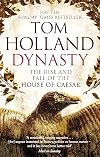
This is an excellent account of the rise and fall of one of the most famous dynasties in world history, the ruling family of the Julio-Claudians that gave Rome its first five emperors who are almost all household names even now two millennia later: Augustus; Tiberius; Caligula; Claudius; and Nero. As well as being the story of a dynasty, it is of course also the story of Rome itself over the period of some 130 years from Julius Caesar's first triumvirate with Pompey and Crassus in 60 BC, to show more the suicide of the last male member of the dynasty Nero in 68 AD. This was not in its structure a traditional ruling house or dynasty, as succession was often by adoption and/or marriage, and never actually by direct father to son transfer. And the fratricidal and bloody nature of so many of the relationships kept the supply of available successors often very limited. Violence, killing, exile, starvation, and suicide punctuate this story at regular intervals, along with incest, matricide, and all manner of other activities seen then, and often (but not always) now as perversions. This of course makes for colourful, though sometimes distasteful, reading. These personalities shine brightly across two millennia, whereas so many later Roman and Medieval historical figures have been forgotten, or in some cases, never known about: "each in his own way, had succeeded in fashioning out of his rule of the world a legend that would for ever afterwards mark the House of Caesar as something eerie and more than mortal. Painted in blood and gold, its record would never cease to haunt the Roman people as a thing of mingled wonder and horror." Tom Holland is one of my favourite contemporary historians and I love the Rest is History podcast he does with Dominic Sandbrook. A great book. show less
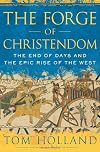
At this time there was only one Church. The Millennium weighed heavily on the collective conscience of every member of society. The Book of Revelations had foretold the coming of the Antichrist but in what form and from where no one knew. I had no idea of the extent to which the oncoming Millennium spurred and shaped an entire continent.
To rule in God's name meant defending Christians from the "demonic" Northmen, "barbaric" Germanic tribes, or the "blasphemous" Saracens. Laying waste to show more pagan villages or smiting a heretic was a holy act, but not without moral consequences. Conquering the lands of fellow Christians was permitted but required penance. But a new church, a pilgrimage, or a sizable donation was no guarantee of forgiveness and salvation. Even as these cultures began to coalesce, assimilate, or form trade relations, this history will seem rife with racist paranoia and sanctimoniousness, and that's the point.
As Holland follows the fractious Frankish Empire, the papacy, the Holy Roman Empire, shining Cordoba and a coalesced England - Christian warlords became venerated. New crowns were dispersed, all wanting a piece of Christendom. Gradually, a new social structure emerged. Castles grew from the landscape and the peasantry were forced to sacrifice their freedom for the protection of walled villages.
For those not familiar with even the bare facts of this era, this might not be a great book to start. There's a lot of ground to cover and across several kingdoms, including the papacy. However, Holland doesn't burden the reader with every battle, succession or boundary change. Instead the book captures the "spirit" of the times with key figures and larger events. It is dense though! I doubt I would've finished it if not for Holland's well-ordered narrative, clear timeline and smooth transitions. show less
To rule in God's name meant defending Christians from the "demonic" Northmen, "barbaric" Germanic tribes, or the "blasphemous" Saracens. Laying waste to show more pagan villages or smiting a heretic was a holy act, but not without moral consequences. Conquering the lands of fellow Christians was permitted but required penance. But a new church, a pilgrimage, or a sizable donation was no guarantee of forgiveness and salvation. Even as these cultures began to coalesce, assimilate, or form trade relations, this history will seem rife with racist paranoia and sanctimoniousness, and that's the point.
As Holland follows the fractious Frankish Empire, the papacy, the Holy Roman Empire, shining Cordoba and a coalesced England - Christian warlords became venerated. New crowns were dispersed, all wanting a piece of Christendom. Gradually, a new social structure emerged. Castles grew from the landscape and the peasantry were forced to sacrifice their freedom for the protection of walled villages.
For those not familiar with even the bare facts of this era, this might not be a great book to start. There's a lot of ground to cover and across several kingdoms, including the papacy. However, Holland doesn't burden the reader with every battle, succession or boundary change. Instead the book captures the "spirit" of the times with key figures and larger events. It is dense though! I doubt I would've finished it if not for Holland's well-ordered narrative, clear timeline and smooth transitions. show less
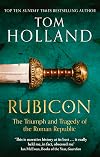
The fall of the Republic and the rise of the Empire, not that Rome wasn't already an Empire when the Republic fell. Built on slavery, it celebrated liberty, but how could you appreciate liberty without lots of slaves deprived of their liberty to contrast with your? Such was the mindset of the Romans, according to this immensely readable book, and it is one of a number of paradoxes that fueled the Roman's drive to take over the world, usually with thinly justified pre-emptive strikes against show more anyone who was even vaguely threatening or disrespectful, then robbing and enslaving and squeezing the survivors unmercifully, creating enormous wealth and opportunities for corruption. Which was, to the Roman mind, as it should be.
I admit my sense of the history of Rome is vague and spotty, filled with cinematic and televisual pageantry rather than a solid conception of its general shape. Still, so much of this is familiar, so many names echoing out of the past, and it's nice to have it brought more sharply into focus. Extraordinary men rise and do extraordinary things to great praise and adulation, then the extraordinary men are brought low, because Rome loves extraordinary men, it just doesn't like them. A swirling vortex of rising and falling leads almost inevitably to chaos and anarchy and a brutal and deadly struggle. The story is often garish and lurid and unimaginably brutal and violent. It's also fascinating and compelling. Holland creates a driving narrative, and while one is automatically suspicious of narratives imposed on history, still it grabs the attention and does not let go. show less
I admit my sense of the history of Rome is vague and spotty, filled with cinematic and televisual pageantry rather than a solid conception of its general shape. Still, so much of this is familiar, so many names echoing out of the past, and it's nice to have it brought more sharply into focus. Extraordinary men rise and do extraordinary things to great praise and adulation, then the extraordinary men are brought low, because Rome loves extraordinary men, it just doesn't like them. A swirling vortex of rising and falling leads almost inevitably to chaos and anarchy and a brutal and deadly struggle. The story is often garish and lurid and unimaginably brutal and violent. It's also fascinating and compelling. Holland creates a driving narrative, and while one is automatically suspicious of narratives imposed on history, still it grabs the attention and does not let go. show less
Lists
Book wishlist (1)
THE WAR ROOM (3)
Awards


You May Also Like


Associated Authors
Statistics
- Works
- 30
- Also by
- 11
- Members
- 14,364
- Popularity
- #1,596
- Rating
- 4.0
- Reviews
- 258
- ISBNs
- 372
- Languages
- 19
- Favorited
- 21