
Dyan Sheldon
Author of The Whales' Song
About the Author
Series
Works by Dyan Sheldon
The Dream 1 copy
Associated Works
Tagged
Common Knowledge
- Gender
- female
- Occupations
- novelist
- Nationality
- USA
- Birthplace
- Brooklyn, New York, USA
- Places of residence
- Brooklyn, New York, USA
London, England, UK - Associated Place (for map)
- USA
Members
Discussions
YA book. Can't remember title or author! Please Help! in Name that Book (September 2011)
Reviews

An amiable witch boards the bus at London's Paddington Station in this charming picture-book, bound for her sister's house, where a birthday tea awaits. Bearing many gifts for the celebrant, the happy witch, oblivious to the general grouchiness around her, bursts spontaneously into song, only to find herself being reprimanded by the outraged conductor. In the scuffle that ensues, as the conductor attempts to eject the witch from the bus, the witch attempts to hold on to her bag, and the show more other passengers all become involved in the argument, the witch's gifts spill out and fill the bus with every kind of wonderful thing, from friendly kittens to blue moons. Serving an impromptu tea to her fellow passengers, and to the driver, the witch proceeds to ignore the conductor, whose continuous protests at this unconventional state of affairs go unheeded by all...
Quirky and appealing, with a friendly and generous nature, this is one witch I wouldn't mind bumping into on my own daily commute on New York City's subways! I enjoyed the story in A Witch Got On At Paddington Station, with its madcap humor and sense of fun - the conductor's outraged (and futile) insistence upon proper decorum was a particularly amusing touch - and I appreciated the artwork as well. The bright colors, the starry flourish when the bag bursts, and the slightly cartoon-like style all were well suited to the text, accentuating the matter-of-factly absurd entertainment. Recommended to young readers who enjoy stories of magical occurrences in the everyday world, as well as to tired commuters in need of a smile. show less
Quirky and appealing, with a friendly and generous nature, this is one witch I wouldn't mind bumping into on my own daily commute on New York City's subways! I enjoyed the story in A Witch Got On At Paddington Station, with its madcap humor and sense of fun - the conductor's outraged (and futile) insistence upon proper decorum was a particularly amusing touch - and I appreciated the artwork as well. The bright colors, the starry flourish when the bag bursts, and the slightly cartoon-like style all were well suited to the text, accentuating the matter-of-factly absurd entertainment. Recommended to young readers who enjoy stories of magical occurrences in the everyday world, as well as to tired commuters in need of a smile. show less
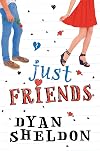
Whether because of self-doubt, or too much awareness of how others at his school view him, Josh is painfully aware he's about as far from the popular crowd as possible. That realization, however, doesn't make much difference when new girl Jena Capistrano moves to town. He's more than smitten and when they start talking and she begins relying on him for friendship and emotional support, it's a dream come true.
However, when you're a teen guy with self-esteem issues and find yourself on the show more razor's edge of ambivalence, the line between dream and nightmare can become very thin. The longer they hang out, the more conflicted Josh becomes...Does he tell her how he feels and risk losing her friendship? Asking his friends just makes things worse for they're as clueless as he, but add in their own mental jumble when giving him advice. Somewhere in this confused mess, he loses sight of his oldest friend, Ramona until it's almost too late to wake up and smell the coffee. Following his ambivalent journey could be really annoying, but it's done so well and he comes across as so sympathetic that everything works and the ending satisfies. show less
However, when you're a teen guy with self-esteem issues and find yourself on the show more razor's edge of ambivalence, the line between dream and nightmare can become very thin. The longer they hang out, the more conflicted Josh becomes...Does he tell her how he feels and risk losing her friendship? Asking his friends just makes things worse for they're as clueless as he, but add in their own mental jumble when giving him advice. Somewhere in this confused mess, he loses sight of his oldest friend, Ramona until it's almost too late to wake up and smell the coffee. Following his ambivalent journey could be really annoying, but it's done so well and he comes across as so sympathetic that everything works and the ending satisfies. show less
 This review was written for LibraryThing Early Reviewers.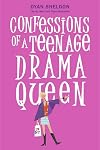
“Confessions of a Teenage Drama Queen” is one of my co-blogger’s favorite books, and even though I’ve already seen the movie with Lindsay Lohan, I decided to take a look at the source material, especially because Ella said the ending would be different from the film. I definitely wasn’t disappointed: “Confessions of a Teenage Drama Queen” promises a light romp through the social jungle of high school life through the eyes of one eccentric teenager, and it definitely does show more deliver.
THE DRAMA QUEEN AND HER KNIGHT
Lola Cep is not exactly a heroine everybody is going to empathize with. She is, as the title already alludes, a drama queen who loves theater and thinks she will be the next big star, she is pretentious and quite honestly a pathological liar, she believes she feels deeper than everybody else and that she has a soulmate-connection to the singer of her favorite band. She also believes that everybody in Dellwood/Deadwood is dull and not able to understand art in the same way she does, and in general, her life is totally ruined because she had to move to New Jersey instead of staying in New York, where real people with real feelings live.
Normally, these kinds of characteristics would be pretty putting off in YA. How many heroines have we read who think that all other people around them, girls especially, are dull and interchangeable? How many ‘Nobody understands me’ teenage tear-machines have we lived through in the YA genre? Generally, this kind of behavior is something that you’d turn your tail on and flee as far as possible, at least if you’ve got similar tastes to me.
The thing is, Lola is so extra and so over-the-top that these characteristics never really seem to be taken seriously. Even though we are in Lola’s head, it is very clear that she is not always right – most of the time, she really doesn’t know what she’s talking about, or she rambles herself into a corner as far removed from any rational notion of reality as Deadwood is from New York. The writing style of Lola’s inner dialogues mimics her histrionics, and at no point is her perspective presented as objective or rational. And that’s not what Lola is about. Objectivity and rationality have no space in the frame of this flawed, lying teenager who neither realizes her own flaws nor really feels bad for lying (only for getting caught). Lola might think everybody else is shallow and unimaginative, but we as readers realize that when a person who honestly wears a cape to school says something like this, we might not have to take it quite so seriously.
Lola might not be a character you like, but you definitely root for her. Even though she portrays her own wishes as life-or-death-issues, the passion with which she works on achieving her dreams is inspiring, and it does make you want her to succeed. You might not like her, but you care about her, and that makes the whole book so enjoyable, and also so frustrating when things don’t go her way.
Then of course, there is Ella, Lola’s side-kick and best friend. She is a ‘good girl’, she does her homework when she is supposed to, she doesn’t disobey her parents, she doesn’t lie. But even though Lola describes her as quite a pushover at the beginning, Ella might have the most character development of anybody in this book. Beneath the veneer of a mousy goody-two-shoes, a strong young woman emerges who stands up for her friends even in the most dire situations, who can handle crises so well that even Lola is impressed, and who, finally, forces Lola to see the errors of her lying ways by calling her out on her bullshit. Or well, at least she forces her to admit that she was lying and to stop doing it. I don’t think Lola will ever understand why lying is bad, but her love for her friend is strong enough to at least try. And Ella is really worth this love. Ella is the total opposite of Lola, and through her, the reader is made even more aware of just how wrong a lot of Lola’s behavior is.
THE QUEEN OF HIGH SCHOOL
An over-the-top protagonist like Lola needs an over-the-top villain if there is to be any acceptable conflict, and Carla Santini definitely qualifies. I would even go so far as to say that Carla Santini might be one of the best villains I’ve read in YA. She is an awful person, an aggressive queen bee, the type of person who makes fun of people because they’re different and because they don’t defer to her like a knight to his liege. She knows how to find other people’s greatest weaknesses, and she knows how to exploit them. She always gets what she wants, and if she doesn’t get it, then of course she didn’t want it in the first place.
And she lies. The biggest low point at the end of the book results from Carla telling a blatant lie and tearing down Lola’s defenses in one fell swoop in the process. Because you see, Lola might lie about herself, and about her family, but while people might die in her lies, most of them lift the people she is lying about up. She lies to make herself look better. Carla lies to make other people look worse. And while lying in general is not something that will ever make a sympathetic character, as a reader it is painful to see the consequences of Carla’s lies basically ruin the lives of the people she is lying about.
All in all, Carla is the type of villain who you just hate. You want her to have her comeuppance throughout the book, which is one reason why the ending of the book (as opposed to the film version) will leave any reader confused and frustrated, though not in a bad way. There is an open feeling to the ending, a feeling as if those characters you just read about for 200 pages are still in motion, as if there is more to come. There is a sequel to the book, of course, but even without the sequel, this ending feels good in its complexity.
AND THE MORAL OF THIS STORY…
Even though I really dislike focusing too much on moral messages in YA literature, it has to be said that there are a lot of good messages in this book. One message, for example, which is also a wisdom I live by, is: Lying makes everything more complicated. So many of Lola’s problems would just not have existed if she didn’t choose to lie. But of course, if she hadn’t lied, her big adventures would also not have happened. That was part of another message which I found very interesting, which was that if you want something badly, you can definitely try and get it, but it might not be as great as you thought it would be. It’s not too much of a spoiler to tell you that Lola gets what she wants at the end – but that she also doesn’t. This was an interesting twist on a genre that mostly deals in happy endings, and I did enjoy that very much.
“Confessions of a Teenage Drama Queen” is a character-driven, extremely enjoyable book with characters that you either love (Ella), hate (Carla), or just don’t quite know how to feel about (Lola). Lola is definitely one of the most compelling protagonists in YA, and the writing style reflects her strangeness and drama so well that you will be laughing out loud more than once for sure. I really liked this book, and I once again have to say that my dear co-blogger Ella has really, really good taste in books.
Want to read more of my reviews? Visit me on The Bookabelles Blog or follow me here on Goodreads :) show less
THE DRAMA QUEEN AND HER KNIGHT
Lola Cep is not exactly a heroine everybody is going to empathize with. She is, as the title already alludes, a drama queen who loves theater and thinks she will be the next big star, she is pretentious and quite honestly a pathological liar, she believes she feels deeper than everybody else and that she has a soulmate-connection to the singer of her favorite band. She also believes that everybody in Dellwood/Deadwood is dull and not able to understand art in the same way she does, and in general, her life is totally ruined because she had to move to New Jersey instead of staying in New York, where real people with real feelings live.
Normally, these kinds of characteristics would be pretty putting off in YA. How many heroines have we read who think that all other people around them, girls especially, are dull and interchangeable? How many ‘Nobody understands me’ teenage tear-machines have we lived through in the YA genre? Generally, this kind of behavior is something that you’d turn your tail on and flee as far as possible, at least if you’ve got similar tastes to me.
The thing is, Lola is so extra and so over-the-top that these characteristics never really seem to be taken seriously. Even though we are in Lola’s head, it is very clear that she is not always right – most of the time, she really doesn’t know what she’s talking about, or she rambles herself into a corner as far removed from any rational notion of reality as Deadwood is from New York. The writing style of Lola’s inner dialogues mimics her histrionics, and at no point is her perspective presented as objective or rational. And that’s not what Lola is about. Objectivity and rationality have no space in the frame of this flawed, lying teenager who neither realizes her own flaws nor really feels bad for lying (only for getting caught). Lola might think everybody else is shallow and unimaginative, but we as readers realize that when a person who honestly wears a cape to school says something like this, we might not have to take it quite so seriously.
Lola might not be a character you like, but you definitely root for her. Even though she portrays her own wishes as life-or-death-issues, the passion with which she works on achieving her dreams is inspiring, and it does make you want her to succeed. You might not like her, but you care about her, and that makes the whole book so enjoyable, and also so frustrating when things don’t go her way.
Then of course, there is Ella, Lola’s side-kick and best friend. She is a ‘good girl’, she does her homework when she is supposed to, she doesn’t disobey her parents, she doesn’t lie. But even though Lola describes her as quite a pushover at the beginning, Ella might have the most character development of anybody in this book. Beneath the veneer of a mousy goody-two-shoes, a strong young woman emerges who stands up for her friends even in the most dire situations, who can handle crises so well that even Lola is impressed, and who, finally, forces Lola to see the errors of her lying ways by calling her out on her bullshit. Or well, at least she forces her to admit that she was lying and to stop doing it. I don’t think Lola will ever understand why lying is bad, but her love for her friend is strong enough to at least try. And Ella is really worth this love. Ella is the total opposite of Lola, and through her, the reader is made even more aware of just how wrong a lot of Lola’s behavior is.
THE QUEEN OF HIGH SCHOOL
An over-the-top protagonist like Lola needs an over-the-top villain if there is to be any acceptable conflict, and Carla Santini definitely qualifies. I would even go so far as to say that Carla Santini might be one of the best villains I’ve read in YA. She is an awful person, an aggressive queen bee, the type of person who makes fun of people because they’re different and because they don’t defer to her like a knight to his liege. She knows how to find other people’s greatest weaknesses, and she knows how to exploit them. She always gets what she wants, and if she doesn’t get it, then of course she didn’t want it in the first place.
And she lies. The biggest low point at the end of the book results from Carla telling a blatant lie and tearing down Lola’s defenses in one fell swoop in the process. Because you see, Lola might lie about herself, and about her family, but while people might die in her lies, most of them lift the people she is lying about up. She lies to make herself look better. Carla lies to make other people look worse. And while lying in general is not something that will ever make a sympathetic character, as a reader it is painful to see the consequences of Carla’s lies basically ruin the lives of the people she is lying about.
All in all, Carla is the type of villain who you just hate. You want her to have her comeuppance throughout the book, which is one reason why the ending of the book (as opposed to the film version) will leave any reader confused and frustrated, though not in a bad way. There is an open feeling to the ending, a feeling as if those characters you just read about for 200 pages are still in motion, as if there is more to come. There is a sequel to the book, of course, but even without the sequel, this ending feels good in its complexity.
AND THE MORAL OF THIS STORY…
Even though I really dislike focusing too much on moral messages in YA literature, it has to be said that there are a lot of good messages in this book. One message, for example, which is also a wisdom I live by, is: Lying makes everything more complicated. So many of Lola’s problems would just not have existed if she didn’t choose to lie. But of course, if she hadn’t lied, her big adventures would also not have happened. That was part of another message which I found very interesting, which was that if you want something badly, you can definitely try and get it, but it might not be as great as you thought it would be. It’s not too much of a spoiler to tell you that Lola gets what she wants at the end – but that she also doesn’t. This was an interesting twist on a genre that mostly deals in happy endings, and I did enjoy that very much.
“Confessions of a Teenage Drama Queen” is a character-driven, extremely enjoyable book with characters that you either love (Ella), hate (Carla), or just don’t quite know how to feel about (Lola). Lola is definitely one of the most compelling protagonists in YA, and the writing style reflects her strangeness and drama so well that you will be laughing out loud more than once for sure. I really liked this book, and I once again have to say that my dear co-blogger Ella has really, really good taste in books.
Want to read more of my reviews? Visit me on The Bookabelles Blog or follow me here on Goodreads :) show less
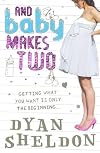
I'm a bit torn about how I feel about this one but I liked it overall. Lana is definitely a really difficult character to like but I think there are perfectly sound reasons for that- she's still just an immature kid and appears to be suffering from postnatal depression (or maybe she really was just clueless and selfish.) As infuriating as a lot of her actions were, I still found myself drawn into the book and eager to know how things turned out. The writing itself is very good- easy to read show more and told in a very coherent fashion. It wasn't too long or too short; the story was told in the perfect length and every page had meaning to the book. It wasn't perfect and it wasn't amazing but it was interesting and certainly easily kept me reading until the very last word. show less
Lists
Awards


You May Also Like


Associated Authors
Statistics
- Works
- 82
- Also by
- 8
- Members
- 3,353
- Popularity
- #7,613
- Rating
- 3.5
- Reviews
- 71
- ISBNs
- 353
- Languages
- 16
- Favorited
- 1
