
Irvine Welsh
Author of Trainspotting
About the Author
Irvine Welsh was born in Edinburgh on September 27, 1958. After leaving school, he lived in London for awhile, but eventually returned to Edinburgh where he worked for the city council in the housing department. He received a degree in computer science and studied for an MBA at Heriot Watt show more University. His first novel, Trainspotting, was published in 1993 and was adapted as a film starring Ewan McGregor and Robert Carlyle in 1996. He became a full-time writer in August 1995. His other works include The Acid House (1994), Marabou Stork Nightmares (1995), Ecstasy: Three Tales of Chemical Romance (1996), Filth (1998), Glue (2001), and Porno (2002). He also wrote the plays Headstate (1994) and You'll Have Had Your Hole (1998). (Bowker Author Biography) show less
Image credit: www.chrismsaunders.com
Series
Works by Irvine Welsh
Men in Love: The new Trainspotting sequel from the No.1 Sunday Times bestseller (2025) 25 copies, 1 review
4 Play: Trainspotting by Harry Gibson, Marabou Stork Nightmares by Harry Gibson, Ecstasy by Keith Wyatt, Filth by Harry Gibson (2001) 19 copies
Days Like This: A Portrait of Scotland Through the Extraordinary Stories of Its People (2009) 8 copies, 1 review
Associated Works
24 Stories: of Hope for Survivors of the Grenfell Tower Fire (2018) — Contributor — 12 copies, 1 review
Tagged
Common Knowledge
- Canonical name
- Welsh, Irvine
- Birthdate
- 1958-09-27
- Gender
- male
- Education
- Ainslie Park Secondary School
City and Guilds (Electrical Engineering)
Heriot-Watt University (MBA) - Occupations
- novelist
playwright
film director
Industrial Training consultant
club promoter
Housing manager (show all 14)
kitchen porter
cook
waiter
property developer
mover
builder
television repair man
musician - Organizations
- Scottish Health Action on Alcohol Problems (advisor)
- Awards and honors
- Prix Italia (1998)
Tennent Golden Can Award (2017) - Nationality
- UK
- Birthplace
- Leith, Edinburgh, Scotland, UK
- Places of residence
- Edinburgh, Scotland, UK
Chicago, Illinois, USA
Dublin, Ireland
London, England, UK
Miami, Florida, USA - Map Location
- Scotland, UK
Members
Discussions
Trainspotting in Folio Society Devotees (July 2023)
Reviews

Yir a mess, but we widnae huv ye any other wey--ya cunt thit ye are. This epoch-defining novel and the associated film were huge, huge for me as I moved from introverted nerd to superstar wasted troublemaker in the late-mid '90s in Victoria, BC. Which seems absurd, right? What does a film about Scottish junkies in the '80s have to say to Canadian teens?
But that was just it. It was the thumping rainbow difference of it, the promise of vistas, the chance to hit the town with your pocket of show more whiskey and your bleached-out hair in your eyes; raise one eyebrow at the ladies, drive the security guard at A&B Sound to distraction, score some albums and feel all virtuous about it because hey, Joe Strummer wouldn't feel the loss. Jarvis Cocker would positively cheer you along. Ian Curtis had more immediate problems. Then, hit the park, the beach, ride bikes. Then, caffeine pill, ecstasy, lager, lager, lager, and go make some trouble with some rich kids
And imagine you'll be doing it forever. Renton and crew (and yeah we divvied up the identities all amongst us, me and my boys, and yeah the girls called me Sick Boy, and the ultimate reptilian exploitativeness of that character was occasion for much navelgazing on my part re why he was so attractive to me and what morality was and what kind of person I wanted to be) were 26, and of course that's at least in part what serious drug habits are, or begin as: the chance to reclaim your freedom, to take control of your space, to step into a twilit lovecat world where you set your own agenda. For a while, until it takes back with interest.
But the drugs were never really the centre of it for us, and their presence in this book certainly had very little to do why it appealed to me. All the existential dilemmas and pain of Trainspotting really have very little to do with junk: only Renton and Spud and Matty really ride the heroin train throughout (Sick Boy kicks at the very beginning). And yet everyone else is just as fucked up on speed or booze or rage or sex or thievery or having a virus in their blood. The drugs are irrelevant: this is a book about growing up poor and circumscribed, with low crumbling roofs and no horizons, and about what kind of people that produces. About their desperate efforts to bind themselves together with tribalism, and then their desperate efforts to kick back against it.
And so Welsh is simplistic, and juvenile, and misogynistic, but he has his finger on the pulse of something real. Here we were on the other side of the world, in an entirely different culture, with no heroin or football gangs or, like Weedjie Orange bastards or whatever, and yet so much of Trainspotting to me sounds just exactly like the everyday depression of growing up in a poor urban neighbourhood, amidst the post-Reagan/Thatcher/Mulroney ruins of a proper working class, and looking for way to derive from that some excitement and colour and joy.
Not that things were as bad for us. But there are so many moments here that ring so true, and they're all the white-trash moments: fights at funerals, the feeble fakery of sports-talk when you ceased to give a fuck when you were like ten years old but it's still like a tax to be payed. Bar fights. Outside-bar fights. No-reason anytime fights. And the turn to compulsive or self-destructive or self-hating behaviours of all sorts, of which addictions are just a subset.
I think Welsh does a great job with all of that. And I have more appreciation now for the withdrawal and counseling and depression and pulling it together and fucking it up again stuff, which seemed so irrelevant then, amid the bravado of youth, but which, it turns out, is just gonna insinuate itself into your life eventually, in some form, and you have to somehow find the resources to deal. That's the hidden existential statement of Trainspotting as far as I'm concerned: "His friends will vanish as his need increases. The inverse, or perverse, mathematics of life." And the drugs are just a for instance, a test case.
And like, one last thing: it's not mathematics: it's economics. Growing up, like, a judge's kid, and getting addicted to heroin and pregnant and alienating your family and going to jail for petty crimes, and you're still about a billion times better off than someone who's in that situation but didn't start with your support network. My life doesn't have a lot to do with drugs these days (and lest this review gave you the wrong impression, never really did); nor a lot with old ugly thuggish E-town, which has gentrified, and was never, don't let me give you the wrong impression again, Leith. But I still feel the repercussions. Me and my boys have remained close, and have prospered, and the two are bound up together. The harder life is, the more good people are ground down into schemies and exploiters. We were lucky to be in Canada, in what was only really an approximation of a depressed working-class inner suburb. And yet I still know more guys in jail, or on welfare, or with kids themselves approaching reproductive age, or grinding their lives away in shit jobs, than all the people I go to grad school with put together.
Sick of talking about me. Point is: it's hard to be poor, and you mortgage yourself to pretend you're not, and to have the easy joys and choices that people with just a BIT more security take for granted, throw away chances defiantly to show that you don't need a fat society's charity, and it all perpetuates unto the generations. Welsh gets that psychic colonization perfectly, and nails it in this book. I'm realizing, now, how I went about my graduate education in a really stupid way because I never thought a professorship was a reliable enough option for me, and now it seems like it might have been had I understood how well I was gonna do--and here I am, another victim (excuse the melodrama; I'm trying to make a larger social point rather than asking for pity) of the tyranny of lowered expectations. As Sick Boy observes of Second Prize and football, the drugs that are the ostensible theme in this book are really just a distraction from that core of despair, that's a lot harder to escape from than just moving away and choosing life. show less
But that was just it. It was the thumping rainbow difference of it, the promise of vistas, the chance to hit the town with your pocket of show more whiskey and your bleached-out hair in your eyes; raise one eyebrow at the ladies, drive the security guard at A&B Sound to distraction, score some albums and feel all virtuous about it because hey, Joe Strummer wouldn't feel the loss. Jarvis Cocker would positively cheer you along. Ian Curtis had more immediate problems. Then, hit the park, the beach, ride bikes. Then, caffeine pill, ecstasy, lager, lager, lager, and go make some trouble with some rich kids
And imagine you'll be doing it forever. Renton and crew (and yeah we divvied up the identities all amongst us, me and my boys, and yeah the girls called me Sick Boy, and the ultimate reptilian exploitativeness of that character was occasion for much navelgazing on my part re why he was so attractive to me and what morality was and what kind of person I wanted to be) were 26, and of course that's at least in part what serious drug habits are, or begin as: the chance to reclaim your freedom, to take control of your space, to step into a twilit lovecat world where you set your own agenda. For a while, until it takes back with interest.
But the drugs were never really the centre of it for us, and their presence in this book certainly had very little to do why it appealed to me. All the existential dilemmas and pain of Trainspotting really have very little to do with junk: only Renton and Spud and Matty really ride the heroin train throughout (Sick Boy kicks at the very beginning). And yet everyone else is just as fucked up on speed or booze or rage or sex or thievery or having a virus in their blood. The drugs are irrelevant: this is a book about growing up poor and circumscribed, with low crumbling roofs and no horizons, and about what kind of people that produces. About their desperate efforts to bind themselves together with tribalism, and then their desperate efforts to kick back against it.
And so Welsh is simplistic, and juvenile, and misogynistic, but he has his finger on the pulse of something real. Here we were on the other side of the world, in an entirely different culture, with no heroin or football gangs or, like Weedjie Orange bastards or whatever, and yet so much of Trainspotting to me sounds just exactly like the everyday depression of growing up in a poor urban neighbourhood, amidst the post-Reagan/Thatcher/Mulroney ruins of a proper working class, and looking for way to derive from that some excitement and colour and joy.
Not that things were as bad for us. But there are so many moments here that ring so true, and they're all the white-trash moments: fights at funerals, the feeble fakery of sports-talk when you ceased to give a fuck when you were like ten years old but it's still like a tax to be payed. Bar fights. Outside-bar fights. No-reason anytime fights. And the turn to compulsive or self-destructive or self-hating behaviours of all sorts, of which addictions are just a subset.
I think Welsh does a great job with all of that. And I have more appreciation now for the withdrawal and counseling and depression and pulling it together and fucking it up again stuff, which seemed so irrelevant then, amid the bravado of youth, but which, it turns out, is just gonna insinuate itself into your life eventually, in some form, and you have to somehow find the resources to deal. That's the hidden existential statement of Trainspotting as far as I'm concerned: "His friends will vanish as his need increases. The inverse, or perverse, mathematics of life." And the drugs are just a for instance, a test case.
And like, one last thing: it's not mathematics: it's economics. Growing up, like, a judge's kid, and getting addicted to heroin and pregnant and alienating your family and going to jail for petty crimes, and you're still about a billion times better off than someone who's in that situation but didn't start with your support network. My life doesn't have a lot to do with drugs these days (and lest this review gave you the wrong impression, never really did); nor a lot with old ugly thuggish E-town, which has gentrified, and was never, don't let me give you the wrong impression again, Leith. But I still feel the repercussions. Me and my boys have remained close, and have prospered, and the two are bound up together. The harder life is, the more good people are ground down into schemies and exploiters. We were lucky to be in Canada, in what was only really an approximation of a depressed working-class inner suburb. And yet I still know more guys in jail, or on welfare, or with kids themselves approaching reproductive age, or grinding their lives away in shit jobs, than all the people I go to grad school with put together.
Sick of talking about me. Point is: it's hard to be poor, and you mortgage yourself to pretend you're not, and to have the easy joys and choices that people with just a BIT more security take for granted, throw away chances defiantly to show that you don't need a fat society's charity, and it all perpetuates unto the generations. Welsh gets that psychic colonization perfectly, and nails it in this book. I'm realizing, now, how I went about my graduate education in a really stupid way because I never thought a professorship was a reliable enough option for me, and now it seems like it might have been had I understood how well I was gonna do--and here I am, another victim (excuse the melodrama; I'm trying to make a larger social point rather than asking for pity) of the tyranny of lowered expectations. As Sick Boy observes of Second Prize and football, the drugs that are the ostensible theme in this book are really just a distraction from that core of despair, that's a lot harder to escape from than just moving away and choosing life. show less
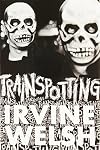
Gritty yet moving. Violent yet tender. Lonely yet loud. Animally human. How can anyone fully explain the phenomenon that is Trainspotting? Once you get the hang of the narrative the characters come alive. All their faults laid bare. They are disgusting and darling all at the same time. Hideous and hilarious. The black humor and absurd situations had me giggling and then glancing around to see if anyone was offended.
In the absence of a plot this is the story of addictions told from the point show more of view of addicts and the people who circle their periphery. To describe the kind of desperation addiction can create - when trying to find a viable vein, one character resorts to injecting their privates. Revenge is brutal. Sex is raw and callous. No one is really all that likeable until you find yourself thinking of them long after you close the book. A certain kind of magnetism...like a train wreck. show less
In the absence of a plot this is the story of addictions told from the point show more of view of addicts and the people who circle their periphery. To describe the kind of desperation addiction can create - when trying to find a viable vein, one character resorts to injecting their privates. Revenge is brutal. Sex is raw and callous. No one is really all that likeable until you find yourself thinking of them long after you close the book. A certain kind of magnetism...like a train wreck. show less

An engaging story collection by the master of Scottish drugs, sex and four-letter words. In fact, though, only one piece here, the novella Kingdom of Fife, is set in Scotland. The title story (and it is a superb title!) follows the adventures of a womanising English expat in Fuertaventura, whilst "Rattlesnakes", "Dogs of Lincoln Park" and "Miss Arizona" are all set in the US. They are all fun, but I think my favourite of the short pieces was "Dogs of Lincoln Park," where a real-estate show more agent's dog goes missing shortly after a Korean chef moves into the building and Welsh manages to keep us guessing for far longer than anyone would have thought possible. He then reverses the trick in "Miss Arizona", but there didn't seem to be a lot of point in that.
"If You Liked School, You'll Love Work" is a long-short story with a fairly conventional plot -- a man who has lived by evading his responsibilities finds that all the women in his life have ganged up on him -- but it has a lot of enjoyable detail.
The real joy of the collection, though, is Kingdom of Fife, which takes up the second half of the book. It's set in the less-than-delightful former mining town of Cowdenbeath and the narration alternates between two young people, the unemployed former apprentice jockey and serial stalker Jason, who writes in all but impenetrable dialect, and Jenni, the very horsey, middle-class daughter of a thuggish businessman, who uses standard English. Welsh has a lot of fun manoeuvring both of them into places where they are forced to rise above themselves and their no-hope lives in Fife, and feeds the reader some delightful treats of language along the way. show less
"If You Liked School, You'll Love Work" is a long-short story with a fairly conventional plot -- a man who has lived by evading his responsibilities finds that all the women in his life have ganged up on him -- but it has a lot of enjoyable detail.
The real joy of the collection, though, is Kingdom of Fife, which takes up the second half of the book. It's set in the less-than-delightful former mining town of Cowdenbeath and the narration alternates between two young people, the unemployed former apprentice jockey and serial stalker Jason, who writes in all but impenetrable dialect, and Jenni, the very horsey, middle-class daughter of a thuggish businessman, who uses standard English. Welsh has a lot of fun manoeuvring both of them into places where they are forced to rise above themselves and their no-hope lives in Fife, and feeds the reader some delightful treats of language along the way. show less

Jaded Edinburgh cop and substance-abuser (probably a redundant descriptor in an Irvine Welsh novel...) Ray Lennox has been granted compassionate leave after a particularly traumatic child-murder case leads to a breakdown, and he is spending some time relaxing in Miami with his fiancée. Within 48 hours of landing in the US, however, he finds himself in a situation where a young girl needs his protection from sexual predators, in circumstances where he can't very well turn to the proper show more authorities for help, and of course all the doubts and questions flying around in his mind from the recent investigation come back to haunt him.
Despite the obviously contrived setup, this turns out to be a very engaging, disturbing book, whose brutal plot somehow manages to deal with the fraught subject of sexual abuse of children in a sensitive and often surprisingly subtle way. Although it is probably a book you will want to read quickly to get it over with... show less
Despite the obviously contrived setup, this turns out to be a very engaging, disturbing book, whose brutal plot somehow manages to deal with the fraught subject of sexual abuse of children in a sensitive and often surprisingly subtle way. Although it is probably a book you will want to read quickly to get it over with... show less
Lists
Overdue Podcast (1)
Which house? (1)
Five star books (1)
Take Four Books (1)
Favourite Books (1)
1990s (1)
Review 4 (1)
First Novels (1)
A Novel Cure (1)
substances (1)
satirical (1)
BBC Big Read (1)
Awards


You May Also Like


Associated Authors
Statistics
- Works
- 40
- Also by
- 20
- Members
- 23,167
- Popularity
- #910
- Rating
- 3.9
- Reviews
- 294
- ISBNs
- 535
- Languages
- 27
- Favorited
- 122


