
Song Nan Zhang
Author of The Children of China: An Artist's Journey
About the Author
Image credit: Song Nan Zhang
Works by Song Nan Zhang
Associated Works
The Man Who Made Parks: The Story of Parkbuilder Frederick Law Olmsted (2009) — Illustrator — 59 copies, 4 reviews
Tagged
Common Knowledge
- Birthdate
- 1942
- Gender
- male
- Occupations
- artist
illustrator
illustrator of children's books - Nationality
- Canada
- Birthplace
- Shanghai, China
- Places of residence
- Beijing, China
Paris, France
Montréal, Québec, Canada
Members
Reviews

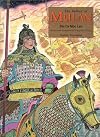
Chinese expatriate artist and children's book author Song Nan Zhang, now living in Canada, turns his attention to one of China's most beloved folk legends in this lovely picture-book, which I read together with two other bilingual adaptations of the story of Mu Lan: Jeanne M. Lee's The Song of Mu Lan and Charlie Chin's China's Bravest Girl: The Legend of Hua Mu Lan. The tale of a devoted daughter, who takes her elderly father's place in the emperor's army, in order to uphold the family's show more honor, and spare her infirm parent the hardships of life in the military, it follows Mu Lan (meaning "magnolia") as she transforms herself into a man, joins the army, wins great renown as a soldier, is promoted to the rank of general, and offered great rewards by the emperor himself, before returning home to her parents in triumph.
Unlike Lee and Chin, Song Nan Zhang presents his English translation in simple prose, resulting in a narrative (in English, anyway) that reads more easily than the free (Lee) or rhyming (Chin) verse of the other two versions. He also provides far more historical background for the original poem, than his two counterparts, both on the front flap, and in his brief historical note, at the rear, and I particularly appreciated the point that the historical Mu Lan - if she did indeed exist - would have most likely been of the Xianbei culture, which permitted greater autonomy to women (even a military role, at times) than the Han. That said, although the illustrations here were very appealing, in and of themselves, I have to confess that I preferred Lee's work, which reminded me, at times, of traditional Chinese scroll paintings.
Still, this is a lovely presentation of a wonderful legend, with an engaging English translation, fascinating historical background, appealing illustrations, and lovely Wei Tablet Style calligraphy, in the original Chinese ballad. I highly recommend it, together with the Lee retelling, to young readers interested in the story of Mu Lan, particularly those who may only have encountered it through the Disney film. show less
Unlike Lee and Chin, Song Nan Zhang presents his English translation in simple prose, resulting in a narrative (in English, anyway) that reads more easily than the free (Lee) or rhyming (Chin) verse of the other two versions. He also provides far more historical background for the original poem, than his two counterparts, both on the front flap, and in his brief historical note, at the rear, and I particularly appreciated the point that the historical Mu Lan - if she did indeed exist - would have most likely been of the Xianbei culture, which permitted greater autonomy to women (even a military role, at times) than the Han. That said, although the illustrations here were very appealing, in and of themselves, I have to confess that I preferred Lee's work, which reminded me, at times, of traditional Chinese scroll paintings.
Still, this is a lovely presentation of a wonderful legend, with an engaging English translation, fascinating historical background, appealing illustrations, and lovely Wei Tablet Style calligraphy, in the original Chinese ballad. I highly recommend it, together with the Lee retelling, to young readers interested in the story of Mu Lan, particularly those who may only have encountered it through the Disney film. show less
I liked this book, of course I know of the Disney version and I kind of expected it to be similar but it was different in a good way!
One thing that I liked about this book were the illustrations. The story is Chinese and the illustrations matched the culture. They looked very traditional and I liked how they went with the story. Another reason why I liked this book was that the book featured the text in English and Chinese. I like this feature because it also really fits in with the story show more being traditional Chinese history and literature. So, it's like for people who speak English, but then it includes the Chinese which makes it feel more cultural to me. I also liked this book because of the actual story. Like I said, I've seen the Disney version, but when comparing the two, this one is more straight forward and to the point. It also told me almost a different story than what I know. For example, in the movie, Mulan goes against her father's wishes and sneaks away to fight while in the ballad, her family is fully aware of what she is doing and happily allows her to leave. So I thought it was interesting to see the true version of Hua Mulan. I think that the main message in this has to do with equality and how gender doesn't impact your capabilities. In the story, she tells her fellow comrades about how two rabbits running look the same and you cannot tell the difference between male and female. She was kind of explaining how that they were doing the same things and no one even noticed but her being a woman didn't stop her from being one of the most noble generals. show less
One thing that I liked about this book were the illustrations. The story is Chinese and the illustrations matched the culture. They looked very traditional and I liked how they went with the story. Another reason why I liked this book was that the book featured the text in English and Chinese. I like this feature because it also really fits in with the story show more being traditional Chinese history and literature. So, it's like for people who speak English, but then it includes the Chinese which makes it feel more cultural to me. I also liked this book because of the actual story. Like I said, I've seen the Disney version, but when comparing the two, this one is more straight forward and to the point. It also told me almost a different story than what I know. For example, in the movie, Mulan goes against her father's wishes and sneaks away to fight while in the ballad, her family is fully aware of what she is doing and happily allows her to leave. So I thought it was interesting to see the true version of Hua Mulan. I think that the main message in this has to do with equality and how gender doesn't impact your capabilities. In the story, she tells her fellow comrades about how two rabbits running look the same and you cannot tell the difference between male and female. She was kind of explaining how that they were doing the same things and no one even noticed but her being a woman didn't stop her from being one of the most noble generals. show less
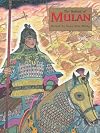
This is a great old folktale from China. The story follows Mulan as she sneaks into the army to fight in her ailing father's place. This version, unlike the Disney telling, focuses on the loneliness and pain of battle and being away from home.
I love to share this as a contrast to the Disney version of these old stories. I often find the original tales to share with my classes to highlight the differences in these stories and the liberties Disney and others have taken.
I love to share this as a contrast to the Disney version of these old stories. I often find the original tales to share with my classes to highlight the differences in these stories and the liberties Disney and others have taken.
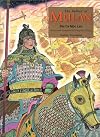
According to legend, there was a young woman named Mulan whose aged and frail father was conscripted. Mulan, unwilling to see her father fighting in a war, disguises herself as a man and joins the army in his place. For the next ten years she shows remarkable skill as a warrior and becomes a famous general. Her true identity remains hidden from her comrades until the very end. Now, over fifteen centuries later, Mulan continues to be an inspiration to Chinese girls and women. She embodies the show more belief that woman — if given the opportunity — are capable of accomplishing the same feats as men. show less
Lists
Awards


You May Also Like


Associated Authors
Statistics
- Works
- 7
- Also by
- 4
- Members
- 327
- Popularity
- #72,481
- Rating
- 3.7
- Reviews
- 6
- ISBNs
- 20
- Languages
- 1