
John S. Major
Author of The New Lifetime Reading Plan: The Classical Guide to World Literature, Revised and Expanded
About the Author
Image credit: via Amazon.com
Works by John S. Major
The New Lifetime Reading Plan: The Classical Guide to World Literature, Revised and Expanded (1997) 1,243 copies, 19 reviews
World Poetry: An Anthology of Verse from Antiquity to Our Time (1998) — Editor — 496 copies, 2 reviews
Associated Works
The Huainanzi: A Guide to the Theory and Practice of Government in Early Han China (0139) — Translator, some editions — 52 copies, 1 review
Tagged
Common Knowledge
- Canonical name
- Major, John S.
- Gender
- male
- Education
- Harvard University (Ph.D.|History and East Asian Languages)
- Organizations
- Book-of-the-Month Club
Association for Asian Studies - Relationships
- Steele, Valerie (wife)
Major, David C. (brother) - Nationality
- USA
- Associated Place (for map)
- USA
Members
Discussions
The New Lifetime Reading Plan in The Well-Educated Mind by Susan Wise-Bauer (November 2009)
Reviews
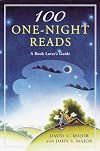
I picked this book up at a library book sale (discarded) and it was a little beat up, a couple of nicks to the cover with slightly yellowed page eges. It sat around the house a year or two before I started reading it. Once I did I quickly realized what a gem this book is. The authors (brothers I believe) give wonderful, brief (2-3 pages) reports of the recommended books. Their writing is superb with a nice blend of book information and author background information. In cases where giving show more away too much of the book's conclusion would spoil the read, they show proper restraint and do not disclose the outcome. Information about the books editions, publishing information,whether or not the book is still in print, etc..is given at the end of each book review. There is a nice mix of fiction, travel, memoirs, and non-fiction books reviewed. When I first started reading the book I went through the list of books in the contents and checked the ones I had read. Then I started putting a "x" by the ones I wanted to read. I finished up marking a lot or "x"s. I Love this book and have since laminated the book for maximum protection. It makes me very happy that I was able to give this little tattered, discarded book a loving home. Highly recommended and only wish that I could read a book, any book, in one night! show less
The New Lifetime Reading Plan: The Classical Guide to World Literature, Revised and Expanded by Clifton Fadiman

The idea of a western cannon of literature is becoming less and less viable with the major shifts in sensibilities that are constantly 'tornadoing' back and forth over it.
Books like this will hardly be published in the future. For those of us that still think there is value in reading parts of the old and moldy cannon this is as good a choice as any I suppose.
The title is appropriate btw, it truly will take a lifetime to read this long list of some of the greatest writings ever. I've barely show more scratched the surface myself.
Were it not for this book I would have never thought for a second that it would be worth reading the Epic of Gilgamesh for example.
Which it is. show less
Books like this will hardly be published in the future. For those of us that still think there is value in reading parts of the old and moldy cannon this is as good a choice as any I suppose.
The title is appropriate btw, it truly will take a lifetime to read this long list of some of the greatest writings ever. I've barely show more scratched the surface myself.
Were it not for this book I would have never thought for a second that it would be worth reading the Epic of Gilgamesh for example.
Which it is. show less

The premise here is that the books under discussion can be read in one night. Perhaps, if you don't have a life with other obligations! That quibble aside, this book is a treasure. The titles are a wonderful mix of fiction and nonfiction; of known and lesser-known authors; of modern and classic titles. The treatment of each title is comprehensive, witty, and approachable. I was swamped with titles I MUST read.
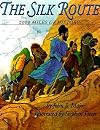
As a caravan of precious silk makes its way across central Asia to Europe, its traders have to contend with harsh climates, bandit attacks, and dangerous terrain. Certain features, such as the writing of the word "silk" in the language of every country the traders travel across and the earth-toned watercolor illustrations add to the realism of the story.The artist plays a lot with movement and drapery, coming in for a close-up of two veiled women inspecting a bolt of cloth or zooming out to show more take in a bird's-eye view of a marketplace or cityscape. The double-page spread of bandits attacking the caravan in Samarkand epitomizes this style, getting right in the thick of the action with flashing swords and emotional faces.
The Silk Route is arranged geographically, with each new page bearing the name of the next city on the road. The dedication page carries a map of the entire route, showing all the stops along the way. Starting in Chang'an, the capital city of Tang Dynasty China, merchants load camels with bolts of silk to trade. The silk changes hands several times as it wends its way across central Asia, traversing deserts, mountains, and, finally, the Mediterranean Sea.
For some children, the vocabulary and references to so many different places and peoples may become confusing, especially since the author doesn't specifically define all of them. He often provides contextual clues as to the definition of words like "yurt" and "porcelain", but all the new material can become overwhelming for some kids. Perhaps this book was written for an older audience than it ended up being marketed to. With this in mind, I probably wouldn't recommend The Silk Route for kids under 2nd or 3rd grade, even though children of this age probably aren't being read to nearly as much as their younger counterparts and won't be able to puzzle it out on their own yet. show less
The Silk Route is arranged geographically, with each new page bearing the name of the next city on the road. The dedication page carries a map of the entire route, showing all the stops along the way. Starting in Chang'an, the capital city of Tang Dynasty China, merchants load camels with bolts of silk to trade. The silk changes hands several times as it wends its way across central Asia, traversing deserts, mountains, and, finally, the Mediterranean Sea.
For some children, the vocabulary and references to so many different places and peoples may become confusing, especially since the author doesn't specifically define all of them. He often provides contextual clues as to the definition of words like "yurt" and "porcelain", but all the new material can become overwhelming for some kids. Perhaps this book was written for an older audience than it ended up being marketed to. With this in mind, I probably wouldn't recommend The Silk Route for kids under 2nd or 3rd grade, even though children of this age probably aren't being read to nearly as much as their younger counterparts and won't be able to puzzle it out on their own yet. show less
Lists
Awards

You May Also Like


Associated Authors
Statistics
- Works
- 15
- Also by
- 3
- Members
- 2,744
- Popularity
- #9,354
- Rating
- 4.0
- Reviews
- 35
- ISBNs
- 50
- Languages
- 2
- Favorited
- 1